Forwarded from The Classical Wisdom Tradition
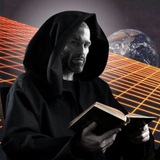
Why Platonic Philosophy is Meditation
What follows is a sketch of why I think Platonic philosophy (as a practice) should be understood as a kind of meditation or yoga. Because the Platonic literature is often technical and theoretical, it's easy to think that Platonism is just geeky theorizing, but it isn't.
First, let me say why I think this is an important topic. Many people, probably the majority of people, believe that Europe has little if anything to offer that is analogous to Eastern-style meditation practice. Perhaps the closest we get to it, they think, is ordinary prayer. And because they believe this, they conclude that, if meditation is good, their only option is to practice meditation in a Buddhist or Hindu manner.
I believe this opinion is false, and I want to explain why I think it's false. But let me be clear: I don't have anything against Eastern meditation techniques, nor am I claiming that Western meditation is the same as Eastern meditation. I simply want to try to correct what I think is a misunderstanding.
But before I can do that, we do need (a little) theory under our belts. In Platonism, it's understood that, on the one hand, our world is always changing, in constant flux. But, on the other hand, there is stability in our world as well: things don't happen randomly; there are patterns, laws, things have intelligible form. So we must ask: from where does this stability come? Platonism claims that this unchanging form and order originates from immaterial causal principles. Furthermore, and this is the key part, it claims that these principles are accessible to the mind. And this brings us to the famous idea of 'contemplating the Forms.'
Now, if we simply re-write that phrase, we begin to see something very interesting reveal itself: "contemplation of the eternal causal principles of reality." Even still, though, this may sound rather academic, as if the point is to study a bunch of charts and diagrams or solve physics equations. But this is to misunderstand what the Platonists meant by contemplation.
They meant seeing. To contemplate the Forms is to commune with the creative 'forces' of reality directly – a pure, unmuddied togetherness with, and vision of, reality through the eye of the soul. The logic chopping and analysis are tools to get us there, but they are not the point. Through reason, we can clear away the confusions and ambiguities which conceal eternal reality from us - and then we can know reality itself in its radiant perfection. This is contemplation.
At this point, we can begin to understand that Plato's dialogues, for example, are anything in the world but mere dramatic records of debates – dramatic and entertaining though they often are. No, they are meditation guides.
"[The soul] loves then to be quiet, having closed its eyes to thoughts that go downward, having become speechless and silent in internal silence. For how else could it attach itself to the most ineffable of all things than by putting to sleep the chatter in it?" - Proclus
"Go into yourself and look. ... If you see that you have become [beautiful and virtuous], at that moment you have become sight, and you can be confident about yourself, and you have at this moment ascended here, no longer in need of someone to show you. Just open your eyes and see, for this alone is the eye that sees the great beauty." - Plotinus
- CWT Admin
What follows is a sketch of why I think Platonic philosophy (as a practice) should be understood as a kind of meditation or yoga. Because the Platonic literature is often technical and theoretical, it's easy to think that Platonism is just geeky theorizing, but it isn't.
First, let me say why I think this is an important topic. Many people, probably the majority of people, believe that Europe has little if anything to offer that is analogous to Eastern-style meditation practice. Perhaps the closest we get to it, they think, is ordinary prayer. And because they believe this, they conclude that, if meditation is good, their only option is to practice meditation in a Buddhist or Hindu manner.
I believe this opinion is false, and I want to explain why I think it's false. But let me be clear: I don't have anything against Eastern meditation techniques, nor am I claiming that Western meditation is the same as Eastern meditation. I simply want to try to correct what I think is a misunderstanding.
But before I can do that, we do need (a little) theory under our belts. In Platonism, it's understood that, on the one hand, our world is always changing, in constant flux. But, on the other hand, there is stability in our world as well: things don't happen randomly; there are patterns, laws, things have intelligible form. So we must ask: from where does this stability come? Platonism claims that this unchanging form and order originates from immaterial causal principles. Furthermore, and this is the key part, it claims that these principles are accessible to the mind. And this brings us to the famous idea of 'contemplating the Forms.'
Now, if we simply re-write that phrase, we begin to see something very interesting reveal itself: "contemplation of the eternal causal principles of reality." Even still, though, this may sound rather academic, as if the point is to study a bunch of charts and diagrams or solve physics equations. But this is to misunderstand what the Platonists meant by contemplation.
They meant seeing. To contemplate the Forms is to commune with the creative 'forces' of reality directly – a pure, unmuddied togetherness with, and vision of, reality through the eye of the soul. The logic chopping and analysis are tools to get us there, but they are not the point. Through reason, we can clear away the confusions and ambiguities which conceal eternal reality from us - and then we can know reality itself in its radiant perfection. This is contemplation.
At this point, we can begin to understand that Plato's dialogues, for example, are anything in the world but mere dramatic records of debates – dramatic and entertaining though they often are. No, they are meditation guides.
"[The soul] loves then to be quiet, having closed its eyes to thoughts that go downward, having become speechless and silent in internal silence. For how else could it attach itself to the most ineffable of all things than by putting to sleep the chatter in it?" - Proclus
"Go into yourself and look. ... If you see that you have become [beautiful and virtuous], at that moment you have become sight, and you can be confident about yourself, and you have at this moment ascended here, no longer in need of someone to show you. Just open your eyes and see, for this alone is the eye that sees the great beauty." - Plotinus
- CWT Admin
🥰10
Forwarded from The Classical Wisdom Tradition
It's hard for modern Western people to get this because they think thoughts are just things floating around mysteriously in their brains, unconnected with external reality. On this view, if we're lucky, the thoughts floating in our brains will sort of match external reality somehow, but who knows.
But that is not how the classical tradition understood it at all. Rather, they had a view that I think can be reasonably summarized as follows: when we truly know something, we are in communion with immaterial reality, and these immaterial realities are (basically) the causal principles of everything in the universe. It's not just a thing in your brain.
On this traditional model, then, careful thinking is - literally - purification. It's a kind of religious rite. That's why they cared about thinking so much, why they cared about logic so much. You are purifying your mind of what blocks it from the eternal.
- CWT Admin
But that is not how the classical tradition understood it at all. Rather, they had a view that I think can be reasonably summarized as follows: when we truly know something, we are in communion with immaterial reality, and these immaterial realities are (basically) the causal principles of everything in the universe. It's not just a thing in your brain.
On this traditional model, then, careful thinking is - literally - purification. It's a kind of religious rite. That's why they cared about thinking so much, why they cared about logic so much. You are purifying your mind of what blocks it from the eternal.
- CWT Admin
💯14🔥2
Forwarded from 𝙨𝙣𝙚𝙠 𝙥𝙞𝙩 - SPRING BLOOMERS EDITION (𝔰𝔢𝔯𝔭𝔢𝔫𝔱𝔦𝔫𝔞)
inside you there are two wolves
💯18🤣8🥰4
Forwarded from 🔮Wizards of the cave🔮 (『Extreme Ultimate Sfaccimm』)
This goes crazy, feel free to screenshot
🤣20