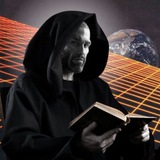
The Tantric Alchemist: Thomas Vaughan and the Indian Tantric Tradition https://amzn.asia/d/0auKwDCw
Amazon
The Tantric Alchemist: Thomas Vaughan and the Indian Tantric Tradition
The Tantric Alchemist: Thomas Vaughan and the Indian Tantric Tradition
🔥1
Richard Ruach's Research Center
The Tantric Alchemist: Thomas Vaughan and the Indian Tantric Tradition https://amzn.asia/d/0auKwDCw
Surprisingly good. Levenda is skilled in both Sanskrit and Old Chinese, so this book is a comparative study of East and West alchemy.
For people who deny that Western Alchemy was ever "internal", this work serves as a counterpoint. Although the language differs many metaphors do not and by using the Eastern systems as a "map" one can piece together the fragments of the western tradition.
All this plus it is embedded in a biography on Thomas Vaughan (the Alchemistwho "gives it all away").
Comes as a high recommendation for anyone wanting to get into western alchemy or the Western Tradition in General. ❤️
For people who deny that Western Alchemy was ever "internal", this work serves as a counterpoint. Although the language differs many metaphors do not and by using the Eastern systems as a "map" one can piece together the fragments of the western tradition.
All this plus it is embedded in a biography on Thomas Vaughan (the Alchemistwho "gives it all away").
Comes as a high recommendation for anyone wanting to get into western alchemy or the Western Tradition in General. ❤️
🥰7🔥4
Forwarded from Enigmatic Ghost-cluster
🥰18❤🔥5🤣2🤯1🤮1🌭1😭1
Forwarded from Wodewose
We're holding esoteric fight club, who do you think wins the cage match
Anonymous Poll
39%
Julius Evola (with a sword cane)
10%
Manly P Hall (very manly)
11%
A bronze golem posessed by Christian Rosenkreuz
22%
Sir Christopher Lee (wizard)
2%
Colonel Olcott (has a musket)
9%
Rene Guenon (has a suicide vest bc he's brown)
7%
Madame Balavtsky (makes Olcott do everything because he's pussy-whipped)
Original Post by Mat Ravignat
______
Éliphas Lévi’s Woman Adept-Teacher in London?
In 1854 after a rather acrimonious and expensive end of his relationship Lévi sought better fortunes and much needed rest in London. He had after all just finished his massive book ‘Dogme et Rituel de la Haute Magie’ (trans. as 'Transcendental Magic: Its Doctrine and Ritual', by A.E. Waite) and been through a really rough break-up.
Relying on Lévi’s letters, in my book 'The Rosicrucian Practices of Éliphas Lévi,' I pointed out that Lévi was already in contact with interested esoteric parties in London before leaving France and that he did not so much go there as a student but as a teacher. He had hoped teaching might help him financially and the fact that he went there as a teacher is also obvious when we keep the following facts in mind about his life:
--Esoteric themes are already evident in his works as early 1845, almost a decade before his trip and he was already a student of Wronski and other Polish R+C adepts for some time
--Lévi already had ‘disciples’, one of these was Adolphe Desbarolles the Count of d’Autencourt
--To write a book such as Dogme et Rituel de la Haute Magie (over 700 pages in length) requires a vast knowledge of esoteric subjects and practices acquired over several years.
--That highly influential book was not actually published yet when he left for England and he was already being welcomed as an initiate there and being asked to demonstrate his magical skills, and this by English aristocrats. We may rightly ask, as does one of his Biographers, Arnaud de L’Estoile, why English aristocrats would welcome a failed clergyman and radical working-class socialist convict with little reputation to speak of into their circle, if he was not already a high initiate and had not something precious to teach or give them?
--Before leaving he says he already has contacts and a list of prominent aristocratic individuals, which include Sir Edward Bulwer-Lytton and Dr. Ashburner.
Regarding the spiritual level of the esotericists he found in England he was quite disappointed as his letters show. It is clear by them that Lévi considers all he met in England as his inferiors or at best just friends. There is however one very important exception to this and it is a woman.
It is through Bulwer-Lytton, that Lévi was introduced to a High Degree Initiate. Here is what Lévi himself says in ‘Dogme et Rituel de la Haute Magic’ about her :
""I saw a woman dressed all in black and which I recognized quickly and in a precise manner to be an initiate, not of the first order, but of an elevated high degree. We had a few very long conversations in which she always insisted on the need to engage in practice in order to compliment initiation.""
That Lévi was already able to recognize such a High-Level Initiate ‘in a precise manner’ is interesting. Might this be a blind for and exchange of tokens and words of recognition, it is interesting to speculate.
Incidentally, during the first meeting with this unidentified woman, Bulwer-Lytton is referred to as a mutual friend and not as Levi's teacher.
Though Lévi does not say specifically that this woman became his teacher, the fact that they are having long discussions and that she convinces him to attempt several practical experiences of evocation seems to indicate, at least regarding practice and when we place the mysoginy of the times aside, that there was a relationship of Master to Student.
How involved was this woman in the actual experiments he undertook after meeting her is hard to tell. At several places Lévi uses the singular when speaking of the spiritual preparations he needed to do for the operations but at other places he uses the plural (nous and notre) as regards to the actual performance of the evocations. In addition, Lévi did not go to London as a man of means, very much the contrary, as his trip had to financed by a wealthy patron and his Ex was literally selling his furniture and books to pay off debts clearly show.
______
Éliphas Lévi’s Woman Adept-Teacher in London?
In 1854 after a rather acrimonious and expensive end of his relationship Lévi sought better fortunes and much needed rest in London. He had after all just finished his massive book ‘Dogme et Rituel de la Haute Magie’ (trans. as 'Transcendental Magic: Its Doctrine and Ritual', by A.E. Waite) and been through a really rough break-up.
Relying on Lévi’s letters, in my book 'The Rosicrucian Practices of Éliphas Lévi,' I pointed out that Lévi was already in contact with interested esoteric parties in London before leaving France and that he did not so much go there as a student but as a teacher. He had hoped teaching might help him financially and the fact that he went there as a teacher is also obvious when we keep the following facts in mind about his life:
--Esoteric themes are already evident in his works as early 1845, almost a decade before his trip and he was already a student of Wronski and other Polish R+C adepts for some time
--Lévi already had ‘disciples’, one of these was Adolphe Desbarolles the Count of d’Autencourt
--To write a book such as Dogme et Rituel de la Haute Magie (over 700 pages in length) requires a vast knowledge of esoteric subjects and practices acquired over several years.
--That highly influential book was not actually published yet when he left for England and he was already being welcomed as an initiate there and being asked to demonstrate his magical skills, and this by English aristocrats. We may rightly ask, as does one of his Biographers, Arnaud de L’Estoile, why English aristocrats would welcome a failed clergyman and radical working-class socialist convict with little reputation to speak of into their circle, if he was not already a high initiate and had not something precious to teach or give them?
--Before leaving he says he already has contacts and a list of prominent aristocratic individuals, which include Sir Edward Bulwer-Lytton and Dr. Ashburner.
Regarding the spiritual level of the esotericists he found in England he was quite disappointed as his letters show. It is clear by them that Lévi considers all he met in England as his inferiors or at best just friends. There is however one very important exception to this and it is a woman.
It is through Bulwer-Lytton, that Lévi was introduced to a High Degree Initiate. Here is what Lévi himself says in ‘Dogme et Rituel de la Haute Magic’ about her :
""I saw a woman dressed all in black and which I recognized quickly and in a precise manner to be an initiate, not of the first order, but of an elevated high degree. We had a few very long conversations in which she always insisted on the need to engage in practice in order to compliment initiation.""
That Lévi was already able to recognize such a High-Level Initiate ‘in a precise manner’ is interesting. Might this be a blind for and exchange of tokens and words of recognition, it is interesting to speculate.
Incidentally, during the first meeting with this unidentified woman, Bulwer-Lytton is referred to as a mutual friend and not as Levi's teacher.
Though Lévi does not say specifically that this woman became his teacher, the fact that they are having long discussions and that she convinces him to attempt several practical experiences of evocation seems to indicate, at least regarding practice and when we place the mysoginy of the times aside, that there was a relationship of Master to Student.
How involved was this woman in the actual experiments he undertook after meeting her is hard to tell. At several places Lévi uses the singular when speaking of the spiritual preparations he needed to do for the operations but at other places he uses the plural (nous and notre) as regards to the actual performance of the evocations. In addition, Lévi did not go to London as a man of means, very much the contrary, as his trip had to financed by a wealthy patron and his Ex was literally selling his furniture and books to pay off debts clearly show.
❤🔥8❤1