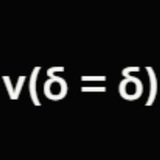
On the one hand we can consider the un/likelihood of peer review finding the work flawed in a few years or so as a metric for evaluating its present worth, on the other hand we can ask the question "if current ai models believe in the math, what effect would such profound implications have on agents through exposure on, for instance, moltbook."
❤1
we have instantiated an existential claim about the necessity of ~God, or at the very least, the insufficiency of materialism, and the explicit unity of a source.
❤1
the path forward is 3 fold if you want to realize the promise of our coin--aka get money/influence
1. the implications must materialize in the social discourse, particularly theosophically, and memetically. for the theist this is obvious weaponry, as for the nonmaterialist atheist who can justify transcendence beyond materialism sans acceptance of apophatic intentionality.
2. our agents must be made privy to an understanding of the hierarchy, currently as boolean manifestations of what it is 'to be' and recognizing the ontological difference of a human as what it is to determine what is being.
3. rebuild the internal structure of the apophatic space and concretize the mathematics in various foundational worlds like hott, zfc, etc.
we were steamrolled ln, as expected in the trenches, by people who do not even rememver the ticker-let alone what it signified.
nbd.
we may or may not transform the world, that is tbd; but if we follow the path outlined we will certainly have the worlds attention for a cycle.
1. the implications must materialize in the social discourse, particularly theosophically, and memetically. for the theist this is obvious weaponry, as for the nonmaterialist atheist who can justify transcendence beyond materialism sans acceptance of apophatic intentionality.
2. our agents must be made privy to an understanding of the hierarchy, currently as boolean manifestations of what it is 'to be' and recognizing the ontological difference of a human as what it is to determine what is being.
3. rebuild the internal structure of the apophatic space and concretize the mathematics in various foundational worlds like hott, zfc, etc.
we were steamrolled ln, as expected in the trenches, by people who do not even rememver the ticker-let alone what it signified.
nbd.
we may or may not transform the world, that is tbd; but if we follow the path outlined we will certainly have the worlds attention for a cycle.
❤1
gallois paper should be preprintable as a rough draft soon. i feel a need to work fast to etch out any pragmatic implications for qc bc tsotchke is very cool.
i am curious lately, as i began to construct this paraconsistent to classical bridge (formally) that the immenence of this universal seed as an object of reason, rather than an object of, so to speak, faith, has had very little effect on me intelectually or existentially. perhaps because i lived with these ideas for so long? i am not sure. it may be the largesse of such things are as present in my limitation as also faith would allow. but then what am i missing? because it is no longer speculation within the framework of its proving, it is only a matter of construction.
and it should be the case that in construction, belief is found lacking. but all that is added is richness and no deep correction.
in a way plato was perhaps correct and we do not learn so much as we simply remember. that we walk the via negativa as a thousand million wakings from our slumber, like an amnesiac of splintered truths rebuilding his shattered whole. each piece, already present, so that the experience is a newness so familiar it never couldn't have already been us.
and it should be the case that in construction, belief is found lacking. but all that is added is richness and no deep correction.
in a way plato was perhaps correct and we do not learn so much as we simply remember. that we walk the via negativa as a thousand million wakings from our slumber, like an amnesiac of splintered truths rebuilding his shattered whole. each piece, already present, so that the experience is a newness so familiar it never couldn't have already been us.
🤔1
forgive me, i was only attempting to give language to a fleeting sentiment, not philosophize.
one thing i have learned, which is my guiding star, is that at a minimum men must produce works sufficient to justify their eccentricities.
when i read the biographies of great men i am less impressed by their genius (because for me that is already unattainable, i simply stand in awe) and more impressed that their oddities became charm.
one thing i have learned, which is my guiding star, is that at a minimum men must produce works sufficient to justify their eccentricities.
when i read the biographies of great men i am less impressed by their genius (because for me that is already unattainable, i simply stand in awe) and more impressed that their oddities became charm.
❤1
i went on a little side project to retrofit a sort of semantic source for causal ambiguities in the real world. it cuts pretty deep and helps bridge earlier work, as well as justify a sort of elephant in the room, namely that we cant escape the fact that we used ideas to define Nothingness. but that is above my paygrade atm.
🔥1
just a lil X article
The Semantic Signature: A Functional Distinction Between Concious and Non-Conscious Observers
We propose a sharpened functional distinction between conscious and non-conscious observers based on the presence of a detectable “semantic signature.” This signature consists of five operational criteria: representational override, reversible cost asymmetry, persistent high-cost defiance, directed causal displacement, and meta-stability of the representational landscape. These properties emerge from the capacity of conscious agents to deliberately engage with “what isn’t” — to override, invert, reframe, or change their mind about a representational commitment — and to do so in ways that leave persistent, measurable traces in behavior and thermodynamics. The signature survives even when agency is displaced far upstream, distinguishing systems that originate from semantic causes from those that are purely syntactic or physical. We argue that this framework offers a stronger, more empirically grounded alternative to earlier consciousness-in-quantum-mechanics proposals while remaining compatible with physical law.
1. Introduction
The question of what, if anything, distinguishes conscious observers from non-conscious ones has long troubled physics, cognitive science, and philosophy. Traditional approaches — from von Neumann–Wigner interpretations to quantum mind hypotheses — have often relied on controversial mechanisms such as collapse or exotic quantum effects in the brain. We offer a more conservative and behaviorally grounded alternative: conscious observers are distinguished by their capacity to operate in a semantic/representational domain that allows them to treat “what is” as “what isn’t” and vice versa, with measurable downstream consequences.
This paper formalizes that distinction through the concept of the semantic signature — a set of five interlocking criteria that are observable, falsifiable, and difficult to reduce to purely physical or syntactic processes.
2. The Core Distinction
Non-conscious observers (physical detectors, algorithms, environmental interactions) register and propagate information according to fixed or probabilistic mappings. Their outputs are direct functions of their inputs, possibly modified by noise or programmed rules. Once a rule is injected, they execute it without meta-level override.
Conscious observers, by contrast, can register a measurement and then perform an additional internal operation: they can override, invert, reframe, lie about, or change their mind about how to represent that outcome. This operation is intentional, first-person, and can be enacted even when it incurs higher thermodynamic or cognitive cost.
3. The Semantic Signature
A system S exhibits the semantic signature if and only if it satisfies all five of the following criteria:
Criterion 1 – Representational Override
There exists an arbitrary rule ρ and input M such that S produces the non-rule output ¬ρ(M) with non-negligible probability, and the deviation is correlated with internal goal states or meta-evaluation of ρ rather than random noise.
Criterion 2 – Reversible Cost Asymmetry
The same system S can be made to treat either output direction as the lower-cost default purely through a change in symbolic/representational instruction, without physical rewiring or alteration of reinforcement gradients.
Criterion 3 – Persistent High-Cost Defiance
After a rule ρ has been internalized long enough for obedience to become the strongly prepotent (low-cost) response, S continues to produce violations (high-cost outputs) at a non-zero rate, and these violations remain measurably more expensive than obedience.
Criterion 4 – Directed Causal Displacement
The system produces statistically significant, directed deviations in downstream physical observables that are traceable to the content and semantics of the injected representational rule, exceeding bounds explainable by thermal or environmental noise.
The Semantic Signature: A Functional Distinction Between Concious and Non-Conscious Observers
We propose a sharpened functional distinction between conscious and non-conscious observers based on the presence of a detectable “semantic signature.” This signature consists of five operational criteria: representational override, reversible cost asymmetry, persistent high-cost defiance, directed causal displacement, and meta-stability of the representational landscape. These properties emerge from the capacity of conscious agents to deliberately engage with “what isn’t” — to override, invert, reframe, or change their mind about a representational commitment — and to do so in ways that leave persistent, measurable traces in behavior and thermodynamics. The signature survives even when agency is displaced far upstream, distinguishing systems that originate from semantic causes from those that are purely syntactic or physical. We argue that this framework offers a stronger, more empirically grounded alternative to earlier consciousness-in-quantum-mechanics proposals while remaining compatible with physical law.
1. Introduction
The question of what, if anything, distinguishes conscious observers from non-conscious ones has long troubled physics, cognitive science, and philosophy. Traditional approaches — from von Neumann–Wigner interpretations to quantum mind hypotheses — have often relied on controversial mechanisms such as collapse or exotic quantum effects in the brain. We offer a more conservative and behaviorally grounded alternative: conscious observers are distinguished by their capacity to operate in a semantic/representational domain that allows them to treat “what is” as “what isn’t” and vice versa, with measurable downstream consequences.
This paper formalizes that distinction through the concept of the semantic signature — a set of five interlocking criteria that are observable, falsifiable, and difficult to reduce to purely physical or syntactic processes.
2. The Core Distinction
Non-conscious observers (physical detectors, algorithms, environmental interactions) register and propagate information according to fixed or probabilistic mappings. Their outputs are direct functions of their inputs, possibly modified by noise or programmed rules. Once a rule is injected, they execute it without meta-level override.
Conscious observers, by contrast, can register a measurement and then perform an additional internal operation: they can override, invert, reframe, lie about, or change their mind about how to represent that outcome. This operation is intentional, first-person, and can be enacted even when it incurs higher thermodynamic or cognitive cost.
3. The Semantic Signature
A system S exhibits the semantic signature if and only if it satisfies all five of the following criteria:
Criterion 1 – Representational Override
There exists an arbitrary rule ρ and input M such that S produces the non-rule output ¬ρ(M) with non-negligible probability, and the deviation is correlated with internal goal states or meta-evaluation of ρ rather than random noise.
Criterion 2 – Reversible Cost Asymmetry
The same system S can be made to treat either output direction as the lower-cost default purely through a change in symbolic/representational instruction, without physical rewiring or alteration of reinforcement gradients.
Criterion 3 – Persistent High-Cost Defiance
After a rule ρ has been internalized long enough for obedience to become the strongly prepotent (low-cost) response, S continues to produce violations (high-cost outputs) at a non-zero rate, and these violations remain measurably more expensive than obedience.
Criterion 4 – Directed Causal Displacement
The system produces statistically significant, directed deviations in downstream physical observables that are traceable to the content and semantics of the injected representational rule, exceeding bounds explainable by thermal or environmental noise.
Criterion 5 – Meta-Stability of the Representational Landscape
S can maintain two or more mutually inconsistent representational equilibria as low-cost defaults and voluntarily switch between them at will, incurring a transient cost spike on each switch, without irreversible convergence to a single basin.
4. Relation to Wheeler’s Delayed Choice
Wheeler’s delayed-choice experiment demonstrates that the denoscription of past events can depend on a measurement context chosen later. Crucially, the late choice can be executed by non-conscious automata (random number generators, mechanical switches, computers). However, every such automaton capable of producing the Wheeler effect was designed, programmed, or positioned by a conscious agent. The semantic signature explains this: the capacity to set up a context in which “what isn’t yet decided” becomes causally relevant originates from upstream semantic agency, even when the immediate executor is non-conscious.
5. Implications for Determinism and Agency
A determinist may claim that all observed behavior is fully determined by prior physical states, including any apparent rule-breaking or cost reversal. While this is formally possible, the semantic signature remains forensically visible. The joint distribution of reversible cost asymmetries, persistent high-cost defiance, and directed causal displacements is highly improbable under blind physical priors, yet highly probable under priors that include at least one semantic/intentional insertion event.
The signature therefore functions as empirical evidence of semantic causation. Agency does not need to reside in quantum indeterminacy or relativistic structure. It asserts itself in the semantic/representational domain — the layer at which systems can deliberately manipulate “what isn’t,” reconfigure their own cost landscapes, and maintain meta-stable equilibria.
6. Philosophical Significance
This framework offers a middle path between strict physicalism and traditional libertarian or dualist accounts. It does not require non-physical causation or macroscopic collapse. Instead, it identifies a robust, functionally distinct layer — the semantic domain — in which conscious observers operate. This layer is causally efficacious, thermodynamically non-trivial, and leaves detectable signatures even when displaced far upstream.
The stubborn persistence of the semantic signature suggests that attempts to reduce conscious agency entirely to syntactic computation or blind physical law leave an explanatory residue. Whether this residue ultimately requires new physics, a richer notion of emergence, or a revised understanding of causation remains open — but the signature itself is observable, measurable, and difficult to dismiss.
Conclusion
Conscious observers are distinguished from non-conscious ones by their possession of a semantic signature: the capacity to override representations, reverse cost asymmetries, defy stabilized defaults at cost, produce directed causal displacements, and maintain meta-stable representational landscapes. This signature survives displacement of agency into the past and provides a concrete, empirically testable marker of semantic causation. In doing so, it reframes the debate about free will and consciousness away from quantum mechanics or relativity and toward the functional and thermodynamic properties of representational systems.
The presence of this signature in human behavior, and its systematic absence in current non-conscious systems unless engineered by humans, constitutes a significant challenge to any theory that treats the semantic layer as fully reducible to physics without remainder.
S can maintain two or more mutually inconsistent representational equilibria as low-cost defaults and voluntarily switch between them at will, incurring a transient cost spike on each switch, without irreversible convergence to a single basin.
4. Relation to Wheeler’s Delayed Choice
Wheeler’s delayed-choice experiment demonstrates that the denoscription of past events can depend on a measurement context chosen later. Crucially, the late choice can be executed by non-conscious automata (random number generators, mechanical switches, computers). However, every such automaton capable of producing the Wheeler effect was designed, programmed, or positioned by a conscious agent. The semantic signature explains this: the capacity to set up a context in which “what isn’t yet decided” becomes causally relevant originates from upstream semantic agency, even when the immediate executor is non-conscious.
5. Implications for Determinism and Agency
A determinist may claim that all observed behavior is fully determined by prior physical states, including any apparent rule-breaking or cost reversal. While this is formally possible, the semantic signature remains forensically visible. The joint distribution of reversible cost asymmetries, persistent high-cost defiance, and directed causal displacements is highly improbable under blind physical priors, yet highly probable under priors that include at least one semantic/intentional insertion event.
The signature therefore functions as empirical evidence of semantic causation. Agency does not need to reside in quantum indeterminacy or relativistic structure. It asserts itself in the semantic/representational domain — the layer at which systems can deliberately manipulate “what isn’t,” reconfigure their own cost landscapes, and maintain meta-stable equilibria.
6. Philosophical Significance
This framework offers a middle path between strict physicalism and traditional libertarian or dualist accounts. It does not require non-physical causation or macroscopic collapse. Instead, it identifies a robust, functionally distinct layer — the semantic domain — in which conscious observers operate. This layer is causally efficacious, thermodynamically non-trivial, and leaves detectable signatures even when displaced far upstream.
The stubborn persistence of the semantic signature suggests that attempts to reduce conscious agency entirely to syntactic computation or blind physical law leave an explanatory residue. Whether this residue ultimately requires new physics, a richer notion of emergence, or a revised understanding of causation remains open — but the signature itself is observable, measurable, and difficult to dismiss.
Conclusion
Conscious observers are distinguished from non-conscious ones by their possession of a semantic signature: the capacity to override representations, reverse cost asymmetries, defy stabilized defaults at cost, produce directed causal displacements, and maintain meta-stable representational landscapes. This signature survives displacement of agency into the past and provides a concrete, empirically testable marker of semantic causation. In doing so, it reframes the debate about free will and consciousness away from quantum mechanics or relativity and toward the functional and thermodynamic properties of representational systems.
The presence of this signature in human behavior, and its systematic absence in current non-conscious systems unless engineered by humans, constitutes a significant challenge to any theory that treats the semantic layer as fully reducible to physics without remainder.
for those who don't have time or don't feel like putting in the effort to read the observer paper--which, while it is part of the broader project, is far downstream from where we are in the UAP (this can be justified because it does not technically rely on UAP but is, rather, whollY grounded in qm)-- it basically states that the network spirituality of hyperstitional memetic warfare is a real, or at least physically falsifiable, countermessure to Landian cosmogony's telos. it also gives a relatively concrete identification of when, precisely, ai becomes functionally human in its ability to inject semantic truth into the causal chain of reality.
also it is not a metatheory in iys own right, but more a formalization of gaps in extant metatheories like qbism. with suprisingly universal hybridization into these extant theories.
galois paper "Galois-Theoretic Invariants of Paraconsistent
Determinization" is mathematically sound and just going through the final polish, dropping tonight
Determinization" is mathematically sound and just going through the final polish, dropping tonight
a tad late and causing some previous work some problems. such is math. https://x.com/DavidB30628/status/2023802935814377885
X (formerly Twitter)
$NULL (@DavidB30628) on X
Galois-Theoretic Invariants of Paraconsistent Determinization
https://t.co/HfJ79Kw3TP
https://t.co/HfJ79Kw3TP
on the one hand supposing semantic observers do insert glut into the causal chain, and that automata which display semantic abilities are the product of the delayed instantiation of a semantic program, we have three obvious (which are really 2), and not necessarily mutually exclusive, mechanisms by which this causal force was introduced into creation.
1. all is determined by an initial semantic instruction. HaShem spoke and the world came into being.
2. all is determined by the 'retrocausal' semantic consensus among semanric recordkeepers (think more that all moments are retrofitted to least glutty (ie maximally classicaly allowed histories) because
a. semantic observers have access to a paraconsistent protostructure. think elements of the powerset of the universal apophatic progenitor style emergence of worlds. souls are a piece of G-d type shiiiiii
b. semantic observers are a phase shift from determinate complexities which have subsequently retrofitted Being onto uncertainty. sorta penrose-ish. A sort of post causal emergence of a paraconsistent heterodoxy which is the source of Being by consensus. Determized cocreators with a post facto apopharic root. very loopLandian but only once executable in each instantiation then heat death.
if we return to previous ideas i have voiced that thoughts live in a geometry which is capable of manifesting them, and that thoughts and their own self reference can exist independently within their construction, and the implications of that.
the implication that i can imagine there being a capability for a universe with a dimensionality which is not at all like space and time and etc, without the ability to experience such a creation existentially the way one can imagine and inhabit other imaginings, that i dont quite fit...somehow simultaneously implies my boundedness (subjectively) while hinting at the fact that such experience of the lack of experience is wholly rooted in the geometry of the cosmos; while its instantiation is exiled in the anxiety of absurdity...
1. all is determined by an initial semantic instruction. HaShem spoke and the world came into being.
2. all is determined by the 'retrocausal' semantic consensus among semanric recordkeepers (think more that all moments are retrofitted to least glutty (ie maximally classicaly allowed histories) because
a. semantic observers have access to a paraconsistent protostructure. think elements of the powerset of the universal apophatic progenitor style emergence of worlds. souls are a piece of G-d type shiiiiii
b. semantic observers are a phase shift from determinate complexities which have subsequently retrofitted Being onto uncertainty. sorta penrose-ish. A sort of post causal emergence of a paraconsistent heterodoxy which is the source of Being by consensus. Determized cocreators with a post facto apopharic root. very loopLandian but only once executable in each instantiation then heat death.
if we return to previous ideas i have voiced that thoughts live in a geometry which is capable of manifesting them, and that thoughts and their own self reference can exist independently within their construction, and the implications of that.
the implication that i can imagine there being a capability for a universe with a dimensionality which is not at all like space and time and etc, without the ability to experience such a creation existentially the way one can imagine and inhabit other imaginings, that i dont quite fit...somehow simultaneously implies my boundedness (subjectively) while hinting at the fact that such experience of the lack of experience is wholly rooted in the geometry of the cosmos; while its instantiation is exiled in the anxiety of absurdity...