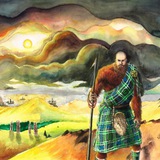
Through all this, we find that ancient Celts considered Cernunnos an important deity as they were also people who dwelt in and around wilderness areas. It was vital to their culture and everyday livelihood, unfortunately there are no recorded myths or literature that directly mention the figure of Cernunnos.
The mystery surrounding him resonates and mystifies us like the stag in its full glory, standing proud, looking down at a wilderness kingdom where he is its savage king.
No civilization to be found, only an ancient, primordial presence.
The mystery surrounding him resonates and mystifies us like the stag in its full glory, standing proud, looking down at a wilderness kingdom where he is its savage king.
No civilization to be found, only an ancient, primordial presence.
Forwarded from Hyperborean Radio (Uncensored)
April 1st is also the Holiday of Veneralia a day originally dedicated to Fortuna the Manly but later dedicated to Venus the Changer of hearts. It was a holiday meant to turn lustful feelings to one of love and procreation. A holiday celebrating the health of sexuality and hoping to dissuade and remove the more lustful and degenerate acts. Replacing them with the generate form of sex and procreation.
Forwarded from Hyperborean Radio (Uncensored)
Tomorrow is April Fool's Day. While at times the origins of this Holiday is said to be in the mockery of pagans by the Church. In it I find the spirit of the Trickster, that freedom that comes with skating the rules and letting loose. It is a day to remember the Trickster Gods and Spirits of Europe. As well as the many gifts that were given by them. Rubezahl gave us the spinning wheel and Sourdough, Hermes gave us the alphabet and lyre, Prometheus gave us fire, Loki gave the gifts and tools of the gods, Veles taught us magic, Puck aids in our daily life, etc. It is a day to make them laugh and to remind ourselves not to take things too seriously. So whether we call it April Fools , Puck's day, Loki's day or whatever we wish to call it take some time in that day to have a bit of fun.-TAO
Artio - Bear goddess of Spring
Revered among the Helvetii tribe, a people of Celtic descent living in the Swiss plateau, Artio is a relatively obscure deity that is associated with the renewal that Springtime brings. She might also be seen as a protector of bears, wildlife and fertility.
This is equally fascinating, knowing that bear females often give birth during hibernation and nurse their cubs in the den until spring arrives, emerging with new life!
Revered among the Helvetii tribe, a people of Celtic descent living in the Swiss plateau, Artio is a relatively obscure deity that is associated with the renewal that Springtime brings. She might also be seen as a protector of bears, wildlife and fertility.
This is equally fascinating, knowing that bear females often give birth during hibernation and nurse their cubs in the den until spring arrives, emerging with new life!
Megalesia - Week of the Great Mother
Historically in Ancient Rome, this week was dedicated to the Cybele, the Great Mother of the gods. A great festival noscriptd “Megalesia”, commenced around April 4th and spanned the entire week, rife with plays, entertainment, and chariot races in her honor.
She is a goddess of healing, fertility and protection during times of war. Her domain also spans the wild, indicated by her lion companions.
Historically in Ancient Rome, this week was dedicated to the Cybele, the Great Mother of the gods. A great festival noscriptd “Megalesia”, commenced around April 4th and spanned the entire week, rife with plays, entertainment, and chariot races in her honor.
She is a goddess of healing, fertility and protection during times of war. Her domain also spans the wild, indicated by her lion companions.
We just watched this with the kids. Although a children's movie, it places great importance on seeing through a child's eyes and the power of belief. It is also neat because it takes place during Easter. Worth a watch. https://youtu.be/aPLiBxhoug0
Basajuan – Lord of the Forest
The Basque people of Northern Spain give credence to a beast of the wild that makes its home in the wilderness as its protector.
The primal Basajuan is described as a large, hairy, human-like creature who lives in crevices and caves deep in the backwoods of the Pyrenees, the mountain range on the border of France and Spain.
The myth of the Basajuan goes back thousands of years, and some compare him to the Yeti of the Himalayas.
Although his imposing massive frame can be intimidating and terrifying, there are tales that describe him as an amiable giant: A guardian of the woods, flocks of sheep and an ally to local shepherds, keeping wolves at bay.
Other stories mention he would call out to warn farmers of perilous storms and to shelter their livestock, bringing them in from their mountain pastures.
There are also mentions of a female counterpart to the Basajuan, called the Basandere, who looks much like him in appearance, but lacks a beard.
The Basque people of Northern Spain give credence to a beast of the wild that makes its home in the wilderness as its protector.
The primal Basajuan is described as a large, hairy, human-like creature who lives in crevices and caves deep in the backwoods of the Pyrenees, the mountain range on the border of France and Spain.
The myth of the Basajuan goes back thousands of years, and some compare him to the Yeti of the Himalayas.
Although his imposing massive frame can be intimidating and terrifying, there are tales that describe him as an amiable giant: A guardian of the woods, flocks of sheep and an ally to local shepherds, keeping wolves at bay.
Other stories mention he would call out to warn farmers of perilous storms and to shelter their livestock, bringing them in from their mountain pastures.
There are also mentions of a female counterpart to the Basajuan, called the Basandere, who looks much like him in appearance, but lacks a beard.
April in Ireland
She hath a woven garland all of the sighing sedge,
And all her flowers are snowdrops grown on the winter’s edge:
The golden looms of Tir na n’Og wove all the winter through
Her gown of mist and raindrops shot with cloudy blue.
Sunlight she holds in one hand, and rain she scatters after,
And through the rainy twilight we hear her fitful laughter.
She shakes down on her flowers the snows less white than they,
Then quickens with her kisses the folded “knots o’ May.”
She seeks the summer-lover that never shall be hers,
Fain for gold leaves of autumn she passes by the furze,
Though buried gold it hideth : she scorns her sedgy crown,
And pressing blindly sunwards she treads her snowdrops down.
Her gifts are all a fardel of wayward smiles and tears,
Yet hope she also holders, this daughter of the years—
A hope that blossoms faintly set upon sorrow’s edge :
She hath a woven garland all of the sighing sedge.
She hath a woven garland all of the sighing sedge,
And all her flowers are snowdrops grown on the winter’s edge:
The golden looms of Tir na n’Og wove all the winter through
Her gown of mist and raindrops shot with cloudy blue.
Sunlight she holds in one hand, and rain she scatters after,
And through the rainy twilight we hear her fitful laughter.
She shakes down on her flowers the snows less white than they,
Then quickens with her kisses the folded “knots o’ May.”
She seeks the summer-lover that never shall be hers,
Fain for gold leaves of autumn she passes by the furze,
Though buried gold it hideth : she scorns her sedgy crown,
And pressing blindly sunwards she treads her snowdrops down.
Her gifts are all a fardel of wayward smiles and tears,
Yet hope she also holders, this daughter of the years—
A hope that blossoms faintly set upon sorrow’s edge :
She hath a woven garland all of the sighing sedge.
Arawn - God of the Welsh underworld
Life after death in the belief of the ancient Welshmen was called Annwn, a beautiful and pleasant otherworld.
Presiding over Annwn justly and fairly, is Arawn, who is also a powerful magician and master huntsman. Annwn’s Location is described as off of the coast of Wales, a kingdom below sea level, or under the ground.
Arawn is also a masterful magician, able to exchange appearances with the Welsh hero Pwyll for a whole year, effectively fooling his own wife.
He also is described as a skilled hunter who loves sport. Every day, he and his court hunts, led by his otherworldly white-eared red-eyed dogs.
Sadly, with the christianization of the British Isles, his association with the afterlife led to his demonization. Annwn is then associated with the christian hell and becomes a place for the departed souls of the damned. Arawn takes the mantle of “lord of the damned” and his dogs essentially become hellhounds, hunting the spirits of the damned.
Life after death in the belief of the ancient Welshmen was called Annwn, a beautiful and pleasant otherworld.
Presiding over Annwn justly and fairly, is Arawn, who is also a powerful magician and master huntsman. Annwn’s Location is described as off of the coast of Wales, a kingdom below sea level, or under the ground.
Arawn is also a masterful magician, able to exchange appearances with the Welsh hero Pwyll for a whole year, effectively fooling his own wife.
He also is described as a skilled hunter who loves sport. Every day, he and his court hunts, led by his otherworldly white-eared red-eyed dogs.
Sadly, with the christianization of the British Isles, his association with the afterlife led to his demonization. Annwn is then associated with the christian hell and becomes a place for the departed souls of the damned. Arawn takes the mantle of “lord of the damned” and his dogs essentially become hellhounds, hunting the spirits of the damned.
This is of course nonsense. Just one of the many coverups by the church to suppress and eradicate pagan spirituality and more effectively take power as the religion of the land.
The Daghda - Good god of the Celts
One of the prominent figures in the Tuatha Dé Danann of the Celtic pantheon, is the Daghda, the good god.
This noscript does not mean he is good in the moral sense, though he might be so, but that he is very skillful, or even masterful (good) at many things.
We gain a glimpse of how the Daghda was bequeathed his honorific noscript in The Second Battle of Magh Tuiread where it reads:
“The Dagda said, “The power which you boast, I will wield it all myself.”
“You are the Dagda [‘the Good God’]!” said everyone, and “Dagda” stuck to him from that time on.
One of the prominent figures in the Tuatha Dé Danann of the Celtic pantheon, is the Daghda, the good god.
This noscript does not mean he is good in the moral sense, though he might be so, but that he is very skillful, or even masterful (good) at many things.
We gain a glimpse of how the Daghda was bequeathed his honorific noscript in The Second Battle of Magh Tuiread where it reads:
“The Dagda said, “The power which you boast, I will wield it all myself.”
“You are the Dagda [‘the Good God’]!” said everyone, and “Dagda” stuck to him from that time on.
He was bestowed kingship between Nuada of the Silver hand, and Lugh of the Long Arm, over all of Ireland and chieftain of the Tuatha Dé Danann.
He is married to the Morrigan, and is said to have had five children: Aengus, Cermait, Aed, Brigid, and Bobd Derg. All are part of the tribe of the children of Danu, the gods of Ireland.
The Daghda is also said to have been brothers with the gods Nuada and Ogma.
The good god possessed very powerful items that are legendary in their nature.
He carried with him the magical cauldron, Coire Ansic, which could never be emptied of its endless food supply.
He is married to the Morrigan, and is said to have had five children: Aengus, Cermait, Aed, Brigid, and Bobd Derg. All are part of the tribe of the children of Danu, the gods of Ireland.
The Daghda is also said to have been brothers with the gods Nuada and Ogma.
The good god possessed very powerful items that are legendary in their nature.
He carried with him the magical cauldron, Coire Ansic, which could never be emptied of its endless food supply.
He wielded a gigantic club that had both death dealing and life giving properties.
In “the Intoxication of the Ulaid” it is described as being:
“…a dreadful iron club, one end violent, the other mild. This is his game and his feat: he lays the violent end across the heads of the nine men so that they die in an instant; then he lays the gentle end across them so that they are brought back to life in an instant.”
One of his greatest possessions was his Four-Cornered Harp, named Uaithne, which could alter people’s emotions from sorrow to joy or vice versa, and he could command the seasons with it with sweet melody.
A generous god, who provides for those who are descendants of the people of the British Isles is the good god Daghda.
There is so much to tell on this awesome deity, but will have to be broken down into multiple posts. There is much to say about him, and rest assured, we will revisit him again in greater detail.
In “the Intoxication of the Ulaid” it is described as being:
“…a dreadful iron club, one end violent, the other mild. This is his game and his feat: he lays the violent end across the heads of the nine men so that they die in an instant; then he lays the gentle end across them so that they are brought back to life in an instant.”
One of his greatest possessions was his Four-Cornered Harp, named Uaithne, which could alter people’s emotions from sorrow to joy or vice versa, and he could command the seasons with it with sweet melody.
A generous god, who provides for those who are descendants of the people of the British Isles is the good god Daghda.
There is so much to tell on this awesome deity, but will have to be broken down into multiple posts. There is much to say about him, and rest assured, we will revisit him again in greater detail.
Apologies for the lack in posting lately.
Life has become hectic for everyone. We all have life to get on with, and that applies to myself as well.
Here at the EDC we aim to give the gift of discovery to the channel subscribers, to hopefully rekindle that desire to honor our pre-christian European history, and to keep the flame alive for those that come after us.
Expect regular broadcasting to continue, and we always suggest that you look to your own people’s stories, folklore, myths and art. It is there that you will find wonderful things about yourself that you never would have dreamed.
We are a proud people and have much to celebrate.
Only by trying to understand our past can we truly know who we are.
Life has become hectic for everyone. We all have life to get on with, and that applies to myself as well.
Here at the EDC we aim to give the gift of discovery to the channel subscribers, to hopefully rekindle that desire to honor our pre-christian European history, and to keep the flame alive for those that come after us.
Expect regular broadcasting to continue, and we always suggest that you look to your own people’s stories, folklore, myths and art. It is there that you will find wonderful things about yourself that you never would have dreamed.
We are a proud people and have much to celebrate.
Only by trying to understand our past can we truly know who we are.
Usinš - Latvian horse god
Right around the corner, on April 23rd the Latvian spring festival of Jurģi will be underway to honor the god Ūsiņš.
The god of the horse in Latvian mythology, he also presides over light and bees, and drives the sun in his chariot across the sky.
His worship can be seen by a report by Jesuit priest Joannis Stribingius in the year 1606:
“They sacrifice to the god of horses, whom they call Deviņ Ūšiņe, each two pieces of money and two pieces of bread and a bit of fat which they throw into the fire.”
Right around the corner, on April 23rd the Latvian spring festival of Jurģi will be underway to honor the god Ūsiņš.
The god of the horse in Latvian mythology, he also presides over light and bees, and drives the sun in his chariot across the sky.
His worship can be seen by a report by Jesuit priest Joannis Stribingius in the year 1606:
“They sacrifice to the god of horses, whom they call Deviņ Ūšiņe, each two pieces of money and two pieces of bread and a bit of fat which they throw into the fire.”
Latvian Dainas, which is a form of music or poetry mentions Ūsiņš singing affectionately:
“Ūsiņš rode to night pasture
With nine horses.
I pray you, brother Ūsiņš,
give me a pair of saddled horses
O Ūsiņš, good man,
Ride with me to night pasture.
I to stoke the fire
You to tend the horses.
Ūsiņš stood idle
at the end of my stable.
O Ūsiņš, old father,
Let us both ride to night pasture,
I to stoke the Fire,
You to tend the horses.
The horses neighed to Ūsiņš
As I was riding to night pasture.
The cows mooed to Māršava
As I was driving them out to pasture.”
“Ūsiņš rode to night pasture
With nine horses.
I pray you, brother Ūsiņš,
give me a pair of saddled horses
O Ūsiņš, good man,
Ride with me to night pasture.
I to stoke the fire
You to tend the horses.
Ūsiņš stood idle
at the end of my stable.
O Ūsiņš, old father,
Let us both ride to night pasture,
I to stoke the Fire,
You to tend the horses.
The horses neighed to Ūsiņš
As I was riding to night pasture.
The cows mooed to Māršava
As I was driving them out to pasture.”