I have come to realize now that I may never read, or hear every single story of the gods and that actually excites me. Our stories cannot be contained in a single book, or even a whole library. They are too countless to number, and I have barely scratched the surface.
I feel my haste with my research and reading is that I thought I had to fill a god-sized void when I left abrahamism, but what I didn’t realize until recently is that it left room for an awakening of sorts.
Some may call this “blood memory.” Remembering something that was hidden, or pulling the veil from your eyes to see how you should always have.
I feel my haste with my research and reading is that I thought I had to fill a god-sized void when I left abrahamism, but what I didn’t realize until recently is that it left room for an awakening of sorts.
Some may call this “blood memory.” Remembering something that was hidden, or pulling the veil from your eyes to see how you should always have.
Returning to the old ways and seeking out the old gods is not an easy task, as much of our lore and gods have been covered up, destroyed or masked under the careful watch of the church. What some don’t realize is that they never left. They have always been with us, both Diasporan and Native European alike.
It came to me as natural as breathing air, and as refreshing as a cool breeze on a stifling day. In seeking to understand our people, our ways, our stories, and our gods.. I am inching closer to understanding myself.
It came to me as natural as breathing air, and as refreshing as a cool breeze on a stifling day. In seeking to understand our people, our ways, our stories, and our gods.. I am inching closer to understanding myself.
This is where I am meant to be, and once I came face to face with that fact, it was like an enormous weight lifted off my shoulders. I just need to slow down and embrace who I truly am, and who I am meant to be.
Be great, Hyperborean. You have much to be proud of.
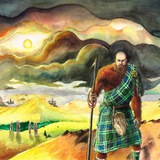
*Note* I do not follow Odin, but he is seen as a god of wisdom or the pursuit of it, hence the images.
Be great, Hyperborean. You have much to be proud of.
*Note* I do not follow Odin, but he is seen as a god of wisdom or the pursuit of it, hence the images.
Until there came three
mighty and benevolent
Æsir to the world
from their assembly.
They found on earth,
nearly powerless,
Ask and Embla,
void of destiny.
Spirit they possessed not,
sense they had not,
blood nor motive powers,
nor goodly colour.
Spirit gave Odin,
sense gave Hoenir,
blood gave Lodur,
and goodly colour
- Völuspá
mighty and benevolent
Æsir to the world
from their assembly.
They found on earth,
nearly powerless,
Ask and Embla,
void of destiny.
Spirit they possessed not,
sense they had not,
blood nor motive powers,
nor goodly colour.
Spirit gave Odin,
sense gave Hoenir,
blood gave Lodur,
and goodly colour
- Völuspá
In azure vaults of heaven soaring bright,
In lofty castles filled with endless joy,
The God of Thunder, Perkons, dwells in light,
And pleasure knows whose sweetness cannot cloy.
The Baltic gods in council gathered there,
Of Destiny's Father tidings to debate.
His will decides the hues-both dark and fair-
And sets the fickle course of mortal fate.
- Canto 1 of Lāčplēsis (The Bear Slayer), Epic poem of Latvia
In lofty castles filled with endless joy,
The God of Thunder, Perkons, dwells in light,
And pleasure knows whose sweetness cannot cloy.
The Baltic gods in council gathered there,
Of Destiny's Father tidings to debate.
His will decides the hues-both dark and fair-
And sets the fickle course of mortal fate.
- Canto 1 of Lāčplēsis (The Bear Slayer), Epic poem of Latvia
"With passing time, its passage soon or late,
My bolts of lightning on the foe will rain,
On all who seek as slaves my people's fate
And strive to crush our spirits for their gain.-
But when the springtime comes with climate fair,
To Latvia's folk sweet showers I will send,
By day will give them clean refreshing air,
And to the darkness sparks of light will lend."
"To them in nature I will stay close by;
My voice of thunder in the sky will ring.
Of Perkons strong the name will never die;
The Latvian folk will ever of it sing.
I wish here now you other gods, apace,
Will follow close upon my guiding will,
And each one swear, at proper time and place,
For humankind a promise to fulfil."
- Perkons, Lāčplēsis
My bolts of lightning on the foe will rain,
On all who seek as slaves my people's fate
And strive to crush our spirits for their gain.-
But when the springtime comes with climate fair,
To Latvia's folk sweet showers I will send,
By day will give them clean refreshing air,
And to the darkness sparks of light will lend."
"To them in nature I will stay close by;
My voice of thunder in the sky will ring.
Of Perkons strong the name will never die;
The Latvian folk will ever of it sing.
I wish here now you other gods, apace,
Will follow close upon my guiding will,
And each one swear, at proper time and place,
For humankind a promise to fulfil."
- Perkons, Lāčplēsis
Freedom monument in Riga, Latvia, where the goddess Milda, the Baltic goddess of love, courtship, friendship and freedom, stands proudly atop. She carries three stars in her hands that represent Lithuania, Latvia, and Estonia.
The Hosting of the Sidhe
THE HOST is riding from Knocknarea
And over the grave of Clooth-na-bare;
Caolte tossing his burning hair
And Niamh calling Away, come away:
Empty your heart of its mortal dream.
The winds awaken, the leaves whirl round,
Our cheeks are pale, our hair is unbound,
Our breasts are heaving, our eyes are a-gleam,
Our arms are waving, our lips are apart;
And if any gaze on our rushing band,
We come between him and the deed of his hand,
We come between him and the hope of his heart.
The host is rushing ’twixt night and day,
And where is there hope or deed as fair?
Caolte tossing his burning hair,
And Niamh calling Away, come away.
- WB Yeats
THE HOST is riding from Knocknarea
And over the grave of Clooth-na-bare;
Caolte tossing his burning hair
And Niamh calling Away, come away:
Empty your heart of its mortal dream.
The winds awaken, the leaves whirl round,
Our cheeks are pale, our hair is unbound,
Our breasts are heaving, our eyes are a-gleam,
Our arms are waving, our lips are apart;
And if any gaze on our rushing band,
We come between him and the deed of his hand,
We come between him and the hope of his heart.
The host is rushing ’twixt night and day,
And where is there hope or deed as fair?
Caolte tossing his burning hair,
And Niamh calling Away, come away.
- WB Yeats
Csillagösvény (Star Trail) by Bertalan Székely 1890. In Hungarian mythology, Prince Csaba was the youngest son of Attila, King of the Huns. A fierce and skilled warrior, he led the Huns to victory in battle.
After Csaba's death, the Huns had no one to take up the mantle. The Huns’ enemy launched an assault on their kingdom. As they met on the field of battle, the enemy generals mocked the Huns, saying "and who will save you now that Csaba is gone?" After those words been spoken, a bright pathway consisting of stars appeared in the night sky and Csaba rode down at the head of an army from the heavens.
After Csaba's death, the Huns had no one to take up the mantle. The Huns’ enemy launched an assault on their kingdom. As they met on the field of battle, the enemy generals mocked the Huns, saying "and who will save you now that Csaba is gone?" After those words been spoken, a bright pathway consisting of stars appeared in the night sky and Csaba rode down at the head of an army from the heavens.