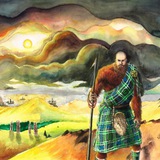
Tuonela - The Finnish land of the Dead
The European concept of the afterlife vary from culture to culture. The only way to know what is in store for us after we pass from this life to the next is a mystery, and that is not necessarily a bad thing. We should become the fullest extent of ourselves, making our ancestors and the gods proud. What will come after this life will come whether we are ready for it or not.
One of the most popular ideas in modern times is to dine with Odin in Valhalla or Freya in Folkvangr, and it is attained through a glorious death in battle where warriors await Ragnarok. Although this is misconceived by many people now, it is widely believed.
For the Celts it was Tír na nÓg, or the land of youth, an island paradise and supernatural realm of everlasting youth, beauty, health, abundance and joy, which is located over the sea, or underground, depending on who you ask.
In ancient Greece, upon death one was greeted by Charon the boatman and ferried to the gates of Hades.
The European concept of the afterlife vary from culture to culture. The only way to know what is in store for us after we pass from this life to the next is a mystery, and that is not necessarily a bad thing. We should become the fullest extent of ourselves, making our ancestors and the gods proud. What will come after this life will come whether we are ready for it or not.
One of the most popular ideas in modern times is to dine with Odin in Valhalla or Freya in Folkvangr, and it is attained through a glorious death in battle where warriors await Ragnarok. Although this is misconceived by many people now, it is widely believed.
For the Celts it was Tír na nÓg, or the land of youth, an island paradise and supernatural realm of everlasting youth, beauty, health, abundance and joy, which is located over the sea, or underground, depending on who you ask.
In ancient Greece, upon death one was greeted by Charon the boatman and ferried to the gates of Hades.
One not as well known afterlife is Tuonela, literally “Tuoni's abode”, afterlife of Finnish mythology. It is described in the Finnish epic Kalevala, as gloomy, with a woman as its guardian.
She is known as “the daughter of Tuoni, Manala’s low maiden” and upon further study I found that Tuoni is the Finnish god of the underworld (Tuonela), and Manala is another word for “underworld.”
Similar to Greece’s Hades, there is a boatman that ferries the recently dead across the black river of Tuonela or one can reach it by a narrow bridge after departing life.
There is eternal darkness in Tuonela, but not in the evil sense, I believe, but can be seen as the inverse of the land of the living, being underground as well.
The Finnish demigod and hero Väinämöinen journeys to Tuonela to gain insight and magical power, but escapes from great peril from the deities who call it home.
Väinämöinen’s trek is so detailed in the Kalevala that it can be seen as a mythological map of the typography of Manala.
She is known as “the daughter of Tuoni, Manala’s low maiden” and upon further study I found that Tuoni is the Finnish god of the underworld (Tuonela), and Manala is another word for “underworld.”
Similar to Greece’s Hades, there is a boatman that ferries the recently dead across the black river of Tuonela or one can reach it by a narrow bridge after departing life.
There is eternal darkness in Tuonela, but not in the evil sense, I believe, but can be seen as the inverse of the land of the living, being underground as well.
The Finnish demigod and hero Väinämöinen journeys to Tuonela to gain insight and magical power, but escapes from great peril from the deities who call it home.
Väinämöinen’s trek is so detailed in the Kalevala that it can be seen as a mythological map of the typography of Manala.
What pre-Christian native Europagan ethnic lore should we discover next?
Final Results
21%
Germanic
34%
Celtic
14%
Hellenistic
17%
Baltic
7%
Slavic
7%
Scandinavian
Forwarded from Hyperborean Radio (Uncensored)
Brigid “The High One” “The Shining One” is a Celtic goddess of immense importance. Born on her holy day of Imbolc with divine flames emanating from her head. She then suckled a cow of the Otherworld with red ears and white fur. From there Brigid became a protector of domestic animals, and the goddess of the divine flame, hearth, and need-fire. Being both the physical flame of the forge and hearth but also the inner flame of divine inspiration. Brigid was a talented poetess and became a patron deity of bards and was regarded as the mother of invention, as the inner flame she embodied became the font through which creativity flowed. Brigid is also at times considered a triple goddess. Being three distinct figures: Brigid the Smith, Brigid the Physician, and Brigid The Female Sage. Due to this many conflicting spouses, parents, and children appear in tales, as such, which Brigid is discussed gets rather confusing at times. Though Brigid herself is often considered the daughter of the Dagda and the Morrigan, or at times the goddess Danu. In one tale during the war with the Fomorians her son Ruadan, died trying to kill Goibniu the Smith God. After his death Brigid invented Keening to grieve for him. In doing so those who were warring lost the will to fight while she did so. Since then Keening became something Irish women did when they lost their loved ones.
Brigid is often conflated with numerous other Celtic goddess such as Scottish Bride, and the Gaulo-Roman Brigantia. It is unclear though if these are the same goddess or just similar ones. Her importance in the British Isles is especially pronounced with the Britonic tribe Brigantes in what is now Northern England being especially devoted to her. In her aspect as a patron goddess of domestic animals she was involved with the production of Milk especially during Imbolc. She also had numerous mythic animals as her companions. Including the Oxen Fe and Men, Torc Triath “The King of Boars” and Cirb “The King of Sheep”. The Women of Ireland also use to keep an eternal flame lit in their house and tend to it as a way of honoring Brigid and asking for her protection and aid. Brigid's role as a physician was seen in her association with healing, of which she has a healing cloak that would heal any illness or injury, in times of great need she would expand this cloak to cover all of Ireland. Protected in the hands of their beloved goddess. Wells were also sacred to Brigid and many in Ireland carry her name.
Brigid is often conflated with numerous other Celtic goddess such as Scottish Bride, and the Gaulo-Roman Brigantia. It is unclear though if these are the same goddess or just similar ones. Her importance in the British Isles is especially pronounced with the Britonic tribe Brigantes in what is now Northern England being especially devoted to her. In her aspect as a patron goddess of domestic animals she was involved with the production of Milk especially during Imbolc. She also had numerous mythic animals as her companions. Including the Oxen Fe and Men, Torc Triath “The King of Boars” and Cirb “The King of Sheep”. The Women of Ireland also use to keep an eternal flame lit in their house and tend to it as a way of honoring Brigid and asking for her protection and aid. Brigid's role as a physician was seen in her association with healing, of which she has a healing cloak that would heal any illness or injury, in times of great need she would expand this cloak to cover all of Ireland. Protected in the hands of their beloved goddess. Wells were also sacred to Brigid and many in Ireland carry her name.
Forwarded from Hyperborean Radio (Uncensored)
She was so beloved that when Christianity came they were unable to get rid of her completely. Instead, they created the figure of St. Brigid of Kildare “The Mary of Ireland” and “The Foster Mother of Christ” to replace her and in many ways carry on her legacy. She maintained her association with the Hearth and healing, among other aspects. Even St. Brigid's Cross is a triskele or Sun wheel shaped for Imbolc, that came from the goddess Brigid. In this way albeit demoted and twisted the goddess' veneration continues to this day. Even as the goddess herself she never truly went away. A shrine to Brigid was in operation until the 18th century, after which it was shut down by force. Numerous revivals of the old ways have allowed Brigid to be one of the few gods to have never truly been forgotten or be lost to their kin. Like most European deities, Brigid is considered a divine ancestor as much as a goddess, and when she is asked for help in regards to wisdom or knowledge she may possess she is likely to deliver a harsh lesson so as to truly learn what you wish to know. Yet to this day she is found in the girls name Brigitte, in any place that still bears her name across Europe and the Diaspora, in the hearth kept in our homes, in the heart of every Irish man or woman who holds her fire in their hearts. Within the modern holidays of Candlemas and Groundhog Day is found the continuation of her sacred holiday of Imbolc. Brigid never left us, she has been with us burning deep within and without around us. We merely need to look to the fire in our homes and in our hearts to find her there with outstretched hands to welcome us home.
The people have spoken! We will pay homage to the deep and extensive myths and lore of the Celts!
Fionn mac Cumhail - Mythical hero of the Celts
One of the greatest heroes in the lore of the ancient Celts is Fionn mac Cumhail, or
Finn MacCool, as he is better known in modern times.
Finn MacCool is spoken of as a warrior-hunter who was leader of the warrior band called the Fianna and is a central character in the Fenian cycle of Irish mythology. In early Irish law the Fianna were referenced as a group of young men known as the ‘Fiann’ who were said to be ‘landless’ / without a home.
During the winter months, the Fianna were given shelter by nobles in exchange for defending their lands and assets. When the summer months came, they roamed the land hunting for their food, which came easy to them as they were skilled hunters.
He was as smart as he was physically powerful, which enabled him to overcome any obstacle he encountered. He was especially wise, as he had eaten the Salmon of Knowledge on one of his adventures, but that is a tale for another post.
One of the greatest heroes in the lore of the ancient Celts is Fionn mac Cumhail, or
Finn MacCool, as he is better known in modern times.
Finn MacCool is spoken of as a warrior-hunter who was leader of the warrior band called the Fianna and is a central character in the Fenian cycle of Irish mythology. In early Irish law the Fianna were referenced as a group of young men known as the ‘Fiann’ who were said to be ‘landless’ / without a home.
During the winter months, the Fianna were given shelter by nobles in exchange for defending their lands and assets. When the summer months came, they roamed the land hunting for their food, which came easy to them as they were skilled hunters.
He was as smart as he was physically powerful, which enabled him to overcome any obstacle he encountered. He was especially wise, as he had eaten the Salmon of Knowledge on one of his adventures, but that is a tale for another post.
Finn encounters Niamh, who comes from the Otherworld, or Tír na nÓg, but I’m not going to spoil that one for you either. You can enjoy the story for yourself, or wait patiently for the story to be presented.
He is credited with the creation of the Giant’s Causeway in northern Ireland as to make a passage to Scotland to fight the giant Benandonner, who follows him back to Ireland, where Finn hides, disguised as a baby, but once again.. I will not spoil that exciting tale.
It is said that he never died, but sleeps in a cave surrounded by the Fianna, awaiting the day when he will awake and defend Ireland in her hour of direst need. Another account says he will awaken when the hunting horn of the Fianna is sounded three times, where he will spring up, refreshed and ready to defend the land.
There are many stories about this epic hero and his valiant adventures. I highly suggest looking into the legends of this famous Celtic warrior and his exploits.
He is credited with the creation of the Giant’s Causeway in northern Ireland as to make a passage to Scotland to fight the giant Benandonner, who follows him back to Ireland, where Finn hides, disguised as a baby, but once again.. I will not spoil that exciting tale.
It is said that he never died, but sleeps in a cave surrounded by the Fianna, awaiting the day when he will awake and defend Ireland in her hour of direst need. Another account says he will awaken when the hunting horn of the Fianna is sounded three times, where he will spring up, refreshed and ready to defend the land.
There are many stories about this epic hero and his valiant adventures. I highly suggest looking into the legends of this famous Celtic warrior and his exploits.
Finn MacCool and the Salmon of Knowledge
As a young lad, the youth Demne had to leave his home after his father was killed in a clan battle to live with a wise sage called Finegas.
The old man lived in a cabin or cottage by the River Boyne for quite some time, and was grateful to have the company.
The youth was named “Finn”, which means “fair-haired” after proving to be the strongest and most skilled player at the sport of hurling with other youths near where he lived.
Finn made the decision to reclaim his birthright as the rightful leader of the Fianna by fighting Mac Morna, the man who killed his father, but he knew that he must first become the greatest hunter and wisest poet. So he stayed, for the moment, and studied with Finegas, the wisest man in Ireland.
Finegas had been living by the Boyne, patiently looking seven years for the mythical Salmon of Knowledge. It is said that whoever eats the divine fish would behold all secrets of the world, and absorbing all knowledge.
As a young lad, the youth Demne had to leave his home after his father was killed in a clan battle to live with a wise sage called Finegas.
The old man lived in a cabin or cottage by the River Boyne for quite some time, and was grateful to have the company.
The youth was named “Finn”, which means “fair-haired” after proving to be the strongest and most skilled player at the sport of hurling with other youths near where he lived.
Finn made the decision to reclaim his birthright as the rightful leader of the Fianna by fighting Mac Morna, the man who killed his father, but he knew that he must first become the greatest hunter and wisest poet. So he stayed, for the moment, and studied with Finegas, the wisest man in Ireland.
Finegas had been living by the Boyne, patiently looking seven years for the mythical Salmon of Knowledge. It is said that whoever eats the divine fish would behold all secrets of the world, and absorbing all knowledge.
As the legend goes, Finn was receiving lessons from Finegas when the old man saw a large pink shape coming downstream in their direction. It was none other that the fabled Salmon of Knowledge.
The old sage caught the passing fish, avoiding direct eye contact with it, as looking in its eyes were purported to put a person into a deep slumber. He instructed Finn to tie a piece of cloth around his eyes and Finegas did the same, lest they fall victim to the sleeping gaze.
Now Finegas had caught the legendary Salmon, but was quite exhausted. After the struggle to get the salmon out of the river, he instructed Finn to clean and cook the legendary fish, while Finegas caught a quick nap, and Finn preceded to do so, blindfolded.
So Finn MacCool proceeded to build a fire and set a roasting station for the day’s catch. After a time, turning the spit above the fire upon which the great salmon was roasting, Finn thought to himself that the fish was perfectly cooked.
The old sage caught the passing fish, avoiding direct eye contact with it, as looking in its eyes were purported to put a person into a deep slumber. He instructed Finn to tie a piece of cloth around his eyes and Finegas did the same, lest they fall victim to the sleeping gaze.
Now Finegas had caught the legendary Salmon, but was quite exhausted. After the struggle to get the salmon out of the river, he instructed Finn to clean and cook the legendary fish, while Finegas caught a quick nap, and Finn preceded to do so, blindfolded.
So Finn MacCool proceeded to build a fire and set a roasting station for the day’s catch. After a time, turning the spit above the fire upon which the great salmon was roasting, Finn thought to himself that the fish was perfectly cooked.
He called to Finegas to come over to taste the fish, but as he was turning around a small drop of burning fish oil landed on his thumb. As any of us would do in when our finger is burned, he stuck it in his mouth to stop the pain!
The Salmon was brought over to Finegas, and he immediately he noticed that Finn had a difference about him. There was a light behind his eyes that had not been there before, and a fire burning in his cheeks that shone brightly.
“Did you eat the salmon?” The old man asked.
“I did not eat the salmon” replied Finn, and he explained how he had tasted the Salmon first by sucking on his burned thumb.
It was then that it dawned upon Finegas that it was not his destiny to possess all the knowledge and secrets given by the sacred fish, but that of Finn MacCool’s.
The Salmon was brought over to Finegas, and he immediately he noticed that Finn had a difference about him. There was a light behind his eyes that had not been there before, and a fire burning in his cheeks that shone brightly.
“Did you eat the salmon?” The old man asked.
“I did not eat the salmon” replied Finn, and he explained how he had tasted the Salmon first by sucking on his burned thumb.
It was then that it dawned upon Finegas that it was not his destiny to possess all the knowledge and secrets given by the sacred fish, but that of Finn MacCool’s.
Danu - Mother of the Celtic gods
Next to the the winter goddess Cailleach, Danu is the oldest, most ancient of the Celtic deities.
She is alluded to as their mother as can be seen in the name Tuatha Dé Danann, which means “Tribe” or “people” of the gods of Danu, and this is first attested to in Lebor Gabála Érenn, or the Book of Invasions.
Although she makes no direct appearances in the larger Celtic myths, hints of her presence can be found through the names of some of the lands and bodies of water in the British Isles.
The Danube River, one of Europe’s longest bodies of water, may have been named in her honor.
Next to the the winter goddess Cailleach, Danu is the oldest, most ancient of the Celtic deities.
She is alluded to as their mother as can be seen in the name Tuatha Dé Danann, which means “Tribe” or “people” of the gods of Danu, and this is first attested to in Lebor Gabála Érenn, or the Book of Invasions.
Although she makes no direct appearances in the larger Celtic myths, hints of her presence can be found through the names of some of the lands and bodies of water in the British Isles.
The Danube River, one of Europe’s longest bodies of water, may have been named in her honor.
Being a matronal goddess, she is believed to have suckled the Tuatha Dé at her breast, instilling in them a sense of wisdom.
Many neopagan traditions have added much to Danu’s myth that is not present in traditional Celtic lore, as there is not much there to go on in the first place.
It is this lack of historical information that casts doubt on the claim that she is a “triple goddess”, and apparently she is a blank slate to use as they see fit.
I encourage readers to appreciate her for who she is.. The mother of the Tuatha Dé Danann, the Celtic gods.
Many neopagan traditions have added much to Danu’s myth that is not present in traditional Celtic lore, as there is not much there to go on in the first place.
It is this lack of historical information that casts doubt on the claim that she is a “triple goddess”, and apparently she is a blank slate to use as they see fit.
I encourage readers to appreciate her for who she is.. The mother of the Tuatha Dé Danann, the Celtic gods.
Nicnevin - The Scottish Witch Mother
First appearing in a 16th century poem by Alexander Montgomerie, Nicnevin, known as the Scottish Witch Mother, is often viewed as a witch, the queen of witches, and a fairy queen to boot.
Montgomerie describes her as such in his poem:
"Then a ready company came, soon after close,
Nicnevin with her nymphs, in number enough
With charms from Caithness and the Canonry of Ross
Whose knowledge consists in casting a ball of yarn...
The King of Fairy, and his Court, with the Elf Queen,
with many elvish Incubi was riding that night.”
Considering that fairies with wings and good nature are are not accurate to what fairies truly are, Nicnevin can be seen as a very powerful goddess indeed.
First appearing in a 16th century poem by Alexander Montgomerie, Nicnevin, known as the Scottish Witch Mother, is often viewed as a witch, the queen of witches, and a fairy queen to boot.
Montgomerie describes her as such in his poem:
"Then a ready company came, soon after close,
Nicnevin with her nymphs, in number enough
With charms from Caithness and the Canonry of Ross
Whose knowledge consists in casting a ball of yarn...
The King of Fairy, and his Court, with the Elf Queen,
with many elvish Incubi was riding that night.”
Considering that fairies with wings and good nature are are not accurate to what fairies truly are, Nicnevin can be seen as a very powerful goddess indeed.
One of the more popular cited etymological origins for Nicnevin’s name is the Gaelic “Nic an Neamh,” which is said to translate to “daughter of frenzy.”
Sir Walter Scott gives her a more in-depth denoscription in his book, “Letters on Demonologie and Witchcraft” (1831):
"...a gigantic and malignant female...who rode on the storm and marshalled the rambling host of wanderers under her grim banner. This hag...was called Nicneven in that later system which blended the faith of the Celts and of the Goths on this subject. The great Scottish poet Dunbar has made a spirited denoscription of this Hecate riding at the head of witches and good neighbours (fairies, namely), sorceresses and elves, indifferently, upon the ghostly eve of All-Hallow Mass."
In the folklore, she is described as leading witches and fairies through the darkness of Halloween night, her unnamed King at her side.
Sir Walter Scott gives her a more in-depth denoscription in his book, “Letters on Demonologie and Witchcraft” (1831):
"...a gigantic and malignant female...who rode on the storm and marshalled the rambling host of wanderers under her grim banner. This hag...was called Nicneven in that later system which blended the faith of the Celts and of the Goths on this subject. The great Scottish poet Dunbar has made a spirited denoscription of this Hecate riding at the head of witches and good neighbours (fairies, namely), sorceresses and elves, indifferently, upon the ghostly eve of All-Hallow Mass."
In the folklore, she is described as leading witches and fairies through the darkness of Halloween night, her unnamed King at her side.
Olwyn
In the Welsh myth masterpiece, the Mabinogion, Olwyn is the daughter of the great Ysbaddaden, the Chief of Giants. It is he who is fated to die if she ever married.
A curse is connected with her and Culhwch, royal prince and cousin to King Arthur. The young price is a main figure in the story “Olwyn and Culhwch” found in the Mabinogion. The enchantment affixed Culwch’s future, as Olwyn was the only bride to be his.
Because of his love for his daughter and the threat to his life, Ysbaddaden prepares for any gentlemen callers in pursuit of Olwen by ensuring challenging defenses in his castle. This will be covered at another time, for it deserves a post on its own.
In the Welsh myth masterpiece, the Mabinogion, Olwyn is the daughter of the great Ysbaddaden, the Chief of Giants. It is he who is fated to die if she ever married.
A curse is connected with her and Culhwch, royal prince and cousin to King Arthur. The young price is a main figure in the story “Olwyn and Culhwch” found in the Mabinogion. The enchantment affixed Culwch’s future, as Olwyn was the only bride to be his.
Because of his love for his daughter and the threat to his life, Ysbaddaden prepares for any gentlemen callers in pursuit of Olwen by ensuring challenging defenses in his castle. This will be covered at another time, for it deserves a post on its own.
The hero emerges triumphant as Culhwch rescues the resplendent Olwyn and marries her sealing Ysbaddaden’s doom.
Olwyn is described as a vision of the beautiful, with “hair more yellow than the broom, white skin, rosy cheeks, and pale hands.”
Her movement blossomed trefoils (flowers) with her every step, as her name means “white footprint” or “white track.”
Definitely a beauty to behold, her role in the Mabinogion heralds her as every Welshman’s desire.
Olwyn is described as a vision of the beautiful, with “hair more yellow than the broom, white skin, rosy cheeks, and pale hands.”
Her movement blossomed trefoils (flowers) with her every step, as her name means “white footprint” or “white track.”
Definitely a beauty to behold, her role in the Mabinogion heralds her as every Welshman’s desire.
Personification of the gods
Our gods are terrifying, yet beautiful, loving, yet indifferent, powerful, yet have weaknesses and through all of our attempts to describe and define them, they are as close to us as our mother, father, sisters or brothers.
They are part of our extended family, and deserve the affection reserved for our kin.
Like us, they have wants, desires, contempts, and dislikes. This does not make them less god-like, it just makes us more so like them. Their stories bear witness to this, and by them we can be seen as god-kin.
Taranis and Thor can be felt in the moment between the thunderclap and a lightning strike, the buildup of raw power right before a crashing down of destruction from on high. This is relatable to the pure anger coursing through the veins right before releasing the fury upon a foe.
Our gods are terrifying, yet beautiful, loving, yet indifferent, powerful, yet have weaknesses and through all of our attempts to describe and define them, they are as close to us as our mother, father, sisters or brothers.
They are part of our extended family, and deserve the affection reserved for our kin.
Like us, they have wants, desires, contempts, and dislikes. This does not make them less god-like, it just makes us more so like them. Their stories bear witness to this, and by them we can be seen as god-kin.
Taranis and Thor can be felt in the moment between the thunderclap and a lightning strike, the buildup of raw power right before a crashing down of destruction from on high. This is relatable to the pure anger coursing through the veins right before releasing the fury upon a foe.
Áine and Freyja are felt through the love a husband has for his wife, or lovers fawning over each other, hopelessly lost in each others eyes. This happens every day for our people and is one of the most wonderful (and miserable) experiences.
Goibniu watches over the craftsman who forges through fire, and welcomes the stranger into the home. Our people are industrious and welcome others in to rest from the long road and a meal to loosen the belt a notch or two.
All of these gods are incarnations of an aspect of the Hyperborean race, and can be seen as an “archetype”, but I see them as what they are.. gods of their respective domains.
It is easy to overlook how one is being formed in connection to god or goddess, and the physical changes that we undergo while employed in a hobby or job in relation to a specific deity.
Goibniu watches over the craftsman who forges through fire, and welcomes the stranger into the home. Our people are industrious and welcome others in to rest from the long road and a meal to loosen the belt a notch or two.
All of these gods are incarnations of an aspect of the Hyperborean race, and can be seen as an “archetype”, but I see them as what they are.. gods of their respective domains.
It is easy to overlook how one is being formed in connection to god or goddess, and the physical changes that we undergo while employed in a hobby or job in relation to a specific deity.
Brewers who are large and barrel-chested are like Sucellos, the Gaulish god of alcohol.
Those in warrior professions embody Tyr, god of war and justice, although living your life in opposition to forces opposing your folk is truly being in communion with the vengeful god.
There are many other great examples of how we are literally demigods, who have yet to live up to our full potential. Once we come to terms with that and live up to our full potential, we are on our way to possible deification.
Live to the fullest, Hyperborean. We are the children of gods.
Those in warrior professions embody Tyr, god of war and justice, although living your life in opposition to forces opposing your folk is truly being in communion with the vengeful god.
There are many other great examples of how we are literally demigods, who have yet to live up to our full potential. Once we come to terms with that and live up to our full potential, we are on our way to possible deification.
Live to the fullest, Hyperborean. We are the children of gods.