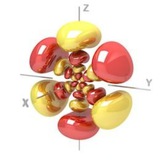
After years there is a new Avogadro 2 release
What's new:
* Insert DNA/RNA dialog @ghutchis (#909)
* Render close contacts @aerkiaga (#898)
* Create new layer from selection @ghutchis (#899)
* Tweak the mesh lighting .. now lights "from the top" @ghutchis (#880)
* Add an initial config widget to set mesh colors and opacity @ghutchis (#877)
* Import and retain space group information @ghutchis (#875)
* Write Gaussian cube files @ghutchis (#873)
* Add plugin to focus or unfocus selection @aerkiaga (#868)
* Implement close contact perception logic @aerkiaga (#862)
* Add formal charge to atom property tables @ghutchis (#839)
* Add support for formal charges @aerkiaga (#831)
* Add setting to reverse direction of scroll-to-zoom @ghutchis (#778)
* Tweak icons for label editor and selection @ghutchis (#776)
* Add tooltips to tools @ghutchis (#777)
* Add label editor to create custom labels @serk12 (#740)
* Add a copy graphics action
https://github.com/OpenChemistry/avogadrolibs/releases/tag/1.96.0
What's new:
* Insert DNA/RNA dialog @ghutchis (#909)
* Render close contacts @aerkiaga (#898)
* Create new layer from selection @ghutchis (#899)
* Tweak the mesh lighting .. now lights "from the top" @ghutchis (#880)
* Add an initial config widget to set mesh colors and opacity @ghutchis (#877)
* Import and retain space group information @ghutchis (#875)
* Write Gaussian cube files @ghutchis (#873)
* Add plugin to focus or unfocus selection @aerkiaga (#868)
* Implement close contact perception logic @aerkiaga (#862)
* Add formal charge to atom property tables @ghutchis (#839)
* Add support for formal charges @aerkiaga (#831)
* Add setting to reverse direction of scroll-to-zoom @ghutchis (#778)
* Tweak icons for label editor and selection @ghutchis (#776)
* Add tooltips to tools @ghutchis (#777)
* Add label editor to create custom labels @serk12 (#740)
* Add a copy graphics action
https://github.com/OpenChemistry/avogadrolibs/releases/tag/1.96.0
GitHub
Release Avogadro 1.96.0 · OpenChemistry/avogadrolibs
Changes
We are pleased to announce the latest release of Avogadro, including piles of bug fixes and feature enhancements, including contributions from @aerkiaga as part of Google Summer of Code.
Th...
We are pleased to announce the latest release of Avogadro, including piles of bug fixes and feature enhancements, including contributions from @aerkiaga as part of Google Summer of Code.
Th...
❤4
Open Access - The importance of stupidity in scientific research
A provocative noscript for an important subject. 😉
https://journals.biologists.com/jcs/article/121/11/1771/30038/The-importance-of-stupidity-in-scientific-research
A provocative noscript for an important subject. 😉
https://journals.biologists.com/jcs/article/121/11/1771/30038/The-importance-of-stupidity-in-scientific-research
The Company of Biologists
The importance of stupidity in scientific research
I recently saw an old friend for the first time in many years. We had been Ph.D. students at the same time, both studying science, although in different areas. She later dropped out of graduate school, went to Harvard Law School and is now a senior lawyer…
PhD position in “Multi-scale atomistic simulations of heterostructures assembled from nanopatterned 2D materials”, HZDR, Dresden, Germany
A fully funded Ph.D. position in atomistic simulations is available immediately in a theory group
“Atomistic Simulations of Materials” (Group Leader Dr. Arkady Krasheninnikov) at the Institute of Ion Beam Physics and Materials Research, Helmholtz-Zentrum Dresden-Rossendorf, Germany.
ln the project “New avenues to nanofabrication: assembly of vertical heterostructures from nanopatterned 2D materials” to be carried out in collaboration with the experimental group of Prof. J. Meyer, University of Tübingen, we will explore fundamentally new ways to arrange matter into arbitrary 3D shapes by stacking 2D materials patterned with focused electron or ion beam. Atomistic simulations are expected to help choosing the optimum parameters for nanostructuring and provide insights into the properties of the heterostructures.
Essential Requirements
* Master degree in solid-state physics or computational physics;
* Good knowledge of theoretical solid state physics and advanced quantum mechanics.
* Excellent noscripting and programming skills;
* Experience with atomistic simulations (molecular dynamics, density-functional theory calculations) is highly desirable but not mandatory;
* Excellent written and oral communication skills in English;
* Readiness to work in an international team and closely collaborate with experimentalists.
Tasks
* Carry out multi-scale atomistic simulations using density-functional theory and analytical potential molecular dynamics aimed at understanding the effects of electron and ion irradiation on 2D materials;
* Carry out electronic structure calculations for 2D materials patterned by the electron beam and their heterostructures;
* Develop the dedicate software for modelling of defect production in two-dimensional materials under irradiation;
* Closely collaborate with the experimental groups involved in the project.
Duration and salary
The total duration of the positions is three years (with possible extension up to 6 months). The starting date is 01.09.2022, or as soon as possible after that date. The salary is based on the collective agreement TVöD-Bund.
How to apply
Interested applicants should submit the complete application consisting of a cover letter, CV, a copy of study records (trannoscript), certificates confirming Master degree, and optionally contact information of two researcher who could give a recommendation through
https://www.hzdr.de/db/Cms?pNid=490&pOid=65943&pContLang=en
The deadline for applications is 01.07.2022. The application should be submitted in English.
For more information, please contact Dr. Arkady Krasheninnikov (a.krasheninnikov@hzdr.de).
See also
https://scholar.google.fi/citations?user=bPC6HXwAAAAJ
https://www.hzdr.de/db/Cms?pOid=46208&pNid=138
A fully funded Ph.D. position in atomistic simulations is available immediately in a theory group
“Atomistic Simulations of Materials” (Group Leader Dr. Arkady Krasheninnikov) at the Institute of Ion Beam Physics and Materials Research, Helmholtz-Zentrum Dresden-Rossendorf, Germany.
ln the project “New avenues to nanofabrication: assembly of vertical heterostructures from nanopatterned 2D materials” to be carried out in collaboration with the experimental group of Prof. J. Meyer, University of Tübingen, we will explore fundamentally new ways to arrange matter into arbitrary 3D shapes by stacking 2D materials patterned with focused electron or ion beam. Atomistic simulations are expected to help choosing the optimum parameters for nanostructuring and provide insights into the properties of the heterostructures.
Essential Requirements
* Master degree in solid-state physics or computational physics;
* Good knowledge of theoretical solid state physics and advanced quantum mechanics.
* Excellent noscripting and programming skills;
* Experience with atomistic simulations (molecular dynamics, density-functional theory calculations) is highly desirable but not mandatory;
* Excellent written and oral communication skills in English;
* Readiness to work in an international team and closely collaborate with experimentalists.
Tasks
* Carry out multi-scale atomistic simulations using density-functional theory and analytical potential molecular dynamics aimed at understanding the effects of electron and ion irradiation on 2D materials;
* Carry out electronic structure calculations for 2D materials patterned by the electron beam and their heterostructures;
* Develop the dedicate software for modelling of defect production in two-dimensional materials under irradiation;
* Closely collaborate with the experimental groups involved in the project.
Duration and salary
The total duration of the positions is three years (with possible extension up to 6 months). The starting date is 01.09.2022, or as soon as possible after that date. The salary is based on the collective agreement TVöD-Bund.
How to apply
Interested applicants should submit the complete application consisting of a cover letter, CV, a copy of study records (trannoscript), certificates confirming Master degree, and optionally contact information of two researcher who could give a recommendation through
https://www.hzdr.de/db/Cms?pNid=490&pOid=65943&pContLang=en
The deadline for applications is 01.07.2022. The application should be submitted in English.
For more information, please contact Dr. Arkady Krasheninnikov (a.krasheninnikov@hzdr.de).
See also
https://scholar.google.fi/citations?user=bPC6HXwAAAAJ
https://www.hzdr.de/db/Cms?pOid=46208&pNid=138
www.hzdr.de
Stellenausschreibungen / Vacancy Notices / Jobs - Helmholtz-Zentrum Dresden-Rossendorf, HZDR
👍4
Dear colleague,
you are invited to register for the seventh QBtopIC event on Friday, June 24th 2022 at 16:00 CEST.
Carole Duboc has invited Max García-Melcher and Vera Krewald for a discussion on the prediction of reaction mechanisms in homogeneous and heterogeneous catalysis. As in all previous QBtopICs, you are welcome to put forward your questions or comments during the session using the Zoom chat function.
Registration is now open: https://forms.gle/2NpCohp8JsgWc9Mq7. You will receive an e-mail with a Zoom link approximately 24 hours before the event.
you are invited to register for the seventh QBtopIC event on Friday, June 24th 2022 at 16:00 CEST.
Carole Duboc has invited Max García-Melcher and Vera Krewald for a discussion on the prediction of reaction mechanisms in homogeneous and heterogeneous catalysis. As in all previous QBtopICs, you are welcome to put forward your questions or comments during the session using the Zoom chat function.
Registration is now open: https://forms.gle/2NpCohp8JsgWc9Mq7. You will receive an e-mail with a Zoom link approximately 24 hours before the event.
Google Docs
QBtopIC Series
The QBtopIC series is a new activity of the QBIC Society (www.qbicsoc.org). In these panel meetings, a discussion leader speaks with a number of invited experts on a topic that is of interest to the wider QBIC community and takes questions from the audience.…
👍2
ASH is a Python-based computational chemistry and QM/MM environment, primarily for molecular calculations in the gas phase, explicit solution, crystal or protein environment. Can do single-point calculations, geometry optimizations, surface scans, molecular dynamics, numerical frequencies etc. using a MM, QM or QM/MM Hamiltonian. Interfaces to popular QM codes: ORCA, xTB, Psi4, PySCF, Dalton, CFour, MRCC.
https://github.com/RagnarB83/ash
https://github.com/RagnarB83/ash
GitHub
GitHub - RagnarB83/ash: ASH is a Python-based computational chemistry and QM/MM environment, primarily for molecular calculations…
ASH is a Python-based computational chemistry and QM/MM environment, primarily for molecular calculations in the gas phase, explicit solution, crystal or protein environment. - RagnarB83/ash
❤7
Speeding Up Molecule Design With a New Technique That Can Delete Single Atoms
https://scitechdaily.com/speeding-up-molecule-design-with-a-new-technique-that-can-delete-single-atoms/
https://scitechdaily.com/speeding-up-molecule-design-with-a-new-technique-that-can-delete-single-atoms/
SciTechDaily
Speeding Up Molecule Design With a New Technique That Can Delete Single Atoms
University of Chicago chemists hope breakthrough can help accelerate drug discovery. Every time a new cancer drug is announced, it represents hundreds of scientists spending years behind the scenes working to design and test a new molecule. The drug has to…
Postdoctoral position available in Prague
Information in the PDF available at the link below.
Apply via https://bit.ly/3bgIaY3
Information in the PDF available at the link below.
Apply via https://bit.ly/3bgIaY3
Fast cheminformatics fingerprint search, anywhere you use Python
Chemfp is an analytics platform for cheminformatics fingerprints. It contains command-line tools and an extensive Python library for fingerprint generation, high-performance similarity search, diversity selection, and exploratory research.
Its market-leading performance and comprehensive API make it easy for you to add fast similarity search anywhere you use Python.
Why chemfp?
* Do you want single-threaded search of 1M 1024-bit fingerprints in under 10 milliseconds?
* Do you want to make a sparse similarity matrix from 1M 2048-bit fingerprints in less than 30 minutes on a four core machine?
* Do you want to include fingerprint similarity results in your Python web application?
* Do you do MaxMin or sphere exclusion diversity selection?
... with fast reload times during development, and without the complexity of using a dedicated search server?
* Do you work with fingerprints from multiple chemistry toolkits, or have custom fingerprint types?
* Do you want command-line tools with sub-second similarity search times?
* Do you program in Python and want to write new fingerprint analysis programs?
* Do you want the option to have the source code with no time-based licensing?
https://chemfp.com/index.html
Chemfp is an analytics platform for cheminformatics fingerprints. It contains command-line tools and an extensive Python library for fingerprint generation, high-performance similarity search, diversity selection, and exploratory research.
Its market-leading performance and comprehensive API make it easy for you to add fast similarity search anywhere you use Python.
Why chemfp?
* Do you want single-threaded search of 1M 1024-bit fingerprints in under 10 milliseconds?
* Do you want to make a sparse similarity matrix from 1M 2048-bit fingerprints in less than 30 minutes on a four core machine?
* Do you want to include fingerprint similarity results in your Python web application?
* Do you do MaxMin or sphere exclusion diversity selection?
... with fast reload times during development, and without the complexity of using a dedicated search server?
* Do you work with fingerprints from multiple chemistry toolkits, or have custom fingerprint types?
* Do you want command-line tools with sub-second similarity search times?
* Do you program in Python and want to write new fingerprint analysis programs?
* Do you want the option to have the source code with no time-based licensing?
https://chemfp.com/index.html
👍3
Theoretical calculations predicted now-confirmed tetraneutron, an exotic state of matter
https://phys.org/news/2022-06-theoretical-now-confirmed-tetraneutron-exotic-state.html
https://phys.org/news/2022-06-theoretical-now-confirmed-tetraneutron-exotic-state.html
phys.org
Theoretical calculations predicted now-confirmed tetraneutron, an exotic state of matter
James Vary has been waiting for nuclear physics experiments to confirm the reality of a "tetraneutron" that he and his colleagues theorized, predicted and first announced during a presentation in the ...
👍1🔥1
Open Access - How Ionization Catalyzes Diels-Alder Reactions
https://chemistry-europe.onlinelibrary.wiley.com/doi/10.1002/chem.202200987
https://chemistry-europe.onlinelibrary.wiley.com/doi/10.1002/chem.202200987
Electrons take the fast and slow lanes at the same time
https://phys.org/news/2022-06-electrons-fast-lanes.html
https://phys.org/news/2022-06-electrons-fast-lanes.html
phys.org
Electrons take the fast and slow lanes at the same time
Imagine a road with two lanes in each direction. One lane is for slow cars, and the other is for fast ones. For electrons moving along a quantum wire, researchers in Cambridge and Frankfurt have discovered ...
Watch "This insane machine can see ATOMS!" on YouTube
https://youtu.be/eYVNZgnQ8gE
https://youtu.be/eYVNZgnQ8gE
YouTube
50,000,000x Magnification
Today's video is about my favorite microscope ever. I did a lot of work in gradschool on this STEM, or Scanning Transmission Electron Microscope, and today I get to share how it works! Extra thanks to the Materials Department at UCSB for letting me film in…
❤2
Many recent density functionals are numerically unstable
(Susi Lehtola, Miguel A. L. Marques)
—
Most computational studies in chemistry and materials science are based on the use of density functional theory. Although the exact density functional is unknown, several density functional approximations (DFAs) offer a good balance of affordable computational cost and semi-quantitative accuracy for applications. The development of DFAs still continues on many fronts, and several new DFAs aiming for improved accuracy are published every year. However, the numerical stability of these DFAs is an often overlooked problem. In this work, we look at all 592 DFAs for three-dimensional systems available in Libxc 5.2.2 and examine the convergence of the density functional total energy based on tabulated atomic Hartree-Fock wave functions. We show that several recent DFAs, including the celebrated SCAN family of functionals, suffer from strong numerical instabilities that make the functionals unsuitable for high-precision studies. In fact, their convergence with respect to quadrature is impractically slow, requiring thousands of radial quadrature points to achieve reliable total energies. These results suggest that numerical stability should be a core consideration in the development of new density functionals.
https://arxiv.org/abs/2206.14062#
(Susi Lehtola, Miguel A. L. Marques)
—
Most computational studies in chemistry and materials science are based on the use of density functional theory. Although the exact density functional is unknown, several density functional approximations (DFAs) offer a good balance of affordable computational cost and semi-quantitative accuracy for applications. The development of DFAs still continues on many fronts, and several new DFAs aiming for improved accuracy are published every year. However, the numerical stability of these DFAs is an often overlooked problem. In this work, we look at all 592 DFAs for three-dimensional systems available in Libxc 5.2.2 and examine the convergence of the density functional total energy based on tabulated atomic Hartree-Fock wave functions. We show that several recent DFAs, including the celebrated SCAN family of functionals, suffer from strong numerical instabilities that make the functionals unsuitable for high-precision studies. In fact, their convergence with respect to quadrature is impractically slow, requiring thousands of radial quadrature points to achieve reliable total energies. These results suggest that numerical stability should be a core consideration in the development of new density functionals.
https://arxiv.org/abs/2206.14062#
👍3
Scientists Synthesize New Carbon Material: A Two-Dimensional Monolayer Polymeric Fullerene
https://scitechdaily.com/scientists-synthesize-new-carbon-material-a-two-dimensional-monolayer-polymeric-fullerene/
https://scitechdaily.com/scientists-synthesize-new-carbon-material-a-two-dimensional-monolayer-polymeric-fullerene/
SciTechDaily
Scientists Synthesize New Carbon Material: A Two-Dimensional Monolayer Polymeric Fullerene
Synthetic carbon allotropes are intriguing due to their exceptional properties and potential applications. Scientists have devoted decades to synthesizing new types of carbon materials. However, a two-dimensional fullerene, which possesses a unique structure…
PhD position - University of Amsterdam
Do you want to do a PhD in supramolecular catalysis and sustainable chemistry? We are hiring! Check out the details: https://vacatures.uva.nl/UvA/job/PhD-Position-in-Homogeneous-Catalysis/749824902/
Do you want to do a PhD in supramolecular catalysis and sustainable chemistry? We are hiring! Check out the details: https://vacatures.uva.nl/UvA/job/PhD-Position-in-Homogeneous-Catalysis/749824902/
DFT Exchange: Sharing Perspectives on the Workhorse of Quantum Chemistry and Materials Science
In this paper, the history, present status, and future of density-functional theory (DFT) is informally reviewed and discussed by 70 workers in the field, including molecular scientists, materials scientists, method developers and practitioners. The format of the paper is that of a roundtable discussion, in which the participants express and exchange views on DFT in the form of 300 individual contributions, formulated as responses to a preset list of 26 questions. Supported by a bibliography of 776 entries, the paper represents a broad snapshot of DFT, anno 2022.
https://chemrxiv.org/engage/chemrxiv/article-details/62974da519595958f0bcc339
In this paper, the history, present status, and future of density-functional theory (DFT) is informally reviewed and discussed by 70 workers in the field, including molecular scientists, materials scientists, method developers and practitioners. The format of the paper is that of a roundtable discussion, in which the participants express and exchange views on DFT in the form of 300 individual contributions, formulated as responses to a preset list of 26 questions. Supported by a bibliography of 776 entries, the paper represents a broad snapshot of DFT, anno 2022.
https://chemrxiv.org/engage/chemrxiv/article-details/62974da519595958f0bcc339
ChemRxiv
DFT Exchange: Sharing Perspectives on the Workhorse of Quantum Chemistry and Materials Science
In this paper, the history, present status, and future of density-functional theory (DFT) is informally reviewed and discussed by 70 workers in the field, including molecular scientists, materials scientists, method developers and practitioners. The format…
👍1
Opeb Access - Tutorial Review -
The devil in the details: A tutorial review on some undervalued aspects of density functional theory calculations
Density functional theory (DFT) has become ubiquitous for chemical applications in research and in education. The exact functional at the foundation of DFT is unfortunately unknown, and issues arise when choosing an approximation for a specific application. With this tutorial review, we tackle the selection problem and many related ones, such as the choices of a basis set and of an integration grid, that are often overlooked by occasional practitioners and by more experienced users as well. We offer a practical approach in the form of a commented notebook containing 12 experiences that can be run on a simple computer in just a few hours. We propose this review as a primary source for those who are willing to include DFT in their everyday research or teaching activities in a way that reflects the research advances of the field in the last couple of decades.
https://onlinelibrary.wiley.com/doi/10.1002/qua.26332
The devil in the details: A tutorial review on some undervalued aspects of density functional theory calculations
Density functional theory (DFT) has become ubiquitous for chemical applications in research and in education. The exact functional at the foundation of DFT is unfortunately unknown, and issues arise when choosing an approximation for a specific application. With this tutorial review, we tackle the selection problem and many related ones, such as the choices of a basis set and of an integration grid, that are often overlooked by occasional practitioners and by more experienced users as well. We offer a practical approach in the form of a commented notebook containing 12 experiences that can be run on a simple computer in just a few hours. We propose this review as a primary source for those who are willing to include DFT in their everyday research or teaching activities in a way that reflects the research advances of the field in the last couple of decades.
https://onlinelibrary.wiley.com/doi/10.1002/qua.26332
👍3
Physicists detect a new type of molecular bond – Physics World
https://physicsworld.com/a/physicists-detect-a-new-type-of-molecular-bond/
https://physicsworld.com/a/physicists-detect-a-new-type-of-molecular-bond/
Physics World
Physicists detect a new type of molecular bond
Bond between an ion and a Rydberg atom is longer than some bacteria
❤1🔥1