Single-molecule magnetic memory is the first to work at room temperature | Research | Chemistry World
https://www.chemistryworld.com/news/single-molecule-magnetic-memory-is-the-first-to-work-at-room-temperature/4016482.article
https://www.chemistryworld.com/news/single-molecule-magnetic-memory-is-the-first-to-work-at-room-temperature/4016482.article
Chemistry World
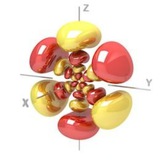
Single-molecule magnetic memory is the first to work at room temperature
Anionic iron complex breaks the rules of magnetic molecules and opens up opportunities to miniaturise data storage
👍1
Controversy surrounds corrected chemical structures | Research | Chemistry World
https://www.chemistryworld.com/research/controversy-surrounds-corrected-chemical-structures/4016494.article
https://www.chemistryworld.com/research/controversy-surrounds-corrected-chemical-structures/4016494.article
Chemistry World
Controversy surrounds corrected chemical structures
Researchers used machine learning-powered NMR prediction to correct improbable structures - but some of their revisions have been challenged
Calculation of Mass Spectra with the QCxMS Method for Negatively and Multiply Charged Molecules
Analysis and validation of a mass spectrometry (MS) experiment are usually performed by comparison to reference spectra. However, if references are missing, measured spectra cannot be properly matched. To close this gap, the Quantum Chemical Mass Spectrometry (QCxMS) program has been developed. It enables fully automatic calculations of electron ionization (EI) and positive ion collision-induced dissociation (CID) mass spectra of singly charged molecular ions. In this work, the extension to negative and multiple ion charge for the CID run mode is presented. QCxMS is now capable of calculating structures carrying any charge, without the need for pretabulated fragmentation pathways or machine learning of database spectra. Mass spectra of four single negatively charged and two multiple positively charged organic ions with molecular sizes from 12 to 92 atoms were computed and compared to reference spectra. The underlying Born–Oppenheimer molecular dynamics (MD) calculations were conducted using the semiempirical quantum mechanical GFN2-xTB method, while for some small molecules, ab initio DFT-based MD simulations were performed. Detailed insights into the fragmentation pathways were gained, and the effects of the computed charge assignments on the resulting spectrum are discussed. Especially for the negative ion mode, the influence of the deprotonation site to create the anion was found to be substantial. Doubly charged fragments could successfully be calculated fully automatically for the first time, while higher charged structures introduced severe assignment problems. Overall, this extension of the QCxMS program further enhances its applicability and underlines its value as a sophisticated toolkit for CID-based tandem MS structure elucidation.
https://pubs.acs.org/doi/10.1021/jasms.2c00209
Analysis and validation of a mass spectrometry (MS) experiment are usually performed by comparison to reference spectra. However, if references are missing, measured spectra cannot be properly matched. To close this gap, the Quantum Chemical Mass Spectrometry (QCxMS) program has been developed. It enables fully automatic calculations of electron ionization (EI) and positive ion collision-induced dissociation (CID) mass spectra of singly charged molecular ions. In this work, the extension to negative and multiple ion charge for the CID run mode is presented. QCxMS is now capable of calculating structures carrying any charge, without the need for pretabulated fragmentation pathways or machine learning of database spectra. Mass spectra of four single negatively charged and two multiple positively charged organic ions with molecular sizes from 12 to 92 atoms were computed and compared to reference spectra. The underlying Born–Oppenheimer molecular dynamics (MD) calculations were conducted using the semiempirical quantum mechanical GFN2-xTB method, while for some small molecules, ab initio DFT-based MD simulations were performed. Detailed insights into the fragmentation pathways were gained, and the effects of the computed charge assignments on the resulting spectrum are discussed. Especially for the negative ion mode, the influence of the deprotonation site to create the anion was found to be substantial. Doubly charged fragments could successfully be calculated fully automatically for the first time, while higher charged structures introduced severe assignment problems. Overall, this extension of the QCxMS program further enhances its applicability and underlines its value as a sophisticated toolkit for CID-based tandem MS structure elucidation.
https://pubs.acs.org/doi/10.1021/jasms.2c00209
ACS Publications
Calculation of Mass Spectra with the QCxMS Method for Negatively and Multiply Charged Molecules
Analysis and validation of a mass spectrometry (MS) experiment are usually performed by comparison to reference spectra. However, if references are missing, measured spectra cannot be properly matched. To close this gap, the Quantum Chemical Mass Spectrometry…
❤2👍2
Forwarded from Henrique
This media is not supported in your browser
VIEW IN TELEGRAM
We are looking for students interested in a Ph.D. in computational organic chemistry! Come help us gain a better understanding of #bioorthogonal reactions. Interested students should contact me directly: https://www.dsvatunek.com/ .
👍3
DeepChem
DeepChem aims to provide a high quality open-source toolchain that democratizes the use of deep-learning in drug discovery, materials science, quantum chemistry, and biology.
https://github.com/deepchem/deepchem
DeepChem aims to provide a high quality open-source toolchain that democratizes the use of deep-learning in drug discovery, materials science, quantum chemistry, and biology.
https://github.com/deepchem/deepchem
GitHub
GitHub - deepchem/deepchem: Democratizing Deep-Learning for Drug Discovery, Quantum Chemistry, Materials Science and Biology
Democratizing Deep-Learning for Drug Discovery, Quantum Chemistry, Materials Science and Biology - deepchem/deepchem
❤3
Join the 3000+ scientists from academia and industry who have taken Schrodinger’s online courses. All courses are completely asynchronous and include access to curated lists of resources/references, web-based versions of Schrodinger software, hands-on case studies, and expert feedback/support. Course participation does not require any hardware or software.
Click here [1] to learn about Schrodinger Online Courses and to register for the upcoming 2023 sessions.
Current courses:
* Introduction to Molecular Modeling in Drug Discovery
* Introduction to Computational Antibody Engineering
* Molecular Modeling for Materials Science Applications: Organic Electronics
* Molecular Modeling for Materials Science Applications: Homogeneous Catalysis and Reactivity
* Molecular Modeling for Materials Science Applications: Surface Chemistry
* Molecular Modeling for Materials Science Applications: Pharmaceutical Formulations
* Molecular Modeling for Materials Science Applications: Polymeric Materials
* Molecular Modeling for Materials Science Applications: Consumer Packaged Goods
* High-Throughput Virtual Screening for Hit Finding and Evaluation
* Free Energy Calculations for Drug Design with FEP+
[1] - https://shorturl.at/dzDOQ
Click here [1] to learn about Schrodinger Online Courses and to register for the upcoming 2023 sessions.
Current courses:
* Introduction to Molecular Modeling in Drug Discovery
* Introduction to Computational Antibody Engineering
* Molecular Modeling for Materials Science Applications: Organic Electronics
* Molecular Modeling for Materials Science Applications: Homogeneous Catalysis and Reactivity
* Molecular Modeling for Materials Science Applications: Surface Chemistry
* Molecular Modeling for Materials Science Applications: Pharmaceutical Formulations
* Molecular Modeling for Materials Science Applications: Polymeric Materials
* Molecular Modeling for Materials Science Applications: Consumer Packaged Goods
* High-Throughput Virtual Screening for Hit Finding and Evaluation
* Free Energy Calculations for Drug Design with FEP+
[1] - https://shorturl.at/dzDOQ
👍3❤1
Chemists propose unifying theory of musk
https://cen.acs.org/biological-chemistry/biochemistry/Chemists-propose-unifying-theory-musk/100/web/2022/11
https://cen.acs.org/biological-chemistry/biochemistry/Chemists-propose-unifying-theory-musk/100/web/2022/11
The world's largest quantum chemistry dataset to empower new materials design and drug discovery
https://phys.org/news/2022-11-world-largest-quantum-chemistry-dataset.html
https://phys.org/news/2022-11-world-largest-quantum-chemistry-dataset.html
phys.org
The world's largest quantum chemistry dataset to empower new materials design and drug discovery
Predicting the properties of an object is a most natural task for machine learning (ML) algorithms, and molecules or crystals are not an exception. Every drug discovery or materials design pipeline depends ...
👍6🤩3🔥2
8th ORCA User Meeting, 6th and 7th of December 2022
Dear ORCA users, this is a short reminder of the 8th ORCA User Meeting, taking place on the 6th and 7th of December 2022: "ORCA - Environmental effects, from solids to biology" (open Webinar, times are CET!)
# Day 1 - 6.12.2022:
* 14.45 Frank Neese (Welcome)
* 15.00-15.30 Christoph Riplinger /FACCTS (QM/MM and ONIOM in ORCA)
* 15.40 - 16.00 Simon Müller / TUHH (openCOSMO-RS: efficient parameterization from the ground up)
* 16.00 - 16.20 Giovanni Bistoni, Lorenzo / Univ. Perugia (computational modeling of electrocatalytic processes on coordination polymers)
* 16.20 - 16.40 Johannes Gorges / Mulliken Center Bonn (reliable prediction of association (free) energies of supramolecular complexes with heavy main group elements - the HS13L benchmark set)
* 16.40 - 17.00 Dimitrios Manganas / MPI KoFo (theoretical spectroscopy protocols for solids and surfaces)
* 17.30 - 19.00 POSTER SESSION I
# Day 2 - 7.12.2022:
* 14.30 - 15.00 Patrick Kibies / TU Dortmund (the EC-RISM integral equation-based solvation model for ORCA calculations)
* 15.00 - 15.30 Abhishek Sirohiwal / Stockholm Univ. (Multiscale Simulations of Light Harvesting Assemblies)
* 15.40 - 16.00 Martin Brehm / Halle (tba)
* 16.00 - 16.20 Alexander Auer/ MPI KoFo (calculating NMR chemical shifts in solds)
* 16.30 - 18.00 POSTER SESSION II
* 18.15 - 19.00 Frank Neese (concluding remarks - next evolution steps of ORCA)
The meeting will take place as a ZOOM webinar and you don't need to apply or register for participation. We will post the link for the webinar the day before the meeting in the ORCA forum.
Note that we have two poster session in which you have the chance to present and discuss your projects with the community and the developers.
Send us your poster abstract !!
(Send the abstract to: orca-cfp@kofo.mpg.de, deadline November 27th )
Dear ORCA users, this is a short reminder of the 8th ORCA User Meeting, taking place on the 6th and 7th of December 2022: "ORCA - Environmental effects, from solids to biology" (open Webinar, times are CET!)
# Day 1 - 6.12.2022:
* 14.45 Frank Neese (Welcome)
* 15.00-15.30 Christoph Riplinger /FACCTS (QM/MM and ONIOM in ORCA)
* 15.40 - 16.00 Simon Müller / TUHH (openCOSMO-RS: efficient parameterization from the ground up)
* 16.00 - 16.20 Giovanni Bistoni, Lorenzo / Univ. Perugia (computational modeling of electrocatalytic processes on coordination polymers)
* 16.20 - 16.40 Johannes Gorges / Mulliken Center Bonn (reliable prediction of association (free) energies of supramolecular complexes with heavy main group elements - the HS13L benchmark set)
* 16.40 - 17.00 Dimitrios Manganas / MPI KoFo (theoretical spectroscopy protocols for solids and surfaces)
* 17.30 - 19.00 POSTER SESSION I
# Day 2 - 7.12.2022:
* 14.30 - 15.00 Patrick Kibies / TU Dortmund (the EC-RISM integral equation-based solvation model for ORCA calculations)
* 15.00 - 15.30 Abhishek Sirohiwal / Stockholm Univ. (Multiscale Simulations of Light Harvesting Assemblies)
* 15.40 - 16.00 Martin Brehm / Halle (tba)
* 16.00 - 16.20 Alexander Auer/ MPI KoFo (calculating NMR chemical shifts in solds)
* 16.30 - 18.00 POSTER SESSION II
* 18.15 - 19.00 Frank Neese (concluding remarks - next evolution steps of ORCA)
The meeting will take place as a ZOOM webinar and you don't need to apply or register for participation. We will post the link for the webinar the day before the meeting in the ORCA forum.
Note that we have two poster session in which you have the chance to present and discuss your projects with the community and the developers.
Send us your poster abstract !!
(Send the abstract to: orca-cfp@kofo.mpg.de, deadline November 27th )
👍3❤1
A Brief Review of Density Functional Theory and Solvation Model
https://chemrxiv.org/engage/chemrxiv/article-details/6231c8042c5010f92a7d0bd6
https://chemrxiv.org/engage/chemrxiv/article-details/6231c8042c5010f92a7d0bd6
ChemRxiv
A Brief Review of Density Functional Theory and Solvation Model
In recent years, the applications of first-principles density functional theory (DFT) is diversified and expanded in a wide range due to the development of robust algorithms and more powerful computer systems. In general, DFT is used in condensed matter physics…
Discovery reveals 'brain-like computing' at molecular level is possible
https://phys.org/news/2022-11-discovery-reveals-brain-like-molecular.html
https://phys.org/news/2022-11-discovery-reveals-brain-like-molecular.html
phys.org
Discovery reveals 'brain-like computing' at molecular level is possible
A discovery at University of Limerick in Ireland has revealed for the first time that unconventional brain-like computing at the tiniest scale of atoms and molecules is possible.
🔥4
Postdoctoral Position at Washington University in St. Louis on Atomistic Modeling of Chalcogenides
A one-year postdoctoral position with possible extension up to two years is available in the Materials Modeling & Microscopy (M-cube) group of Rohan Mishra at Washington University in St. Louis, beginning immediately. The successful candidate will use first-principles density-functional-theory (DFT) calculations for developing structure-property correlations in chalcogenide materials.
We are currently interested in quasi-one-dimensional (1D) chalcogenides for their optical and thermal properties, and 2D chalcogenide alloys for their electrocatalytic activity. The successful applicant is expected to develop quantitative structure-property-processing correlations to enable the design of new 1D and 2D chalcogenides for optical, thermal and electrocatalytic applications. These projects are part of multi-university collaborative efforts and involve extensive collaboration with experimentalists focused on the synthesis and characterization of these materials. The successful applicant is expected to work closely with our collaborators.
Applicants must have a recent Ph.D. in Materials Science, Physics, or a closely related field with demonstrated expertise in using DFT calculations to develop structure-property correlations in functional materials. Prior experience of developing phenomenological models from first-principles calculations will be a bonus. The applicant should be able to work independently and in a team. Candidates with strong programing skills (using Python, Fortran or C/C++) will be preferred.
The successful applicant will have ample opportunities for career development. They are expected to be involved in co-mentoring graduate and undergraduate researchers, present their research at conferences, and develop independent research directions.
Interested candidates are encouraged to apply by emailing a single PDF file containing: (1) a cover letter (not more than one-page) with a summary of accomplishments and future research interests; (2) CV (with a list of all publications); and (3) names of three references to rmishra@wustl.edu.
Screening of applications will start immediately and will continue until the position is filled.
A one-year postdoctoral position with possible extension up to two years is available in the Materials Modeling & Microscopy (M-cube) group of Rohan Mishra at Washington University in St. Louis, beginning immediately. The successful candidate will use first-principles density-functional-theory (DFT) calculations for developing structure-property correlations in chalcogenide materials.
We are currently interested in quasi-one-dimensional (1D) chalcogenides for their optical and thermal properties, and 2D chalcogenide alloys for their electrocatalytic activity. The successful applicant is expected to develop quantitative structure-property-processing correlations to enable the design of new 1D and 2D chalcogenides for optical, thermal and electrocatalytic applications. These projects are part of multi-university collaborative efforts and involve extensive collaboration with experimentalists focused on the synthesis and characterization of these materials. The successful applicant is expected to work closely with our collaborators.
Applicants must have a recent Ph.D. in Materials Science, Physics, or a closely related field with demonstrated expertise in using DFT calculations to develop structure-property correlations in functional materials. Prior experience of developing phenomenological models from first-principles calculations will be a bonus. The applicant should be able to work independently and in a team. Candidates with strong programing skills (using Python, Fortran or C/C++) will be preferred.
The successful applicant will have ample opportunities for career development. They are expected to be involved in co-mentoring graduate and undergraduate researchers, present their research at conferences, and develop independent research directions.
Interested candidates are encouraged to apply by emailing a single PDF file containing: (1) a cover letter (not more than one-page) with a summary of accomplishments and future research interests; (2) CV (with a list of all publications); and (3) names of three references to rmishra@wustl.edu.
Screening of applications will start immediately and will continue until the position is filled.
👍3
Unparalleled Precision: Researchers Reveal New Information About Photosynthesis
https://scitechdaily.com/unparalleled-precision-researchers-reveal-new-information-about-photosynthesis/
https://scitechdaily.com/unparalleled-precision-researchers-reveal-new-information-about-photosynthesis/
SciTechDaily
Unparalleled Precision: Researchers Reveal New Information About Photosynthesis
Photosystem I in plants reveals a hitherto unobserved face/Molecular examination with high precision. Photosynthesis is the most important foundation of life on Earth. In it, biomass and sugar are produced from the sunlight's energy by plants and single-celled…
Researchers publish 31,618 molecules with potential for energy storage in batteries
https://phys.org/news/2022-11-publish-molecules-potential-energy-storage.html
https://phys.org/news/2022-11-publish-molecules-potential-energy-storage.html
phys.org
Researchers publish 31,618 molecules with potential for energy storage in batteries
Scientists from the Dutch Institute for Fundamental Energy Research (DIFFER) have created a database of 31,618 molecules that could potentially be used in future redox-flow batteries. These batteries ...
UCSF ChimeraX version 1.5 has been released!
ChimeraX includes user documentation and is free for noncommercial use.
Download for Windows, Linux, and MacOS from:
https://www.rbvi.ucsf.edu/chimerax/
Updates since version 1.4 (Jun 2022) include:
- AlphaFold search/fetch uses database v4 (fixes ~4% of v3 entries)
- show AlphaFold residue-residue errors (PAE) with colored lines
- Axes/Planes/Centroids tool to define objects, use in measurements
- transform surface models (scale, shift, rotate)
- add hydrogens GUI
- calculate and assign charges, including for nonstandard residues
- dock prep command
- renumber residues, change chain IDs
- crosseye and walleye stereo
- cleaner close session (reverts more settings)
- UniProt sequence fetch updated to work with UniProtKB's new API
- DICOM browser shows patient-study-series hierarchy in medical image data
For details, please see the ChimeraX change log:
https://www.rbvi.ucsf.edu/trac/ChimeraX/wiki/ChangeLog
ChimeraX includes user documentation and is free for noncommercial use.
Download for Windows, Linux, and MacOS from:
https://www.rbvi.ucsf.edu/chimerax/
Updates since version 1.4 (Jun 2022) include:
- AlphaFold search/fetch uses database v4 (fixes ~4% of v3 entries)
- show AlphaFold residue-residue errors (PAE) with colored lines
- Axes/Planes/Centroids tool to define objects, use in measurements
- transform surface models (scale, shift, rotate)
- add hydrogens GUI
- calculate and assign charges, including for nonstandard residues
- dock prep command
- renumber residues, change chain IDs
- crosseye and walleye stereo
- cleaner close session (reverts more settings)
- UniProt sequence fetch updated to work with UniProtKB's new API
- DICOM browser shows patient-study-series hierarchy in medical image data
For details, please see the ChimeraX change log:
https://www.rbvi.ucsf.edu/trac/ChimeraX/wiki/ChangeLog
🔥3