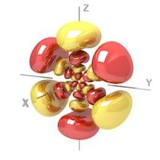
Discovery reveals 'brain-like computing' at molecular level is possible
https://phys.org/news/2022-11-discovery-reveals-brain-like-molecular.html
https://phys.org/news/2022-11-discovery-reveals-brain-like-molecular.html
phys.org
Discovery reveals 'brain-like computing' at molecular level is possible
A discovery at University of Limerick in Ireland has revealed for the first time that unconventional brain-like computing at the tiniest scale of atoms and molecules is possible.
🔥4
Postdoctoral Position at Washington University in St. Louis on Atomistic Modeling of Chalcogenides
A one-year postdoctoral position with possible extension up to two years is available in the Materials Modeling & Microscopy (M-cube) group of Rohan Mishra at Washington University in St. Louis, beginning immediately. The successful candidate will use first-principles density-functional-theory (DFT) calculations for developing structure-property correlations in chalcogenide materials.
We are currently interested in quasi-one-dimensional (1D) chalcogenides for their optical and thermal properties, and 2D chalcogenide alloys for their electrocatalytic activity. The successful applicant is expected to develop quantitative structure-property-processing correlations to enable the design of new 1D and 2D chalcogenides for optical, thermal and electrocatalytic applications. These projects are part of multi-university collaborative efforts and involve extensive collaboration with experimentalists focused on the synthesis and characterization of these materials. The successful applicant is expected to work closely with our collaborators.
Applicants must have a recent Ph.D. in Materials Science, Physics, or a closely related field with demonstrated expertise in using DFT calculations to develop structure-property correlations in functional materials. Prior experience of developing phenomenological models from first-principles calculations will be a bonus. The applicant should be able to work independently and in a team. Candidates with strong programing skills (using Python, Fortran or C/C++) will be preferred.
The successful applicant will have ample opportunities for career development. They are expected to be involved in co-mentoring graduate and undergraduate researchers, present their research at conferences, and develop independent research directions.
Interested candidates are encouraged to apply by emailing a single PDF file containing: (1) a cover letter (not more than one-page) with a summary of accomplishments and future research interests; (2) CV (with a list of all publications); and (3) names of three references to rmishra@wustl.edu.
Screening of applications will start immediately and will continue until the position is filled.
A one-year postdoctoral position with possible extension up to two years is available in the Materials Modeling & Microscopy (M-cube) group of Rohan Mishra at Washington University in St. Louis, beginning immediately. The successful candidate will use first-principles density-functional-theory (DFT) calculations for developing structure-property correlations in chalcogenide materials.
We are currently interested in quasi-one-dimensional (1D) chalcogenides for their optical and thermal properties, and 2D chalcogenide alloys for their electrocatalytic activity. The successful applicant is expected to develop quantitative structure-property-processing correlations to enable the design of new 1D and 2D chalcogenides for optical, thermal and electrocatalytic applications. These projects are part of multi-university collaborative efforts and involve extensive collaboration with experimentalists focused on the synthesis and characterization of these materials. The successful applicant is expected to work closely with our collaborators.
Applicants must have a recent Ph.D. in Materials Science, Physics, or a closely related field with demonstrated expertise in using DFT calculations to develop structure-property correlations in functional materials. Prior experience of developing phenomenological models from first-principles calculations will be a bonus. The applicant should be able to work independently and in a team. Candidates with strong programing skills (using Python, Fortran or C/C++) will be preferred.
The successful applicant will have ample opportunities for career development. They are expected to be involved in co-mentoring graduate and undergraduate researchers, present their research at conferences, and develop independent research directions.
Interested candidates are encouraged to apply by emailing a single PDF file containing: (1) a cover letter (not more than one-page) with a summary of accomplishments and future research interests; (2) CV (with a list of all publications); and (3) names of three references to rmishra@wustl.edu.
Screening of applications will start immediately and will continue until the position is filled.
👍3
Unparalleled Precision: Researchers Reveal New Information About Photosynthesis
https://scitechdaily.com/unparalleled-precision-researchers-reveal-new-information-about-photosynthesis/
https://scitechdaily.com/unparalleled-precision-researchers-reveal-new-information-about-photosynthesis/
SciTechDaily
Unparalleled Precision: Researchers Reveal New Information About Photosynthesis
Photosystem I in plants reveals a hitherto unobserved face/Molecular examination with high precision. Photosynthesis is the most important foundation of life on Earth. In it, biomass and sugar are produced from the sunlight's energy by plants and single-celled…
Researchers publish 31,618 molecules with potential for energy storage in batteries
https://phys.org/news/2022-11-publish-molecules-potential-energy-storage.html
https://phys.org/news/2022-11-publish-molecules-potential-energy-storage.html
phys.org
Researchers publish 31,618 molecules with potential for energy storage in batteries
Scientists from the Dutch Institute for Fundamental Energy Research (DIFFER) have created a database of 31,618 molecules that could potentially be used in future redox-flow batteries. These batteries ...
UCSF ChimeraX version 1.5 has been released!
ChimeraX includes user documentation and is free for noncommercial use.
Download for Windows, Linux, and MacOS from:
https://www.rbvi.ucsf.edu/chimerax/
Updates since version 1.4 (Jun 2022) include:
- AlphaFold search/fetch uses database v4 (fixes ~4% of v3 entries)
- show AlphaFold residue-residue errors (PAE) with colored lines
- Axes/Planes/Centroids tool to define objects, use in measurements
- transform surface models (scale, shift, rotate)
- add hydrogens GUI
- calculate and assign charges, including for nonstandard residues
- dock prep command
- renumber residues, change chain IDs
- crosseye and walleye stereo
- cleaner close session (reverts more settings)
- UniProt sequence fetch updated to work with UniProtKB's new API
- DICOM browser shows patient-study-series hierarchy in medical image data
For details, please see the ChimeraX change log:
https://www.rbvi.ucsf.edu/trac/ChimeraX/wiki/ChangeLog
ChimeraX includes user documentation and is free for noncommercial use.
Download for Windows, Linux, and MacOS from:
https://www.rbvi.ucsf.edu/chimerax/
Updates since version 1.4 (Jun 2022) include:
- AlphaFold search/fetch uses database v4 (fixes ~4% of v3 entries)
- show AlphaFold residue-residue errors (PAE) with colored lines
- Axes/Planes/Centroids tool to define objects, use in measurements
- transform surface models (scale, shift, rotate)
- add hydrogens GUI
- calculate and assign charges, including for nonstandard residues
- dock prep command
- renumber residues, change chain IDs
- crosseye and walleye stereo
- cleaner close session (reverts more settings)
- UniProt sequence fetch updated to work with UniProtKB's new API
- DICOM browser shows patient-study-series hierarchy in medical image data
For details, please see the ChimeraX change log:
https://www.rbvi.ucsf.edu/trac/ChimeraX/wiki/ChangeLog
🔥3
‘Shadow Libraries’ Are Moving Their Pirated Books to The Dark Web After Fed Crackdowns
https://www.vice.com/en/article/v7vnn4/shadow-libraries-are-moving-their-pirated-books-to-the-dark-web-after-fed-crackdowns
https://www.vice.com/en/article/v7vnn4/shadow-libraries-are-moving-their-pirated-books-to-the-dark-web-after-fed-crackdowns
VICE
‘Shadow Libraries’ Are Moving Their Pirated Books to The Dark Web After Fed Crackdowns
Academic repositories like LibGen and Z-Library are becoming less accessible on the web, but finding a home on alt-networks like Tor and IPFS.
😱8👍1
As the crackdown on SciHub and LigGen/Z-Lib intensifies the platforms to open the access to papers and books in PDFs are moving to the deep web. The Telegram Bots, nevertheless, keep working fine.
SciHub: @scihubot or https://news.1rj.ru/str/scihubot
Z-Lib: @zlibrary2bot or https://news.1rj.ru/str/zlibrary2bot
Knowledge should be free.
SciHub: @scihubot or https://news.1rj.ru/str/scihubot
Z-Lib: @zlibrary2bot or https://news.1rj.ru/str/zlibrary2bot
Knowledge should be free.
Telegram
Sci-Hub
Официальный бот сервиса Sci-Hub. Бесплатный доступ к научным публикациям. Sci-Hub bot. Break academic paywalls
🔥2👍1
SHARC2.1
Surface Hopping including Arbitrary Couplings developed by the González group
The SHARC molecular dynamics (MD) program suite is an ab initio MD software package developed to study the excited-state dynamics of molecules.
* can treat non-adiabatic couplings at conical intersections, intersystem crossing induced by spin-orbit coupling, and laser couplings on an equal footing.
* can treat any number of states of arbitrary multiplicities.
* has interfaces to MOLPRO, MOLCAS, COLUMBUS, ADF, TURBOMOLE (only ricc2), GAUSSIAN, ORCA, BAGEL, analytical potentials, and linear-vibronic coupling potentials.
* comes with the WFoverlap program for efficient computation of nonadiabatic couplings and Dyson norms.
* can do QM/MM simulations with MOLCAS, ADF, TURBOMOLE, and ORCA.
* can do on-the-fly wave function analysis through TheoDORE.
* comes with the PySHARC extension for very efficient dynamics simulations with linear-vibronic coupling potentials.
* includes auxiliary Python noscripts for setup, maintenance and analysis of ensembles of trajectories.
* includes noscripts to perform excited-state (crossing point) optimizations and single point calculations with all interfaced methods.
* has a comprehensive tutorial.
https://sharc-md.org/
Surface Hopping including Arbitrary Couplings developed by the González group
The SHARC molecular dynamics (MD) program suite is an ab initio MD software package developed to study the excited-state dynamics of molecules.
* can treat non-adiabatic couplings at conical intersections, intersystem crossing induced by spin-orbit coupling, and laser couplings on an equal footing.
* can treat any number of states of arbitrary multiplicities.
* has interfaces to MOLPRO, MOLCAS, COLUMBUS, ADF, TURBOMOLE (only ricc2), GAUSSIAN, ORCA, BAGEL, analytical potentials, and linear-vibronic coupling potentials.
* comes with the WFoverlap program for efficient computation of nonadiabatic couplings and Dyson norms.
* can do QM/MM simulations with MOLCAS, ADF, TURBOMOLE, and ORCA.
* can do on-the-fly wave function analysis through TheoDORE.
* comes with the PySHARC extension for very efficient dynamics simulations with linear-vibronic coupling potentials.
* includes auxiliary Python noscripts for setup, maintenance and analysis of ensembles of trajectories.
* includes noscripts to perform excited-state (crossing point) optimizations and single point calculations with all interfaced methods.
* has a comprehensive tutorial.
https://sharc-md.org/
🔥4❤1
OPEN ACCESS
Single-Reference ab Initio Methods for the Calculation of Excited States of Large Molecules
https://pubs.acs.org/doi/10.1021/cr0505627
Single-Reference ab Initio Methods for the Calculation of Excited States of Large Molecules
https://pubs.acs.org/doi/10.1021/cr0505627
ACS Publications
Single-Reference ab Initio Methods for the Calculation of Excited States of Large Molecules
Registrations for the 2023 edition of the Virtual WinterSchool on Computational Chemistry are now open!
The event is completely FREE. The next edition will have talks by a plethora of prominent computational chemists and official workshops provided by Q-Chem and Tinker.
See the program and register here: https://winterschool.cc/
The event is completely FREE. The next edition will have talks by a plethora of prominent computational chemists and official workshops provided by Q-Chem and Tinker.
See the program and register here: https://winterschool.cc/
winterschool.cc
Virtual Winter School on Computational Chemistry - Home
Online congress discussing state of the art computational chemistry
👍10
The Virtual Winter School on Computational Chemistry is now on Mastodon. Follow to help boost this amazing event:
https://mstdn.science/@CompChemVirtual
https://mstdn.science/@CompChemVirtual
mstdn.science
Virtual School on CompChem (@CompChemVirtual@mstdn.science)
36 Posts, 2 Following, 12 Followers · This is an online conference covering a broad range of topics in computational and theoretical chemistry. Talks are delivered live via conferencing software.
👍4
OPEN ACCESS
DFT exchange: sharing perspectives on the workhorse of quantum chemistry and materials science
In this paper, the history, present status, and future of density-functional theory (DFT) is informally reviewed and discussed by 70 workers in the field, including molecular scientists, materials scientists, method developers and practitioners. The format of the paper is that of a roundtable discussion, in which the participants express and exchange views on DFT in the form of 302 individual contributions, formulated as responses to a preset list of 26 questions. Supported by a bibliography of 777 entries, the paper represents a broad snapshot of DFT, anno 2022.
https://pubs.rsc.org/en/content/articlelanding/2022/CP/D2CP02827A
DFT exchange: sharing perspectives on the workhorse of quantum chemistry and materials science
In this paper, the history, present status, and future of density-functional theory (DFT) is informally reviewed and discussed by 70 workers in the field, including molecular scientists, materials scientists, method developers and practitioners. The format of the paper is that of a roundtable discussion, in which the participants express and exchange views on DFT in the form of 302 individual contributions, formulated as responses to a preset list of 26 questions. Supported by a bibliography of 777 entries, the paper represents a broad snapshot of DFT, anno 2022.
https://pubs.rsc.org/en/content/articlelanding/2022/CP/D2CP02827A
pubs.rsc.org
DFT exchange: sharing perspectives on the workhorse of quantum chemistry and materials science
In this paper, the history, present status, and future of density-functional theory (DFT) is informally reviewed and discussed by 70 workers in the field, including molecular scientists, materials scientists, method developers and practitioners. The format…
🔥4👍2
Repeat with me: I will NOT use Pople basis set!
——————-
https://mattermodeling.stackexchange.com/questions/9678/choosing-between-6-311g3df-3pd-and-def2-tzvppd-for-certain-type-of-diffuse-s
——————-
https://mattermodeling.stackexchange.com/questions/9678/choosing-between-6-311g3df-3pd-and-def2-tzvppd-for-certain-type-of-diffuse-s
Matter Modeling Stack Exchange
Choosing between 6-311++G(3df,3pd) and def2-TZVPPD for certain type of diffuse system
I need to use a diffuse basis set for my highly delocalised molecule, consisting of C, N, O, Cl, S, Mg, Al, B and Si only, since it has many non-covalent interactions inside it. After reading some ...
👍5❤1🔥1