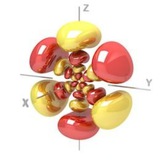
There is a new release of Quantum ESPRESSO
Exciting news for all Quantum ESPRESSO users! The latest version, 7.2, is now available with a range of new features, bug fixes and improvements.
QUANTUM ESPRESSO v.7.2 release notes: https://www.quantum-espresso.org/release-notes/release-notes-QE7-2.html
Exciting news for all Quantum ESPRESSO users! The latest version, 7.2, is now available with a range of new features, bug fixes and improvements.
QUANTUM ESPRESSO v.7.2 release notes: https://www.quantum-espresso.org/release-notes/release-notes-QE7-2.html
👍6
Wang_et_al_2023_Predicting_Biomolecular_Binding_Kinetics_A_Review.pdf
2 MB
Predicting Biomolecular Binding Kinetics: A Review
❤1
Webinar: Advancing Magnetic Memory Technology with Atomistic Modeling of Novel Materials & Concepts (April 26)
Join this free event on April 26 2023 to discover how experts from Martin-Luther-Universitat Halle Wittenberg and Synopsys QuantumATK use ab initio DFT modeling of MTJs to guide and accelerate the technological development of magnetic memory.
* Date: 26th April, 2023
* Time 1: 9 am CEST (Europe) / 12.30 pm IST (India) / 3 pm CST (China) / 4 pm KST (South Korea) / 4 pm JST (Japan)
* Time 2: 9 am PDT (US West Coast) / 12 pm EDT (US East Coast) / 6 pm CEST (Europe)
* Duration: 1 hour (including Q&A session)
Learn about:
- Investigating the potential of novel magnetic tunnel junction (MTJ) materials and concepts for improved magnetic memory performance.
- Generating realistic MTJ structures with Machine-Learned Force Fields.
- Evaluating the performance based on calculated MTJ spintronic properties, such as tunnel magnetoresistance (TMR), current rectification, spin-transfer torque (STT), Heisenberg exchange, Gilbert damping, and Curie temperature.
# Synopsys Webinar Speakers:
# Invited Speaker:
* Dr. Ersoy Sasioglu, Senior Research Scientist, Martin-Luther-Universitat Halle Wittenberg, Germany.
* Dr. Sasioglu will introduce a new MTJ concept based on novel half-metallic magnets and spin-gapless semiconducting Heusler compounds. The new MTJ concept exhibits a significant advantage due to the current rectification functionality and reconfigurable I-V characteristics, therefore showing potential for logic-in-memory computing. Proposed MTJ devices have been simulated with QuantumATK, realized experimentally, and patented.
# Synopsys Speaker:
* Dr. Troels Markussen, Manager R&D, Synopsys QuantumATK.
* Dr. Markussen will present a study of investigating different capping layer materials in a double spin-torque MTJ for STT-MRAM.
This Synopsys Webinar is the first one in the Synopsys Webinar Series on Advancing Magnetic Memory Technology with Atomistic Modeling.
The second Synopsys webinar "Advancing MRAM Technology with Atomistic Spin Dynamics Simulations" will take place on May 24, 2023. It will focus on simulating MTJs with the atomistic spin dynamics code Vampire. Invited speaker Dr. Richard Evans, Associate Professor, Developer of Vampire software, University of York, UK.
You are welcome to ask questions throughout the webinar or at the end during the Q&A session.
Contact us for more information at quantumatk@synopsys.com.
REGISTER: https://register.gotowebinar.com/#rt/9013806649862345305?source=psik-1
Join this free event on April 26 2023 to discover how experts from Martin-Luther-Universitat Halle Wittenberg and Synopsys QuantumATK use ab initio DFT modeling of MTJs to guide and accelerate the technological development of magnetic memory.
* Date: 26th April, 2023
* Time 1: 9 am CEST (Europe) / 12.30 pm IST (India) / 3 pm CST (China) / 4 pm KST (South Korea) / 4 pm JST (Japan)
* Time 2: 9 am PDT (US West Coast) / 12 pm EDT (US East Coast) / 6 pm CEST (Europe)
* Duration: 1 hour (including Q&A session)
Learn about:
- Investigating the potential of novel magnetic tunnel junction (MTJ) materials and concepts for improved magnetic memory performance.
- Generating realistic MTJ structures with Machine-Learned Force Fields.
- Evaluating the performance based on calculated MTJ spintronic properties, such as tunnel magnetoresistance (TMR), current rectification, spin-transfer torque (STT), Heisenberg exchange, Gilbert damping, and Curie temperature.
# Synopsys Webinar Speakers:
# Invited Speaker:
* Dr. Ersoy Sasioglu, Senior Research Scientist, Martin-Luther-Universitat Halle Wittenberg, Germany.
* Dr. Sasioglu will introduce a new MTJ concept based on novel half-metallic magnets and spin-gapless semiconducting Heusler compounds. The new MTJ concept exhibits a significant advantage due to the current rectification functionality and reconfigurable I-V characteristics, therefore showing potential for logic-in-memory computing. Proposed MTJ devices have been simulated with QuantumATK, realized experimentally, and patented.
# Synopsys Speaker:
* Dr. Troels Markussen, Manager R&D, Synopsys QuantumATK.
* Dr. Markussen will present a study of investigating different capping layer materials in a double spin-torque MTJ for STT-MRAM.
This Synopsys Webinar is the first one in the Synopsys Webinar Series on Advancing Magnetic Memory Technology with Atomistic Modeling.
The second Synopsys webinar "Advancing MRAM Technology with Atomistic Spin Dynamics Simulations" will take place on May 24, 2023. It will focus on simulating MTJs with the atomistic spin dynamics code Vampire. Invited speaker Dr. Richard Evans, Associate Professor, Developer of Vampire software, University of York, UK.
You are welcome to ask questions throughout the webinar or at the end during the Q&A session.
Contact us for more information at quantumatk@synopsys.com.
REGISTER: https://register.gotowebinar.com/#rt/9013806649862345305?source=psik-1
👍1
The Electron Is So Round That It’s Ruling Out New Particles | Quanta Magazine
https://www.quantamagazine.org/the-electron-is-so-round-that-its-ruling-out-new-particles-20230410/
https://www.quantamagazine.org/the-electron-is-so-round-that-its-ruling-out-new-particles-20230410/
Quanta Magazine
The Electron Is So Round That It’s Ruling Out Potential New Particles
If the electron’s charge wasn’t perfectly round, it could reveal the existence of hidden particles. A new measurement approaches perfection.
Do you struggle understanding the number of roots to use on a CAS calculation? (You are not alone).
This paper explains how this works and even give a table for each electronic configuration:
📄 OPEN ACCESS - Assessment of minimal active space CASSCF-SO methods for calculation of atomic Slater–Condon and spin–orbit coupling parameters in d- and f-block ions (Dalton Trans., 2021,50, 14130-14138)
🔗 https://pubs.rsc.org/en/content/articlelanding/2021/DT/D1DT02346B
This paper explains how this works and even give a table for each electronic configuration:
📄 OPEN ACCESS - Assessment of minimal active space CASSCF-SO methods for calculation of atomic Slater–Condon and spin–orbit coupling parameters in d- and f-block ions (Dalton Trans., 2021,50, 14130-14138)
🔗 https://pubs.rsc.org/en/content/articlelanding/2021/DT/D1DT02346B
pubs.rsc.org
Assessment of minimal active space CASSCF-SO methods for calculation of atomic Slater–Condon and spin–orbit coupling parameters…
Slater–Condon parameters and the spin–orbit (SO) coupling constants for various oxidation states of transition metal ions (3d/4d/5d) and trivalent f-block ions were calculated using minimal active space complete active space self-consistent field (CASSCF)…
mulliken1932.pdf
388.5 KB
The original paper by Mulliken that is the foundation of Molecular Orbital Theory: Phys Rev 40, 55–62 (1932)
❤7👍1
Scientists use computational modeling to design “ultrastable” materials | MIT News | Massachusetts Institute of Technology
https://news.mit.edu/2023/scientists-computational-modeling-design-ultrastable-materials-0404
https://news.mit.edu/2023/scientists-computational-modeling-design-ultrastable-materials-0404
MIT News
Scientists use computational modeling to design “ultrastable” materials
MIT researchers developed a computational approach to predict which metal-organic framework (MOF) structures will be the most stable, and therefore the best candidates for applications such as capturing greenhouse gases.
❤1
HOMO-LUMO gap is the energy that separates the last occupied and first unoccupied molecular orbitals. With that said, can an electronic transition occur in energies less than the HOMO-LUMO gap?
Anonymous Quiz
53%
Yes
47%
No
👍3
X-rays reveal electronic details of nickel-based superconductors
https://phys.org/news/2023-04-x-rays-reveal-electronic-nickel-based-superconductors.html
https://phys.org/news/2023-04-x-rays-reveal-electronic-nickel-based-superconductors.html
phys.org
X-rays reveal electronic details of nickel-based superconductors
Scientists at the U.S. Department of Energy's (DOE) Brookhaven National Laboratory have discovered new details about the electrons in a nickel-based family of superconducting materials. The research, ...
A machine learning model for identifying new compounds to fight against global warming
https://phys.org/news/2023-04-machine-compounds-global.html
https://phys.org/news/2023-04-machine-compounds-global.html
phys.org
A machine learning model for identifying new compounds to fight against global warming
Among all greenhouse gases, carbon dioxide is the highest contributor to global warming. If we do not take action by 2100, according to the Intergovernmental Panel on Climate Change, the average temperature ...
Heaviest Schrödinger cat achieved by putting a small crystal into a superposition of two oscillation states
https://phys.org/news/2023-04-heaviest-schrdinger-cat-small-crystal.html
https://phys.org/news/2023-04-heaviest-schrdinger-cat-small-crystal.html
phys.org
Heaviest Schrödinger cat achieved by putting a small crystal into a superposition of two oscillation states
Even if you are not a quantum physicist, you will most likely have heard of Schrödinger's famous cat. Erwin Schrödinger came up with the feline that can be alive and dead at the same time in a thought ...
Hydrogen’s Hidden Phase: Machine Learning Unlocks the Secrets of the Universe’s Most Abundant Element
https://scitechdaily.com/hydrogens-hidden-phase-machine-learning-unlocks-the-secrets-of-the-universes-most-abundant-element/
https://scitechdaily.com/hydrogens-hidden-phase-machine-learning-unlocks-the-secrets-of-the-universes-most-abundant-element/
SciTechDaily
Hydrogen’s Hidden Phase: Machine Learning Unlocks the Secrets of the Universe’s Most Abundant Element
Putting hydrogen on solid ground: simulations with a machine learning model predict a new phase of solid hydrogen. A machine-learning technique developed by University of Illinois Urbana-Champaign researchers has revealed a previously undiscovered high-pressure…