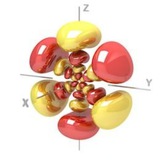
The bugfix release ORCA 6.0.1 will be released today
ORCA 6 introduced significant changes to the ORCA code, marking a new era for the software. Naturally, a change of this magnitude comes with some unexpected bugs. Today’s release, ORCA 6.0.1, addresses these reported issues, and it is recommended to use this updated version instead of ORCA 6.0.0.
The ORCA 6.0.1 Linux & Windows distributions now contain the official XTB 6.7.1 binary !
So there is no need to install xtb separately, if that has not been done yet.
https://orcaforum.kofo.mpg.de/app.php/dlext/?cat=25
RELEASE NOTES: https://orcaforum.kofo.mpg.de/viewtopic.php?f=60&t=12475
ORCA 6 introduced significant changes to the ORCA code, marking a new era for the software. Naturally, a change of this magnitude comes with some unexpected bugs. Today’s release, ORCA 6.0.1, addresses these reported issues, and it is recommended to use this updated version instead of ORCA 6.0.0.
The ORCA 6.0.1 Linux & Windows distributions now contain the official XTB 6.7.1 binary !
So there is no need to install xtb separately, if that has not been done yet.
https://orcaforum.kofo.mpg.de/app.php/dlext/?cat=25
RELEASE NOTES: https://orcaforum.kofo.mpg.de/viewtopic.php?f=60&t=12475
❤5🔥2
sowa_rossky_2024_a_bond_based_machine_learning_model_for_molecular.pdf
2.3 MB
A Bond-Based Machine Learning Model for Molecular Polarizabilities and A Priori Raman Spectra
👍6
Scientists just got 1 step closer to creating a 'superheavy' element that is so big, it will add a new row to the periodic table | Live Science
https://www.livescience.com/chemistry/elements/scientists-just-got-1-step-closer-to-creating-a-superheavy-element-that-is-so-big-it-will-add-a-new-row-to-the-periodic-table
https://www.livescience.com/chemistry/elements/scientists-just-got-1-step-closer-to-creating-a-superheavy-element-that-is-so-big-it-will-add-a-new-row-to-the-periodic-table
livescience.com
Scientists just got 1 step closer to creating a 'superheavy' element that is so big, it will add a new row to the periodic table
Scientists have discovered a new way of creating superheavy elements by firing supercharged ion beams at dense atoms. The team believes this method could potentially help synthesize the hypothetical "element 120," which would be heavier than any known element.
The Elementary Multiperspective Material Ontology (EMMO)
The Elementary Multiperspective Material Ontology (EMMO) is the result of a multidisciplinary effort within the EMMC, aimed at the development of a standard representational ontology framework based on current materials modelling and characterization knowledge. Instead of starting from general upper level concepts, as done by other ontologies, the EMMO development started from the very bottom level, using the actual picture of the physical world coming from applied sciences, and in particular from physics and material sciences.
The EMMO has grown from the bottom (i.e. scientific application field) to the top (i.e. conceptualization), staying focused on the original scope while at the same time maintaining an approach as general as possible. The ontological framework has been built around concepts like elementary particles, wave-particle dualism, finiteness of space and time intervals coming from the perspective for experimental physics. The development of the middle and upper layers of the ontology has been functional to the respect of these low level concepts, to facilitate the understanding of the high level concepts to users with limited or no philosophical background.
https://emmo-repo.github.io/
The Elementary Multiperspective Material Ontology (EMMO) is the result of a multidisciplinary effort within the EMMC, aimed at the development of a standard representational ontology framework based on current materials modelling and characterization knowledge. Instead of starting from general upper level concepts, as done by other ontologies, the EMMO development started from the very bottom level, using the actual picture of the physical world coming from applied sciences, and in particular from physics and material sciences.
The EMMO has grown from the bottom (i.e. scientific application field) to the top (i.e. conceptualization), staying focused on the original scope while at the same time maintaining an approach as general as possible. The ontological framework has been built around concepts like elementary particles, wave-particle dualism, finiteness of space and time intervals coming from the perspective for experimental physics. The development of the middle and upper layers of the ontology has been functional to the respect of these low level concepts, to facilitate the understanding of the high level concepts to users with limited or no philosophical background.
https://emmo-repo.github.io/
👍4
#PhD
🌞 Join the Future of Sustainable Energy with a PhD in SPETRA! 🌞
Are you eager to tackle fundamental challenges in sustainable energy? Ready to work in a diverse, multidisciplinary team on pioneering research?
📚 SPETRA PhD Program – Focusing on Materials for Sun-Powered Energy Transition:
The SPETRA program, hosted by the Luxembourg Institute for Science and Technology (LIST) and the University of Luxembourg, seeks motivated PhD candidates to work on groundbreaking projects that harness sunlight for energy.
🌱 Our Mission:
With a rapid shift needed from fossil fuels to renewable sources, solar and wind energy will be key to reducing greenhouse emissions. SPETRA will conduct cutting-edge research to develop efficient materials for sunlight-to-energy conversion, helping us meet climate goals.
🔬 Research Focus:
- Photovoltaics: 4 projects on advanced materials for direct sun-to-electricity conversion.
- Hybrid Solar Panels: 2 projects exploring ways to use sunlight's heat for efficiency.
- Green Hydrogen: 2 projects focused on using sunlight and novel catalysts for water-splitting.
💻 Theoretical Projects:
- Wide Gap Solar Absorbers: Advanced simulations on Cu(InGa)S₂ defects, supervised by Prof. Ludger Wirtz.
- Ferroelectric Materials: Studying phase transitions for pyroelectric energy harvesting, led by Prof. Jorge Íñiguez-González.
🎓 Why SPETRA?
SPETRA provides a unique training experience covering experiment, theory, physics, chemistry, and global energy systems. Doctoral candidates will engage in secondments with other network groups and attend regular SPETRA events, gaining not only scientific skills but also management and communication expertise tailored to their interests.
📌 Interested?
For more information about SPETRA and the thesis supervisors, visit the official project page: [https://www.uni.lu/research-en/research-projects/spetra/](https://www.uni.lu/research-en/research-projects/spetra/).
📄 To apply, submit:
1. CV
2. Full academic record
3. Motivation letter explaining why this position is for you!
*Please note: Applications via email will not be considered.*
🌞 Join the Future of Sustainable Energy with a PhD in SPETRA! 🌞
Are you eager to tackle fundamental challenges in sustainable energy? Ready to work in a diverse, multidisciplinary team on pioneering research?
📚 SPETRA PhD Program – Focusing on Materials for Sun-Powered Energy Transition:
The SPETRA program, hosted by the Luxembourg Institute for Science and Technology (LIST) and the University of Luxembourg, seeks motivated PhD candidates to work on groundbreaking projects that harness sunlight for energy.
🌱 Our Mission:
With a rapid shift needed from fossil fuels to renewable sources, solar and wind energy will be key to reducing greenhouse emissions. SPETRA will conduct cutting-edge research to develop efficient materials for sunlight-to-energy conversion, helping us meet climate goals.
🔬 Research Focus:
- Photovoltaics: 4 projects on advanced materials for direct sun-to-electricity conversion.
- Hybrid Solar Panels: 2 projects exploring ways to use sunlight's heat for efficiency.
- Green Hydrogen: 2 projects focused on using sunlight and novel catalysts for water-splitting.
💻 Theoretical Projects:
- Wide Gap Solar Absorbers: Advanced simulations on Cu(InGa)S₂ defects, supervised by Prof. Ludger Wirtz.
- Ferroelectric Materials: Studying phase transitions for pyroelectric energy harvesting, led by Prof. Jorge Íñiguez-González.
🎓 Why SPETRA?
SPETRA provides a unique training experience covering experiment, theory, physics, chemistry, and global energy systems. Doctoral candidates will engage in secondments with other network groups and attend regular SPETRA events, gaining not only scientific skills but also management and communication expertise tailored to their interests.
📌 Interested?
For more information about SPETRA and the thesis supervisors, visit the official project page: [https://www.uni.lu/research-en/research-projects/spetra/](https://www.uni.lu/research-en/research-projects/spetra/).
📄 To apply, submit:
1. CV
2. Full academic record
3. Motivation letter explaining why this position is for you!
*Please note: Applications via email will not be considered.*
Research EN
Materials for a Sun-Powered Energy Transition (SPETRA )
Navigation Menu Start date:1 November 2024 Duration in months:78 Funding:FNR - Luxembourg Principal Investigator(s):Prof Jorge Iniguez-Gonzalez It is
👍3❤1
📢 MOPAC v23.0.0: Major Update Release! 🚀
The latest MOPAC release is here, packed with new features that expand its accessibility beyond traditional command-line operations and disk-based I/O. Here's what's new in MOPAC v23.0.0:
🔹 Expanded Accessibility and Integration
- MDI Engine Support: MOPAC now integrates as an MDI Engine via the MolSSI Driver Interface (MDI) Library, enabling compatibility in multi-software workflows.
- Direct Library Calls: Run standard MOPAC calculations directly with the core library, making disk-based I/O more flexible and efficient.
- Diskless API: A new, purely diskless API with C bindings allows seamless integration with software written in C, Python, or Julia.
📱 Platform Support and Future Plans
MOPAC continues to support x86-based Windows, Mac, and Linux. However, as Apple phases out x86 support for Macs, MOPAC will transition to ARM-based Macs in the future while continuing to support x86 on Windows and Linux. The main distribution will use the fastest available BLAS/LAPACK libraries, such as Intel MKL for x86 and OpenBLAS or ARM vendor BLAS for ARM processors.
🔄 Key Updates and Fixes
Here are some highlights from this release:
- Improved EXCITED tests and XYZ packaging bug fixes by @godotalgorithm
- Updated actions and continuous integration configurations
- Enhanced API with C binding, error handling, and stateless functionality for modern applications
For the full list of updates and to download the latest version, check out the release here:
👉 [https://github.com/openmopac/mopac/releases/tag/v23.0.0](https://github.com/openmopac/mopac/releases/tag/v23.0.0)
Upgrade today and enjoy the latest improvements with MOPAC!
The latest MOPAC release is here, packed with new features that expand its accessibility beyond traditional command-line operations and disk-based I/O. Here's what's new in MOPAC v23.0.0:
🔹 Expanded Accessibility and Integration
- MDI Engine Support: MOPAC now integrates as an MDI Engine via the MolSSI Driver Interface (MDI) Library, enabling compatibility in multi-software workflows.
- Direct Library Calls: Run standard MOPAC calculations directly with the core library, making disk-based I/O more flexible and efficient.
- Diskless API: A new, purely diskless API with C bindings allows seamless integration with software written in C, Python, or Julia.
📱 Platform Support and Future Plans
MOPAC continues to support x86-based Windows, Mac, and Linux. However, as Apple phases out x86 support for Macs, MOPAC will transition to ARM-based Macs in the future while continuing to support x86 on Windows and Linux. The main distribution will use the fastest available BLAS/LAPACK libraries, such as Intel MKL for x86 and OpenBLAS or ARM vendor BLAS for ARM processors.
🔄 Key Updates and Fixes
Here are some highlights from this release:
- Improved EXCITED tests and XYZ packaging bug fixes by @godotalgorithm
- Updated actions and continuous integration configurations
- Enhanced API with C binding, error handling, and stateless functionality for modern applications
For the full list of updates and to download the latest version, check out the release here:
👉 [https://github.com/openmopac/mopac/releases/tag/v23.0.0](https://github.com/openmopac/mopac/releases/tag/v23.0.0)
Upgrade today and enjoy the latest improvements with MOPAC!
GitHub
Release MOPAC version 23.0.0 · openmopac/mopac
This major version release of MOPAC adds several new interfaces to expand accessibility beyond the traditional usage of MOPAC as a command-line program and interfacing with MOPAC strictly through d...
Cuby - ruby framework for computational chemistry
Cuby is a computational chemistry framework written in ruby. For users, it provides an unified access to various computational methods available in different software packages. For developers, Cuby is much more - it is a complex framework that provides object-oriented access to the data enetering the calculations and to their results, making it easy to create new computational protocols by combining existing blocks of the framework.
http://cuby4.molecular.cz/index.html
Cuby is a computational chemistry framework written in ruby. For users, it provides an unified access to various computational methods available in different software packages. For developers, Cuby is much more - it is a complex framework that provides object-oriented access to the data enetering the calculations and to their results, making it easy to create new computational protocols by combining existing blocks of the framework.
http://cuby4.molecular.cz/index.html
👍5
nagase1985.pdf
199.5 KB
Do you ever wake up thinking, “What if we have a benzene ring, but with Si instead of C?” 🤔 Yeah, me too! 😄
Hexasilabenzene does exist, but it’s quite unstable! 😬 A 1985 study employed ab initio calculations to assess the aromatic stabilization energy of hexasilabenzene, finding it to be approximately half that of benzene.
Hexasilabenzene does exist, but it’s quite unstable! 😬 A 1985 study employed ab initio calculations to assess the aromatic stabilization energy of hexasilabenzene, finding it to be approximately half that of benzene.
👍7👀6🔥4
SpectraGuru - A Spectra Analysis Application
SpectraGuru is a spectra analysis application designed to provide user-friendly tools for processing and visualizing spectra, aimed at accelerating your research. It functions as a dashboard or a specialized tool within a Python environment, organized with various modular functions that allow users to process spectroscopy data in a pipeline.
https://d2vdb5tvdlk3yc.cloudfront.net/
SpectraGuru is a spectra analysis application designed to provide user-friendly tools for processing and visualizing spectra, aimed at accelerating your research. It functions as a dashboard or a specialized tool within a Python environment, organized with various modular functions that allow users to process spectroscopy data in a pipeline.
https://d2vdb5tvdlk3yc.cloudfront.net/
❤5👍1
❤12
🌟 Registrations Open: 11th Virtual Winter School on Computational Chemistry 🌟
🗓 When: January 27–31, 2025
💻 Where: Online (Free registration!)
🔗 Register here: https://www.winterschool.cc/
About the Event:
The Virtual Winter School on Computational Chemistry (VWSCC) features extended lectures covering foundational topics and the latest research in computational and theoretical chemistry.
👩🔬👨🔬 What's Included:
- 🛠 Two hands-on workshops by the developers of ORCA and xTB
- 🎓 Single Figure Presentations (SFPs) + short talks
- 🗣 Two interactive panel sessions with speakers
Confirmed Speakers:
- Francesca Baletto (University of Milan, Italy)
- Jack Simons (University of Utah, USA)
- Edit Mtyus (Etvs Lornd University, Hungary)
- Chrif Matta (Mount Saint Vincent University, Canada)
- Sason Shaik (The Hebrew University of Jerusalem, Israel)
- Farnaz Shakib (New Jersey Institute of Technology, USA)
- Susi Lehtola (Helsinki University, Finland)
- Norah Hoffman (New York University, USA)
- Valentina Erastova (University of Edinburgh, UK)
- Gian Pietro Miscione (Universidad de Los Andes, Colombia)
- Abhishek Kumar Sharma (The Cooper Union, USA)
- Tucker Carrington (Queen's University, Canada)
- Amber Jain (Indian Institute of Technology, India)
We look forward to seeing you at #VWSCC2025!
– Robert Q. Topper & the Organising Committee
🗓 When: January 27–31, 2025
💻 Where: Online (Free registration!)
🔗 Register here: https://www.winterschool.cc/
About the Event:
The Virtual Winter School on Computational Chemistry (VWSCC) features extended lectures covering foundational topics and the latest research in computational and theoretical chemistry.
👩🔬👨🔬 What's Included:
- 🛠 Two hands-on workshops by the developers of ORCA and xTB
- 🎓 Single Figure Presentations (SFPs) + short talks
- 🗣 Two interactive panel sessions with speakers
Confirmed Speakers:
- Francesca Baletto (University of Milan, Italy)
- Jack Simons (University of Utah, USA)
- Edit Mtyus (Etvs Lornd University, Hungary)
- Chrif Matta (Mount Saint Vincent University, Canada)
- Sason Shaik (The Hebrew University of Jerusalem, Israel)
- Farnaz Shakib (New Jersey Institute of Technology, USA)
- Susi Lehtola (Helsinki University, Finland)
- Norah Hoffman (New York University, USA)
- Valentina Erastova (University of Edinburgh, UK)
- Gian Pietro Miscione (Universidad de Los Andes, Colombia)
- Abhishek Kumar Sharma (The Cooper Union, USA)
- Tucker Carrington (Queen's University, Canada)
- Amber Jain (Indian Institute of Technology, India)
We look forward to seeing you at #VWSCC2025!
– Robert Q. Topper & the Organising Committee
winterschool.cc
Virtual Winter School on Computational Chemistry - Home
Online congress discussing state of the art computational chemistry
👍10❤3