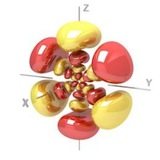
MolSSI Launches Credentialed Online Quantum Chemistry Course
The Molecular Sciences Software Institute (MolSSI) has introduced a new credentialed online course in quantum chemistry simulation. This course is designed to expand the skillsets of early-career graduate students and researchers in the field.
https://molssi.org/learn-quantum-chemistry-simulation-with-molssis-new-credentialed-online-course/?utm_source=chatgpt.com
The Molecular Sciences Software Institute (MolSSI) has introduced a new credentialed online course in quantum chemistry simulation. This course is designed to expand the skillsets of early-career graduate students and researchers in the field.
https://molssi.org/learn-quantum-chemistry-simulation-with-molssis-new-credentialed-online-course/?utm_source=chatgpt.com
MolSSI
The Molecular Sciences Software Institution
This is the official website for MolSSI
🧬 63rd Hands-on Workshop on Computational Biophysics
📅 August 4–8, 2025
📍 Auburn University, Alabama, USA
🔗 https://www.tcbg.illinois.edu/Training/Workshop/Auburn2025
The Theoretical and Computational Biophysics Group (TCBG), NIH Resource for Macromolecular Modeling and Visualization, is pleased to announce its upcoming training event.
🖥 Workshop topics include:
• Molecular dynamics with NAMD
• Biomolecular visualization with VMD
• Nanotechnology simulations using ARBD
• Introductory modeling with QwikMD
📚 Format:
• Morning lectures on theoretical foundations
• Afternoon hands-on sessions with guided tutorials
• Flash talks from participants
🎯 Who should apply:
Graduate students, postdocs, and researchers in computational or biophysical sciences. Experimentalists and newcomers are especially encouraged.
✅ No registration fee. Participants are responsible for housing and travel.
💻 Personal laptops required.
👥 Enrollment limited to 35 participants.
🗓 Application deadline: June 20, 2025
📩 Notification of acceptance by: June 27, 2025
✔️ Confirmation deadline: July 4, 2025
More info and application:
🔗 https://www.tcbg.illinois.edu/Training/Workshop/Auburn2025
📧 Questions: workshop+questions@ks.uiuc.edu
📅 August 4–8, 2025
📍 Auburn University, Alabama, USA
🔗 https://www.tcbg.illinois.edu/Training/Workshop/Auburn2025
The Theoretical and Computational Biophysics Group (TCBG), NIH Resource for Macromolecular Modeling and Visualization, is pleased to announce its upcoming training event.
🖥 Workshop topics include:
• Molecular dynamics with NAMD
• Biomolecular visualization with VMD
• Nanotechnology simulations using ARBD
• Introductory modeling with QwikMD
📚 Format:
• Morning lectures on theoretical foundations
• Afternoon hands-on sessions with guided tutorials
• Flash talks from participants
🎯 Who should apply:
Graduate students, postdocs, and researchers in computational or biophysical sciences. Experimentalists and newcomers are especially encouraged.
✅ No registration fee. Participants are responsible for housing and travel.
💻 Personal laptops required.
👥 Enrollment limited to 35 participants.
🗓 Application deadline: June 20, 2025
📩 Notification of acceptance by: June 27, 2025
✔️ Confirmation deadline: July 4, 2025
More info and application:
🔗 https://www.tcbg.illinois.edu/Training/Workshop/Auburn2025
📧 Questions: workshop+questions@ks.uiuc.edu
❤2👍1
2208.12590v1.pdf
3.3 MB
Ab initio quantum chemistry with neural-network wavefunctions
Deep learning methods outperform human capabilities in pattern recognition and data processing problems and now have an increasingly important role in scientific discovery. A key application of machine learning in molecular science is to learn potential energy surfaces or force fields from ab initio solutions of the electronic Schrödinger equation using data sets obtained with density functional theory, coupled cluster or other quantum chemistry (QC) methods. In this Review, we discuss a complementary approach using machine learning to aid the direct solution of QC problems from first principles. Specifically, we focus on quantum Monte Carlo methods that use neural-network ansatzes to solve the electronic Schrödinger equation, in first and second quantization, computing ground and excited states and generalizing over multiple nuclear configurations.
https://www.nature.com/articles/s41570-023-00516-8
Deep learning methods outperform human capabilities in pattern recognition and data processing problems and now have an increasingly important role in scientific discovery. A key application of machine learning in molecular science is to learn potential energy surfaces or force fields from ab initio solutions of the electronic Schrödinger equation using data sets obtained with density functional theory, coupled cluster or other quantum chemistry (QC) methods. In this Review, we discuss a complementary approach using machine learning to aid the direct solution of QC problems from first principles. Specifically, we focus on quantum Monte Carlo methods that use neural-network ansatzes to solve the electronic Schrödinger equation, in first and second quantization, computing ground and excited states and generalizing over multiple nuclear configurations.
https://www.nature.com/articles/s41570-023-00516-8
❤6👍5👌2🔥1
ORCA 6.1 will be released June 17th
With lots of new features!
- Analytic Raman intensities
- Coupled cluster level chemical shieldings
- Coupled cluster level g-tensors
- Open shell XAS calculations with EOM/STEOM
- Lots of new LED capabilities
https://www.linkedin.com/feed/update/urn:li:activity:7328342996616175616/
With lots of new features!
- Analytic Raman intensities
- Coupled cluster level chemical shieldings
- Coupled cluster level g-tensors
- Open shell XAS calculations with EOM/STEOM
- Lots of new LED capabilities
https://www.linkedin.com/feed/update/urn:li:activity:7328342996616175616/
👍9🔥1
🧪 VeloxChem
Next-generation quantum chemistry software
VeloxChem is a Python-based open-source quantum chemistry package designed for both interactive use and high-performance computing (HPC) environments. It supports Jupyter notebook integration and is optimized for modern and future hardware architectures.
⚙️ Key Features
• Kohn–Sham Density Functional Theory (DFT)
• Time-Dependent DFT (TDDFT)
• Complex Polarization Propagator (CPP)
• Linear, quadratic, and cubic response functions
• Potential Energy Surface (PES) exploration (ground/excited states)
• UV/Vis, X-ray absorption (XAS, XPS), ECD, TPA spectra
• Infrared (IR), Raman, and Resonance Raman Spectroscopy (RRS)
• Classical methods: MM, IM, MD, EVB
• Conformational search and polarizable embedding (PE)
• Localized properties (LoProp, RESP)
📚 Why VeloxChem?
• Enables interactive teaching of quantum chemistry
• Facilitates rapid method development
• Ideal for building simulation workflows and data-driven research
🔗 Documentation and resources:
👉 https://veloxchem.org/docs/intro.html
#VeloxChem #QuantumChemistry #DFT #TDDFT #Python #HPC #ComputationalChemistry #OpenSource #eChem #MolecularModeling
Next-generation quantum chemistry software
VeloxChem is a Python-based open-source quantum chemistry package designed for both interactive use and high-performance computing (HPC) environments. It supports Jupyter notebook integration and is optimized for modern and future hardware architectures.
⚙️ Key Features
• Kohn–Sham Density Functional Theory (DFT)
• Time-Dependent DFT (TDDFT)
• Complex Polarization Propagator (CPP)
• Linear, quadratic, and cubic response functions
• Potential Energy Surface (PES) exploration (ground/excited states)
• UV/Vis, X-ray absorption (XAS, XPS), ECD, TPA spectra
• Infrared (IR), Raman, and Resonance Raman Spectroscopy (RRS)
• Classical methods: MM, IM, MD, EVB
• Conformational search and polarizable embedding (PE)
• Localized properties (LoProp, RESP)
📚 Why VeloxChem?
• Enables interactive teaching of quantum chemistry
• Facilitates rapid method development
• Ideal for building simulation workflows and data-driven research
🔗 Documentation and resources:
👉 https://veloxchem.org/docs/intro.html
#VeloxChem #QuantumChemistry #DFT #TDDFT #Python #HPC #ComputationalChemistry #OpenSource #eChem #MolecularModeling
❤6
☝️ Read the paper: https://wires.onlinelibrary.wiley.com/doi/full/10.1002/wcms.1457
Wiley Interdisciplinary Reviews
VeloxChem: A Python‐driven density‐functional theory program for spectroscopy simulations in high‐performance computing environments
With a high degree of code vectorization and parallelization, the VeloxChem program provides a powerful tool to calculate absorptive and dispersive parts of real and complex linear response functions...
❤4
Open Access Review
Advancing Covalent Ligand and Drug Discovery beyond Cysteine
https://pubs.acs.org/doi/10.1021/acs.chemrev.5c00001
Advancing Covalent Ligand and Drug Discovery beyond Cysteine
https://pubs.acs.org/doi/10.1021/acs.chemrev.5c00001
ACS Publications
Advancing Covalent Ligand and Drug Discovery beyond Cysteine
Targeting intractable proteins remains a key challenge in drug discovery, as these proteins often lack well-defined binding pockets or possess shallow surfaces not readily addressed by traditional drug design. Covalent chemistry has emerged as a powerful…
❤5👍1
Some sources say imaginary modes with |ν| < 200 cm⁻¹ can be ignored. Your B3LYP/def2-TZVP optimization of a 50-atom molecule reports a single mode at −45 cm⁻¹. What is the prudent next action?
Anonymous Quiz
51%
Displace ±0.05 Å along the mode and re-optimize with tighter thresholds
14%
Accept the structure; −45 cm⁻¹ is within the ‘don’t bother’ band
20%
Use an ultrafine grid and recompute the frequencies only
7%
Run 200 steepest-descent steps in Cartesian coordinates
8%
Freeze the atoms in the mode and do a single-point energy
An excellent video on prompt engineering. In an era where everyone is using LLMs, anyone can benefit from some knowledge on how to better use these tools.
https://www.youtube.com/watch?v=uDIW34h8cmM
https://www.youtube.com/watch?v=uDIW34h8cmM
YouTube
Prompt Engineering Guide - From Beginner to Advanced
Join My Newsletter for Regular AI Updates 👇🏼
https://forwardfuture.ai
Discover The Best AI Tools👇🏼
https://tools.forwardfuture.ai
My Links 🔗
👉🏻 X: https://x.com/matthewberman
👉🏻 Instagram: https://www.instagram.com/matthewberman_ai
👉🏻 Discord: https://…
https://forwardfuture.ai
Discover The Best AI Tools👇🏼
https://tools.forwardfuture.ai
My Links 🔗
👉🏻 X: https://x.com/matthewberman
👉🏻 Instagram: https://www.instagram.com/matthewberman_ai
👉🏻 Discord: https://…
🔥3👌1
Understanding pore space in MOF structures is simple with the "display voids" function in Mercury — Jeff Lengyel shows us how here.
Watch the full free webinar on-demand: https://register.gotowebinar.com/recording/5372607885945338208?utm_campaign=10735978-FrameworksApr25&utm_content=333719989&utm_medium=social&utm_source=linkedin&hss_channel=lcp-2683138
Watch the full free webinar on-demand: https://register.gotowebinar.com/recording/5372607885945338208?utm_campaign=10735978-FrameworksApr25&utm_content=333719989&utm_medium=social&utm_source=linkedin&hss_channel=lcp-2683138
❤4
Funded #PhD with focus on #cheminformatics #DrugDesign at University of Hamburg (Germany) ref: 148 | start: 01-Sep-2025 | duration: 3 years | closing: 27-Jun-2025 #CompChem
https://www.uni-hamburg.de/en/stellenangebote/ausschreibung.html?jobID=8e7216d7ba4ae403a7e544cf677bbe4530821467
https://www.uni-hamburg.de/en/stellenangebote/ausschreibung.html?jobID=8e7216d7ba4ae403a7e544cf677bbe4530821467
www.uni-hamburg.de
Job advertisement
❤5
For a particle in a one-dimensional box of length L, what are the allowed energy
Anonymous Quiz
21%
Eₙ = n²h² / (8mL²), where n = 0, 1, 2, ...
53%
Eₙ = n²h² / (8mL²), where n = 1, 2, 3, ...
17%
Eₙ = (n + 1/2)ħω
7%
All non-negative energies are allowed.
3%
Eₙ = nh / (2mL)
👍7
🔷 CrysX – 3D Viewer
A high-fidelity cross-platform tool for crystal and molecular visualization
🧊 CrysX – Crystal Visualizer is a powerful application compatible with Windows, macOS, Linux, and Android. Built on the Unity3D engine, it offers unmatched graphical quality**—outperforming all existing tools for viewing molecules, crystals, and isosurfaces.
📂 Supports multiple file formats:
`.cif`, `.xyz`, `.cub`, `.mol`, `POSCAR`, `CONTCAR`, `extXYZ`, and Turbomole format.
🎓 **Designed for researchers, it allows:
▪️ Creation of illustrations for papers, graphical abstracts, journal covers, theses, and dissertations
▪️ Visualization of lattice planes, electric/magnetic field vectors
▪️ Modeling of supercells, thin films/quantum wells, quantum dots
▪️ Manipulation of structures (e.g., vacancies, impurities)
▪️ Measurement of bond angles and lengths
📘 Despite its advanced features, CrysX is easy to use and comes with detailed documentation and YouTube tutorials.
🔗 Learn more and download:
👉 [https://www.bragitoff.com/crysx-3d-viewer/](https://www.bragitoff.com/crysx-3d-viewer/)
\#Crystallography #MolecularVisualization #MaterialsScience #ResearchTools #CrystalViewer #CrysX #3DViewer #ComputationalChemistry #ScientificSoftware
A high-fidelity cross-platform tool for crystal and molecular visualization
🧊 CrysX – Crystal Visualizer is a powerful application compatible with Windows, macOS, Linux, and Android. Built on the Unity3D engine, it offers unmatched graphical quality**—outperforming all existing tools for viewing molecules, crystals, and isosurfaces.
📂 Supports multiple file formats:
`.cif`, `.xyz`, `.cub`, `.mol`, `POSCAR`, `CONTCAR`, `extXYZ`, and Turbomole format.
🎓 **Designed for researchers, it allows:
▪️ Creation of illustrations for papers, graphical abstracts, journal covers, theses, and dissertations
▪️ Visualization of lattice planes, electric/magnetic field vectors
▪️ Modeling of supercells, thin films/quantum wells, quantum dots
▪️ Manipulation of structures (e.g., vacancies, impurities)
▪️ Measurement of bond angles and lengths
📘 Despite its advanced features, CrysX is easy to use and comes with detailed documentation and YouTube tutorials.
🔗 Learn more and download:
👉 [https://www.bragitoff.com/crysx-3d-viewer/](https://www.bragitoff.com/crysx-3d-viewer/)
\#Crystallography #MolecularVisualization #MaterialsScience #ResearchTools #CrystalViewer #CrysX #3DViewer #ComputationalChemistry #ScientificSoftware
BragitOff.com
CrysX - 3D Viewer - BragitOff.com
by Manas Sharma (Phys Whiz) The Crystal Visualizer tool offers cross-platform compatibility, being accessible on Windows, MacOS, Linux, and Android devices. This sophisticated…
❤10
🚨 *It’s happening tomorrow!*
Join us for a *special extra event* at the Virtual Winter School on Computational Chemistry (VWSCC) featuring the launch of Q-Chem 6.3.
🧪 *Free registration* gives you access to:
• A full day of live webinars
• Hands-on exercises
• In-depth demos of new features
• Interaction with the Q-Chem developers
🕔 *Schedule (Central European Time - CET)*:
• 17:00 — *Introduction to Q-Chem & IQmol* (Shannon Houck)
• 17:30 — *Exercise: Plotting and Interpreting MOs and IR spectra*
• 17:50 — *DFT & Energy Decomposition Analysis* (Martin Head-Gordon)
• 18:20 — *Exercise: DFT & EDA*
• 18:40 — *Excited States* (Kaushik Nanda)
• 19:10 — *Exercises: Excited States & Spectroscopy*
• 19:30 — *Q-Cloud: Introduction and Demonstration* (Shannon Houck)
• 19:45 — *Closing Remarks & What’s New in Q-Chem 6.3* (Shannon Houck)
🔗 Sign up now (free): https://winterschool.cc
\#VWSCC #QChem #QChem63 #ComputationalChemistry #QuantumChemistry #DFT
Join us for a *special extra event* at the Virtual Winter School on Computational Chemistry (VWSCC) featuring the launch of Q-Chem 6.3.
🧪 *Free registration* gives you access to:
• A full day of live webinars
• Hands-on exercises
• In-depth demos of new features
• Interaction with the Q-Chem developers
🕔 *Schedule (Central European Time - CET)*:
• 17:00 — *Introduction to Q-Chem & IQmol* (Shannon Houck)
• 17:30 — *Exercise: Plotting and Interpreting MOs and IR spectra*
• 17:50 — *DFT & Energy Decomposition Analysis* (Martin Head-Gordon)
• 18:20 — *Exercise: DFT & EDA*
• 18:40 — *Excited States* (Kaushik Nanda)
• 19:10 — *Exercises: Excited States & Spectroscopy*
• 19:30 — *Q-Cloud: Introduction and Demonstration* (Shannon Houck)
• 19:45 — *Closing Remarks & What’s New in Q-Chem 6.3* (Shannon Houck)
🔗 Sign up now (free): https://winterschool.cc
\#VWSCC #QChem #QChem63 #ComputationalChemistry #QuantumChemistry #DFT
winterschool.cc
Virtual Winter School on Computational Chemistry - Home
Online congress discussing state of the art computational chemistry
❤7