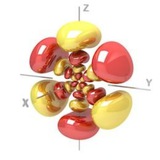
Researchers show how to make non-magnetic materials magnetic
https://phys.org/news/2020-08-non-magnetic-materials-magnetic.html
https://phys.org/news/2020-08-non-magnetic-materials-magnetic.html
phys.org
Researchers show how to make non-magnetic materials magnetic
A complex process can modify non-magnetic oxide materials in such a way to make them magnetic. The basis for this new phenomenon is controlled layer-by-layer growth of each material. An international ...
A highly light-absorbent and tunable material
https://phys.org/news/2020-08-highly-light-absorbent-tunable-material.html
https://phys.org/news/2020-08-highly-light-absorbent-tunable-material.html
phys.org
A highly light-absorbent and tunable material
By layering different two-dimensional materials, physicists at the University of Basel have created a novel structure with the ability to absorb almost all light of a selected wavelength. The achievement ...
Live Webinar: Machine Learning in Drug Discovery
-----------------------------------------------------
You are invited to an upcoming webinar hosted by Collaborative Drug
Discovery:
Demystifying Machine Learning (AI) in Drug Discovery
Thursday, September 10th at 9:00 am PDT, 12:00 pm EDT and 16:00 GMT
Free registration: https://info.collaborativedrug.com/2020-q3-scientific-webinar?utm_campaign=2020%20Q3%20Scientific%20Webinar&utm_source=ccl
Join panelists Dr. John Overington (Medicines Discovery Catapult), Dr. John Griffin (Integral Health), Dr. Jeff Warrington (Atomwise) for a cutting-edge discussion on modern machine learning (AI) methods applied to drug discovery data. Learn how various methodologies are being applied in real organizations. We hope to you see you there!
-----------------------------------------------------
You are invited to an upcoming webinar hosted by Collaborative Drug
Discovery:
Demystifying Machine Learning (AI) in Drug Discovery
Thursday, September 10th at 9:00 am PDT, 12:00 pm EDT and 16:00 GMT
Free registration: https://info.collaborativedrug.com/2020-q3-scientific-webinar?utm_campaign=2020%20Q3%20Scientific%20Webinar&utm_source=ccl
Join panelists Dr. John Overington (Medicines Discovery Catapult), Dr. John Griffin (Integral Health), Dr. Jeff Warrington (Atomwise) for a cutting-edge discussion on modern machine learning (AI) methods applied to drug discovery data. Learn how various methodologies are being applied in real organizations. We hope to you see you there!
Quantum Researchers Create an Error-Correcting Cat – New Device Combines Schrödinger’s Cat With Quantum Error Correction – SciTechDaily
https://scitechdaily.com/quantum-researchers-create-an-error-correcting-cat-new-device-combines-schrodingers-cat-with-quantum-error-correction/
https://scitechdaily.com/quantum-researchers-create-an-error-correcting-cat-new-device-combines-schrodingers-cat-with-quantum-error-correction/
SciTechDaily
Quantum Researchers Create an Error-Correcting Cat – New Device Combines Schrödinger’s Cat With Quantum Error Correction
Yale physicists have developed an error-correcting cat — a new device that combines the Schrödinger’s cat concept of superposition (a physical system existing in two states at once) with the ability to fix some of the trickiest errors in a quantum computation.…
How Scientists Solved One of the Greatest Open Questions in Quantum Physics - Scientific American
https://www.scientificamerican.com/article/how-scientists-solved-one-of-the-greatest-open-questions-in-quantum-physics/
https://www.scientificamerican.com/article/how-scientists-solved-one-of-the-greatest-open-questions-in-quantum-physics/
Scientific American
How Scientists Solved One of the Greatest Open Questions in Quantum Physics
The story of a macroscopic quantum system and a mathematical odyssey
Quantum Error Correction with Molecules | Quantum Frontiers
https://quantumfrontiers.com/2019/11/20/quantum-error-correction-with-molecules/
https://quantumfrontiers.com/2019/11/20/quantum-error-correction-with-molecules/
Quantum Frontiers
Quantum Error Correction with Molecules
TLDR on error correction.
Scientists Measured An Exact Moment In Quantum Time - And It Was Fuzzy
https://www.forbes.com/sites/fernandezelizabeth/2020/03/11/scientists-measured-an-exact-moment-in-quantum-timeand-it-was-fuzzy/
https://www.forbes.com/sites/fernandezelizabeth/2020/03/11/scientists-measured-an-exact-moment-in-quantum-timeand-it-was-fuzzy/
Forbes
Scientists Measured An Exact Moment In Quantum Time - And It Was Fuzzy
Recently, a team of researchers designed a clever experiment to watch how quantum systems become classical systems - and in the process, found that time is not as precise as we thought it was.
Media is too big
VIEW IN TELEGRAM
0604 - Solvation Models Continuum (Implicit) Solvent
Media is too big
VIEW IN TELEGRAM
0605 - Solvation Models Continuum (Implicit) Solvent
Media is too big
VIEW IN TELEGRAM
0606 - Solvation Models Phase-Phase Partitioning
Media is too big
VIEW IN TELEGRAM
0607 - Solvation Models Hybrid Explicit/Implicit Solvent
Wave-particle duality in action—big molecules surf on their own waves | Ars Technica
https://arstechnica.com/science/2020/07/wave-particle-duality-in-action-big-molecules-surf-on-their-own-waves/
https://arstechnica.com/science/2020/07/wave-particle-duality-in-action-big-molecules-surf-on-their-own-waves/
Ars Technica
Wave-particle duality in action—big molecules surf on their own waves
Heavy molecules reveal wave-like properties after scattering from light beam.
Free Webinar - MolScreen ADME Prediction Panels
MolScreen - Combining Deep Learning with Docking. Thousands of preclinical activity assays for drug candidates in silico.
https://register.gotowebinar.com/register/2829076811429870606
MolScreen - Combining Deep Learning with Docking. Thousands of preclinical activity assays for drug candidates in silico.
https://register.gotowebinar.com/register/2829076811429870606
Scientists Extend Quantum States by 22 Milliseconds. That's an Eternity.
https://news.yahoo.com/scientists-extend-quantum-states-22-210900147.html
https://news.yahoo.com/scientists-extend-quantum-states-22-210900147.html
Yahoo
Scientists Extend Quantum States by 22 Milliseconds. That's an Eternity.
Do you know what a computer can do in that time?
GCC 2020 (November 2-3) and the SAMPL Workshop (November 4) will now take
place virtually.
https://veranstaltungen.gdch.de/tms/frontend/index.cfm?l=10731&sp_id=2
The language for the meeting is English.
As announced earlier, the current situation forced us to resort to a purely virtual format for both GCC and the SAMPL workshop (originally termed "EuroSAMPL" as it was planned to be hosted as in-person meeting in Germany), which nevertheless provides an attractive platform for presenting and discussing exciting new research.
The GCC reflects and highlights the important role of cheminformatics, which connects the modern information and data-driven world with computational modelling of molecular systems. It spans a wide range of subjects related to the use of computers in chemistry, pharmacy, materials science and biology; from informatics and data science to atomistic modelling, and from fundamental academic research to industrial applications.
The scientific programme will include software workshops, contributed lectures (25+5 min), research telegrams (12+3 min), and - in parallel sessions - very brief "flash talks" (3+2 min to be held twice, open to everyone) instead of a poster session. Young academics (Ph.D. students only) are encouraged to select the format of research telegrams as an opportunity to present the highlights of their research to a wider audience. Ph.D. student submissions as full talks will compete against all contributions in this category and cannot be changed to the research telegram format if declined.
The conference contains slots for software workshops. Our sponsors will introduce the latest software developments to the participants. If you are interested in providing workshops or sponsoring please contact Dr. Stefan Güssregen at gcc-exhibition@chemoinformatics.info.
The SAMPL satellite workshop will encompass invited lectures and contributions from participants during the recent SAMPL blinded challenge on predicting protein-ligand and guest-host features as well as, depending on upcoming challenge deadlines, small molecule properties. This will give participants the opportunity to present and learn about state-of-the-art computational methodology benchmarked against high-quality experimental data. SAMPL lectures will take place from 1 p.m. to 9 p.m. (CET) to ease participation of North and South American residents.
place virtually.
https://veranstaltungen.gdch.de/tms/frontend/index.cfm?l=10731&sp_id=2
The language for the meeting is English.
As announced earlier, the current situation forced us to resort to a purely virtual format for both GCC and the SAMPL workshop (originally termed "EuroSAMPL" as it was planned to be hosted as in-person meeting in Germany), which nevertheless provides an attractive platform for presenting and discussing exciting new research.
The GCC reflects and highlights the important role of cheminformatics, which connects the modern information and data-driven world with computational modelling of molecular systems. It spans a wide range of subjects related to the use of computers in chemistry, pharmacy, materials science and biology; from informatics and data science to atomistic modelling, and from fundamental academic research to industrial applications.
The scientific programme will include software workshops, contributed lectures (25+5 min), research telegrams (12+3 min), and - in parallel sessions - very brief "flash talks" (3+2 min to be held twice, open to everyone) instead of a poster session. Young academics (Ph.D. students only) are encouraged to select the format of research telegrams as an opportunity to present the highlights of their research to a wider audience. Ph.D. student submissions as full talks will compete against all contributions in this category and cannot be changed to the research telegram format if declined.
The conference contains slots for software workshops. Our sponsors will introduce the latest software developments to the participants. If you are interested in providing workshops or sponsoring please contact Dr. Stefan Güssregen at gcc-exhibition@chemoinformatics.info.
The SAMPL satellite workshop will encompass invited lectures and contributions from participants during the recent SAMPL blinded challenge on predicting protein-ligand and guest-host features as well as, depending on upcoming challenge deadlines, small molecule properties. This will give participants the opportunity to present and learn about state-of-the-art computational methodology benchmarked against high-quality experimental data. SAMPL lectures will take place from 1 p.m. to 9 p.m. (CET) to ease participation of North and South American residents.
veranstaltungen.gdch.de
GCC 2020 and SAMPL Satellite Workshop - Virtual Edition
U2D steht für digitale Premiumlösungen nach Maß. Wir bieten die flexibelsten Softwarelösungen für das Eventmanagement sowie für das Lernmanagement.
Media is too big
VIEW IN TELEGRAM
0701 - Quantum MechanicalMolecular Mechanical (QMMM)
Media is too big
VIEW IN TELEGRAM
0702 - Quantum MechanicalMolecular Mechanical (QMMM)
Media is too big
VIEW IN TELEGRAM
0703 - Quantum MechanicalMolecular Mechanical (QMMM)
Google performed the first quantum simulation of a chemical reaction | New Scientist
https://www.newscientist.com/article/2253089-google-performed-the-first-quantum-simulation-of-a-chemical-reaction/
https://www.newscientist.com/article/2253089-google-performed-the-first-quantum-simulation-of-a-chemical-reaction/
New Scientist
Google performed the first quantum simulation of a chemical reaction
For the first time, Google has used its quantum computer Sycamore to simulate a chemical reaction, paving the way for quantum chemistry algorithms