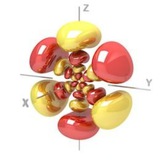
Software PACKMOL
- Initial configurations for Molecular Dynamics Simulations by packing optimization -
http://leandro.iqm.unicamp.br/m3g/packmol/download.shtml
- Initial configurations for Molecular Dynamics Simulations by packing optimization -
http://leandro.iqm.unicamp.br/m3g/packmol/download.shtml
What is your highest education (academic degree)?
Anonymous Poll
27%
Doctoral Degree
40%
Master's Degree
25%
Bachelor's Degree
6%
High School
2%
Other
Remember that Sci-Hub is on Telegram too. If you want to download most papers (and even some books) just add the @scihubot and enjoy.
The_Quantum_Cookbook_Mathematical_Recipes_for_the_Foundations_of.pdf
8.4 MB
The Quantum Cookbook: Mathematical Recipes for the Foundations of Quantum Mechanics
Mathematics_for_Quantum_Mechanics_An_Introductory_Survey_of_Operators.pdf
5.6 MB
Mathematics for Quantum Mechanics: An Introductory Survey of Operators, Eigenvalues, and Linear Vector Spaces
Mathematics for Quantum Mechanics - Martin Laforest.pdf
4.6 MB
Mathematics for Quantum Mechanics - Martin Laforest
Atomic nuclei go for a quantum swing – Physics World
https://physicsworld.com/a/atomic-nuclei-go-for-a-quantum-swing/
https://physicsworld.com/a/atomic-nuclei-go-for-a-quantum-swing/
Physics World
Atomic nuclei go for a quantum swing
Precisely controlling nuclear excitations could aid the development of ultraprecise clocks as well as batteries that can store huge amounts of energy
Automated chemistry sets new pace for materials discovery
https://phys.org/news/2021-03-automated-chemistry-pace-materials-discovery.html
https://phys.org/news/2021-03-automated-chemistry-pace-materials-discovery.html
phys.org
Automated chemistry sets new pace for materials discovery
Researchers at the Department of Energy's Oak Ridge National Laboratory and the University of Tennessee are automating the search for new materials to advance solar energy technologies.
What is your favorite software? (if other, then you care to comment?)
Anonymous Poll
47%
Gaussian
10%
Orca
5%
GAMESS
2%
CP2K
1%
Siesta
9%
Quantum espresso
10%
Vasp
2%
Q-Chem
9%
Gromacs
6%
Other
Understanding_Organometallic_Reaction_Mechanisms_and_Catalysis_Computational.pdf
4.5 MB
Understanding Organometallic Reaction Mechanisms and Catalysis - Computational and Experimental Tools
Software makes hand-drawn chemical structures machine readable
https://cen.acs.org/physical-chemistry/computational-chemistry/Software-makes-hand-drawn-chemical/99/i9
https://cen.acs.org/physical-chemistry/computational-chemistry/Software-makes-hand-drawn-chemical/99/i9
Chemical & Engineering News
Software makes hand-drawn chemical structures machine readable
Machine-learning tool recognizes molecules 3 times out of 4
***Elk version 7.1.14 has just been released***
This release improves the speed and memory footprint of the code, and is partly accomplished by switching some floating-point arithmetic in the second-variational step to single-precision.
We will continue this strategy to other parts of the code, in particular TDDFT and the ultra long-range method.
There are also bug fixes for the electron-phonon mean-field method. The spin density wave in bcc-Cr has been included as an example of the ultra long-range ansatz.
Best wishes,
Kay Dewhurst, Sangeeta Sharma, Lars Nordström, Francesco Cricchio, Oscar
Grånäs and Hardy Gross
https://sourceforge.net/projects/elk/
This release improves the speed and memory footprint of the code, and is partly accomplished by switching some floating-point arithmetic in the second-variational step to single-precision.
We will continue this strategy to other parts of the code, in particular TDDFT and the ultra long-range method.
There are also bug fixes for the electron-phonon mean-field method. The spin density wave in bcc-Cr has been included as an example of the ultra long-range ansatz.
Best wishes,
Kay Dewhurst, Sangeeta Sharma, Lars Nordström, Francesco Cricchio, Oscar
Grånäs and Hardy Gross
https://sourceforge.net/projects/elk/
SourceForge
Elk
Download Elk for free. An all-electron full-potential linearised augmented-planewave (FP-LAPW) code. Designed to be as developer friendly as possible so that new developments in the field of density functional theory (DFT) can be added quickly and reliably.
How Quantum Computing Could Remake Chemistry - Scientific American
https://www.scientificamerican.com/article/how-quantum-computing-could-remake-chemistry/
https://www.scientificamerican.com/article/how-quantum-computing-could-remake-chemistry/
Scientific American
How Quantum Computing Could Remake Chemistry
It will bring molecular modeling to a new level of accuracy, reducing researchers’ reliance on serendipity
Researchers enhance quantum machine learning algorithms
https://phys.org/news/2021-03-quantum-machine-algorithms.html
https://phys.org/news/2021-03-quantum-machine-algorithms.html
phys.org
Researchers enhance quantum machine learning algorithms
A Florida State University professor's research could help quantum computing fulfill its promise as a powerful computational tool.
Machine Learning for Virtually Unlimited Solar Cell Experiments – SciTechDaily
https://scitechdaily.com/machine-learning-for-virtually-unlimited-solar-cell-experiments/
https://scitechdaily.com/machine-learning-for-virtually-unlimited-solar-cell-experiments/
SciTechDaily
Machine Learning for Virtually Unlimited Solar Cell Experiments
Researchers at Osaka University use machine learning to design and virtually test molecules for organic solar cells, which can lead to higher efficiency functional materials for renewable energy applications. Osaka University researchers employed machine…
Why does DNA spontaneously mutate? Quantum physics might explain. | Live Science
https://www.livescience.com/quantum-physics-dna-mutations.html
https://www.livescience.com/quantum-physics-dna-mutations.html
livescience.com
Why does DNA spontaneously mutate? Quantum physics might explain.
Quantum mechanics, which rules the world of the teensy-tiny, may help explain why genetic mutations spontaneously crop up in DNA as it makes copies of itself, a recent study suggests.
Ultracold atoms permit direct observation of quasiparticle dynamics – Physics World
https://physicsworld.com/a/ultracold-atoms-permit-direct-observation-of-quasiparticle-dynamics/
https://physicsworld.com/a/ultracold-atoms-permit-direct-observation-of-quasiparticle-dynamics/
Physics World
Ultracold atoms permit direct observation of quasiparticle dynamics
Physicists witness the formation and subsequent non-equilibrium dynamics of a quasiparticle in an ultracold atomic gas
Quantum Bio·Inorganic Chemistry Society
The QBtopIC series is a new activity of the QBIC Society (www.qbicsoc.org). In these panel meetings, a discussion leader speaks with a number of invited experts on a topic that is of interest to the wider QBIC community and takes questions from the audience.
How to participate
Each meeting starts with a general introduction of the topic by the discussion leader, followed by short statements by the invited experts to highlight specific aspects. The remainder of the meeting is intended as a general discussion between the panel members with questions from the audience. In total the QBtopIC discussions should take 60-90 minutes.
You can put forward your questions or comments in the following ways:
– before the session as an e-mail to the discussion leader
– during the session through Twitter with the hashtag #QBtopIC #question
– during the session through the Zoom chat function
The QBIC Society plans to organise QBtopIC meetings on a monthly basis. If you have a topic in mind or an expert you would like to hear, please contact Vera Krewald via e-mail.
https://docs.google.com/forms/d/e/1FAIpQLSc6wi64fphlVLyo_L_3abUUMTkwOBmN8vPYCsfsUBKKZgrl-w/viewform
The QBtopIC series is a new activity of the QBIC Society (www.qbicsoc.org). In these panel meetings, a discussion leader speaks with a number of invited experts on a topic that is of interest to the wider QBIC community and takes questions from the audience.
How to participate
Each meeting starts with a general introduction of the topic by the discussion leader, followed by short statements by the invited experts to highlight specific aspects. The remainder of the meeting is intended as a general discussion between the panel members with questions from the audience. In total the QBtopIC discussions should take 60-90 minutes.
You can put forward your questions or comments in the following ways:
– before the session as an e-mail to the discussion leader
– during the session through Twitter with the hashtag #QBtopIC #question
– during the session through the Zoom chat function
The QBIC Society plans to organise QBtopIC meetings on a monthly basis. If you have a topic in mind or an expert you would like to hear, please contact Vera Krewald via e-mail.
https://docs.google.com/forms/d/e/1FAIpQLSc6wi64fphlVLyo_L_3abUUMTkwOBmN8vPYCsfsUBKKZgrl-w/viewform
Google Docs
QBtopIC Series
The QBtopIC series is a new activity of the QBIC Society (www.qbicsoc.org). In these panel meetings, a discussion leader speaks with a number of invited experts on a topic that is of interest to the wider QBIC community and takes questions from the audience.…
Research finds surprising electron interaction in 'magic-angle' graphene
https://phys.org/news/2021-03-electron-interaction-magic-angle-graphene.html
https://phys.org/news/2021-03-electron-interaction-magic-angle-graphene.html
phys.org
Research finds surprising electron interaction in 'magic-angle' graphene
In 2018, physicists showed that something interesting happens when two sheets of the nanomaterial graphene are placed on top of each other. When one layer is rotated to a "magic angle" of around 1.1 degrees ...
The_Feynman_Lectures_on_Physics_Quantum_Mechanics_by_Richard_P_Feynman.pdf
8.3 MB
The Feynman Lectures on Physics: Quantum Mechanics