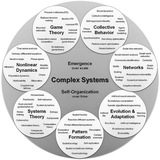
🔹 The following is a collection of papers regarded as "classic" literature in Complex Systems Science.
🔗 http://tuvalu.santafe.edu/events/workshops/index.php/Background_Readings_CSSS17
#CSSS2017
🔗 http://tuvalu.santafe.edu/events/workshops/index.php/Background_Readings_CSSS17
#CSSS2017
📄 Complex Systems Summer School 2017-Lecture Slides
🔗 http://tuvalu.santafe.edu/events/workshops/index.php/Complex_Systems_Summer_School_2017-Lecture_Slides
#CSSS2017
🔗 http://tuvalu.santafe.edu/events/workshops/index.php/Complex_Systems_Summer_School_2017-Lecture_Slides
#CSSS2017
📄 Writing the History of Dynamical Systems and Chaos:
Longue Duree and Revolution, Disciplines and Cultures
http://chaosbook.org/library/aubin-dahanPubl.pdf
Longue Duree and Revolution, Disciplines and Cultures
http://chaosbook.org/library/aubin-dahanPubl.pdf
🔖 The assembly of prestige and status in networks
Daniel Larremore
http://tuvalu.santafe.edu/events/workshops/images/8/87/Larremore_CSSS_PrestigeNetworks.pdf
#CSSS2017
Daniel Larremore
http://tuvalu.santafe.edu/events/workshops/images/8/87/Larremore_CSSS_PrestigeNetworks.pdf
#CSSS2017
#سمینارهای_هفتگی گروه سیستمهای پیچیده و علم شبکه دانشگاه شهید بهشتی
🔹دوشنبه، ۱۷ مهرماه، ساعت ۴:۰۰ - کلاس ٬۵ دانشکده فیزیک دانشگاه شهید بهشتی.
@carimi
🔹دوشنبه، ۱۷ مهرماه، ساعت ۴:۰۰ - کلاس ٬۵ دانشکده فیزیک دانشگاه شهید بهشتی.
@carimi
🔹 Something that bothers me about deep neural nets
John D. Cook, PhD
https://www.johndcook.com/blog/2017/10/09/something-that-bothers-me-about-deep-neural-nets/
Overfitting happens when a model does too good a job of matching a particular data set and so does a poor job on new data. The way traditional statistical models address the danger of overfitting is to limit the number of parameters. For example, you might fit a straight line (two parameters) to 100 data points, rather than using a 99-degree polynomial that could match the input data exactly and probably do a terrible job on new data. You find the best fit you can to a model that doesn’t have enough flexibility to match the data too closely.
Deep neural networks have enough parameters to overfit the data, but there are various strategies to keep this from happening. A common way to avoid overfitting is to deliberately do a mediocre job of fitting the model.
When it works well, the shortcomings of the optimization procedure yield a solution that differs from the optimal solution in a beneficial way. But the solution could fail to be useful in several ways. It might be too far from optimal, or deviate from the optimal solution in an unhelpful way, or the optimization method might accidentally do too good a job.
It a nutshell, the disturbing thing is that you have a negative criteria for what constitutes a good solution: one that’s not too close to optimal. But there are a lot of ways to not be too close to optimal. In practice, you experiment until you find an optimally suboptimal solution, i.e. the intentionally suboptimal fit that performs the best in validation.
John D. Cook, PhD
https://www.johndcook.com/blog/2017/10/09/something-that-bothers-me-about-deep-neural-nets/
Overfitting happens when a model does too good a job of matching a particular data set and so does a poor job on new data. The way traditional statistical models address the danger of overfitting is to limit the number of parameters. For example, you might fit a straight line (two parameters) to 100 data points, rather than using a 99-degree polynomial that could match the input data exactly and probably do a terrible job on new data. You find the best fit you can to a model that doesn’t have enough flexibility to match the data too closely.
Deep neural networks have enough parameters to overfit the data, but there are various strategies to keep this from happening. A common way to avoid overfitting is to deliberately do a mediocre job of fitting the model.
When it works well, the shortcomings of the optimization procedure yield a solution that differs from the optimal solution in a beneficial way. But the solution could fail to be useful in several ways. It might be too far from optimal, or deviate from the optimal solution in an unhelpful way, or the optimization method might accidentally do too good a job.
It a nutshell, the disturbing thing is that you have a negative criteria for what constitutes a good solution: one that’s not too close to optimal. But there are a lot of ways to not be too close to optimal. In practice, you experiment until you find an optimally suboptimal solution, i.e. the intentionally suboptimal fit that performs the best in validation.
Johndcook
Something that bothers me about deep neural networks
Deep learning depends on not solving an optimization problem too well.
Forwarded from رادیوفیزیک 📣
Audio
Abbas Karimi
صوت سخنرانی عباس کریمی با موضوع:
🎧 Inferring Pairwise Interactions from Biological Data Using Maximum-Entropy Probability Models
🎧 Inferring Pairwise Interactions from Biological Data Using Maximum-Entropy Probability Models