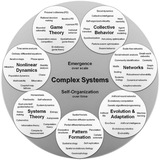
#سمینارهای_هفتگی گروه سیستمهای پیچیده و علم شبکه دانشگاه شهید بهشتی
🔹شنبه، ۵ خرداد، ساعت ۱۵:۱۰- کلاس ۴، طبقه سوم دانشکده فیزیک، دانشگاه شهید بهشتی
@carimi
🔹شنبه، ۵ خرداد، ساعت ۱۵:۱۰- کلاس ۴، طبقه سوم دانشکده فیزیک، دانشگاه شهید بهشتی
@carimi
🔹How a Pioneer of Machine Learning Became One of Its Sharpest Critics
Judea Pearl helped artificial intelligence gain a strong grasp on probability, but laments that it still can't compute cause and effect.
https://www.theatlantic.com/amp/article/560675/
Judea Pearl helped artificial intelligence gain a strong grasp on probability, but laments that it still can't compute cause and effect.
https://www.theatlantic.com/amp/article/560675/
Apply now for the 2018 JSMF Postdoctoral Fellowship in Understanding Dynamic & Multi-scale Systems. 2-3 yrs & freedom to choose where to pursue training. Deadline is June 15. https://t.co/5qTC0zaAJk
دومین سمپوزیوم تازه های نقشه برداری مغز ایران (ISBM2018)
http://nbml.ir/ISBM2018
http://nbml.ir/ISBM2018
🌐 "The atom is the icon of the 20th century. The atom whirls alone. It is the metaphor for individuality. But the atom is the past. The symbol for the next century is the net."
Kevin Kelly
Kevin Kelly
Applications are now open for our awesome new international winter school on complex networks. Check out the 2018 Complex Networks Winter Workshop here https://t.co/Xc6lVcF5kJ https://t.co/YxF7gLTilq
Forwarded from IPM Data Science
مدرسه تابستانی علم داده (مقدماتی)
🔵 پژوهشگاه دانشهای بنیادی با همکاری مرکز علوم داده آمستردام
🕖 9 تا 14 تیر 1397
📍ثبت نام و اطلاعات بیشتر در سایت
conf.ipm.ir/elementary-school
@IPMDataScience
🔵 پژوهشگاه دانشهای بنیادی با همکاری مرکز علوم داده آمستردام
🕖 9 تا 14 تیر 1397
📍ثبت نام و اطلاعات بیشتر در سایت
conf.ipm.ir/elementary-school
@IPMDataScience
🎞ٰٰ در این ویدیو خیلی سریع با #پایتون آشنا میشین! همینطور مرور خیلی خوبی هست برای کسانی که قبلترها دستشون به برنامهنویسی رفته و الان دنبال یه بهونه خوب برای شروع برنامه نویسی هستن:
https://www.aparat.com/v/7y04v
https://www.aparat.com/v/7y04v
آپارات - سرویس اشتراک ویدیو
پایتون: صفر تا صد در ۲ ساعت!
CS50 2016 - Week 8 - Pythonٰٰدر این ویدیو خیلی سریع با پایتون آشنا میشین! همین طور مرور خیلی خوبی هست برای کسانی که قبل ترها دستشون به برنامه نویسی رفته و الان دنبال یه بهونه خوب برای شروع برنامه نویسی هستن.
🍄 Instead of arguing about whether results hold up, let’s push to provide enough information for others to repeat the experiments, says Philip Stark
https://www.nature.com/articles/d41586-018-05256-0
🔹 Science should be ‘show me’, not ‘trust me’; it should be ‘help me if you can’, not ‘catch me if you can’.
🔸 Just as I have pledged not to review papers that are not preproducible, I have also pledged not to submit papers without providing the software I used, and — to the extent permitted by law and ethics — the underlying data. I urge you to do the same. The commitment that Boyle made to the scientific community is even more crucial today.
https://www.nature.com/articles/d41586-018-05256-0
🔹 Science should be ‘show me’, not ‘trust me’; it should be ‘help me if you can’, not ‘catch me if you can’.
🔸 Just as I have pledged not to review papers that are not preproducible, I have also pledged not to submit papers without providing the software I used, and — to the extent permitted by law and ethics — the underlying data. I urge you to do the same. The commitment that Boyle made to the scientific community is even more crucial today.
Nature
Before reproducibility must come preproducibility
Instead of arguing about whether results hold up, let’s push to provide enough information for others to repeat the experiments, says Philip Stark.
🔹 PhD Fellowship in Tensor Networks/Hamiltonian Complexity
http://deepquantum.ai/phd-fellowship-in-tensor-networks-hamiltonian-complexity/
🤹♂ Experience in quantum theory/computing is not required. Students who have completed or are nearing completion of a masters degree with backgrounds in an area of mathematical sciences with interest in quantum computing are encouraged to apply.
http://deepquantum.ai/phd-fellowship-in-tensor-networks-hamiltonian-complexity/
🤹♂ Experience in quantum theory/computing is not required. Students who have completed or are nearing completion of a masters degree with backgrounds in an area of mathematical sciences with interest in quantum computing are encouraged to apply.
📈 MCMC sampling for dummies
http://twiecki.github.io/blog/2015/11/10/mcmc-sampling/
http://twiecki.github.io/blog/2015/11/10/mcmc-sampling/
Everything you ever wanted to know about controlling your brain (ok, let's settle on a worm for now, no offense...). FAQ about Brain Control here: https://t.co/AM8YGMZuMu https://t.co/QCmIE6OFuR
توی این کار نشون دادن هرچی در دانشگاه خوش آوازهتری مشغول باشی، شانس بیشتری داری که حرفت شنیده بشه!
🔖 Prestige drives epistemic inequality in the diffusion of scientific ideas
Allison C. Morgan, Dimitrios Economou, Samuel F. Way, Aaron Clauset
🔗 arxiv.org/pdf/1805.09966v1.pdf
📌 ABSTRACT
The spread of ideas in the scientific community is often viewed as a competition, in which good ideas spread further because of greater intrinsic fitness. As a result, it is commonly believed that publication venue and citation counts correlate with importance and impact. However, relatively little is known about how structural factors influence the spread of ideas, and specifically how where an idea originates can influence how it spreads. Here, we investigate the role of faculty hiring networks, which embody the set of researcher transitions from doctoral to faculty institutions, in shaping the spread of ideas in computer science, and the importance of where in the network an idea originates. We consider comprehensive data on the hiring events of 5,032 faculty at all 205 Ph.D.-granting departments of computer science in the U.S. and Canada, and on the timing and noscripts of 200,476 associated publications. Analyzing three popular research topics, we show empirically that faculty hiring plays a significant role in driving the spread of ideas across the community. We then use epidemic models to simulate the generic spread of research ideas and quantify the consequences of where an idea originates on its longterm diffusion across the network. We find that research from prestigious institutions spreads more quickly and completely than work of similar quality originating from less prestigious institutions. Our analyses establish the theoretical trade-offs between university prestige and the quality of ideas necessary for efficient circulation. These results suggest a lower bound for epistemic inequality, identify a mechanism for the persistent epistemic advantage observed for elite institutions, and highlight limitations for meritocratic ideals.
🔖 Prestige drives epistemic inequality in the diffusion of scientific ideas
Allison C. Morgan, Dimitrios Economou, Samuel F. Way, Aaron Clauset
🔗 arxiv.org/pdf/1805.09966v1.pdf
📌 ABSTRACT
The spread of ideas in the scientific community is often viewed as a competition, in which good ideas spread further because of greater intrinsic fitness. As a result, it is commonly believed that publication venue and citation counts correlate with importance and impact. However, relatively little is known about how structural factors influence the spread of ideas, and specifically how where an idea originates can influence how it spreads. Here, we investigate the role of faculty hiring networks, which embody the set of researcher transitions from doctoral to faculty institutions, in shaping the spread of ideas in computer science, and the importance of where in the network an idea originates. We consider comprehensive data on the hiring events of 5,032 faculty at all 205 Ph.D.-granting departments of computer science in the U.S. and Canada, and on the timing and noscripts of 200,476 associated publications. Analyzing three popular research topics, we show empirically that faculty hiring plays a significant role in driving the spread of ideas across the community. We then use epidemic models to simulate the generic spread of research ideas and quantify the consequences of where an idea originates on its longterm diffusion across the network. We find that research from prestigious institutions spreads more quickly and completely than work of similar quality originating from less prestigious institutions. Our analyses establish the theoretical trade-offs between university prestige and the quality of ideas necessary for efficient circulation. These results suggest a lower bound for epistemic inequality, identify a mechanism for the persistent epistemic advantage observed for elite institutions, and highlight limitations for meritocratic ideals.
Forwarded from Sitpor.org سیتپـــــور
برسانید به دست کسانی که کنکور کارشناسی دادهاند:
📢 چهارسال فیزیک!
چهارسال گذشت و دوره کارشناسی فیزیک من تموم شد. چهارسال پر از فراز و نشیبی که با تمام لذتها و هیجانها، سختیها و فشارها بالاخره به پایان رسید (من ورودی ۹۱ فیزیک دانشگاه شهیدبهشتی بودم). قصد دارم طی این نوشته، تجربههای خودم از دوران کارشناسی فیزیک رو بنویسم. امیدوارم این نوشته برای کسایی که قصد دارن فیزیک رو به صورت آکادمیک شروع کنن و برای کسانی که به تازگی وارد فیزیک شدن مفید واقع بشه!
🔗 http://www.sitpor.org/2016/06/bachelor-of-science-in-physics/
📢 چهارسال فیزیک!
چهارسال گذشت و دوره کارشناسی فیزیک من تموم شد. چهارسال پر از فراز و نشیبی که با تمام لذتها و هیجانها، سختیها و فشارها بالاخره به پایان رسید (من ورودی ۹۱ فیزیک دانشگاه شهیدبهشتی بودم). قصد دارم طی این نوشته، تجربههای خودم از دوران کارشناسی فیزیک رو بنویسم. امیدوارم این نوشته برای کسایی که قصد دارن فیزیک رو به صورت آکادمیک شروع کنن و برای کسانی که به تازگی وارد فیزیک شدن مفید واقع بشه!
🔗 http://www.sitpor.org/2016/06/bachelor-of-science-in-physics/
As #ICCS2018 approaches, here is a list of "significant points" to ponder in the study of complex systems.
In order to help establish a backdrop for the ICCS conferences, I have compiled (with much feedback and contributions from others) a list of "significant points" in the study of complex systems. These are supposed to represent key conceptual insights coupled with mathematical tools for the analysis and discussion of complex systems in general. Feedback and additions are welcome. The points are provided only in brief. In general some familiarity is assumed. Some controversial points are included (what field has no controversy?).
Y. Bar-Yam
http://www.necsi.edu/guide/points.html?platform=hootsuite
In order to help establish a backdrop for the ICCS conferences, I have compiled (with much feedback and contributions from others) a list of "significant points" in the study of complex systems. These are supposed to represent key conceptual insights coupled with mathematical tools for the analysis and discussion of complex systems in general. Feedback and additions are welcome. The points are provided only in brief. In general some familiarity is assumed. Some controversial points are included (what field has no controversy?).
Y. Bar-Yam
http://www.necsi.edu/guide/points.html?platform=hootsuite