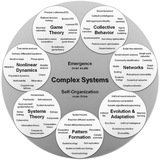
Are most systems really organized into scale-free networks? A new paper has cracked open a raging argument in network science.
https://t.co/aJJmWSLETo
https://t.co/aJJmWSLETo
Netlab gives an intuitive UI for interactive lessons in complexity.
Dear ImGui: https://t.co/E0fH1VcPFY
Course: https://t.co/L1AUcnqpMH https://t.co/Rxm0ppX6W8
Dear ImGui: https://t.co/E0fH1VcPFY
Course: https://t.co/L1AUcnqpMH https://t.co/Rxm0ppX6W8
Forwarded from R Learning
How to deal with missing values in time series with R
https://cran.r-project.org/web/packages/imputeTS/imputeTS.pdf
https://github.com/SteffenMoritz/imputeTS
#R #missing_values #imputeTS
https://cran.r-project.org/web/packages/imputeTS/imputeTS.pdf
https://github.com/SteffenMoritz/imputeTS
#R #missing_values #imputeTS
Forwarded from R Learning
How to fix the problem imputeTS installation along installing:
use this command to install this package:
install.packages("https://cran.r-project.org/src/contrib/Archive/RcppArmadillo/RcppArmadillo_0.6.100.0.0.tar.gz", repos=NULL, type="source")
install.packages("imputeTS")
use this command to install this package:
install.packages("https://cran.r-project.org/src/contrib/Archive/RcppArmadillo/RcppArmadillo_0.6.100.0.0.tar.gz", repos=NULL, type="source")
install.packages("imputeTS")
Forwarded from Complex Systems Studies
🌀 Tehran school on Theory and Applications of Complex Networks
3-7 Shahrivar 1397
🔗 More info:
http://facultymembers.sbu.ac.ir/jafari/events/
📄 Registration:
http://psi.ir/tacn2018_3.asp
3-7 Shahrivar 1397
🔗 More info:
http://facultymembers.sbu.ac.ir/jafari/events/
📄 Registration:
http://psi.ir/tacn2018_3.asp
Complex Systems Studies
🌀 Tehran school on Theory and Applications of Complex Networks 3-7 Shahrivar 1397 🔗 More info: http://facultymembers.sbu.ac.ir/jafari/events/ 📄 Registration: http://psi.ir/tacn2018_3.asp
⚠ این یک مدرسه تخصصیه و به دوستانی که در حوزه علم شبکه و سیستمهای پیچیده مشغول به پژوهش هستن توصیه میشه. بهطور ويژه دوستان باید پیشزمینهای از علم شبکه داشته باشن. در حد کتاب علمشبکه باراباشی لینک. همینطور مهارتهای برنامهنویسی به شدت نیازه.
🇬🇧 تمام ارائهها و درسها به زبان انگلیسی هست.
💰هزینه شرکت در این مدرسه ۵ روزه، برای دانشجویان ایرانی ۱۸۰ هزار تومن و برای دوستان خارجی ۲۰۰ یورو (به همراه اسکان) هست. ثبتنام شامل دو مرحله است: ابتدا شما فرمهای مشخص شده رو پر میکنید و رزومهتون رو آپلود میکنید. مرحله بعدی، دریافت پذیرش و اقدام برای پرداخت هزینه است.
🇬🇧 تمام ارائهها و درسها به زبان انگلیسی هست.
💰هزینه شرکت در این مدرسه ۵ روزه، برای دانشجویان ایرانی ۱۸۰ هزار تومن و برای دوستان خارجی ۲۰۰ یورو (به همراه اسکان) هست. ثبتنام شامل دو مرحله است: ابتدا شما فرمهای مشخص شده رو پر میکنید و رزومهتون رو آپلود میکنید. مرحله بعدی، دریافت پذیرش و اقدام برای پرداخت هزینه است.
BarabásiLab
Network Science by Albert-László Barabási
The power of network science, the beauty of network visualization.
🔖 Typology of phase transitions in Bayesian inference problems
Federico Ricci-Tersenghi, Guilhem Semerjian, Lenka Zdeborova
🔗 Download
📌 ABSTRACT
Many inference problems, notably the stochastic block model (SBM) that generates a random graph with a hidden community structure, undergo phase transitions as a function of the signal-to-noise ratio, and can exhibit hard phases in which optimal inference is information-theoretically possible but computationally challenging. In this paper we refine this denoscription in two ways. In a qualitative perspective we emphasize the existence of more generic phase diagrams with a hybrid-hard phase in which it is computationally easy to reach a non-trivial inference accuracy, but computationally hard to match the information theoretically optimal one. We support this discussion by quantitative expansions of the functional cavity equations that describe inference problems on sparse graphs. These expansions shed light on the existence of hybrid-hard phases, for a large class of planted constraint satisfaction problems, and on the question of the tightness of the Kesten-Stigum (KS) bound for the associated tree reconstruction problem. Our results show that the instability of the trivial fixed point is not a generic evidence for the Bayes-optimality of the message passing algorithms. We clarify in particular the status of the symmetric SBM with 4 communities and of the tree reconstruction of the associated Potts model: in the assortative (ferromagnetic) case the KS bound is always tight, whereas in the disassortative (antiferromagnetic) case we exhibit an explicit criterion involving the degree distribution that separates a large degree regime where the KS bound is tight and a low degree regime where it is not. We also investigate the SBM with 2 communities of different sizes, a.k.a. the asymmetric Ising model, and describe quantitatively its computational gap as a function of its asymmetry. We complement this study with numerical simulations of the Belief Propagation iterative algorithm.
Federico Ricci-Tersenghi, Guilhem Semerjian, Lenka Zdeborova
🔗 Download
📌 ABSTRACT
Many inference problems, notably the stochastic block model (SBM) that generates a random graph with a hidden community structure, undergo phase transitions as a function of the signal-to-noise ratio, and can exhibit hard phases in which optimal inference is information-theoretically possible but computationally challenging. In this paper we refine this denoscription in two ways. In a qualitative perspective we emphasize the existence of more generic phase diagrams with a hybrid-hard phase in which it is computationally easy to reach a non-trivial inference accuracy, but computationally hard to match the information theoretically optimal one. We support this discussion by quantitative expansions of the functional cavity equations that describe inference problems on sparse graphs. These expansions shed light on the existence of hybrid-hard phases, for a large class of planted constraint satisfaction problems, and on the question of the tightness of the Kesten-Stigum (KS) bound for the associated tree reconstruction problem. Our results show that the instability of the trivial fixed point is not a generic evidence for the Bayes-optimality of the message passing algorithms. We clarify in particular the status of the symmetric SBM with 4 communities and of the tree reconstruction of the associated Potts model: in the assortative (ferromagnetic) case the KS bound is always tight, whereas in the disassortative (antiferromagnetic) case we exhibit an explicit criterion involving the degree distribution that separates a large degree regime where the KS bound is tight and a low degree regime where it is not. We also investigate the SBM with 2 communities of different sizes, a.k.a. the asymmetric Ising model, and describe quantitatively its computational gap as a function of its asymmetry. We complement this study with numerical simulations of the Belief Propagation iterative algorithm.
🏦 Facebook reported that the effective diameter (covering 90% of all pairs of users) of its social network is five and is decreasing with time.
The equivalent number for the bitcoin transaction network is fourteen and is increasing with time. That is, across 90% of all pairs of transactions, the shortest path between them in the transaction network, ignoring directionality, is at most fourteen hops. The increasing value is likely due to the fact that, unlike the Facebook social network, there is no preferential attachment. New nodes are connected to existing nodes whose corresponding transactions are not yet fully redeemed. In other words, the transaction network is growing at the frontier only.
https://www.google.com/amp/s/www.coindesk.com/network-analysts-view-block-chain/amp/
The equivalent number for the bitcoin transaction network is fourteen and is increasing with time. That is, across 90% of all pairs of transactions, the shortest path between them in the transaction network, ignoring directionality, is at most fourteen hops. The increasing value is likely due to the fact that, unlike the Facebook social network, there is no preferential attachment. New nodes are connected to existing nodes whose corresponding transactions are not yet fully redeemed. In other words, the transaction network is growing at the frontier only.
https://www.google.com/amp/s/www.coindesk.com/network-analysts-view-block-chain/amp/
CoinDesk
A Network Analyst's View of the Block Chain
Analysing the block chain's network structure can help us grasp bitcoin's usage patterns, economy and growth.
🌐 "Knitworks" - The latest and first network addition to Complexity Explorables is now online. Have fun....
http://rocs.hu-berlin.de/explorables/explorables/networks/
http://rocs.hu-berlin.de/explorables/explorables/networks/
www.complexity-explorables.org
Complexity Explorables
Interactive explorations of complex systems in biology, physics, mathematics, social sciences, ecology, epidemiology and ....
📈 The notes below are our attempt to re-develop #economic_theory from scratch, namely starting with the axiom that individuals optimize what happens to them over time, not what happens to them on average in a collection of parallel worlds. The latter, surprisingly, is the starting point of the currently dominant form of economic theory.
https://ergodicityeconomics.com/lecture-notes/
https://ergodicityeconomics.com/lecture-notes/
آزمایشگاه ملی نقشه برداری مغز برگزار میکند:
کارگاه سه روزه عملی آمار در محیط R, روش های کاربردی در علوم شناختی و نقشه برداری مغز
زمان: ۱۳ الی ۱۵ تیر ۱۳۹۷
ثبت نام و کسب اطلاعات بیشتر:
www.nbml.ir
کارگاه سه روزه عملی آمار در محیط R, روش های کاربردی در علوم شناختی و نقشه برداری مغز
زمان: ۱۳ الی ۱۵ تیر ۱۳۹۷
ثبت نام و کسب اطلاعات بیشتر:
www.nbml.ir
🌀 https://www.the-tls.co.uk/articles/public/thomas-bayes-science-crisis/amp/?__twitter_impression=true
TLS
Thomas Bayes and the crisis in science
Footnotes to Plato is a TLS Online series appraising the works and legacies of the great thinkers and philosophers
We are living in new Bayesian age. Applications of Bayesian probability are taking over our lives. Doctors, lawyers, engineers and financiers…
We are living in new Bayesian age. Applications of Bayesian probability are taking over our lives. Doctors, lawyers, engineers and financiers…
A new thermodynamic theory of glasses explains the high efficiency of the swap Monte Carlo algorithm. https://t.co/IG84nzxGbI https://t.co/8UX1TAXZGJ
⚽ "Using network science to analyze football passing networks: dynamics, space, time and the multilayer nature of the game. arXiv:1807.00534v1
[physics.soc-ph]
[physics.soc-ph]