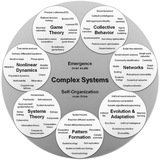
🌀 There are few places left to study our Master in Physics of Complex Systems. Take the opportunity to continue your training at a "Maria de Maeztu" centre of excellence. For more information, please visit: https://ifisc.uib-csic.es/master/
https://www.youtube.com/watch?v=usn8Ea2kBWk
https://www.youtube.com/watch?v=usn8Ea2kBWk
🌀 If you don't know anything about the Monte Carlo method, here is a very nice, easy to understand introduction by the Russian/Lithuanian mathematician/engineer Ilya Sobel. https://t.co/aQnJYs9d05
Internet Archive
The Monte-Carlo Method (Little Mathematics Library) : I. M. Sobol : Free Download, Borrow, and Streaming : Internet Archive
Everybody had at some moment used the words âprobabilityâ and ârandom variableâ. The intuitive idea of the probability (considered as frequency)...
TCNS 2018
Photo
مدرسه تابستانی یادگیری عمیق در دانشگاه تهران. دهم تا دوازدهم مرداد. ثبت نام تا چهارم مرداد.
http://acm.ut.ac.ir/deeplearning
http://acm.ut.ac.ir/deeplearning
Forwarded from IPM Biological Sciences
Forwarded from گردهمايی پيوند
سومین گردهمایی پیوند
📅 سهشنبه ۱۶ مرداد
⏰ ۹ تا ۱۸
🏛 تالار ابن هیثم، دانشکده فیزیک دانشگاه شهیدبهشتی
📌 ثبتنام:
peyvand.me
@peyvandgathering
📅 سهشنبه ۱۶ مرداد
⏰ ۹ تا ۱۸
🏛 تالار ابن هیثم، دانشکده فیزیک دانشگاه شهیدبهشتی
📌 ثبتنام:
peyvand.me
@peyvandgathering
سومین گردهمایی پیوند
📅 سهشنبه ۱۶ مرداد
⏰ ۹ تا ۱۸
🏛 تالار ابن هیثم، دانشکده فیزیک دانشگاه شهیدبهشتی
📌 ثبتنام:
peyvand.me
@peyvandgathering
📅 سهشنبه ۱۶ مرداد
⏰ ۹ تا ۱۸
🏛 تالار ابن هیثم، دانشکده فیزیک دانشگاه شهیدبهشتی
📌 ثبتنام:
peyvand.me
@peyvandgathering
🧓 "Introduction to Applied Linear Algebra – Vectors, Matrices, and Least Squares"
Book by Prof. Stephen P. Boyd (Stanford) and Prof. Lieven Vandenberghe (UCLA)
Available online
https://t.co/843XLv8xWD
Book by Prof. Stephen P. Boyd (Stanford) and Prof. Lieven Vandenberghe (UCLA)
Available online
https://t.co/843XLv8xWD
🔅 "Reexamining the renormalization group: Period doubling onset of chaos" (new paper by Archishman Raju, James P Sethna): https://t.co/DdB1BAHDFX
🔖 A different approach to introducing statistical mechanics
Thomas A. Moore, Daniel V. Schroeder
🔗 https://arxiv.org/pdf/1502.07051.pdf
📌 ABSTRACT
The basic notions of statistical mechanics (microstates, multiplicities) are quite simple, but understanding how the second law arises from these ideas requires working with cumbersomely large numbers. To avoid getting bogged down in mathematics, one can compute multiplicities numerically for a simple model system such as an Einstein solid -- a collection of identical quantum harmonic oscillators. A computer spreadsheet program or comparable software can compute the required combinatoric functions for systems containing a few hundred oscillators and units of energy. When two such systems can exchange energy, one immediately sees that some configurations are overwhelmingly more probable than others. Graphs of entropy vs. energy for the two systems can be used to motivate the theoretical definition of temperature, T=(∂S/∂U)−1, thus bridging the gap between the classical and statistical approaches to entropy. Further spreadsheet exercises can be used to compute the heat capacity of an Einstein solid, study the Boltzmann distribution, and explore the properties of a two-state paramagnetic system.
Thomas A. Moore, Daniel V. Schroeder
🔗 https://arxiv.org/pdf/1502.07051.pdf
📌 ABSTRACT
The basic notions of statistical mechanics (microstates, multiplicities) are quite simple, but understanding how the second law arises from these ideas requires working with cumbersomely large numbers. To avoid getting bogged down in mathematics, one can compute multiplicities numerically for a simple model system such as an Einstein solid -- a collection of identical quantum harmonic oscillators. A computer spreadsheet program or comparable software can compute the required combinatoric functions for systems containing a few hundred oscillators and units of energy. When two such systems can exchange energy, one immediately sees that some configurations are overwhelmingly more probable than others. Graphs of entropy vs. energy for the two systems can be used to motivate the theoretical definition of temperature, T=(∂S/∂U)−1, thus bridging the gap between the classical and statistical approaches to entropy. Further spreadsheet exercises can be used to compute the heat capacity of an Einstein solid, study the Boltzmann distribution, and explore the properties of a two-state paramagnetic system.
Here is the paper presented by Barabasi at #ICCS2018:
Controllability of complex networks
https://t.co/3YklaJm78N
Controllability of complex networks
https://t.co/3YklaJm78N