🎧 Tomorrow we release our #podcast w Network Scientist, Albert-László Barabási @barabasi — His new book The Formula is out now, be sure to grab your copy & listen to this sneak peek of his in-depth interview #TheComplexityPodcast
https://t.co/uWYIwRLtGv
https://t.co/uWYIwRLtGv
Libsyn
115 - Episode Preview with Albert-László Barabási
In this episode preview, we share a clip from our interview with Albert-László Barabási. Barabási is the Robert Gray Dodge Professor of Network Science and a Distinguished University Professor at Northeastern University, where he directs the Center for Complex…
🎭 Scale-free Networks Well Done
“scale-free networks are definitely not as rare as one would conclude based on the popular but unrealistic assumption that real-world data comes from power laws of pristine purity, void of noise and deviations”
https://t.co/iBxudOe58b
“scale-free networks are definitely not as rare as one would conclude based on the popular but unrealistic assumption that real-world data comes from power laws of pristine purity, void of noise and deviations”
https://t.co/iBxudOe58b
Forwarded from Sitpor.org سیتپـــــور
〽️Topology and Geometry of Urban Road Networks
By: saray shai (Assistant Professor at Wesleyan University)
🌐 https://vimeo.com/299556586
🎲 @ComplexSys
By: saray shai (Assistant Professor at Wesleyan University)
🌐 https://vimeo.com/299556586
🎲 @ComplexSys
Vimeo
Topology and Geometry of Urban Road Networks
Center for Collective Dynamics of Complex Systems (CoCo) Seminar Series November 7, 2018 Saray Shai (Computer Science, Wesleyan University) "Topology and Geometry…
Why Excel Users Should Learn Python : https://t.co/XwF1IbqYy0 #abdsc #BigData #Analytics #DataScientists #Coding
So, check out this "Complete Tutorial To Learn #DataScience With #Python From Scratch": https://t.co/PfQ5gfcke5 #MachineLearning #AI #Algorithms
So, check out this "Complete Tutorial To Learn #DataScience With #Python From Scratch": https://t.co/PfQ5gfcke5 #MachineLearning #AI #Algorithms
Optimization of Scientific Code with Cython: Ising Model | Pythonic Perambulations
https://jakevdp.github.io/blog/2017/12/11/live-coding-cython-ising-model/
https://jakevdp.github.io/blog/2017/12/11/live-coding-cython-ising-model/
jakevdp.github.io
Optimization of Scientific Code with Cython: Ising Model | Pythonic Perambulations
#سمینارهای_هفتگی مرکز شبکههای پیچیده و مردمشناسی دانشگاه شهید بهشتی
⏰ یکشنبه، ۲۰ آبان، ساعت ۱۶:۴۵
🏛 محل برگزاری: سالن ابن هیثم
@mhakim
⏰ یکشنبه، ۲۰ آبان، ساعت ۱۶:۴۵
🏛 محل برگزاری: سالن ابن هیثم
@mhakim
〽️ THE 2019 30 under 30 Inventing the future from the atom up
🌐 https://www.forbes.com/30-under-30/2019/science/#18aaf2477add
🎲 @ComplexSys
🌐 https://www.forbes.com/30-under-30/2019/science/#18aaf2477add
🎲 @ComplexSys
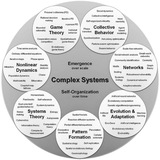
☄ We just launched our new browse page - all of the amazing, high-quality resources on Complexity Explorer can now be searched according to topic, type, difficulty, and/or source.
Here is a little bit about what each of these fields mean:
Topic: The Complexity Explorer Team decided these topics comprehensively represent Complex Systems Science and the content on Complexity Explorer.
Type: These are the eight content types we have on Complexity Explorer.
Difficulty Levels:
Level 1: Straightforward and easy-to-navigate denoscriptions requiring little to no mathematical calculations and are intended for an audience without an assumption of background. Articles, pop-sci books, educational videos, general blogs, course syllabi, etc. that take a short time commitment.
Level 2: Slightly technical material requiring some basic mathematics that may include basic calculus and algebra for full understanding. "Entry" level science—which can be applied or theoretical—and should be understandable by those with undergraduate math and science courses. These should take at most an evening's work to fully understand.
Level 3: Methods or tools that build off of an assumed knowledge base. A wide range of competency covered and may include the use of nonlinear differential equations and matrix algebra to illustrate concepts. Typically defined as "advanced undergraduate to early graduate." Time commitment varies, but these require some expertise in a subject area to fully comprehend.
Level 4: Technically advanced or field-specific topics that usually require an extensive background in the subject field to comprehend fully, while those outside the field may not understand techniques or references. Graduate-level material that requires a professional level of expertise in understanding or applications. Also reserved for Masters and PhD-level program descirption pages.
Source: This helps you know what or what type of institution or party is responsible for the production of this resource. For content we make in house - it is either Complexity Explorer or Santa Fe Institute. For content that you can access online - link an online course from someone else this would be 'Online'. For resources that are not courses, but something like an informative webpage, or a blog, we call those 'Web Resources'. Lastly, we like to acknowledge our fellow Complexity Research Centers, so you will see these centers there too!
You will also notice that we have now color coded each content type!
We hope you enjoy this new utility and, as this is a brand new functionality for Complexity Explorer, please let us know any feedback about how you like it or how to improve it at admin@complexityexplorer.org.
In the future we hope to make the curation and tagging of resources an interactive element for users to participate in - so stay tuned and thanks for all being Complexity Explorers!
Here is a little bit about what each of these fields mean:
Topic: The Complexity Explorer Team decided these topics comprehensively represent Complex Systems Science and the content on Complexity Explorer.
Type: These are the eight content types we have on Complexity Explorer.
Difficulty Levels:
Level 1: Straightforward and easy-to-navigate denoscriptions requiring little to no mathematical calculations and are intended for an audience without an assumption of background. Articles, pop-sci books, educational videos, general blogs, course syllabi, etc. that take a short time commitment.
Level 2: Slightly technical material requiring some basic mathematics that may include basic calculus and algebra for full understanding. "Entry" level science—which can be applied or theoretical—and should be understandable by those with undergraduate math and science courses. These should take at most an evening's work to fully understand.
Level 3: Methods or tools that build off of an assumed knowledge base. A wide range of competency covered and may include the use of nonlinear differential equations and matrix algebra to illustrate concepts. Typically defined as "advanced undergraduate to early graduate." Time commitment varies, but these require some expertise in a subject area to fully comprehend.
Level 4: Technically advanced or field-specific topics that usually require an extensive background in the subject field to comprehend fully, while those outside the field may not understand techniques or references. Graduate-level material that requires a professional level of expertise in understanding or applications. Also reserved for Masters and PhD-level program descirption pages.
Source: This helps you know what or what type of institution or party is responsible for the production of this resource. For content we make in house - it is either Complexity Explorer or Santa Fe Institute. For content that you can access online - link an online course from someone else this would be 'Online'. For resources that are not courses, but something like an informative webpage, or a blog, we call those 'Web Resources'. Lastly, we like to acknowledge our fellow Complexity Research Centers, so you will see these centers there too!
You will also notice that we have now color coded each content type!
We hope you enjoy this new utility and, as this is a brand new functionality for Complexity Explorer, please let us know any feedback about how you like it or how to improve it at admin@complexityexplorer.org.
In the future we hope to make the curation and tagging of resources an interactive element for users to participate in - so stay tuned and thanks for all being Complexity Explorers!