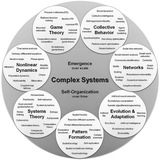
Complex Systems Studies
🕸 New Course Alert! 💡 Learn about #networks (like this co-authorship network map of physicians publishing on hepatitis C) from both a computer science & an #economics standpoint! https://t.co/yZfOaX65yK
The course is aimed at developing a systematic understanding and analysis of networks and processes over networks.
⭕️ Course Denoscription
Networks are ubiquitous in our modern society. The World Wide Web that links us to and enables information flows with the rest of the world is the most visible example. But it is only one of many networks within which we are situated. Our social life is organized around networks of friends and colleagues. These networks determine our information, influence our opinions, and shape our political attitudes. They also link us, often through important but weak ties, to everybody else in the United States and in the world. Economic and financial markets also look much more like networks than anonymous marketplaces. Firms interact with the same suppliers and customers and use web-like supply chains. Financial linkages, both among banks and between consumers, companies, and banks, also form a network over which funds flow and risks are shared. Systemic risk in financial markets often results from the counterparty risks created within this financial network. Food chains, interacting biological systems, and the spread and containment of epidemics are some of the other natural and social phenomena that exhibit a marked networked structure.
This course will highlight common principles that permeate the functioning of these networks and how the same issues related to robustness, fragility, and interlinkages arise in several different types of networks. It will both introduce conceptual tools from dynamical systems, random graph models, optimization, and game theory, and cover a wide variety of applications including: learning and informational cascades; economic and financial networks; social influence networks; formation of social groups; communication networks and the Internet; consensus and gossiping; spread and control of epidemics; and control and use of energy networks.
⭕️ Course Denoscription
Networks are ubiquitous in our modern society. The World Wide Web that links us to and enables information flows with the rest of the world is the most visible example. But it is only one of many networks within which we are situated. Our social life is organized around networks of friends and colleagues. These networks determine our information, influence our opinions, and shape our political attitudes. They also link us, often through important but weak ties, to everybody else in the United States and in the world. Economic and financial markets also look much more like networks than anonymous marketplaces. Firms interact with the same suppliers and customers and use web-like supply chains. Financial linkages, both among banks and between consumers, companies, and banks, also form a network over which funds flow and risks are shared. Systemic risk in financial markets often results from the counterparty risks created within this financial network. Food chains, interacting biological systems, and the spread and containment of epidemics are some of the other natural and social phenomena that exhibit a marked networked structure.
This course will highlight common principles that permeate the functioning of these networks and how the same issues related to robustness, fragility, and interlinkages arise in several different types of networks. It will both introduce conceptual tools from dynamical systems, random graph models, optimization, and game theory, and cover a wide variety of applications including: learning and informational cascades; economic and financial networks; social influence networks; formation of social groups; communication networks and the Internet; consensus and gossiping; spread and control of epidemics; and control and use of energy networks.
#سمینارهای_هفتگی مرکز شبکههای پیچیده و مردمشناسی دانشگاه شهید بهشتی
⏰ یکشنبه، ۹ دی، ساعت ۱۶:۴۵
🏛 محل برگزاری: سالن ابن هیثم
به همراه معرفی مقدماتی مدل سازی عامل مبنا، نرم افزار تخصصی NetLogo و چندنمونه از شبیه سازی های انجام شده درمورد
segregation model
اکوسیستم حیوانات،
مثلث سرپینسکی و بازی آشوب توسط زهرا کاظمی.
@mhakim
⏰ یکشنبه، ۹ دی، ساعت ۱۶:۴۵
🏛 محل برگزاری: سالن ابن هیثم
به همراه معرفی مقدماتی مدل سازی عامل مبنا، نرم افزار تخصصی NetLogo و چندنمونه از شبیه سازی های انجام شده درمورد
segregation model
اکوسیستم حیوانات،
مثلث سرپینسکی و بازی آشوب توسط زهرا کاظمی.
@mhakim
🎞 Game Theory
https://oyc.yale.edu/economics/econ-159
About the Course
This course is an introduction to game theory and strategic thinking. Ideas such as dominance, backward induction, Nash equilibrium, evolutionary stability, commitment, credibility, asymmetric information, adverse selection, and signaling are discussed and applied to games played in class and to examples drawn from economics, politics, the movies, and elsewhere.
Course Structure
This Yale College course, taught on campus twice per week for 75 minutes, was recorded for Open Yale Courses in Fall 2007.
https://oyc.yale.edu/economics/econ-159
About the Course
This course is an introduction to game theory and strategic thinking. Ideas such as dominance, backward induction, Nash equilibrium, evolutionary stability, commitment, credibility, asymmetric information, adverse selection, and signaling are discussed and applied to games played in class and to examples drawn from economics, politics, the movies, and elsewhere.
Course Structure
This Yale College course, taught on campus twice per week for 75 minutes, was recorded for Open Yale Courses in Fall 2007.
🎞 Machine Learning at IAS
As part of the 2017–18 Theoretical Machine Learning Lecture Series at IAS, Visiting Professor in the School of Mathematics Sanjeev Arora organized a public lecture series, which included talks by him and Richard Zemel, Visitor in the School and a Professor of Computer Science at the University of Toronto where he serves as Research Director of the Vector Institute of Artificial Intelligence, on "Machines: How Do They Learn and Where Are They Headed?"; Yann LeCun, Facebook’s chief artificial intelligence scientist and founder of the Facebook AI Research lab, on "How Could Machines Learn as Efficiently as Animals and Humans?"; and Christopher Manning, Thomas M. Siebel Professor in Machine Learning and Professor of Linguistics and of Computer Science at Stanford University, on "Deep Learning and Cognition."
Find videos of the lectures below.
https://www.ias.edu/ideas/machine-learning
As part of the 2017–18 Theoretical Machine Learning Lecture Series at IAS, Visiting Professor in the School of Mathematics Sanjeev Arora organized a public lecture series, which included talks by him and Richard Zemel, Visitor in the School and a Professor of Computer Science at the University of Toronto where he serves as Research Director of the Vector Institute of Artificial Intelligence, on "Machines: How Do They Learn and Where Are They Headed?"; Yann LeCun, Facebook’s chief artificial intelligence scientist and founder of the Facebook AI Research lab, on "How Could Machines Learn as Efficiently as Animals and Humans?"; and Christopher Manning, Thomas M. Siebel Professor in Machine Learning and Professor of Linguistics and of Computer Science at Stanford University, on "Deep Learning and Cognition."
Find videos of the lectures below.
https://www.ias.edu/ideas/machine-learning
Institute for Advanced Study
Video: Machine Learning at IAS
As part of the 2017–18 Theoretical Machine Learning Lecture Series at IAS, Visiting Professor in the School of Mathematics Sanjeev Arora organized a public lecture series, which included talks by him and Richard Zemel, Visitor in the School and a Professor…
🍭 اگر فیزیکدان هستید یا سابقهای در فیزیک دارین و دوست دارین زیستشناسی یاد بگیرین، این توصیه گلدنفلد رو بد نیست که بخونید:
🌀 Most biology books are awful, in my opinion. I find the subject difficult to learn, and you probably will also if you are attracted to the intellectual style of my work. By far the nicest read is the Problems in Biology by Maynard Smith, written 20 years or so ago, but still very relevant. Although written for the general public, he approaches biology from a physicist's perspective. The other book I would recommend is Ptashne's Genetic Switch book, which describes modern gene regulation in a simple way without too much chemistry or jargon. It cries out for mathematisation, which is really what is systems biology; the place to start there is Uri Alon's book.
https://www.amazon.com/Problems-Biology-Opus-Books/dp/0192891987/ref=ed_oe_p
https://www.amazon.com/Genetic-Switch-Phage-Lambda-Revisited/dp/0879697164
https://www.amazon.com/Introduction-Systems-Biology-Mathematical-Computational/dp/1584886420
🌀 Most biology books are awful, in my opinion. I find the subject difficult to learn, and you probably will also if you are attracted to the intellectual style of my work. By far the nicest read is the Problems in Biology by Maynard Smith, written 20 years or so ago, but still very relevant. Although written for the general public, he approaches biology from a physicist's perspective. The other book I would recommend is Ptashne's Genetic Switch book, which describes modern gene regulation in a simple way without too much chemistry or jargon. It cries out for mathematisation, which is really what is systems biology; the place to start there is Uri Alon's book.
https://www.amazon.com/Problems-Biology-Opus-Books/dp/0192891987/ref=ed_oe_p
https://www.amazon.com/Genetic-Switch-Phage-Lambda-Revisited/dp/0879697164
https://www.amazon.com/Introduction-Systems-Biology-Mathematical-Computational/dp/1584886420
Amazon
The Problems of Biology (The Problems of science): Smith, John Maynard: 9780192891983: Amazon.com: Books
Buy The Problems of Biology (The Problems of science) on Amazon.com ✓ FREE SHIPPING on qualified orders
Forwarded from رادیوفیزیک 📣
«آیا فیزیک میتواند شبکههای اجتماعی را تحلیل کند؟!«
ویدیو ارائه عباس کریمی در مورد علم شبکه
سومین همایش پیوند
دانشگاه شهیدبهشتی تابستان ۹۷
🎞 https://www.aparat.com/v/w9Sy3
فایل صوتی:
🔗 http://bit.ly/2vICezc
ویدیو ارائه عباس کریمی در مورد علم شبکه
سومین همایش پیوند
دانشگاه شهیدبهشتی تابستان ۹۷
🎞 https://www.aparat.com/v/w9Sy3
فایل صوتی:
🔗 http://bit.ly/2vICezc
آپارات - سرویس اشتراک ویدیو
آیا فیزیک می تواند شبکه های اجتماعی را تحلیل کند؟
همایش پیوند - sitpor.orgارائه عباس کریمی در مورد علم شبکهسومین همایش پیوند - دانشگاه شهیدبهشتیتابستان ۹۷اطلاعات بیشتر و اسلایدها در: http://www.sitpor.org/2018/12/physics-of-social-networks/
Forwarded from MathSBU (Saba kd)
تقریب توابع ترکیبی برای حسابان کسری
- سخنران: دکتر محسن رزاقی، رئیس دپارتمان ریاضیات و آمار دانشگاه ایالتی میسیسیپی
- زمان: چهارشنبه 12 دی، ساعت 3 بعد از ظهر
- مکان: تالار دانشکده علوم ریاضی، دانشگاه شهید بهشتی
- سخنران: دکتر محسن رزاقی، رئیس دپارتمان ریاضیات و آمار دانشگاه ایالتی میسیسیپی
- زمان: چهارشنبه 12 دی، ساعت 3 بعد از ظهر
- مکان: تالار دانشکده علوم ریاضی، دانشگاه شهید بهشتی
🦋 A tutorial at NetSciX'19 by Eduardo Graells-Garrido. Held on January 2nd, 2019. Happy New Year!
https://github.com/carnby/pythonnetworkvis
Introductory slides available at http://bit.ly/NetworkVisInPython
https://github.com/carnby/pythonnetworkvis
Introductory slides available at http://bit.ly/NetworkVisInPython
Twitter
Eduardo G (@carnby) | Twitter
The latest Tweets from Eduardo G (@carnby). Investigo Movilidad Urbana en @BSC_CNS. Escribo relatos. Extraño a los zorzales. Colecciono postres y peluches. Amo y soy amado. Neo SCL / Neo BCN
همه دروغ میگویند!
https://bit.ly/2RxlWFm
کتاب EVERYBODY LIES یکی از کتابهای جذاب برای آشنایی با قابلیتهای حوزه Big Data میباشد که توسط ست استفندیویدویتز یکی از دانشمندان داده شرکت گوگل در جهت معرفی قابلیتهای تحلیلداده منتشر گردیده است.
این محقق چهار سال را صرف تحلیل دادههای ناشناس گوگل کرده است. تحقیقات او درباره موضوعاتی همچون بیماریهای روانی، سقط جنین، مذهب و پزشکی بوده است. او معتقد است که جستجوهای گوگل مهمترین پایگاه دادهای است که تاکنون در مورد روح و روان انسان وجود دارد.
در این کتاب مقایسههای مختلفی از جستجوهای کاربران موتور جستجو گوگل با نظرسنجیها عمومی صورت گرفته است. نتایج این تحقیق نشان از وجود اختلاف میان این دو حوزه و ارزش تحلیل اطلاعات در عصر جدید است.
در ادامه بخشی از توضیحات این کتاب آورده شده است:
همه دروغ میگویند. مردم در مورد اینکه چند بار به باشگاه میروند، قیمت کفش آنها چقدر است و کتابهایی که میخوانند، دروغ میگویند. آنها سر کار نمیروند چون بیمار هستند، اما در واقع دروغ میگویند. آنها میگویند که با شما تماس میگیرند، اما نمیگیرند.
محور اصلی این کتاب جمله زیر میباشد:
آیا مردم در سرچهای خود در موتور جستجو گوگل نیز دروغ خواهد گفت؟!
پینوشت:
1- اگر علاقهمند به شنیدن کتابهای صوتی و پادکست هستید میتوانید خلاصه این کتاب را در اپیزود شماره 3 پادکست Bplus گوش دهید. در پست بعدی این پادکست قرار داده خواهد شد.
2-مطالعه این کتاب برای متخصصین جامعهشناسی، روانشناسی، مدیران و... بسیار مفید خواهد بود.
ارادتمند
محمدرضا محتاط
© @DataAnalysis
🎲 @ComplexSys
https://bit.ly/2RxlWFm
کتاب EVERYBODY LIES یکی از کتابهای جذاب برای آشنایی با قابلیتهای حوزه Big Data میباشد که توسط ست استفندیویدویتز یکی از دانشمندان داده شرکت گوگل در جهت معرفی قابلیتهای تحلیلداده منتشر گردیده است.
این محقق چهار سال را صرف تحلیل دادههای ناشناس گوگل کرده است. تحقیقات او درباره موضوعاتی همچون بیماریهای روانی، سقط جنین، مذهب و پزشکی بوده است. او معتقد است که جستجوهای گوگل مهمترین پایگاه دادهای است که تاکنون در مورد روح و روان انسان وجود دارد.
در این کتاب مقایسههای مختلفی از جستجوهای کاربران موتور جستجو گوگل با نظرسنجیها عمومی صورت گرفته است. نتایج این تحقیق نشان از وجود اختلاف میان این دو حوزه و ارزش تحلیل اطلاعات در عصر جدید است.
در ادامه بخشی از توضیحات این کتاب آورده شده است:
همه دروغ میگویند. مردم در مورد اینکه چند بار به باشگاه میروند، قیمت کفش آنها چقدر است و کتابهایی که میخوانند، دروغ میگویند. آنها سر کار نمیروند چون بیمار هستند، اما در واقع دروغ میگویند. آنها میگویند که با شما تماس میگیرند، اما نمیگیرند.
محور اصلی این کتاب جمله زیر میباشد:
آیا مردم در سرچهای خود در موتور جستجو گوگل نیز دروغ خواهد گفت؟!
پینوشت:
1- اگر علاقهمند به شنیدن کتابهای صوتی و پادکست هستید میتوانید خلاصه این کتاب را در اپیزود شماره 3 پادکست Bplus گوش دهید. در پست بعدی این پادکست قرار داده خواهد شد.
2-مطالعه این کتاب برای متخصصین جامعهشناسی، روانشناسی، مدیران و... بسیار مفید خواهد بود.
ارادتمند
محمدرضا محتاط
© @DataAnalysis
🎲 @ComplexSys
BPlus Podcast Episode 3 : Everybody Lies
Ali Bandari
3:Everybody Lies اپیزود سوم پادکست بیپلاس
〽️The statistical mechanics of Twitter
🌐Paper : https://arxiv.org/abs/1812.07029
🎲 @ComplexSys
#Physics #Society #StatisticPhysics
🌐Paper : https://arxiv.org/abs/1812.07029
🎲 @ComplexSys
#Physics #Society #StatisticPhysics
The Korean Government just released DataKorea! DataKorea is built on DataUSA's open source code and includes many nice additions, such as the use of telco data to provide activity metrics for different places in major korean cities. Check it out!
https://t.co/ifyErmNzuU
https://t.co/ifyErmNzuU
"Surges of collective human activity emerge from pairwise correlations" has just been accepted at PRX (https://t.co/PBvvpF9BdK). We show that spikes of collective activity, from emails and private messages to face-to-face interactions and music streaming, can be predicted by a maximum entropy model that is only aware of pairwise correlations between individuals. Moreover, the functional interactions look very much like the networks of inter-human communication themselves!
Forwarded from Sitpor.org سیتپـــــور
IFISC announces the 2019 Colloquia on Complex Systems, a series of seminars by leading scientists in CS, starting on Jan 16. All seminars will be broadcasted via: https://t.co/QCCiNMgYB1
🌔 A Complete Tutorial to learn Data Science in R from Scratch https://t.co/SJalbK0TLg
Datasciencecentral
A Complete Tutorial to learn Data Science in R from Scratch
This article on a complete tutorial to learn Data Science in R from scratch, was posted by Manish Saraswat. Manish who works in marketing and Data Science at A…