Forwarded from رادیو پیچیدگی
Closer to Truth
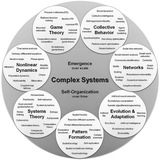
🔸 Does ordinary stuff have mysterious properties? Take anything; find all its parts; combine those parts any way you like. What do you expect? Nothing at all like what you have. It's called "emergence" and it describes how wondrously our world works. But is it a real mystery?
@Radio_Complexity
🔸 Does ordinary stuff have mysterious properties? Take anything; find all its parts; combine those parts any way you like. What do you expect? Nothing at all like what you have. It's called "emergence" and it describes how wondrously our world works. But is it a real mystery?
@Radio_Complexity
🔹 If you use Twitter's API to gather data and would like to learn more about how to reconstruct Twitter's firehose, I have a preliminary paper I am working on that I'd like to make available for comments: https://t.co/kpSyEuaC57
If you use Twitter data -- READ THIS!
#bigdata
If you use Twitter data -- READ THIS!
#bigdata
Google Docs
Reconstructing Twitter's Firehose
Reconstructing Twitter's Firehose How to reconstruct over 99% of Twitter's firehose for any time period Author: Jason Michael Baumgartner (Owner of Pushshift.io) E-mail: jason@pushshift.io Twitter: @jasonbaumgartne Since there has been a lot of interest…
Good opportunity to work on #DataScience in Pisa, especially if you are interested in #SportsAnalytics and #ScienceOfSuccess! :-)
Last couple of days to apply to the first session of the #CallForApplication for the #PhD program in #DataScience, open for students of all disciplines
Deadline: 28 February 2019
#BigData #Call #Grant
https://t.co/zQQAvIGbTt
Last couple of days to apply to the first session of the #CallForApplication for the #PhD program in #DataScience, open for students of all disciplines
Deadline: 28 February 2019
#BigData #Call #Grant
https://t.co/zQQAvIGbTt
Forwarded from Complex Networks (SBU)
#سمینار_عمومی
تحلیل بحران اقتصادی کشور با رویکرد فیزیک اقتصاد
دکتر سید علی حسینی
🎞 https://youtu.be/dGvcwgg_PDc
—————————————
🕸 SBU Center for Complex Networks & Social Data Science
🕸 @CCNSD 🔗 ccnsd.ir
—————————————
تحلیل بحران اقتصادی کشور با رویکرد فیزیک اقتصاد
دکتر سید علی حسینی
🎞 https://youtu.be/dGvcwgg_PDc
—————————————
🕸 SBU Center for Complex Networks & Social Data Science
🕸 @CCNSD 🔗 ccnsd.ir
—————————————
YouTube
Econphysics approach on Iran's recession by Dr.Ali Hosseiny
Forwarded from Complex Networks (SBU)
#سمینارهای_هفتگی
مرکز شبکههای پیچیده و علمداده اجتماعی دانشگاه شهید بهشتی (CCNSD)
📝 CCNSD Interdisciplinary Research Projects on Twitter, Arms Trade & Co-citation Maps
🗣 دکتر کوثر کریمیپور - CCNSD
⏰ دوشنبه، ۱۳ اسفند ساعت ۱۶:۰۰
🏛 محل برگزاری: سالن ابنهیثم
⭕️ شرکت برای همه آزاد و رایگان است. برای هماهنگی با مسئول جلسه آقای محمدحسین حکیمی تماس بگیرید:
📞 @mhakim
—————————————
🕸 SBU Center for Complex Networks & Social Data Science
🕸 @CCNSD 🔗 ccnsd.ir
—————————————
مرکز شبکههای پیچیده و علمداده اجتماعی دانشگاه شهید بهشتی (CCNSD)
📝 CCNSD Interdisciplinary Research Projects on Twitter, Arms Trade & Co-citation Maps
🗣 دکتر کوثر کریمیپور - CCNSD
⏰ دوشنبه، ۱۳ اسفند ساعت ۱۶:۰۰
🏛 محل برگزاری: سالن ابنهیثم
⭕️ شرکت برای همه آزاد و رایگان است. برای هماهنگی با مسئول جلسه آقای محمدحسین حکیمی تماس بگیرید:
📞 @mhakim
—————————————
🕸 SBU Center for Complex Networks & Social Data Science
🕸 @CCNSD 🔗 ccnsd.ir
—————————————
Forwarded from کافه فیزیک بهشتی (sbuPhysics)
#کافه_فیزیک 🤗
سری #پنجم
#جلسه یازدهم 💫
آیا تا به حال فکر کردهاید چه فیزیک و ریاضی پیچیدهای در پس روابط انسانها وجود دارد؟!
«بالانس تئوری» 🗓دوشنبه ۱۳ اسفند ۹۷
🕰ساعت ۱۷
📍دانشکده فیزیک بهشتی
منتظر حضور فیزیکیتون هستیم 😊☕️
❗️راستی لیوان شخصی یادتون نره! به احترام طبیعت 🙂 @sbu_physicscafe
سری #پنجم
#جلسه یازدهم 💫
آیا تا به حال فکر کردهاید چه فیزیک و ریاضی پیچیدهای در پس روابط انسانها وجود دارد؟!
«بالانس تئوری» 🗓دوشنبه ۱۳ اسفند ۹۷
🕰ساعت ۱۷
📍دانشکده فیزیک بهشتی
منتظر حضور فیزیکیتون هستیم 😊☕️
❗️راستی لیوان شخصی یادتون نره! به احترام طبیعت 🙂 @sbu_physicscafe
Neurosexism: the myth that men and women have different brains
https://www.nature.com/articles/d41586-019-00677-x?sf208537564=1&fbclid=IwAR0EIWRwG_C6MMXt5xe-2qySa1vxVskYopFFYiUeCDZbryLGjhZzLIXp6JE
https://www.nature.com/articles/d41586-019-00677-x?sf208537564=1&fbclid=IwAR0EIWRwG_C6MMXt5xe-2qySa1vxVskYopFFYiUeCDZbryLGjhZzLIXp6JE
🧩 “The wisdom of the crowds” suggests that decentralized systems get smarter when they get bigger. But new research finds important exceptions to that rule.
https://t.co/5y3tcPbAH9
https://t.co/5y3tcPbAH9
Quanta Magazine
Smarter Parts Make Collective Systems Too Stubborn
As researchers delve deeper into the behavior of decentralized collective systems, they’re beginning to question some of their initial assumptions.
The Conference Proceeding will be indexed in ISC
Deadline for registration and paper submission:
⭕️ March 19, 2019 (28 Esfand, 1397)
https://iasbs.ac.ir/seminars/condmat-meeting/m25/
Deadline for registration and paper submission:
⭕️ March 19, 2019 (28 Esfand, 1397)
https://iasbs.ac.ir/seminars/condmat-meeting/m25/
🔅 https://www.artsy.net/article/artsy-editorial-artists-famous-friends-originality-work/
While past studies have suggested that there is a link between creativity and fame, Ingram and Banerjee found, in contrast, that there was no such correlation for these artists. Rather, artists with a large and diverse network of contacts were most likely to be famous, regardless of how creative their art was.
“An important implication of the paper is to show that diverse networks matter not only as a source of creativity…but could mean other benefits,” Ingram said. “That even aside from creativity…the artists benefit from the cosmopolitan identity.”
While past studies have suggested that there is a link between creativity and fame, Ingram and Banerjee found, in contrast, that there was no such correlation for these artists. Rather, artists with a large and diverse network of contacts were most likely to be famous, regardless of how creative their art was.
“An important implication of the paper is to show that diverse networks matter not only as a source of creativity…but could mean other benefits,” Ingram said. “That even aside from creativity…the artists benefit from the cosmopolitan identity.”
Artsy
Study Finds Artists Become Famous through Their Friends, Not the Originality of Their Work
A new study on the early pioneers of abstraction found that artists with diverse social networks were most famous, regardless of the creativity of their work.
🔹 finally out:
"Scale-free networks are rare"
We thoroughly test the empirical ubiquity of 'scale-free networks' using a huge networks corpus, multiple evidence classes, and reliable stats tools
#NatureComms https://t.co/60L2SbEVkh 1/3
"Scale-free networks are rare"
We thoroughly test the empirical ubiquity of 'scale-free networks' using a huge networks corpus, multiple evidence classes, and reliable stats tools
real networks are far more structurally diverse than claims of 'universality' can cover. We don't know what creates this diversity, but probably not any single mechanism. These findings bolster the need for new work figuring what mechanisms structure real networks.
#NatureComms https://t.co/60L2SbEVkh 1/3
Nature Communications
Scale-free networks are rare
Real-world networks are often said to be ”scale free”, meaning their degree distribution follows a power law. Broido and Clauset perform statistical tests of this claim using a large and diverse corpus of real-world networks, showing that scale-free structure…
Forwarded from Sci-Hub
stanley1988.pdf
738.4 KB
Stanley, H. E., & Meakin, P. (1988). Multifractal phenomena in physics and chemistry. Nature, 335(6189), 405–409. doi:10.1038/335405a0
🔸 عناوین پیشنهادی برای پایان نامه دوره کارشناسی ارشد در زمینه سیستمهای پیچیده - دکتر سید محمدصادق موحد
http://facultymembers.sbu.ac.ir/movahed/attachments/movahed_master_proposal_97.pdf
http://facultymembers.sbu.ac.ir/movahed/attachments/movahed_master_proposal_97.pdf
🗒 Phase transitions and asymmetry between signal comprehension and production in biological communication
🖇 https://www.nature.com/articles/s41598-019-40141-4
📌Abstract
We introduce a model for collective information acquisition from the environment, in a biological population. In this model, individuals can make noisy observations of the environment, and communicate their observation by production and comprehension of signals. As the communication noise decreases, the model shows an order-disorder transition from a disordered phase in which no consensus about the environmental state exists to an ordered phase where the population forms a consensus about the environmental state. The ordered phase itself is composed of an informed consensus, in which the correct belief about the environment prevails, and an uninformed consensus phase, in which consensus on a random belief about the environmental state is formed. The probability of reaching informed consensus increases with increasing the observation probability. This phenomenology implies that a maximum noise level, and a minimum observation probability are necessary for informed consensus in a communicating population. Furthermore, we show that the fraction of observant individuals needed for the group to reach informed consensus decreases with increasing population size. This results from a shift in the uninformed-informed transition to smaller observation probabilities by increasing population size. Importantly, we also find that an amount of noise in signal production deteriorates the information flow and the inference capability, more than the same amount of noise in comprehension. This finding implies that there is higher selection pressure to reduce noise in production of signals compared to comprehension. Regarding this asymmetry, we propose an experimental design to separately measure comprehension and production noise in a given population and test the predicted asymmetry.
Mohammad Salahshour, Shahin Rouhani & Yasser Roudi
🖇 https://www.nature.com/articles/s41598-019-40141-4
📌Abstract
We introduce a model for collective information acquisition from the environment, in a biological population. In this model, individuals can make noisy observations of the environment, and communicate their observation by production and comprehension of signals. As the communication noise decreases, the model shows an order-disorder transition from a disordered phase in which no consensus about the environmental state exists to an ordered phase where the population forms a consensus about the environmental state. The ordered phase itself is composed of an informed consensus, in which the correct belief about the environment prevails, and an uninformed consensus phase, in which consensus on a random belief about the environmental state is formed. The probability of reaching informed consensus increases with increasing the observation probability. This phenomenology implies that a maximum noise level, and a minimum observation probability are necessary for informed consensus in a communicating population. Furthermore, we show that the fraction of observant individuals needed for the group to reach informed consensus decreases with increasing population size. This results from a shift in the uninformed-informed transition to smaller observation probabilities by increasing population size. Importantly, we also find that an amount of noise in signal production deteriorates the information flow and the inference capability, more than the same amount of noise in comprehension. This finding implies that there is higher selection pressure to reduce noise in production of signals compared to comprehension. Regarding this asymmetry, we propose an experimental design to separately measure comprehension and production noise in a given population and test the predicted asymmetry.
Nature
Phase transitions and asymmetry between signal comprehension and production in biological communication
Scientific Reports - Phase transitions and asymmetry between signal comprehension and production in biological communication
Complex Systems Studies
🔹 finally out: "Scale-free networks are rare" We thoroughly test the empirical ubiquity of 'scale-free networks' using a huge networks corpus, multiple evidence classes, and reliable stats tools real networks are far more structurally diverse than claims…
Nature
Rare and everywhere: Perspectives on scale-free networks
Nature Communications - Are scale-free networks rare or universal? Important or not? We present the recent research about degree distributions of networks. This is a controversial topic, but, we...
🧩 The politics of physicists social models
Jensen Pablo
https://arxiv.org/pdf/1903.00964.pdf
I give an overview of the topic of this special issue, the applications of (statistical) physics to social sciences at large. I discuss several examples of simple social models put forward by physicists and discuss their interest. I argue that while they may be conceptually useful to correct our intuitive models of social mechanisms, their relevance for real social systems is moot. What is more, since physicists have always needed to tame the world inside laboratories to make their models relevant, I suggest that social modeling might be linked to human taming, a smashing political project.
Jensen Pablo
https://arxiv.org/pdf/1903.00964.pdf
I give an overview of the topic of this special issue, the applications of (statistical) physics to social sciences at large. I discuss several examples of simple social models put forward by physicists and discuss their interest. I argue that while they may be conceptually useful to correct our intuitive models of social mechanisms, their relevance for real social systems is moot. What is more, since physicists have always needed to tame the world inside laboratories to make their models relevant, I suggest that social modeling might be linked to human taming, a smashing political project.