New on arXiv: "PySINDy: A Python package for the Sparse Identification of Nonlinear Dynamics from Data"
(by Brian M. de Silva, Kathleen Champion, Markus Quade, Jean-Christophe Loiseau, J. Nathan Kutz, Steven L. Brunton): https://t.co/HWnBdDYCSm
(by Brian M. de Silva, Kathleen Champion, Markus Quade, Jean-Christophe Loiseau, J. Nathan Kutz, Steven L. Brunton): https://t.co/HWnBdDYCSm
bit.ly/DynaCORE-C-FA
تحقیق گروه دایناکر یه تحقیق بینالمللی برای بررسی رفتارها و اثرات ناشی از استرسه که تا این لحظه دهها هزار نفر شرکت کننده داشته. با تلاشها و درخواست جمعی از ما، ترجمه این تحقیق توسط محققین داوطلب ایرانی در آلمان انجام شده. لطفا پاسخنامه رو پر کنین و به اشتراک بذارین. امیدواریم نتایج این تحقیق کمکی در راستای بهبود حال همهی مردم دنیا باشه.
سعی خواهیم کرد مقالات منتشر شده بر اساس این پروژه رو همینجا در آینده به اشتراک بذاریم.
تحقیق گروه دایناکر یه تحقیق بینالمللی برای بررسی رفتارها و اثرات ناشی از استرسه که تا این لحظه دهها هزار نفر شرکت کننده داشته. با تلاشها و درخواست جمعی از ما، ترجمه این تحقیق توسط محققین داوطلب ایرانی در آلمان انجام شده. لطفا پاسخنامه رو پر کنین و به اشتراک بذارین. امیدواریم نتایج این تحقیق کمکی در راستای بهبود حال همهی مردم دنیا باشه.
سعی خواهیم کرد مقالات منتشر شده بر اساس این پروژه رو همینجا در آینده به اشتراک بذاریم.
www.research.net
نرم افزار نظرسنجی آنلاین: نظرسنجی بسته شده
در حال حاضر این نظرسنجی بسته شده است. لطفاً برای دریافت راهنمایی با نویسنده نظرسنجی تماس بگیرید.
در صورت تمایل به کسب اطلاعات بیشتر و مشاهده اسامی سرپرستان پروژه دایناکر به لینک زیر مراجعه کنید:
https://dynamore-project.eu/our-studies/dynacore-c-in-25-languages/
https://dynamore-project.eu/our-studies/dynacore-c-in-25-languages/
The simple task of recognizing a stop sign is harder than we can imagine. @karpathy
https://t.co/vo8gqSvJ1Y https://t.co/SX1Eq0hqM4
https://t.co/vo8gqSvJ1Y https://t.co/SX1Eq0hqM4
Great tool by @reichlab showing the covid-19 forecasts of different teams and producing an ensemble approach.
https://t.co/XlWokOvcjq
https://t.co/XlWokOvcjq
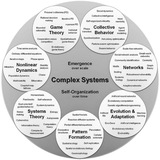
Complex Systems Studies
Network Epidemiology Online Workshop Series Join us for Understanding and Exploring Network Epidemiology in the Time of Coronavirus, a special online workshop series presented by the University of Maryland’s COMBINE program in network biology in partnership…
YouTube
Net-COVID Session3A: Human mobility and control measures in the COVID-19 epidemic by Sam Scarpino
Third lecture (seminar) of the Net-COVID online series: Understanding and Exploring Network Epidemiology in the Time of Coronavirus. Seminar by Sam Scarpino ...
😄 So You Think You Know C?
And Ten More Short Essays on Programming Languages
by Oleksandr Kaleniuk
https://wordsandbuttons.online/SYTYKC.pdf
And Ten More Short Essays on Programming Languages
by Oleksandr Kaleniuk
https://wordsandbuttons.online/SYTYKC.pdf
Science in the time of corona - https://t.co/ujeOQjkbOM
The #COVID19 crisis could change the way we conduct our scientific lives, for better and for worse.
The #COVID19 crisis could change the way we conduct our scientific lives, for better and for worse.
Covid19 updates.
Considering the current circumstances, the impact of the pandemic and ongoing travel bans, organizers of SocInfo2020 are moving forward with the assumption that SocInfo2020 will be a hybrid of in-person and online conference or a fully online conference probably in the originally scheduled dates of October 6-9, 2020. The exact format and schedule will be announced in due course. To allow authors to recover from disruptions, we also give an extension to the submission deadline for papers and abstract until May 29. We will also announce a revised registration structure taking into account the new format of the conference for online participants.
Details of all the exact format of the conference will be announced later. Meanwhile, please get behind SocInfo2020, support Social Informatics research, and consider submitting your work to the conference.
https://kdd.isti.cnr.it/socinfo2020/
Considering the current circumstances, the impact of the pandemic and ongoing travel bans, organizers of SocInfo2020 are moving forward with the assumption that SocInfo2020 will be a hybrid of in-person and online conference or a fully online conference probably in the originally scheduled dates of October 6-9, 2020. The exact format and schedule will be announced in due course. To allow authors to recover from disruptions, we also give an extension to the submission deadline for papers and abstract until May 29. We will also announce a revised registration structure taking into account the new format of the conference for online participants.
Details of all the exact format of the conference will be announced later. Meanwhile, please get behind SocInfo2020, support Social Informatics research, and consider submitting your work to the conference.
https://kdd.isti.cnr.it/socinfo2020/
این نوشته جالبی است؛ ابتدا ماتریس هاشیموتو به عنوان یک ماتریس non-backtracking رو معرفی میکنه و بعدش به سه مقاله که از این ایده به خوبی استفاده کردند اشاره میکنه.
برای یک شبکه با n راس و m پیوند (یال)، ماتریس هاشیموتو، ماتریس m*m است که چگونگی قرار گرفتن دنبالهای از یالها در شبکه رو نشون میده.
https://www.quora.com/What-is-an-intuitive-explanation-of-the-Hashimoto-non-backtracking-matrix-and-its-utility-in-network-analysis
برای یک شبکه با n راس و m پیوند (یال)، ماتریس هاشیموتو، ماتریس m*m است که چگونگی قرار گرفتن دنبالهای از یالها در شبکه رو نشون میده.
https://www.quora.com/What-is-an-intuitive-explanation-of-the-Hashimoto-non-backtracking-matrix-and-its-utility-in-network-analysis
Quora
What is an intuitive explanation of the Hashimoto non-backtracking matrix and its utility in network analysis? - Quora
TL;DR: The Hashimoto non-backtracking matrix is a representation of the link structure of a network that is an alternative to the usual adjacency matrix. The matrix can be used to identify non-backtracking walks on a network, which means that the ...
'Short Course' on "Mathematical and Computational Methods for Complex Social Systems" at the 2021 Joint Mathematics Meetings!
https://t.co/A4rXWVOWSU
https://t.co/A4rXWVOWSU
Anonymized mobile phone data can help curb #COVID19 by aiding efforts such as testing and tracing, bans on large gatherings and non-essential business closures, argue the authors of this @ScienceAdvances Editorial: https://t.co/PZIpaqXCN6
📱 #Mobile_phone #data for informing public health actions across the COVID-19 pandemic life cycle, freely available here:
https://t.co/AFZIf4FNWt
https://t.co/AFZIf4FNWt
Science
Mobile phone data for informing public health actions across the COVID-19 pandemic life cycle
The coronavirus 2019-2020 pandemic (COVID-19) poses unprecedented challenges for governments and societies around the world ( 1 ). Non-pharmaceutical interventions (NPIs) have proven to be critical for delaying and containing the COVID-19 pandemic ( 2 – 6…
💉 More than 90 #coronavirus #vaccines are being developed by research teams around the world. Our graphical guide explains each vaccine design.
https://t.co/FubzKkPlqZ
https://t.co/FubzKkPlqZ
💰 We have a #postdoc opening on modelling the COVID-19 epidemic. The position should be filled as soon as possible.
You can find more information
here https://t.co/EAejH8e5vZ
You can find more information
here https://t.co/EAejH8e5vZ
chiara-poletto.github.io
Chiara Poletto
Chiara Poletto's personal webpage
💰 Come do your #PhD with me in Estonia! We combine neuroscience, virtual reality and deep learning to study the master algorithm(s) of the human brain.
See projects 5 & 8 https://t.co/yb77MzA89w
See projects 5 & 8 https://t.co/yb77MzA89w
www.ut.ee
PhD in Computer Science
*/ /*-->*/ */ /*-->*/
Understanding complexity via network theory: a gentle introduction
Vaiva Vasiliauskaite, Fernando E. Rosas
Download PDF
Network theory provides tools which are particularly appropriate for assessing the complex interdependencies that characterise our modern connected world. This article presents an introduction to network theory, in a way that doesn't require a strong mathematical background. We explore how network theory unveils commonalities in the interdependency profiles of various systems, ranging from biological, to social, and artistic domains. Our aim is to enable an intuitive understanding while conveying the fundamental principles and aims of complexity science. Additionally, various network-theoretic tools are discussed, and numerous references for more advanced materials are provided.
Vaiva Vasiliauskaite, Fernando E. Rosas
Download PDF
Network theory provides tools which are particularly appropriate for assessing the complex interdependencies that characterise our modern connected world. This article presents an introduction to network theory, in a way that doesn't require a strong mathematical background. We explore how network theory unveils commonalities in the interdependency profiles of various systems, ranging from biological, to social, and artistic domains. Our aim is to enable an intuitive understanding while conveying the fundamental principles and aims of complexity science. Additionally, various network-theoretic tools are discussed, and numerous references for more advanced materials are provided.
Multilayer network simplification: approaches, models and methods
Roberto Interdonato, Matteo Magnani, Diego Perna, Andrea Tagarelli, Davide Vega
Download PDF
Multilayer networks have been widely used to represent and analyze systems of interconnected entities where both the entities and their connections can be of different types. However, real multilayer networks can be difficult to analyze because of irrelevant information, such as layers not related to the objective of the analysis, because of their size, or because traditional methods defined to analyze simple networks do not have a straightforward extension able to handle multiple layers. Therefore, a number of methods have been devised in the literature to simplify multilayer networks with the objective of improving our ability to analyze them. In this article we provide a unified and practical taxonomy of existing simplification approaches, and we identify categories of multilayer network simplification methods that are still underdeveloped, as well as emerging trends.
Comments:Accepted for publication in Computer Science Review, Elsevier
Roberto Interdonato, Matteo Magnani, Diego Perna, Andrea Tagarelli, Davide Vega
Download PDF
Multilayer networks have been widely used to represent and analyze systems of interconnected entities where both the entities and their connections can be of different types. However, real multilayer networks can be difficult to analyze because of irrelevant information, such as layers not related to the objective of the analysis, because of their size, or because traditional methods defined to analyze simple networks do not have a straightforward extension able to handle multiple layers. Therefore, a number of methods have been devised in the literature to simplify multilayer networks with the objective of improving our ability to analyze them. In this article we provide a unified and practical taxonomy of existing simplification approaches, and we identify categories of multilayer network simplification methods that are still underdeveloped, as well as emerging trends.
Comments:Accepted for publication in Computer Science Review, Elsevier