Latest #coronavirus research:
👉Experimental vaccine prompted strong immune response in monkeys.
👉Lifting lockdown could spell surge of infections for France.
👉A single person who attended choir practice led to infection of more than 50 choir members.
https://t.co/kLL8jPRQh4
👉Experimental vaccine prompted strong immune response in monkeys.
👉Lifting lockdown could spell surge of infections for France.
👉A single person who attended choir practice led to infection of more than 50 choir members.
https://t.co/kLL8jPRQh4
Nature
Coronavirus research updates: Promising vaccine shields monkeys from lung damage
A selection of the latest research on the new coronavirus.
💡In reviewing A Mind at Play: How Claude Shannon Invented the Information Age, R. Losee surveys Shannon’s life & work, drawing special attention to his early intellectual experiences.
#InformationTheory
https://inference-review.com/article/a-gentle-giant
#InformationTheory
https://inference-review.com/article/a-gentle-giant
Inference
A Gentle Giant
Claude Shannon is known chiefly for creating information theory, but he was an unmatched problem-solver in many fields. Robert MacLean Losee reviews A Mind at Play: How Claude Shannon Invented the Information Age by Jimmy Soni and Rob Goodman.
💰 #postdoc
DYNASNET Project (ERC Synergy Grant), under supervision of Profs. Laszlo Barabasi and Marton Posfai, to bridge gap between network science & graph theory, start September 2020, based in Budapest.
How to apply:
https://t.co/RfXcJWo7yQ
DYNASNET Project (ERC Synergy Grant), under supervision of Profs. Laszlo Barabasi and Marton Posfai, to bridge gap between network science & graph theory, start September 2020, based in Budapest.
How to apply:
https://t.co/RfXcJWo7yQ
Interested in a fully-funded #PhD position at the intersection of Social Computing and Artificial Intelligence? Then this call may be for you: https://t.co/vCWvneMImg Apply until June 1st!
نشست یکصدوهفتادوهفتم باشگاه فیزیک تهران، ساعت ۱۷ روز دوشنبه 12 خردادماه 1399، به صورت مجازی در دانشگاه تهران برگزار خواهد شد.
خانم دکتر فاخته قنبرنژاد از دانشکده فیزیک دانشگاه صنعتی شریف در این باشگاه از «مدلسازی، پسبینی و پیشبینی پدیدههای همهگیری» خواهند گفت.
علاقهمندان برای شرکت در این باشگاه باید حتما ابتدا فیلم 5 دقیقهای آموزشی نحوهی ثبتنام و استفاده از وبینار به نشانی https://bayan.ut.ac.ir/v/EaojD را ببینند، که با محیط آشنا شوند. سپس با مراجعه به نشانی وبینارهای دانشگاه تهران https://webinar.ut.ac.ir/ اقدام به ایجاد حساب کاربری کنند. پس از ایجاد حساب کاربری، نیم ساعت پیش از زمان برگزاری باشگاه با ورود به اتاق وبینار «باشگاه فیزیک» به نشانی https://webinar.ut.ac.ir/b/mas-r2j-92n مراجعه کنند و سیستم خود را چک کنند.
عضویت در #باشگاه_فیزیک و شرکت در جلسات آن برای همهی علاقهمندان به علم فیزیک آزاد است.
با احترام
انجمن فیزیک ایران
خانم دکتر فاخته قنبرنژاد از دانشکده فیزیک دانشگاه صنعتی شریف در این باشگاه از «مدلسازی، پسبینی و پیشبینی پدیدههای همهگیری» خواهند گفت.
علاقهمندان برای شرکت در این باشگاه باید حتما ابتدا فیلم 5 دقیقهای آموزشی نحوهی ثبتنام و استفاده از وبینار به نشانی https://bayan.ut.ac.ir/v/EaojD را ببینند، که با محیط آشنا شوند. سپس با مراجعه به نشانی وبینارهای دانشگاه تهران https://webinar.ut.ac.ir/ اقدام به ایجاد حساب کاربری کنند. پس از ایجاد حساب کاربری، نیم ساعت پیش از زمان برگزاری باشگاه با ورود به اتاق وبینار «باشگاه فیزیک» به نشانی https://webinar.ut.ac.ir/b/mas-r2j-92n مراجعه کنند و سیستم خود را چک کنند.
عضویت در #باشگاه_فیزیک و شرکت در جلسات آن برای همهی علاقهمندان به علم فیزیک آزاد است.
با احترام
انجمن فیزیک ایران
bayan.ut.ac.ir
بیان | راهنمای ویدئویی کاربران وبینار-ویژۀ کاربران عادی یا میهمان
بیان سیستم محتوای تولید شده توسط کاربر دانشگاه تهران
Forwarded from انجمن علمی فیزیک شریف (Zahra Kabiri)
🧠لیست سخنرانان وبینار مغز و ذهن
📅پنجشنبه و جمعه
۱ و۲ ام خرداد ماه
🔗لینک ثبتنام :
🔹https://evnd.co/No0rx
🔺همراه با تخفیف دانشجویی
#BrainAwarenessWeek
@Shenasa_Sharif
@anjoman_elmi_phys_sut
📅پنجشنبه و جمعه
۱ و۲ ام خرداد ماه
🔗لینک ثبتنام :
🔹https://evnd.co/No0rx
🔺همراه با تخفیف دانشجویی
#BrainAwarenessWeek
@Shenasa_Sharif
@anjoman_elmi_phys_sut
Forwarded from «کانال رسمی دانشگاه صنعتی اصفهان»
✅«همایش فیزیک و سامانه های اجتماعی»
🔶🔶
سخنرانان:
دکتر سامانی
دانشگاه صنعتی اصفهان
دکتر شهبازی
دانشگاه صنعتی اصفهان
دکتر حسینی
دانشگاه شهیدبهشتی تهران
🔶🔶
⚠️زمان:پنج شنبه 8 خرداد ساعت 17⚠️
علاقهمندان میتوانند با
نام کاربری: physics_ss
و
گذرواژه: pss1399
از طریق لینک زیر در همایش شرکت نمایند:
https://www.skyroom.online/ch/iut_farhangi/physics-ss
هزینه ی ثبت نام:رایگان
منتظر مشارکت شما عزیزان هستیم
@physicsiut
---------‐--------------
📲@iut_news
🔶🔶
سخنرانان:
دکتر سامانی
دانشگاه صنعتی اصفهان
دکتر شهبازی
دانشگاه صنعتی اصفهان
دکتر حسینی
دانشگاه شهیدبهشتی تهران
🔶🔶
⚠️زمان:پنج شنبه 8 خرداد ساعت 17⚠️
علاقهمندان میتوانند با
نام کاربری: physics_ss
و
گذرواژه: pss1399
از طریق لینک زیر در همایش شرکت نمایند:
https://www.skyroom.online/ch/iut_farhangi/physics-ss
هزینه ی ثبت نام:رایگان
منتظر مشارکت شما عزیزان هستیم
@physicsiut
---------‐--------------
📲@iut_news
The Many Faces of Balance: Multilevel Structural Evaluation of Signed Directed Social Networks
Samin Aref, Ly Dinh, Rezvaneh Rezapour, Jana Diesner
Download PDF
Balance theory explains the forces behind the structure of social systems commonly modeled as static undirected signed networks. We expand the modeling to incorporate directionality of the edges and consider three levels of analysis: triads, subgroups, and the whole network. For triad-level balance, we utilize semicycles that satisfy the condition of transitivity. For subgroup-level balance, we derive measures of cohesiveness (internal solidarity) and divisiveness (external antagonism) to capture balance in subgroups using the most fitting partition of nodes into two groups. For network-level balance, we use the normalized line index which relies on the proportion of edges whose position suits balance. Through extensive computational analysis, we document frequently repeated patterns of social structure in triads, subgroups, and the whole network across a range of social settings from college students and Wikipedia users to philosophers and Bitcoin traders. We then apply our multilevel framework to examine balance in temporal and multilayer networks which demonstrates the generalizability of our approach and leads to new observations on balance with respect to time and layer dimensions. Our complementary findings on a variety of social networks highlight the need to evaluate balance at different levels for which we propose a comprehensive yet parsimonious approach.
Samin Aref, Ly Dinh, Rezvaneh Rezapour, Jana Diesner
Download PDF
Balance theory explains the forces behind the structure of social systems commonly modeled as static undirected signed networks. We expand the modeling to incorporate directionality of the edges and consider three levels of analysis: triads, subgroups, and the whole network. For triad-level balance, we utilize semicycles that satisfy the condition of transitivity. For subgroup-level balance, we derive measures of cohesiveness (internal solidarity) and divisiveness (external antagonism) to capture balance in subgroups using the most fitting partition of nodes into two groups. For network-level balance, we use the normalized line index which relies on the proportion of edges whose position suits balance. Through extensive computational analysis, we document frequently repeated patterns of social structure in triads, subgroups, and the whole network across a range of social settings from college students and Wikipedia users to philosophers and Bitcoin traders. We then apply our multilevel framework to examine balance in temporal and multilayer networks which demonstrates the generalizability of our approach and leads to new observations on balance with respect to time and layer dimensions. Our complementary findings on a variety of social networks highlight the need to evaluate balance at different levels for which we propose a comprehensive yet parsimonious approach.
Neurolinguistics
This course introduces the key principles and goals of modern neurolinguistics. Neurolinguistics is a science that incorporates methods and paradigms of linguistics and neuroscience.
This course discusses the main units and organizational principles of the human nervous system that underlie our language capacity. You will learn about the neurophysiological aspects of first and second language learning, discover clinical research in speech, reading and writing disorders, and also find out about speech disorders accompanying various psychiatric conditions. The course includes information on the history of neurolinguistics, modern techniques and methods of neurolinguistic research, and also provides detailed examples of several recent studies in the field.
This course introduces the key principles and goals of modern neurolinguistics. Neurolinguistics is a science that incorporates methods and paradigms of linguistics and neuroscience.
This course discusses the main units and organizational principles of the human nervous system that underlie our language capacity. You will learn about the neurophysiological aspects of first and second language learning, discover clinical research in speech, reading and writing disorders, and also find out about speech disorders accompanying various psychiatric conditions. The course includes information on the history of neurolinguistics, modern techniques and methods of neurolinguistic research, and also provides detailed examples of several recent studies in the field.
2020 International Conference on Mathematical Neuroscience - Digital Edition (6th-7th of July 2020)
https://www.danieleavitabile.com/icmns2020digital/
https://www.danieleavitabile.com/icmns2020digital/
🎞 Missing Semester:
As computer scientists, we know that computers are great at aiding in repetitive tasks. However, far too often, we forget that this applies just as much to our use of the computer as it does to the computations we want our programs to perform. We have a vast range of tools available at our fingertips that enable us to be more productive and solve more complex problems when working on any computer-related problem. Yet many of us utilize only a small fraction of those tools; we only know enough magical incantations by rote to get by, and blindly copy-paste commands from the internet when we get stuck.
This class is an attempt to address this.
We want to teach you how to make the most of the tools you know, show you new tools to add to your toolbox, and hopefully instill in you some excitement for exploring (and perhaps building) more tools on your own. This is what we believe to be the missing semester from most Computer Science curriculum
در آپارات:
https://www.aparat.com/playlist/406966
computing ecosystem literacyhttps://www.youtube.com/watch?v=Z56Jmr9Z34Q&list=PLyzOVJj3bHQuloKGG59rS43e29ro7I57J
As computer scientists, we know that computers are great at aiding in repetitive tasks. However, far too often, we forget that this applies just as much to our use of the computer as it does to the computations we want our programs to perform. We have a vast range of tools available at our fingertips that enable us to be more productive and solve more complex problems when working on any computer-related problem. Yet many of us utilize only a small fraction of those tools; we only know enough magical incantations by rote to get by, and blindly copy-paste commands from the internet when we get stuck.
This class is an attempt to address this.
We want to teach you how to make the most of the tools you know, show you new tools to add to your toolbox, and hopefully instill in you some excitement for exploring (and perhaps building) more tools on your own. This is what we believe to be the missing semester from most Computer Science curriculum
در آپارات:
https://www.aparat.com/playlist/406966
YouTube
Lecture 1: Course Overview + The Shell (2020)
You can find the lecture notes and exercises for this lecture at https://missing.csail.mit.edu/2020/course-shell/
Help us caption & translate this video!
https://amara.org/v/C1Efe/
Help us caption & translate this video!
https://amara.org/v/C1Efe/
Enhanced Large Scale Colloquial Persian Language Understanding
https://iasbs.ac.ir/~ansari/lscp/index.html
LSCP is hierarchically organized in a semantic taxonomy that focuses on multi-task informal Persian language understanding as a comprehensive problem.
The proposed corpus consists of 120M Persian (Farsi) sentences resulted from 27M tweets annotated with parsing tree, part-of-speech tags, sentiment polarity and translations in English, German, Czech, Italian and Hindi spoken languages.
https://iasbs.ac.ir/~ansari/lscp/index.html
LSCP is hierarchically organized in a semantic taxonomy that focuses on multi-task informal Persian language understanding as a comprehensive problem.
The proposed corpus consists of 120M Persian (Farsi) sentences resulted from 27M tweets annotated with parsing tree, part-of-speech tags, sentiment polarity and translations in English, German, Czech, Italian and Hindi spoken languages.
iasbs.ac.ir
LSCP: Enhanced Large Scale Colloquial Persian Language Understanding
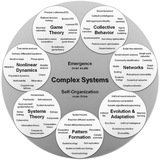
Complex Systems Studies
🎞 Missing Semester: computing ecosystem literacy https://www.youtube.com/watch?v=Z56Jmr9Z34Q&list=PLyzOVJj3bHQuloKGG59rS43e29ro7I57J As computer scientists, we know that computers are great at aiding in repetitive tasks. However, far too often, we forget…
این دوره جزو چیزایی هست که:
۱) هیچجایی به آدم درس نمیدن
۲) همه حرفهایها بلدش هستن
۳) همه چون خودشون یاد گرفتن فکر نکردن که این چیزا بدیهی نیست
۴) بدون اینها شاید زندگیتون بگذره، ولی با دونستن این نکتههای ریز، نگاهتون به کامپیوتر و تواناییهاتون خیلی ساده چند برابر میشه!
https://missing.csail.mit.edu/2020/course-shell/
ویدیوها:
https://www.aparat.com/playlist/406966
۱) هیچجایی به آدم درس نمیدن
۲) همه حرفهایها بلدش هستن
۳) همه چون خودشون یاد گرفتن فکر نکردن که این چیزا بدیهی نیست
۴) بدون اینها شاید زندگیتون بگذره، ولی با دونستن این نکتههای ریز، نگاهتون به کامپیوتر و تواناییهاتون خیلی ساده چند برابر میشه!
https://missing.csail.mit.edu/2020/course-shell/
ویدیوها:
https://www.aparat.com/playlist/406966
💰 Great #PhD opportunity in sunny #brisbane - @ProfMJSimpson with the School of #maths at @QUTSciEng is looking for 2 PhD students for his project in mathematical biology: Mathematical and statistical modelling of cell migration in 4D tumour spheroids. Info: https://t.co/sbvV6JFQCI
Waiting-Time Paradox in 1922
Naoki Masuda, University at Buffalo
Takayuki Hiraoka, Aalto University
Abstract
We present an English translation and discussion of an essay that a Japanese physicist, Torahiko Terada, wrote in 1922. In the essay, he described the waiting-time paradox, also called the bus paradox, which is a known mathematical phenomenon in queuing theory, stochastic processes, and modern temporal network analysis. He also observed and analyzed data on Tokyo City trams to verify the relevance of the waiting-time paradox to busy passengers in Tokyo at the time. This essay seems to be one of the earliest documentations of the waiting-time paradox in a sufficiently scientific manner.
Naoki Masuda, University at Buffalo
Takayuki Hiraoka, Aalto University
Abstract
We present an English translation and discussion of an essay that a Japanese physicist, Torahiko Terada, wrote in 1922. In the essay, he described the waiting-time paradox, also called the bus paradox, which is a known mathematical phenomenon in queuing theory, stochastic processes, and modern temporal network analysis. He also observed and analyzed data on Tokyo City trams to verify the relevance of the waiting-time paradox to busy passengers in Tokyo at the time. This essay seems to be one of the earliest documentations of the waiting-time paradox in a sufficiently scientific manner.
💡 Interested in a rather peculiar type of a phase transition in computational problems, an infinite-order one? Want to learn about a bunch of conjectures to prove rigorously? Here is a paper just for you https://t.co/SLPkEWxiCw
Recovery thresholds in the sparse planted matching problem
Guilhem Semerjian, Gabriele Sicuro, Lenka Zdeborová
We consider the statistical inference problem of recovering an unknown perfect matching, hidden in a weighted random graph, by exploiting the information arising from the use of two different distributions for the weights on the edges inside and outside the planted matching. A recent work has demonstrated the existence of a phase transition, in the large size limit, between a full and a partial recovery phase for a specific form of the weights distribution on fully connected graphs. We generalize and extend this result in two directions: we obtain a criterion for the location of the phase transition for generic weights distributions and possibly sparse graphs, exploiting a technical connection with branching random walk processes, as well as a quantitatively more precise denoscription of the critical regime around the phase transition.
Recovery thresholds in the sparse planted matching problem
Guilhem Semerjian, Gabriele Sicuro, Lenka Zdeborová
We consider the statistical inference problem of recovering an unknown perfect matching, hidden in a weighted random graph, by exploiting the information arising from the use of two different distributions for the weights on the edges inside and outside the planted matching. A recent work has demonstrated the existence of a phase transition, in the large size limit, between a full and a partial recovery phase for a specific form of the weights distribution on fully connected graphs. We generalize and extend this result in two directions: we obtain a criterion for the location of the phase transition for generic weights distributions and possibly sparse graphs, exploiting a technical connection with branching random walk processes, as well as a quantitatively more precise denoscription of the critical regime around the phase transition.