Forwarded from Wäinölä 🇫🇮 (Wäinämöinen • Eternal Sage)
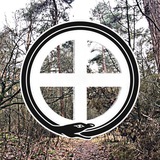
Kultalähde sacrificial spring. Salo, Finland. The name means "gold spring".
Of all the photos and videos I took, this photo right here best conveys how it felt to be there.
Of all the photos and videos I took, this photo right here best conveys how it felt to be there.
Forwarded from Survive the Jive: All-feed
An ancient tradition in British folk custom, likely going back thousands of years to the ancient germanic Harii tribe, where men paint their faces black and channel spirits of the dead, is to be banned. Many morris dancers have blacked their faces and it has nothing to do with Africans but they are so easily offended and don't care about our culture so this happens https://www.telegraph.co.uk/news/2020/07/03/morris-dancing-groups-ban-blackening-faces/
The Telegraph
Morris dancing groups ban blackening faces
The Joint Morris Organisation wants to prevent the English folk dance causing offence and being claimed by the extreme right
One such tradition, also heavily under attack, is Black Pete (Zwarte Piet) in the Low Countries, a tradition stemming from the Germanic Wotan cult.
The current way Black Pete is depicted is based on images of Moors from the 13th century, which were widely known in Europe back then. However, the origin of both Black Pete and Saint Nicholas in this tradition, which he accompanies, dates back to Germanic times.
Jan de Vries, linguist and researcher of Germanic mythology, connected the figure of Zwarte Piet to the Einherjar of Norse mythology: Odin’s army of the dead in the Wild Hunt. The ‘Harii’ described by Tacitus in Germania as warriors painting their faces black as part of a cult, can be very well connected to the Einherjar known from Norse mythology.
The current way Black Pete is depicted is based on images of Moors from the 13th century, which were widely known in Europe back then. However, the origin of both Black Pete and Saint Nicholas in this tradition, which he accompanies, dates back to Germanic times.
Jan de Vries, linguist and researcher of Germanic mythology, connected the figure of Zwarte Piet to the Einherjar of Norse mythology: Odin’s army of the dead in the Wild Hunt. The ‘Harii’ described by Tacitus in Germania as warriors painting their faces black as part of a cult, can be very well connected to the Einherjar known from Norse mythology.
In Germany, the same tradition exists in the figure of Knecht Ruprecht, helper of Saint Nicholas. The difference with the tradition in the Low Countries, is that Ruprecht does not resemble a Moor. The lack of Spanish clothing and African hairstyle brings the German Ruprecht closer to the mythological figure it represents.
The fact that Ruprecht, just as many similar figures, carries a birch rod indicates the traditions having the same origin. In some areas of Europe, the black painted figures go out and hit women with the rod, pointing towards the tradition stemming from a fertility cult.
The fact that Ruprecht, just as many similar figures, carries a birch rod indicates the traditions having the same origin. In some areas of Europe, the black painted figures go out and hit women with the rod, pointing towards the tradition stemming from a fertility cult.
The tradition that is probably most well known, however, is the Alpine tradition of Krampus. Krampus, just like Ruprecht and Zwarte Piet, carries a bundle of birch branches.
The biggest difference with the other traditions, is that Krampus truly takes the form of a terrifying, devilish creature. It is very likely that this depiction came to be under influence of Christianity, equating the figure with the devil.
The biggest difference with the other traditions, is that Krampus truly takes the form of a terrifying, devilish creature. It is very likely that this depiction came to be under influence of Christianity, equating the figure with the devil.
In Iran, while not part of Europe, a similar figure exists. Haji Firuz is the black painted helper of the old man Amu Nowruz. Haji Firuz helps Amu Nowruz with spreading gifts. While it is unknown if the origin is the same as the aforementioned celebrations, they are at the very least strikingly similar.
New temple dedicated to Apollo in Palermo, Sicily built by the Associazione Tradizionale Pietas. The temple is the first building dedicated to the gods of Rome in almost 2000 years to be opened on the island.
Source: Associazione Tradizionale Pietas Facebook
Source: Associazione Tradizionale Pietas Facebook
Forwarded from Pagan Places
We're busy creating a comprehensive pagan atlas at http://paganplaces.com
Follow us to stay up to date about the latest developments!
Instagram: http://instagram.com/paganplaces
Telegram: http://t.me/paganplaces
Follow us to stay up to date about the latest developments!
Instagram: http://instagram.com/paganplaces
Telegram: http://t.me/paganplaces
Pagan Places
Home • Pagan Places
Pagan Places is your atlas for exploring sacred sites of the indigenous religions of Europeans. Find both historic and contemporary pagan places right here.
The culture is named after and known for its magnificent stone structures called nuraghes. These towers can be seen all throughout Sardinia and played a very significant role in Nuragic culture: a miniature nuraghe was even found by archeologists.
The towers often allowed the inhabitants to have a strategic view of the area and were surrounded by smaller houses. This suggests a double function, perhaps both as defense structure and village centre.
The towers often allowed the inhabitants to have a strategic view of the area and were surrounded by smaller houses. This suggests a double function, perhaps both as defense structure and village centre.
As for the religion of Nuragic Sardinia, it was polytheistic and multiple deities played an important role. One such deity was Sardus or Sardus Pater (Father of the Sardinians), a hero who ascended to godhood.
After Cathaginian and Roman colonization of the island, Sardus was still worshipped. The Temple of Antas, depicted above, was dedicated to him.
After Cathaginian and Roman colonization of the island, Sardus was still worshipped. The Temple of Antas, depicted above, was dedicated to him.