📖 Ancient Restoration
Russian redheads from the city of Perm, a red hair hotspot near the Ural Mountains. Sits on the same line of latitude as Ireland/Scotland. #Redheads
Red hair was admired in ancient Europe - It was associated with courage & honour; a mark of divinity, beauty, vitality, & fierceness of war.
📖 Ancient Restoration
Red hair was admired in ancient Europe - It was associated with courage & honour; a mark of divinity, beauty, vitality, & fierceness of war.
The Iliad describes Menelaus & Achilles, heroes of Ancient Greece, as redheads. Helen of Troy too, deemed the most beautiful woman on earth, was ginger
📖 Ancient Restoration
Hibernia is the Roman name for Ireland, meaning 'the land of winter'. They saw it as an inhospitable land at the edge of the known world.
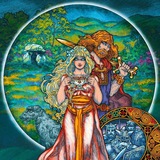
Hibernia - Lily Williams (1874-1940)
The beautiful figure, seated & alert, personifies the national awakening of the #Gaelic spirit.
The beautiful figure, seated & alert, personifies the national awakening of the #Gaelic spirit.
📖 Ancient Restoration
Hibernia - Lily Williams (1874-1940) The beautiful figure, seated & alert, personifies the national awakening of the #Gaelic spirit.
A portrait of Arthur Griffith c. 1920, by Lily Williams.
The two were lifelong friends and worked to promote the Irish cultural revival.
The two were lifelong friends and worked to promote the Irish cultural revival.
📖 Ancient Restoration
The stoat (Irish: Easóg) is found all over Ireland and mainly eats rabbits. #Irish #wildlife
Early days of March #hares (Irish: Giorria) will be seen while taking a drive up the mountains. First of the year!
Rock of Cashel, Tipperary. Site of the conversion of the king of Munster. Formed when St Patrick banished Satan from nearby mountain Devil's Bit.
#Tipperary
#Tipperary
📖 Ancient Restoration
Rock of Cashel, Tipperary. Site of the conversion of the king of Munster. Formed when St Patrick banished Satan from nearby mountain Devil's Bit. #Tipperary
St Patrick's Rock, #Cashel, Co Tipperary - Jim Fitzpatrick
📖 Ancient Restoration
This poem was originally written in Irish in the margins of the St Gall Gospel (8th C.) - probably by a bored but very inspired scribe.
Pangur Bán, perhaps the most famous poem from Early Ireland: written by a monk about his cat named Pangur.
https://irisharchaeology.ie/2013/10/pangur-ban/
https://irisharchaeology.ie/2013/10/pangur-ban/
📖 Ancient Restoration
Pangur Bán, perhaps the most famous poem from Early Ireland: written by a monk about his cat named Pangur. https://irisharchaeology.ie/2013/10/pangur-ban/
A poem by Sedulius Scottus ('the Irish') written in Liège, 9th c.
His special patrons included Emperor Lothar & Empress Ermingard.
His special patrons included Emperor Lothar & Empress Ermingard.
📖 Ancient Restoration
A poem by Sedulius Scottus ('the Irish') written in Liège, 9th c. His special patrons included Emperor Lothar & Empress Ermingard.
📖 Ancient Restoration
The historical propensity of the Irish toward 'active monasticism' was extensive. The illuminated books, hermitages, voyages to America..
The Irish #monk was a heroic figure. He represents a tour de force in creativity, a conquering of space, & triumphant spiritual knowledge.
📖 Ancient Restoration
Hiberno-Latin was a form of Latin originating in 5th C. Ireland. It gained great influence across Europe for its artistic & literary merits.
Irish scholars of the 8th & 9th centuries were the superiors of their European contemporaries when it came to Greek & Latin learning:
📖 Ancient Restoration
Irish scholars of the 8th & 9th centuries were the superiors of their European contemporaries when it came to Greek & Latin learning:
Spaces between words & use of punctuation started with 7th c. Irish scribes. Previously, Latin was written only in continuous sentences.
📖 Ancient Restoration
Spaces between words & use of punctuation started with 7th c. Irish scribes. Previously, Latin was written only in continuous sentences.
The reason for the existence of the Irish Scriptoria was to help the Irish monks read & learn.
📖 Ancient Restoration
The reason for the existence of the Irish Scriptoria was to help the Irish monks read & learn.
In the Book of Armagh at Matt 10:4, next to Judas Iscariot's name, the scribe wrote 'trógán' in the margin (Irish for 'miserable wretch').