📖 Ancient Restoration
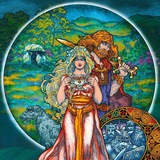
The name Brigid comes from Brigantes ('the people of the goddess Brigid') - a Celtic tribe that inhabited Iron Age Britain. Later the Brigantes settled Leinster, suggesting these peoples introduced Brigid as a chief deity to Ireland.
The sacred fire Solas Bhride ('the Light of Brigid') re-lit in 1993 by the Brigidine Sisters, Co Kildare. Each St. Brigid's Day the town hosts a week-long celebration in honour of their saint founder.
📖 Ancient Restoration
The name Brigid comes from Brigantes ('the people of the goddess Brigid') - a Celtic tribe that inhabited Iron Age Britain. Later the Brigantes settled Leinster, suggesting these peoples introduced Brigid as a chief deity to Ireland.
An Irish legend tells of how St Brigid aided the Virgin Mary in presenting Jesus at the temple by distracting the crowd with a headdress bearing many lighted candles. In gratitude, Mary decreed that a feast day honouring Brigid should take place a day before Candlemas.
📖 Ancient Restoration
An Irish legend tells of how St Brigid aided the Virgin Mary in presenting Jesus at the temple by distracting the crowd with a headdress bearing many lighted candles. In gratitude, Mary decreed that a feast day honouring Brigid should take place a day before…
In medieval Ireland winter and spring comprised the quieter half of the year.
During the cold months war-making ceased and the people took to housing and feeding the warrior-bands. Great effort was made to ensure a varied diet by hunting, fishing and preserving.
During the cold months war-making ceased and the people took to housing and feeding the warrior-bands. Great effort was made to ensure a varied diet by hunting, fishing and preserving.
📖 Ancient Restoration
In medieval Ireland winter and spring comprised the quieter half of the year. During the cold months war-making ceased and the people took to housing and feeding the warrior-bands. Great effort was made to ensure a varied diet by hunting, fishing and preserving.
"Marriages in early Ireland tended to be concentrated between Twelfth Night (5 Jan) and Shrove Tuesday.."
The links between the Imbolc spring festival, birth and marriage -
The links between the Imbolc spring festival, birth and marriage -
📖 Ancient Restoration
"Marriages in early Ireland tended to be concentrated between Twelfth Night (5 Jan) and Shrove Tuesday.." The links between the Imbolc spring festival, birth and marriage -
In the 16-17th centuries the coming of spring heralded the majority of trade between Ireland and England. Shiploads of animal products would leave Ireland for the port of Bristol, returning home with necessities like dyes, fabrics, salt & sugar.
📖 Ancient Restoration
Photo
On This Day 1848: John Mitchel published 1st United Irishman. Only 16 editions, as suppressed under Treason Felony Act (1848). He was sentenced to 14 years in Van Diemen's Land. (Escaped after 5 years & spent 2 decades in US being pro-slavery, before returning to Ireland. Died in Newry.
This day 330 years ago – 13 February 1689 – Prince William of Orange and his wife Mary II were declared joint sovereigns of England, Ireland and Scotland.
The previous king, James II, had fled to France the December before.
This deposition led to the Battle of the Boyne in 1690
https://en.m.wikipedia.org/wiki/Battle_of_the_Boyne
The previous king, James II, had fled to France the December before.
This deposition led to the Battle of the Boyne in 1690
https://en.m.wikipedia.org/wiki/Battle_of_the_Boyne
Forwarded from 📖 Ancient Restoration
St Valentine's Tomb - Whitefriar Church, Dublin.
Gifted by Pope Gregory XVI in 1836, the casket contains Saint Valentine's bones and a vessel tinged with his blood.
Gifted by Pope Gregory XVI in 1836, the casket contains Saint Valentine's bones and a vessel tinged with his blood.
Forwarded from 📖 Ancient Restoration
The shrine of St Valentine in Dublin - On Valentines Day it's popular for engaged couples to attend Mass here and to receive a blessing of rings beside his relics.
Forwarded from 📖 Ancient Restoration
The Claddagh ring is a traditional faith ring that's given in Ireland for engagement or friendship. Originating in the fishing villages of Galway, its 'giving heart' symbolises love and fellowship, and the crown, loyalty.