Forwarded from Geology & Mineral smol channel
Zoomorphic Swastika from Kardzhali, Bulgaria :
The small artifact is one of the emblematic artifacts from Bulgaria, found from Kardzhali and dating back to Neolithic. Its age is 8 millennia. This jade amulet in the shape of a swastika has zoomorphic arms (ends of arms are shaped like frog legs).
Closer examination of the artifact showed that the polishing of the amulet which was done with an abrasive material had traces of processing only in one direction. Hand polishing suggests that the microscratches are in two or more directions, so a mechanical device, most likely a wheel was used to produce it. The problem is that according to archaeological science, this type of technique was discovered 3000 years later.
A great mystery is how, with the technology and tools we know Stone Age humans used, they could achieve such perfection in processing one of the hardest minerals.
National Museum of Bulgaria
The small artifact is one of the emblematic artifacts from Bulgaria, found from Kardzhali and dating back to Neolithic. Its age is 8 millennia. This jade amulet in the shape of a swastika has zoomorphic arms (ends of arms are shaped like frog legs).
Closer examination of the artifact showed that the polishing of the amulet which was done with an abrasive material had traces of processing only in one direction. Hand polishing suggests that the microscratches are in two or more directions, so a mechanical device, most likely a wheel was used to produce it. The problem is that according to archaeological science, this type of technique was discovered 3000 years later.
A great mystery is how, with the technology and tools we know Stone Age humans used, they could achieve such perfection in processing one of the hardest minerals.
National Museum of Bulgaria
Forwarded from 𝔸ℝℂ𝔸ℕÆ𝕌𝕄
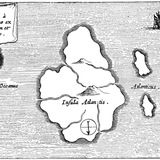
Jürgen Spanuth’s Atlantis of the North claims that Atlantis was located near Helgoland in the North Sea and that its destruction around 1200 BCE caused the migration of the Sea Peoples into the Mediterranean. Drawing on archaeology, mythology, and ancient texts, Spanuth links Plato’s account to northern Europe, arguing that natural disasters and cultural upheaval in the Bronze Age support his theory.
🔥1
Forwarded from 𝔸ℝℂ𝔸ℕÆ𝕌𝕄
James M. Allen’s Atlantis: The Andes Solution proposes that Plato’s Atlantis was located on Bolivia’s Altiplano, near Lake Poopó. He argues that the 9,000-year figure given by Plato was likely based on lunar months, not solar years. If interpreted this way, 9,000 months equals 750 years, which—when added to Solon’s visit to Egypt around 600 B.C.—places the destruction of Atlantis around 1350 B.C., squarely within the Late Bronze Age.
Forwarded from 𝔸ℝℂ𝔸ℕÆ𝕌𝕄
Atlantis of the North by Jürgen Spanuth.pdf
17.8 MB
Forwarded from 𝔸ℝℂ𝔸ℕÆ𝕌𝕄
Atlantis _ the Andes Solution_James M_ Allen.pdf
35.5 MB
Forwarded from Survive the Jive: All-feed
Aryan Proto-factory-city discovered in Kazakhstan
Dating to 1600 BC, the settlement was associated with the Andronovo culture which was Proto-Indo-Iranic. Recent excavations revealed the foundations of rows of multi-room homes at the centre of which was a large building, likely a hall or ceremonial space.
There is also lots of evidence of large sacle tin-bronze weapon production. The site was positioned to be close to copper and tin deposits making it ideal for tin-bronze production at this early stage.
This culture and region was possibly the largest exporter of tin and tin-Bronze before the Beaker folk of Britain over took them.
Dating to 1600 BC, the settlement was associated with the Andronovo culture which was Proto-Indo-Iranic. Recent excavations revealed the foundations of rows of multi-room homes at the centre of which was a large building, likely a hall or ceremonial space.
There is also lots of evidence of large sacle tin-bronze weapon production. The site was positioned to be close to copper and tin deposits making it ideal for tin-bronze production at this early stage.
This culture and region was possibly the largest exporter of tin and tin-Bronze before the Beaker folk of Britain over took them.