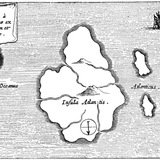
Ancient fragments, containing what remains of the writings of Sanchoniatho, Berossus, Abydenus, Megasthenes, and Manetho : also the Hermetic Creed, the Old Chronicle, the Laterculus of Eratosthenes, the Tyrian annals, the Oracles of Zoroaster, and the Periplus of Hanno (original Greek/Latin with English translation side by side)
Forwarded from Portal Ibis
"Throughout the universe there vibrates a resonant tone known to Occultists as the Bindery Note. When man, by discipline of the mind, is able to shut off all sense perception, he becomes conscious of an ever-vibrating rhythmic throb or pulsation which manifests as a distinct and audible sound. As the earth and planets . have each their own note or sound vibration, this pulse of the universe creates a respondent chord from the spheres. When the different planets approach the earth their respective notes are apparent to the consciousness of the Adept as distinct tones predominant in the Harmony of the World."
— "The Comte De Gabalis" by Abbé N. de Montfaucon de Villars
Art: Hug.Grotii Bataui Syntagma Arateorum: opus poeticae et astronomiae studiosis vtilissimum: quo quae contineantur versa pagella indicabit, c. 1600
— "The Comte De Gabalis" by Abbé N. de Montfaucon de Villars
Art: Hug.Grotii Bataui Syntagma Arateorum: opus poeticae et astronomiae studiosis vtilissimum: quo quae contineantur versa pagella indicabit, c. 1600
Forwarded from Portal Ibis
Siren (Melusine) with horn
St Martin’s Church in Zillis, Canton Graubünden, c. 1109/1114
St Martin’s Church in Zillis, Canton Graubünden, c. 1109/1114
Forwarded from Portal Ibis
Marduk was the chief god of Babylon and one of the most important deities in Mesopotamian mythology. He became the ruler of the gods after defeating the chaos dragon Tiamat in the Enuma Elish creation epic. Marduk was associated with justice, order, and creation.