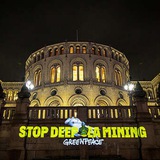
Forwarded from NorgeTelegramFreaks : Norge Telegram Freaks from Norway / Scandinavia - fra Norge / Skandinavia - aus Norwegen / Skandinavien
Abstract: The rapidly increasing global populations and socio-economic development in the Global South have resulted in rising demand for natural resources. There are many plans for harvesting natu- ral resources from the ocean floor, especially rare metals and minerals. However, if proper care is not taken, there is substantial potential for long-lasting and even irreversible physical and environmental impacts on the deep-sea ecosystems, including on biodiversity and ecosystem functioning. This paper reviews the literature on some potentials and risks to deep seabed mining (DSM), outlining its legal aspects and environmental impacts. It presents two case studies that describe the environmental risks related to this exploitative process. They include significant disturbance of the seabed, light and noise pollution, the creation of plumes, and negative impacts on the surface, benthic, and meso- and bathypelagic zones. The study suggests some of the issues interested companies should consider in preventing the potential physical and environmental damages DSM may cause. Sustainable mining and the use of minerals are vital in meeting various industrial demands.
Forwarded from NorgeTelegramFreaks : Norge Telegram Freaks from Norway / Scandinavia - fra Norge / Skandinavia - aus Norwegen / Skandinavien
Media is too big
VIEW IN TELEGRAM
Deep Sea Mining: The Next Climate Disaster No One’s Talking About | Vasser Seydel | TEDxBoston
Backup by @NorgeTelegramFreaks
A @grttme project - Other backups: https://swiy.co/tgme
Backup by @NorgeTelegramFreaks
A @grttme project - Other backups: https://swiy.co/tgme
Forwarded from NorgeTelegramFreaks : Norge Telegram Freaks from Norway / Scandinavia - fra Norge / Skandinavia - aus Norwegen / Skandinavien
This media is not supported in your browser
VIEW IN TELEGRAM
Deep Mining in Norway
Backup by @NorgeTelegramFreaks
A @grttme project - Other backups: https://swiy.co/tgme
Backup by @NorgeTelegramFreaks
A @grttme project - Other backups: https://swiy.co/tgme
Forwarded from NorgeTelegramFreaks : Norge Telegram Freaks from Norway / Scandinavia - fra Norge / Skandinavia - aus Norwegen / Skandinavien
Regjeringen enig med Høyre og Frp om å åpne for gruvedrift på havbunnen
Norway, just a shame for their crimes related to oil/gas, salmon and deep mining!
https://news.1rj.ru/str/NorgeTelegramFreaks/51
https://news.1rj.ru/str/NorgeTelegramFreaks/53
https://news.1rj.ru/str/NorgeTelegramFreaks/55
Norway, just a shame for their crimes related to oil/gas, salmon and deep mining!
https://news.1rj.ru/str/NorgeTelegramFreaks/51
https://news.1rj.ru/str/NorgeTelegramFreaks/53
https://news.1rj.ru/str/NorgeTelegramFreaks/55
Forwarded from NorgeTelegramFreaks : Norge Telegram Freaks from Norway / Scandinavia - fra Norge / Skandinavia - aus Norwegen / Skandinavien
Media is too big
VIEW IN TELEGRAM
FROKOSTSEMINAR OM GRUVEDRIFT PÅ HAVBUNNEN
Backup by @NorgeTelegramFreaks
A @grttme project - Other backups: https://swiy.co/tgme
Backup by @NorgeTelegramFreaks
A @grttme project - Other backups: https://swiy.co/tgme
Forwarded from NorgeTelegramFreaks : Norge Telegram Freaks from Norway / Scandinavia - fra Norge / Skandinavia - aus Norwegen / Skandinavien
DEEP MINING IS A NO GO!
Norway, stop to do shit now!
The deep seabed is our planet’s final frontier. Covering around half the Earth’s surface, it’s a largely unknown, uncharted world. But we’re beginning to discover that it’s a world teeming with life, and that it exerts a major influence on the whole ocean ecosystem and on our climate.
Mining would have a destructive impact on deep-sea ecosystems and biodiversity, which could have a knock-
on effect on fisheries, livelihoods and food security and compromise ocean carbon, metal and nutrient cycles. It also runs counter to the transition to a circular economy, undermining efforts to increase recycling and reduce the use of finite resources.
https://news.1rj.ru/str/NorgeTelegramFreaks/116
https://news.1rj.ru/str/NorgeTelegramFreaks/55
Norway, stop to do shit now!
The deep seabed is our planet’s final frontier. Covering around half the Earth’s surface, it’s a largely unknown, uncharted world. But we’re beginning to discover that it’s a world teeming with life, and that it exerts a major influence on the whole ocean ecosystem and on our climate.
Mining would have a destructive impact on deep-sea ecosystems and biodiversity, which could have a knock-
on effect on fisheries, livelihoods and food security and compromise ocean carbon, metal and nutrient cycles. It also runs counter to the transition to a circular economy, undermining efforts to increase recycling and reduce the use of finite resources.
https://news.1rj.ru/str/NorgeTelegramFreaks/116
https://news.1rj.ru/str/NorgeTelegramFreaks/55
Forwarded from NorgeTelegramFreaks : Norge Telegram Freaks from Norway / Scandinavia - fra Norge / Skandinavia - aus Norwegen / Skandinavien
What he is talking about is pretty similar to what Switzerland wants to do
https://news.1rj.ru/str/PollutionFacts/150
Yes, we know about that, since they even talked about that in Norway directly ....
We are still of the opinion:
INSTEAD OF USING SUCH TECHNOLOGIES AS EXCUSES TO DO NOTHING, to really start changing and decreasing the CO2 generation.
https://news.1rj.ru/str/BenShapiroBullshit/12
https://news.1rj.ru/str/BenShapiroBullshit/13
but not with a Greta Thunberg way to act
https://news.1rj.ru/str/GretaThunbergTelegram/159
https://news.1rj.ru/str/GretaThunbergTelegram/225
means now all need to be 0, which is just bullshit that cannot be applied at all ... is just utopia ...
So again, yes, we see that where in the past Norway did a lot on oil, now they start to convert to more cleaner things ...
We don't need to forget that Norway is even one of the best country about energy production and adaption, if we exclude oil and gas now ...
https://news.1rj.ru/str/EnergyFactsTelegram/725
https://news.1rj.ru/str/EnergyFactsTelegram/365
https://news.1rj.ru/str/EnergyFactsTelegram/275
https://news.1rj.ru/str/EnergyFactsTelegram/508
https://news.1rj.ru/str/PolestarTelegram/6
etc.
Hvordan CCS fungerer https://perma.cc/XV79-5BT6
How CCS works https://perma.cc/3XRM-TJM7
The first stage in the CCS process is the capture of CO2 from the gases emitted during the burning of fossil fuels or biomass, as well as capturing CO2 from industrial processes such as steel-making, cement, chemicals and refining.
Once captured, carbon dioxide is transported by pipeline or ship to a suitable storage site. The technologies involved in transportation are similar as those used extensively for transporting food grade CO2 and natural gas around the world.
CO2 can be isolated from the atmosphere by a variety of techniques. Currently, the most cost-effective technique for safely storing large volumes is to mimic nature and recycle the carbon back into the Earth’s sedimentary basins – from where humans have extracted it in the form of fossil fuels. This process is referred to as geological storage of CO2, or just CO2 storage.
https://news.1rj.ru/str/PollutionFacts/150
Yes, we know about that, since they even talked about that in Norway directly ....
We are still of the opinion:
INSTEAD OF USING SUCH TECHNOLOGIES AS EXCUSES TO DO NOTHING, to really start changing and decreasing the CO2 generation.
https://news.1rj.ru/str/BenShapiroBullshit/12
https://news.1rj.ru/str/BenShapiroBullshit/13
but not with a Greta Thunberg way to act
https://news.1rj.ru/str/GretaThunbergTelegram/159
https://news.1rj.ru/str/GretaThunbergTelegram/225
means now all need to be 0, which is just bullshit that cannot be applied at all ... is just utopia ...
So again, yes, we see that where in the past Norway did a lot on oil, now they start to convert to more cleaner things ...
We don't need to forget that Norway is even one of the best country about energy production and adaption, if we exclude oil and gas now ...
https://news.1rj.ru/str/EnergyFactsTelegram/725
https://news.1rj.ru/str/EnergyFactsTelegram/365
https://news.1rj.ru/str/EnergyFactsTelegram/275
https://news.1rj.ru/str/EnergyFactsTelegram/508
https://news.1rj.ru/str/PolestarTelegram/6
etc.
Hvordan CCS fungerer https://perma.cc/XV79-5BT6
How CCS works https://perma.cc/3XRM-TJM7
The first stage in the CCS process is the capture of CO2 from the gases emitted during the burning of fossil fuels or biomass, as well as capturing CO2 from industrial processes such as steel-making, cement, chemicals and refining.
Once captured, carbon dioxide is transported by pipeline or ship to a suitable storage site. The technologies involved in transportation are similar as those used extensively for transporting food grade CO2 and natural gas around the world.
CO2 can be isolated from the atmosphere by a variety of techniques. Currently, the most cost-effective technique for safely storing large volumes is to mimic nature and recycle the carbon back into the Earth’s sedimentary basins – from where humans have extracted it in the form of fossil fuels. This process is referred to as geological storage of CO2, or just CO2 storage.
Forwarded from NorgeTelegramFreaks : Norge Telegram Freaks from Norway / Scandinavia - fra Norge / Skandinavia - aus Norwegen / Skandinavien
Media is too big
VIEW IN TELEGRAM
Filmen om Langskip
More about:
Shame of oil and deep mining in Norway
https://news.1rj.ru/str/NorgeTelegramFreaks/121
https://news.1rj.ru/str/NorgeTelegramFreaks/116
https://news.1rj.ru/str/NorgeTelegramFreaks/118
https://news.1rj.ru/str/NorgeTelegramFreaks/118
Carbon Capture
ℹ️ https://news.1rj.ru/str/NorgeTelegramFreaks/122
🇩🇪 https://news.1rj.ru/str/EnergyFactsTelegram/758
🇳🇴 https://news.1rj.ru/str/NorgeTelegramFreaks/125
🇫🇷 https://news.1rj.ru/str/PollutionFacts/1109
🇺🇸 https://news.1rj.ru/str/MissionWillowProject/175
Backup by @NorgeTelegramFreaks
A @grttme project - Other backups: https://swiy.co/tgme
More about:
Shame of oil and deep mining in Norway
https://news.1rj.ru/str/NorgeTelegramFreaks/121
https://news.1rj.ru/str/NorgeTelegramFreaks/116
https://news.1rj.ru/str/NorgeTelegramFreaks/118
https://news.1rj.ru/str/NorgeTelegramFreaks/118
Carbon Capture
ℹ️ https://news.1rj.ru/str/NorgeTelegramFreaks/122
🇩🇪 https://news.1rj.ru/str/EnergyFactsTelegram/758
🇳🇴 https://news.1rj.ru/str/NorgeTelegramFreaks/125
🇫🇷 https://news.1rj.ru/str/PollutionFacts/1109
🇺🇸 https://news.1rj.ru/str/MissionWillowProject/175
Backup by @NorgeTelegramFreaks
A @grttme project - Other backups: https://swiy.co/tgme
Forwarded from NorgeTelegramFreaks : Norge Telegram Freaks from Norway / Scandinavia - fra Norge / Skandinavia - aus Norwegen / Skandinavien
Media is too big
VIEW IN TELEGRAM
Er gruvedrift på havbunnen en god idé? Vi spurte en havforsker
https://news.1rj.ru/str/NorgeTelegramFreaks/24
https://news.1rj.ru/str/NorgeTelegramFreaks/25
https://news.1rj.ru/str/NorgeTelegramFreaks/37
https://news.1rj.ru/str/NorgeTelegramFreaks/51
https://news.1rj.ru/str/NorgeTelegramFreaks/53
https://news.1rj.ru/str/NorgeTelegramFreaks/55
https://news.1rj.ru/str/NorgeTelegramFreaks/57
etc.
Backup by @NorgeTelegramFreaks
A @grttme project - Other backups: https://swiy.co/tgme
https://news.1rj.ru/str/NorgeTelegramFreaks/24
https://news.1rj.ru/str/NorgeTelegramFreaks/25
https://news.1rj.ru/str/NorgeTelegramFreaks/37
https://news.1rj.ru/str/NorgeTelegramFreaks/51
https://news.1rj.ru/str/NorgeTelegramFreaks/53
https://news.1rj.ru/str/NorgeTelegramFreaks/55
https://news.1rj.ru/str/NorgeTelegramFreaks/57
etc.
Backup by @NorgeTelegramFreaks
A @grttme project - Other backups: https://swiy.co/tgme
Forwarded from Mission Willow Projekt by GRT : Detener el abuso de nuestro ártico / tierra - Fertig mit dem Missbrauch unserer Arktis / Erde
Just facts about the overevaluated Tesla by the fake "climate change guru" Elon Musk ...
https://news.1rj.ru/str/ElonMuskPollution/80
https://www.stopdeepseabedmining.org/
https://www.greenpeace.org/stop-deep-sea-mining
https://petition.parliament.uk/petitions/636545
https://news.1rj.ru/str/PolestarTelegram/17
https://news.1rj.ru/str/ElonMuskPollution/80
https://www.stopdeepseabedmining.org/
https://www.greenpeace.org/stop-deep-sea-mining
https://petition.parliament.uk/petitions/636545
https://news.1rj.ru/str/PolestarTelegram/17
Forwarded from Mission Willow Projekt by GRT : Detener el abuso de nuestro ártico / tierra - Fertig mit dem Missbrauch unserer Arktis / Erde
Europe at a crossroads: protecting the deep sea or letting mining destroy it? https://perma.cc/N6HJ-5MSE
Europa en la encrucijada: proteger los fondos marinos o dejar que la minería los destruya https://perma.cc/RMJ3-96RE
Europa en la encrucijada: proteger los fondos marinos o dejar que la minería los destruya https://perma.cc/RMJ3-96RE