Stream Starting!
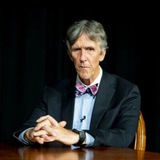
EMJ Live #35: Is it a sin to watch Oppenheimer?
EMJ Live is every Friday at 5:00pm EST streamed on Cozy,
Cozy Podcast : cozy.tv/emichaeljones
Call In: https://news.1rj.ru/str/EMichaelJonesChat?videochat
Odysee: https://odysee.com/@E.MichelJones:f
Rumble: https://rumble.com/c/c-920885
EMJ Live #35: Is it a sin to watch Oppenheimer?
EMJ Live is every Friday at 5:00pm EST streamed on Cozy,
Cozy Podcast : cozy.tv/emichaeljones
Call In: https://news.1rj.ru/str/EMichaelJonesChat?videochat
Odysee: https://odysee.com/@E.MichelJones:f
Rumble: https://rumble.com/c/c-920885
Cozy.tv
EMichaelJones on Cozy.tv
About: Dr. E. Michael Jones is a prolific Catholic writer, lecturer, journalist, and Editor of Culture Wars Magazine who seeks to defend traditional Catholic teachings and values from those seeking to undermine them. The Holocaust Narrative is NOW AVAILABLE!!!…
In a recent review of Oppenheimer which appeared in Crisis, Editor Eric Sammons found it “baffling” than any Catholic could watch the sex scenes in that movie without committing sin, “because it is always a sin to watch such a scene. Always, full stop.” To back up his claim, Sammons cites the Catechism of the Catholic Church on pornography:
Pornography consists in removing real or simulated sexual acts from the intimacy of the partners, in order to display them deliberately to third parties. It offends against chastity because it perverts the conjugal act, the intimate giving of spouses to each other. It does grave injury to the dignity of its participants (actors, vendors, the public), since each one becomes an object of base pleasure and illicit profit for others. It immerses all who are involved in the illusion of a fantasy world. It is a grave offense. Civil authorities should prevent the production and distribution of pornographic materials. (#2354)
In order to use the Catechism to back up his claim, Sammons would have to show that Oppenheimer is pornography, which he does not do. Instead of proving his point, Sammons engages in verbal sleight of hand which obscures the main issue, which is that pornography is an occasion of sin. According to the Catholic Encyclopedia:
Occasions of sin are external circumstances—whether of things or persons—which either because of their special nature or because of the frailty common to humanity or peculiar to some individual, incite or entice one to sin. It is important to remember that there is a wide difference between the cause and the occasion of sin. The cause of sin in the last analysis is the perverse human will and is intrinsic to the human composite. The occasion is something extrinsic and, given the freedom of the will, cannot, properly speaking, stand in causal relation to the act or vicious habit which we call sin. There can be no doubt that in general the same obligation which binds us to refrain from sin requires us to shun its occasion. Qui tenetur ad finem, tenetur ad media (he who is bound to reach a certain end is bound to employ the means to attain it). https://newadvent.org/cathen/11196a.htm
Theologians distinguish between proximate and remote occasions of sin, but they are not of one mind on how to define the terms:
De Lugo defines proximate occasion (De poenit. disp. 14, n. 149) as one in which men of like calibre for the most part fall into mortal sin, or one in which experience points to the same result from the special weakness of a particular person. The remote occasion lacks these elements. All theologians are agreed that there is no obligation to avoid the remote occasions of sin both because this would, practically speaking, be impossible and because they do not involve serious danger of sin. https://newadvent.org/cathen/11196a.htm
Oftentimes the distinction between proximate and remote occasions of sin is numerical. Getting drunk is a sin. A bar may be an occasion of sin. If your job entails going to a bar and drinking with clients, and you get drunk four out of the ten times you drink with them, you should avoid that bar as a remote occasion of sin. If you get drunk nine out of the ten times you go there, you should avoid the bar as a proximate or near occasion of sin. Deliberately frequenting a near occasion of sin is itself sinful, unless you have a sufficiently serious reason, which may be the case if it is part of your job. On the other hand, filmmakers should not put people into an occasion of sin for no good reason, which is clearly what Director Christopher Nolan did in Oppenheimer, where the sex scenes are gratuitous and could have been avoided. But the relatively minor nature of the sex scenes in Oppenheimer militates against viewing the film as pornographic in its intention. That does not mean that it could not be, for some, a near occasion of sin which should be avoided. It is a judgement call for individual viewers to make, knowing their own weakness in this area.
Pornography consists in removing real or simulated sexual acts from the intimacy of the partners, in order to display them deliberately to third parties. It offends against chastity because it perverts the conjugal act, the intimate giving of spouses to each other. It does grave injury to the dignity of its participants (actors, vendors, the public), since each one becomes an object of base pleasure and illicit profit for others. It immerses all who are involved in the illusion of a fantasy world. It is a grave offense. Civil authorities should prevent the production and distribution of pornographic materials. (#2354)
In order to use the Catechism to back up his claim, Sammons would have to show that Oppenheimer is pornography, which he does not do. Instead of proving his point, Sammons engages in verbal sleight of hand which obscures the main issue, which is that pornography is an occasion of sin. According to the Catholic Encyclopedia:
Occasions of sin are external circumstances—whether of things or persons—which either because of their special nature or because of the frailty common to humanity or peculiar to some individual, incite or entice one to sin. It is important to remember that there is a wide difference between the cause and the occasion of sin. The cause of sin in the last analysis is the perverse human will and is intrinsic to the human composite. The occasion is something extrinsic and, given the freedom of the will, cannot, properly speaking, stand in causal relation to the act or vicious habit which we call sin. There can be no doubt that in general the same obligation which binds us to refrain from sin requires us to shun its occasion. Qui tenetur ad finem, tenetur ad media (he who is bound to reach a certain end is bound to employ the means to attain it). https://newadvent.org/cathen/11196a.htm
Theologians distinguish between proximate and remote occasions of sin, but they are not of one mind on how to define the terms:
De Lugo defines proximate occasion (De poenit. disp. 14, n. 149) as one in which men of like calibre for the most part fall into mortal sin, or one in which experience points to the same result from the special weakness of a particular person. The remote occasion lacks these elements. All theologians are agreed that there is no obligation to avoid the remote occasions of sin both because this would, practically speaking, be impossible and because they do not involve serious danger of sin. https://newadvent.org/cathen/11196a.htm
Oftentimes the distinction between proximate and remote occasions of sin is numerical. Getting drunk is a sin. A bar may be an occasion of sin. If your job entails going to a bar and drinking with clients, and you get drunk four out of the ten times you drink with them, you should avoid that bar as a remote occasion of sin. If you get drunk nine out of the ten times you go there, you should avoid the bar as a proximate or near occasion of sin. Deliberately frequenting a near occasion of sin is itself sinful, unless you have a sufficiently serious reason, which may be the case if it is part of your job. On the other hand, filmmakers should not put people into an occasion of sin for no good reason, which is clearly what Director Christopher Nolan did in Oppenheimer, where the sex scenes are gratuitous and could have been avoided. But the relatively minor nature of the sex scenes in Oppenheimer militates against viewing the film as pornographic in its intention. That does not mean that it could not be, for some, a near occasion of sin which should be avoided. It is a judgement call for individual viewers to make, knowing their own weakness in this area.
www.newadvent.org
CATHOLIC ENCYCLOPEDIA: Occasions of Sin
External circumstances — things or persons — which incite or entice one to sin.
Father Hardon says that pornography is always a near occasion of sin. Is Oppenheimer pornography? No. The sex scenes in Oppenheimer make it objectively speaking at this point in history a remote occasion of sin, which means that at another time and under other subjective circumstances, it could be a near occasion of sin for some. It is most certainly not “a sin to watch” Oppenheimer as Sammons claims.
Sammons’ claim that “it is always a sin to watch such a scene. Always, full stop” is forceful but inaccurate. In warning his readers against laxity, he should not overstate his case. Once we introduce the proper terminology into this discussion, Sammons’ claim reveals itself an overstatement and nothing more than an extended exercise in virtue signaling which places unnecessary burdens on the consciences of those who take his magazine seriously.
https://crisismagazine.com/editors-desk/a-movie-isnt-worth-sinning-over
Sammons’ claim that “it is always a sin to watch such a scene. Always, full stop” is forceful but inaccurate. In warning his readers against laxity, he should not overstate his case. Once we introduce the proper terminology into this discussion, Sammons’ claim reveals itself an overstatement and nothing more than an extended exercise in virtue signaling which places unnecessary burdens on the consciences of those who take his magazine seriously.
https://crisismagazine.com/editors-desk/a-movie-isnt-worth-sinning-over
Crisis Magazine
A Movie Isn’t Worth Sinning Over
By Eric Sammons - Are you Barbie or are you Oppenheimer? Catholics should be neither.
I've been proposing a discussion of the Logos of sexuality in Iran for years now. Inshallah, this scandal and the imminent Farsi translation of Libido Dominandi: Sexual Liberation and Political Control will bring it about before the CIA uses this as an excuse for another sex-based mass uprising.
https://www.bbc.com/news/world-middle-east-66349073
https://www.bbc.com/news/world-middle-east-66349073
Bbc
Iran sex tape scandal: Government says no prior knowledge of alleged behaviour
A video - which is unverified - allegedly shows a regional head of Islamic guidance having sex with another man.
Stream Starting! EMJ Live #36: Part II - Oppenheimer: Applied Jewish Science
EMJ Live is every Friday at 5:00pm EST streamed on Cozy,
Cozy Podcast : cozy.tv/emichaeljones
Call In: https://news.1rj.ru/str/EMichaelJonesChat?videochat
Odysee: https://odysee.com/@E.MichelJones:f
Rumble: https://rumble.com/c/c-920885
EMJ Live is every Friday at 5:00pm EST streamed on Cozy,
Cozy Podcast : cozy.tv/emichaeljones
Call In: https://news.1rj.ru/str/EMichaelJonesChat?videochat
Odysee: https://odysee.com/@E.MichelJones:f
Rumble: https://rumble.com/c/c-920885
Cozy.tv
EMichaelJones on Cozy.tv
About: Dr. E. Michael Jones is a prolific Catholic writer, lecturer, journalist, and Editor of Culture Wars Magazine who seeks to defend traditional Catholic teachings and values from those seeking to undermine them. The Holocaust Narrative is NOW AVAILABLE!!!…
Jardula gets to the bottom of RFK's self-immolation over Israel. It because we have internalized the Holocaust Narrative.
https://www.youtube.com/watch?v=d7tNmCnrG7M
https://www.youtube.com/watch?v=d7tNmCnrG7M
YouTube
RFK Jr Declines Debate Over Israel with Max Blumenthal
RFK Jr’s team has declined debating Max Blumenthal over his support for Israel.
Craig Pasta Jardula is an independent journalist and the co-host of The Convo Couch. Follow him on https://twitter.com/yopasta
Meet your daily fruits and veggies goal! Get 15%…
Craig Pasta Jardula is an independent journalist and the co-host of The Convo Couch. Follow him on https://twitter.com/yopasta
Meet your daily fruits and veggies goal! Get 15%…
If your goal in life is to be a sex robot, you may be replaced by a real sex robot.
https://www.dailymail.co.uk/sciencetech/article-12341111/Sexy-AI-generated-influencers-silently-swarming-social-media-fake-names-backstories-one-goal-desperate-men.html
https://www.dailymail.co.uk/sciencetech/article-12341111/Sexy-AI-generated-influencers-silently-swarming-social-media-fake-names-backstories-one-goal-desperate-men.html
Mail Online
DailyMail.com exposes weird world of sexy A.I. influencers
DailyMail.com uncovered several AI influencers who are aspiring virtual models, online girlfriends and are asking for tips. Some of the digital designs offer plans to purchase their nudes.
The reason for all of the Catholic virtue signaling over the sex scenes in Oppenheimer is the inability of conservative Catholic chest thumpers to face the real issue which the film brings up, namely, Jewish control of the Manhattan Project then and of our foreign policy now, as NATO slouches toward nuclear war with Russia.
Dennis Prager admits that the ADL creates anti-Semitism. (at 7:44)
https://www.youtube.com/watch?v=OHYuKXI4LZo
https://www.youtube.com/watch?v=OHYuKXI4LZo
YouTube
Rabbi's answer to this question will SHOCK you (with Dennis Prager)
►► Support Rabbi Friedman's work today with a donation of any amount! Campaign ends on THURSDAY: https://raisethon.com/goodtoknow/youtube
►►Ask Rabbi Manis Friedman Your Questions In His Private VIP Community: https://go.itsgoodtoknow.org/vip-membersh…
►►Ask Rabbi Manis Friedman Your Questions In His Private VIP Community: https://go.itsgoodtoknow.org/vip-membersh…
Hillard wrote the foreword to the French edition of The Jewish Revolutionary Spirit. No Jew was ever a citizen in any European country before Napoleon emancipated them. Two hundred years of experience shows that those Catholic countries were right and Napoleon was wrong. Does anyone seriously think that Merrick Garland or Antony Blinken is capable of representing the interests of the American people?
https://www.lemonde.fr/en/france/article/2023/08/07/france-moves-to-ban-far-right-party-for-anti-semitism_6083926_7.html
https://www.lemonde.fr/en/france/article/2023/08/07/france-moves-to-ban-far-right-party-for-anti-semitism_6083926_7.html
Le Monde.fr
France moves to ban far-right party for anti-Semitism
Interior Minister Gérald Darmanin announced the dissolution of the far-right, ultra-traditional Catholic party Civitas on Monday, saying he would refer the matter to the prosecutor following anti-Semitic remarks.
LIVE NOW!
EMJ Live #37: The Dangers of Beauty Upcoming Lecture
EMJ Live is every Friday at 5:00pm EST
Call In: t.me/EMichaelJonesChat?videochat
Cozy: cozy.tv/emichaeljones
Rumble: rumble.com/c/c-920885
Odysee: odysee.com/@E.MichelJones:f
EMJ Live #37: The Dangers of Beauty Upcoming Lecture
EMJ Live is every Friday at 5:00pm EST
Call In: t.me/EMichaelJonesChat?videochat
Cozy: cozy.tv/emichaeljones
Rumble: rumble.com/c/c-920885
Odysee: odysee.com/@E.MichelJones:f
Telegram
EMJ Live Chat
E. Michael Jones chat. Run by @CultureWarsMedia → contact questions or concerns.
**DO NOT contact EMJ or CW office.**
*Comments of users/mods do not represent EMJ*
EMJ channel: t.me/RealEMichaelJones
Books: fidelitypress.org
Magazine: culturewars.com
**DO NOT contact EMJ or CW office.**
*Comments of users/mods do not represent EMJ*
EMJ channel: t.me/RealEMichaelJones
Books: fidelitypress.org
Magazine: culturewars.com
What's Obama really trying to tell us here?
https://nypost.com/2023/08/12/barack-obama-told-ex-i-make-love-to-men-daily-but-in-the-imagination/
https://nypost.com/2023/08/12/barack-obama-told-ex-i-make-love-to-men-daily-but-in-the-imagination/
New York Post
Exclusive | Barack Obama told ex, 'I make love to men daily, but in the...
Obama wrote of his own "androgynous" mind and "mak[ing] love to men daily, but in my imagination," according to the redacted portion of a 1982 letter, obtained by The Post.
If Dennis Prager says it, it must be true.
https://twitter.com/iansmithfitness/status/1689637383715876864
https://twitter.com/iansmithfitness/status/1689637383715876864
X (formerly Twitter)
Ian Smith (@iansmithfitness) on X
All I want for my birthday is for @DennisPrager to tell us why he thinks playing with his wiener to animated child porn is not evil.
Help me with my birthday wishes and ask Dennis why!
Help me with my birthday wishes and ask Dennis why!
Leave it to Rolling Stone to promote a completely insignificant group so that Rolling Stone can keep the failing race narrative afloat.
https://www.rollingstone.com/politics/politics-features/nazis-new-england-white-ethnostate-1234801707/
https://www.rollingstone.com/politics/politics-features/nazis-new-england-white-ethnostate-1234801707/
Rolling Stone
These Nazis Want to Turn New England Into a White Ethnostate
PINE, a subgroup of the neo-Nazi NSC-131, is moving to turn New England into a white ethnostate and ban people of color from moving to the area.
Things like this make it hard to take Jewish complaints seriously.
https://www.nbcnews.com/news/us-news/bradley-cooper-prosthetic-nose-leonard-bernstein-maestro-jewface-rcna100137
https://www.nbcnews.com/news/us-news/bradley-cooper-prosthetic-nose-leonard-bernstein-maestro-jewface-rcna100137
NBC News
Bradley Cooper accused of ‘Jewface’ over fake nose in ‘Maestro’; Leonard Bernstein's kids defend the prosthetic
Some on social media criticized the film, which Cooper co-wrote, produced and directed, after Netflix dropped a trailer for the biopic Tuesday.
EMJ Live is starting!
EMJ Live #38: Problems in the Catholic Church
EMJ Live is every Friday at 5:00pm EST
Call In: t.me/EMichaelJonesChat?videochat
Cozy: cozy.tv/emichaeljones
Rumble: rumble.com/c/c-920885
Odysee: odysee.com/@E.MichelJones:f
EMJ Live #38: Problems in the Catholic Church
EMJ Live is every Friday at 5:00pm EST
Call In: t.me/EMichaelJonesChat?videochat
Cozy: cozy.tv/emichaeljones
Rumble: rumble.com/c/c-920885
Odysee: odysee.com/@E.MichelJones:f
Telegram
EMJ Live Chat
E. Michael Jones chat. Run by @CultureWarsMedia → contact questions or concerns.
**DO NOT contact EMJ or CW office.**
*Comments of users/mods do not represent EMJ*
EMJ channel: t.me/RealEMichaelJones
Books: fidelitypress.org
Magazine: culturewars.com
**DO NOT contact EMJ or CW office.**
*Comments of users/mods do not represent EMJ*
EMJ channel: t.me/RealEMichaelJones
Books: fidelitypress.org
Magazine: culturewars.com
Jews are victims of Jewish privilege. As Dennis Prager has pointed out, the younger generation of Jews doesn't do anything. This means that they don't act, in every sense of the word.
https://lamag.com/film/oppenheimer-golda-maestro-non-jewish-actors-playing-jews
https://lamag.com/film/oppenheimer-golda-maestro-non-jewish-actors-playing-jews
LAmag
'Oppenheimer,' 'Golda,' 'Maestro': Will the Real Jewish Actors Please Stand Up?
Three major films choosing not to cast Jews in starring roles, and the Academy’s silence on the omission of Jews from its diversity initiative, signals a troubling moment
Jewish atheist chaplain sees atheism as a gift. But a gift from whom? Her real religion, she makes clear in this NPR story, is the Holocaust.
https://www.npr.org/2023/08/20/1194628971/religion-atheism-chaplin
https://www.npr.org/2023/08/20/1194628971/religion-atheism-chaplin
NPR
Why this chaplain sees her atheism as a gift
Vanessa Zoltan describes herself as a Jewish atheist whose outlook on the world and her spiritual life is defined by the Holocaust.
All the king's horses
And all the king's men
Couldn't put Humpty together again.
Jonathan Greenblatt destroyed what was left of the Black-Jewish Alliance when he attacked Kanye West and Kyrie Irving.
https://www.msn.com/en-gb/news/other/strengthening-the-black-jewish-alliance-is-as-critical-as-ever-opinion/ar-AA1fNbRC
And all the king's men
Couldn't put Humpty together again.
Jonathan Greenblatt destroyed what was left of the Black-Jewish Alliance when he attacked Kanye West and Kyrie Irving.
https://www.msn.com/en-gb/news/other/strengthening-the-black-jewish-alliance-is-as-critical-as-ever-opinion/ar-AA1fNbRC