Forwarded from ELYSIVM
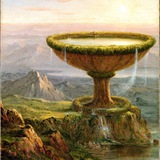
“The mountains are fountains of men as well as of rivers, of glaciers, of fertile soil. The great poets, philosophers, prophets, able men whose thoughts and deeds have moved the world, have come down from the mountains – mountain dwellers who have grown strong there with the forest trees in Nature’s workshops.”
John Muir
John Muir
💯2🔥1
Forwarded from Celtic Europe
Pictish symbol stone depicting a battle against Anglo-Saxon invaders, from the churchyard of Aberlemno, in Angus; Scotland. 🏴⚔️🏴
The stone is thought to depict the Battle of Dún Nechtáin, fought on May 20 of the year AD 685, between the Anglo-Saxon Kingdom of Northumbria and the Pictish Kingdom of Foirtriu. Northumbria had been extending its power northward into Scotland, trying to subdue and annex the whole of northern Britain. Resistance seems to have coalesced around the Pictish king of Foirtriu, Bridei III, son of Beli. The Anglian king Ecgfrith, son of Oswiu, led an immense army into Scotland in hopes of finally crushing that resistance. According to the English historian Bede, the Picts lured the Anglo-Saxon army deep into Scotland to a pre-selected battlefield, where it was defeated and cut to pieces in one of the bloodiest battles of that entire period. Ecgfrith himself was killed —the stone seems to show him in the lower right, being eaten by a raven— along with his entire army. The Picts not only shook off Northumbrian domination, they permanently broke the kingdom’s power; Northumbria would never again achieve hegemony in Britain.
Celtic Europe - channel link (please share!): https://news.1rj.ru/str/CelticEurope
The stone is thought to depict the Battle of Dún Nechtáin, fought on May 20 of the year AD 685, between the Anglo-Saxon Kingdom of Northumbria and the Pictish Kingdom of Foirtriu. Northumbria had been extending its power northward into Scotland, trying to subdue and annex the whole of northern Britain. Resistance seems to have coalesced around the Pictish king of Foirtriu, Bridei III, son of Beli. The Anglian king Ecgfrith, son of Oswiu, led an immense army into Scotland in hopes of finally crushing that resistance. According to the English historian Bede, the Picts lured the Anglo-Saxon army deep into Scotland to a pre-selected battlefield, where it was defeated and cut to pieces in one of the bloodiest battles of that entire period. Ecgfrith himself was killed —the stone seems to show him in the lower right, being eaten by a raven— along with his entire army. The Picts not only shook off Northumbrian domination, they permanently broke the kingdom’s power; Northumbria would never again achieve hegemony in Britain.
Celtic Europe - channel link (please share!): https://news.1rj.ru/str/CelticEurope
🔥1
Forwarded from 🏛MEDIEVAL EUROPE🏛
James I of Scotland with his consort Joan Beaufort, queen of Scotland. 🏴
*He has the coat of arms of Scotland on his tabard and is holding a sword and scepter, while she has the coat of arms of England on her clothing, and is holding a scepter and thistle.
*He has the coat of arms of Scotland on his tabard and is holding a sword and scepter, while she has the coat of arms of England on her clothing, and is holding a scepter and thistle.
Forwarded from Celtic Folk and Culture
Mammoth Book of Celtic Myths.pdf
2.4 MB
Forwarded from ᛉ Sagnamaðr Stark ᛉ
Jacob Grimm recorded a survival of Woden worship in Blekinge, Sweden and Mecklenburg, wherein farmers would leave a section of rye unharvested for Odin’s horse. They would braid the tops together and sprinkle them with water, take off their hats and bow, and recite thrice;
"Woden, take care of your horse now, with thistle and thorn,
so next year we may have better corn!"
Another version was;
"Woden, Woden, feed your horse now, with thistle and thorn, next year, better corn!"
He noted that it was said during winter nights, he could be heard roaming the fields with his hunting dogs (Freki and Geri?).
This was likely a remnant of offerings on Winterfylleth and/or Álfablót; in the Austrfararvísur, Odin is mentioned during a sacrifice to the Álfar. In rural regions of Scandinavia and Germany, the Old Ways never fully disappeared.
Art by Carl Emil Doepler, 1905. ⴲ
"Woden, take care of your horse now, with thistle and thorn,
so next year we may have better corn!"
Another version was;
"Woden, Woden, feed your horse now, with thistle and thorn, next year, better corn!"
He noted that it was said during winter nights, he could be heard roaming the fields with his hunting dogs (Freki and Geri?).
This was likely a remnant of offerings on Winterfylleth and/or Álfablót; in the Austrfararvísur, Odin is mentioned during a sacrifice to the Álfar. In rural regions of Scandinavia and Germany, the Old Ways never fully disappeared.
Art by Carl Emil Doepler, 1905. ⴲ
Forwarded from Æhtemen
Eolh-secg
We all know this rune, commonly called the Life-rune. It's usually translated as Elk-sedge; however I recently found a reference where the plant was also recorded (in Old English) in the following terms; eolugsecg, eolxsegc, illucseg, ilugseg and ilugsegg – this changes the meaning somewhat. According to Johannes Hoops in their book 'Über Die Altenglischen Pflanzennamen' (1889) the root eoletes means water and they compare this rune to the plant Sea Holly (Sea Thistle). The word secg was used in Anglo-Saxon compound words to mean 'sword' which describes the sharp ended holly for sure!
"die Meerdistel hat ihren Platz am häufigsten im Sumpfe; sie wächst im Wasser, verwundet grimmig, brennt blutig jeden Mann, der sie irgend angreift".
"The sea thistle has its place most often in the swamp; it grows in the water, wounds fiercely, burns bloody every man who attacks it".
We all know this rune, commonly called the Life-rune. It's usually translated as Elk-sedge; however I recently found a reference where the plant was also recorded (in Old English) in the following terms; eolugsecg, eolxsegc, illucseg, ilugseg and ilugsegg – this changes the meaning somewhat. According to Johannes Hoops in their book 'Über Die Altenglischen Pflanzennamen' (1889) the root eoletes means water and they compare this rune to the plant Sea Holly (Sea Thistle). The word secg was used in Anglo-Saxon compound words to mean 'sword' which describes the sharp ended holly for sure!
"die Meerdistel hat ihren Platz am häufigsten im Sumpfe; sie wächst im Wasser, verwundet grimmig, brennt blutig jeden Mann, der sie irgend angreift".
"The sea thistle has its place most often in the swamp; it grows in the water, wounds fiercely, burns bloody every man who attacks it".
Forwarded from Celtic Europe
Folio 33r from the Book of Kells; 8th-9th century AD. 🇮🇪🏴
The Book of Kells was created by Irish monks, probably on the Island of Iona in Scotland. It’s believed to have been transported to the monastery of Kells in Ireland —which had been founded by monks from Iona— shortly after Kells was built (AD 807-814); probably to protect it from Viking raiders.
Celtic Europe - channel link (please share!): https://news.1rj.ru/str/CelticEurope
The Book of Kells was created by Irish monks, probably on the Island of Iona in Scotland. It’s believed to have been transported to the monastery of Kells in Ireland —which had been founded by monks from Iona— shortly after Kells was built (AD 807-814); probably to protect it from Viking raiders.
Celtic Europe - channel link (please share!): https://news.1rj.ru/str/CelticEurope
🔥1
Forwarded from Celtic Europe
Gold torc from a Gallic treasure hoard unearthed near Tayac, in Gironde, France; 2nd century B.C. ⚜️🇫🇷
Celtic Europe - channel link (please share!): https://news.1rj.ru/str/CelticEurope
Celtic Europe - channel link (please share!): https://news.1rj.ru/str/CelticEurope
Please open Telegram to view this post
VIEW IN TELEGRAM
🔥2
Forwarded from IMPERIVM
"The philosopher is not the spokesman of his age, but an angel imprisoned in time."
~Nicolás Gómez Dávila
IMPERIVM
~Nicolás Gómez Dávila
IMPERIVM
🔥1