Media is too big
VIEW IN TELEGRAM
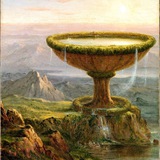
Galadriel's Lamp 🪔🌿
Elves, Forebears, Heirlooms, & Tombs
The term elf derives from Old English "ælf" from proto-Nordic, *albaR, meaning "white"
Originally, it was a term for the dead relatives, residing in the burial mound, waiting to return to life by awakening the memories we had in previous lives.
We do this by participating in the same rituals that we have always participated in (Yule, Easter, Summer Solstice, etc) and by perceiving the sacred objects, that we owned or knew well in previous lives.
The purpose of golden items in our burial mounds is to ensure the survival of these memories. To 'regain our elf', we enter the burial mound and claim the items we owned in previous lives.
The amnesia is lifted by the sight or experience of something familiar, and we gain the accumulated strength of our forebears.
As we BECOME them.
They are immortals, but perhaps not in the sense that you might think. They are eternal, as long as the world remains light, green, and free.
They are our immortal spirits.
We are them.
We (the elves) reincarnate in the kin, and we remember and retain our spiritual strength through them.
🪔🌿
Lessons to be learned:
1. Mordor's darkness advances where trees and traditions fall and cities are built. Where what is your own is replaced by something that is not, forgetfulness prevails.
2. You are not just yourself. You are a part of your kin, and if awoken, the memories of old can be yours. The accumulated courage, wisdom, fortitude, and honour of your forebears can be yours - because you are them!
🪔🌿
Bring this elven lamp with you, and make use of it when you go to the dark places of the world (cast the One Ring into fire)!
Banish the Darkness of our World with it!
Elves, Forebears, Heirlooms, & Tombs
The term elf derives from Old English "ælf" from proto-Nordic, *albaR, meaning "white"
Originally, it was a term for the dead relatives, residing in the burial mound, waiting to return to life by awakening the memories we had in previous lives.
We do this by participating in the same rituals that we have always participated in (Yule, Easter, Summer Solstice, etc) and by perceiving the sacred objects, that we owned or knew well in previous lives.
The purpose of golden items in our burial mounds is to ensure the survival of these memories. To 'regain our elf', we enter the burial mound and claim the items we owned in previous lives.
The amnesia is lifted by the sight or experience of something familiar, and we gain the accumulated strength of our forebears.
As we BECOME them.
They are immortals, but perhaps not in the sense that you might think. They are eternal, as long as the world remains light, green, and free.
They are our immortal spirits.
We are them.
We (the elves) reincarnate in the kin, and we remember and retain our spiritual strength through them.
🪔🌿
Lessons to be learned:
1. Mordor's darkness advances where trees and traditions fall and cities are built. Where what is your own is replaced by something that is not, forgetfulness prevails.
2. You are not just yourself. You are a part of your kin, and if awoken, the memories of old can be yours. The accumulated courage, wisdom, fortitude, and honour of your forebears can be yours - because you are them!
🪔🌿
Bring this elven lamp with you, and make use of it when you go to the dark places of the world (cast the One Ring into fire)!
Banish the Darkness of our World with it!
All's over, then: does truth sound bitter
As one at first believes?
Hark, 'tis the sparrows' good-night twitter
About your cottage eaves!
And the leaf-buds on the vine are woolly,
I noticed that, to-day;
One day more bursts them open fully
You know the red turns grey.
To-morrow we meet the same then, dearest?
May I take your hand in mine?
Mere friends are we, - well, friends the merest
Keep much that I resign;
For each glance of the eye so bright and black,
Though I keep with heart's endeavour,
Your voice, when you wish the snowdrops back,
Though it stay in my soul for-ever!
Yet I will but say what mere friends say,
Or only a thought stronger;
I will hold your hand but as long as all may,
Or so very little longer!
Robert Browning
As one at first believes?
Hark, 'tis the sparrows' good-night twitter
About your cottage eaves!
And the leaf-buds on the vine are woolly,
I noticed that, to-day;
One day more bursts them open fully
You know the red turns grey.
To-morrow we meet the same then, dearest?
May I take your hand in mine?
Mere friends are we, - well, friends the merest
Keep much that I resign;
For each glance of the eye so bright and black,
Though I keep with heart's endeavour,
Your voice, when you wish the snowdrops back,
Though it stay in my soul for-ever!
Yet I will but say what mere friends say,
Or only a thought stronger;
I will hold your hand but as long as all may,
Or so very little longer!
Robert Browning
👍1
This media is not supported in your browser
VIEW IN TELEGRAM
Occult ontological oracle maxing
Forwarded from Fortress of Avalon (𝔖𝔦𝔥𝔱𝔯𝔦𝔠 🏴)
MANANNAN MAC LIR
Manannán or Manann, also known as Manannán mac Lir ("
He is seen as the Ruler and Guardian of the Otherworld, and his Dominion is referred by such names as Emain Ablach, Mag Mell (
In modern tales, he is said to own a self-navigating boat named Sguaba Tuinne ("
@CelticPagans
Manannán or Manann, also known as Manannán mac Lir ("
Son of the Sea"), is a Warrior and King of the Otherworld in Celtic Mythology, who is associated with the Sea and often interpreted as a Sea God, usually as a member of the Tuatha Dé Danann.He is seen as the Ruler and Guardian of the Otherworld, and his Dominion is referred by such names as Emain Ablach, Mag Mell (
Plain of Delights), or Tír Tairngire (Land of Promise). He is described as Over-King of the surviving Tuatha Dé after the advent of Humans (Milesians), and uses the Mist of Invisibility (féth fíada) to cloak the whereabouts of his home as well as the sidh dwellings of the others.In modern tales, he is said to own a self-navigating boat named Sguaba Tuinne ("
Wave-sweeper"), a Horse Aonbharr which can course over water as well as land, and a Deadly, Strength-Sapping Sword named Fragarach, though the list does not end there! — The Isle of Man (Mannin) is named after him.@CelticPagans
👍1
Media is too big
VIEW IN TELEGRAM
You can speak with Nature.
Nature will speak back.
⚡️⛈️⚡️
(Song in video is "Call of the Sídhe" by @SOLETHERtheband)
Nature will speak back.
⚡️⛈️⚡️
(Song in video is "Call of the Sídhe" by @SOLETHERtheband)
Forwarded from The Apollonian 2
“Invoked or not, the Gods will be present.”The Oracle of Delphi
Forwarded from Rubi
This could be you. A man at the top of the world. Successful, rich, a King. It all starts in your mind.
⚡1
Forwarded from Sons of Sol
Vishudda meditation:
Sit and tense each muscle from feet to head then relax. Focus on your lower head and imagine a beautiful blue mist washing inside your mouth, bathing in your throat cavity, swirling around your ears, caressing your neck, sliding over your tongue then relax your jaw
Be aware of any tension and draw the attention of this blue mist to that area so it can be released
Be aware of your breathing and allow each inhale to increase the intensity of the blue mist. Each exhalation to spread the blue mist throat, mouth, tongue, ears and neck. Strengthening each area allowing you to speak your truth, to express your feelings openly, honestly and with compassion
As you circulate the blue mist, think of the words "I want and I need" what is it you want and need? You have the right to ask what you want and need with confidence
Know by meditating on this blue mist daily, you will support and strengthen your throat chakra and move towards having your wants and needs listened to with support and honor
Sit and tense each muscle from feet to head then relax. Focus on your lower head and imagine a beautiful blue mist washing inside your mouth, bathing in your throat cavity, swirling around your ears, caressing your neck, sliding over your tongue then relax your jaw
Be aware of any tension and draw the attention of this blue mist to that area so it can be released
Be aware of your breathing and allow each inhale to increase the intensity of the blue mist. Each exhalation to spread the blue mist throat, mouth, tongue, ears and neck. Strengthening each area allowing you to speak your truth, to express your feelings openly, honestly and with compassion
As you circulate the blue mist, think of the words "I want and I need" what is it you want and need? You have the right to ask what you want and need with confidence
Know by meditating on this blue mist daily, you will support and strengthen your throat chakra and move towards having your wants and needs listened to with support and honor
Saint Porphyrius Orthodox Church
Saint Porphyrius, Archbishop of Gaza, was born about the year 346 at Thessalonica.
His parents were people of substance, and this allowed Saint Porphyrius to receive a fine education. Having the inclination for monastic life, he left his native region at twenty-five years of age and set off for Egypt, where he lived in the Nitrian desert under the guidance of Saint Macarius the Great.
There, he also met Saint Jerome, who was then visiting the Egyptian monasteries. He went to Jerusalem on pilgrimage to the holy places, and to venerate the Life-Creating Cross of the Lord (September 14), then he moved into a cave in the Jordanian wilderness for prayer and ascetic deeds.
Saint Porphyrius, Archbishop of Gaza, was born about the year 346 at Thessalonica.
His parents were people of substance, and this allowed Saint Porphyrius to receive a fine education. Having the inclination for monastic life, he left his native region at twenty-five years of age and set off for Egypt, where he lived in the Nitrian desert under the guidance of Saint Macarius the Great.
There, he also met Saint Jerome, who was then visiting the Egyptian monasteries. He went to Jerusalem on pilgrimage to the holy places, and to venerate the Life-Creating Cross of the Lord (September 14), then he moved into a cave in the Jordanian wilderness for prayer and ascetic deeds.
🔥1