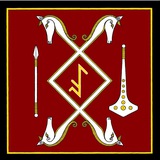
We, as a Northern folk, embrace life’s harshness, no matter how cold and hard it gets. We don’t run or hide from our struggles, but tackle them head on, even when inside we might be crying, feeling crushed, or feel our hope slipping away. Sometimes we have to ‘fake it, until we make it’, but that’s how strength is built, like steel forged in fire; how we become conquerers and creators of beauty, goodness, and life. It’s how we honor, emulate, and carry on that which Háma-Ríg brought us. We forge ahead and be who we are - creators of culture.
Based on the German poem by Otto Ernst, Wintermärchen speaks of a bluebird who stays in the cold northland while the rest fly toward the warm southland sun.
“On a bare rock below the stars
There sat amidst the raw winter wind
A bluebird, and I asked:
'Why don't you wander away?
Why do you stay, as the storms
Roll over meadows and fields,
While in the south far away there beckons
A beautiful sunny world?'
It gave an answer in a gentle tone
'Because I am not like the others,
Who, with tides and fortunes
Change their lighthearted minds.
There, they follow the Sun
Restless, from land to land,
They never have recognized
The still light in their own hearts.
It glows inside me with an eternal shine
- even when night falls over the Earth,
I sing, while the snow flakes fall,
Alone, a dreamy song.
Your eye also shines brightly,
Though your cheek may be pale;
It does show an inner glance
Into the eternal Realm of the Sun.
Let us live here together,
And a song from time to time
Let us sing of a withered bough,
That gloss of eternity.
Let us live here together,
And a song from times of yore
Let us sing of a withered bough,
That gloss of eternity”
https://youtu.be/yi9DQTjHOgA
https://linktr.ee/TheFrithstead
Based on the German poem by Otto Ernst, Wintermärchen speaks of a bluebird who stays in the cold northland while the rest fly toward the warm southland sun.
“On a bare rock below the stars
There sat amidst the raw winter wind
A bluebird, and I asked:
'Why don't you wander away?
Why do you stay, as the storms
Roll over meadows and fields,
While in the south far away there beckons
A beautiful sunny world?'
It gave an answer in a gentle tone
'Because I am not like the others,
Who, with tides and fortunes
Change their lighthearted minds.
There, they follow the Sun
Restless, from land to land,
They never have recognized
The still light in their own hearts.
It glows inside me with an eternal shine
- even when night falls over the Earth,
I sing, while the snow flakes fall,
Alone, a dreamy song.
Your eye also shines brightly,
Though your cheek may be pale;
It does show an inner glance
Into the eternal Realm of the Sun.
Let us live here together,
And a song from time to time
Let us sing of a withered bough,
That gloss of eternity.
Let us live here together,
And a song from times of yore
Let us sing of a withered bough,
That gloss of eternity”
https://youtu.be/yi9DQTjHOgA
https://linktr.ee/TheFrithstead
YouTube
Darkwood - Wintermärchen [Lyrics + English Translation] [German Neofolk]
Based on a poem by Otto Ernst (1862-1926).
Big thank you to oskar: https://lyricstranslate.com/en/winterm%C3%A4rchen-winter-fairy-tale.html
Lyrics:
Auf kahlem Felsen unter Sternen
Saß im rauen Winterhauch
Eine Drossel und ich fragte:
»Warum wanderst du…
Big thank you to oskar: https://lyricstranslate.com/en/winterm%C3%A4rchen-winter-fairy-tale.html
Lyrics:
Auf kahlem Felsen unter Sternen
Saß im rauen Winterhauch
Eine Drossel und ich fragte:
»Warum wanderst du…
Forwarded from Woden's Folk
The right eye of the Sutton Hoo Mask has a curious feature, and pointed out by Stephen Pollington in 'The Elder Gods'. Both eyes have garnets set around the edges, but the right eye has garnets backed by gold foil. It is doubtful if this is a mistake, but a deliberate means to allow the eye to stand out - when the light of a blazing torch shines on it. In fact this fits exactly with one of the denoscriptions given of Woden - Fyrgoge meaning 'Fire-Eye'.
After more than 1,000 years, this English pub is closing its doors
The oldest English pub in Britain is closing due to financial problems.
Ye Olde Fighting Cocks in St. Albans, just north of London, has been in business since 793 AD. Now, its doors are closed "after a sustained period of extremely challenging trading conditions," according to a statement from landlord Christo Tofalli
https://linktr.ee/TheFrithstead
The oldest English pub in Britain is closing due to financial problems.
Ye Olde Fighting Cocks in St. Albans, just north of London, has been in business since 793 AD. Now, its doors are closed "after a sustained period of extremely challenging trading conditions," according to a statement from landlord Christo Tofalli
https://linktr.ee/TheFrithstead
👎10
Anglo-Saxon Religious Leaders - Part 1
Blótere
[blow-tare-eh] • /ˈbloː.te.re/
A Blótere is a noscript for one who sacrifices, or Blóts. For Mǽġþ (Clan) or greater public observances, Blóteras are religious leaders trained in performing Blót. They know the gods, know the lore, and are trained in understanding the connections between the symbols and examples found within the Lore and within the natural world, in order to properly communicate with the gods and relay the information to the folk. In essence, they are the bridge, or conduit, between the higher powers and the folk. In private observances, within the inhíréd, or family household, the elder father or grandfather takes on this role as the de facto Blótere.
https://linktr.ee/TheFrithstead
Blótere
[blow-tare-eh] • /ˈbloː.te.re/
A Blótere is a noscript for one who sacrifices, or Blóts. For Mǽġþ (Clan) or greater public observances, Blóteras are religious leaders trained in performing Blót. They know the gods, know the lore, and are trained in understanding the connections between the symbols and examples found within the Lore and within the natural world, in order to properly communicate with the gods and relay the information to the folk. In essence, they are the bridge, or conduit, between the higher powers and the folk. In private observances, within the inhíréd, or family household, the elder father or grandfather takes on this role as the de facto Blótere.
https://linktr.ee/TheFrithstead
❤6👍3
Anglo-Saxon Religious Leaders - Part 2
Ǽweweard
[æːweh-wærd] • /æːwe.wæ͜ɑrd/
An Ǽweweard is a noscript for a Priest and guardian of the divine law. This noscript is seen in the Old High German, Éowart. Ǽwe or Ǽw means law or that which is established by law. Interestingly, the word was connected to marriage, highlighting the importance of folk-unions. Weard is our modern English word Ward, & carries the same meaning of protecting and guarding in the sense of keeping something safe.
For Mǽġþ (Clan) or greater public religious observances & Þings, Ǽweweardas are religious leaders trained in knowing, understanding, and practicing the law. These are the judges, lawyers, and advisors. They know the gods, religious lore, folk-law, & folk-history. Ǽweweardas are trained in understanding how to lead, administrate, and counsel the folk for their benefit & survival. They work with the gods and the folk-rulers to ensure the safety and maintenance of the folk.
https://linktr.ee/TheFrithstead
Ǽweweard
[æːweh-wærd] • /æːwe.wæ͜ɑrd/
An Ǽweweard is a noscript for a Priest and guardian of the divine law. This noscript is seen in the Old High German, Éowart. Ǽwe or Ǽw means law or that which is established by law. Interestingly, the word was connected to marriage, highlighting the importance of folk-unions. Weard is our modern English word Ward, & carries the same meaning of protecting and guarding in the sense of keeping something safe.
For Mǽġþ (Clan) or greater public religious observances & Þings, Ǽweweardas are religious leaders trained in knowing, understanding, and practicing the law. These are the judges, lawyers, and advisors. They know the gods, religious lore, folk-law, & folk-history. Ǽweweardas are trained in understanding how to lead, administrate, and counsel the folk for their benefit & survival. They work with the gods and the folk-rulers to ensure the safety and maintenance of the folk.
https://linktr.ee/TheFrithstead
👍7❤2
Anglo-Saxon Religious Leader - Part 3
Weofodþeġn
[way-oh-vode-thane]
/ˈwe͜oː.vod/
A Weofodþeġn is a noscript for a Priest. From Wíg, sacred idol, and bedd, wéofod translates as an altar, the place where sacred idols are placed. A Þeġn is a servant. Together, a Weofodþeġn is a minister of the altar who performs religious rites and services. For Mǽġþ (Clan) or greater public religious observances & Þings, Weofodþeġnas are religious leaders trained in knowing, understanding, and practicing the folk-rituals and rites of the faith. They lead the folk at the Heargas, Heargtræf, & Þing. They’re highly trained in the knowledge of the gods, well-versed in the religious & folk-law & history & understand how to lead & counsel the folk. When the folk gather for observance, it’s the Weofodþeġn who walks with the folk as a bridge between the gods. He/she is the leader, guide, & teacher; a servant to the folk.
https://linktr.ee/TheFrithstead
Weofodþeġn
[way-oh-vode-thane]
/ˈwe͜oː.vod/
A Weofodþeġn is a noscript for a Priest. From Wíg, sacred idol, and bedd, wéofod translates as an altar, the place where sacred idols are placed. A Þeġn is a servant. Together, a Weofodþeġn is a minister of the altar who performs religious rites and services. For Mǽġþ (Clan) or greater public religious observances & Þings, Weofodþeġnas are religious leaders trained in knowing, understanding, and practicing the folk-rituals and rites of the faith. They lead the folk at the Heargas, Heargtræf, & Þing. They’re highly trained in the knowledge of the gods, well-versed in the religious & folk-law & history & understand how to lead & counsel the folk. When the folk gather for observance, it’s the Weofodþeġn who walks with the folk as a bridge between the gods. He/she is the leader, guide, & teacher; a servant to the folk.
https://linktr.ee/TheFrithstead
👍3❤2
Anglo-Saxon Religious Leaders - Part 4
Þingere
[thing-er-eh] • /θinɡ.e.re/
An Þingere is a noscript for an advocate or intercessor; a priest, who in his office intercedes for the folk. As a verb, to Þingian is to make terms & settle disputes and or finalize agreements. A Þingere presides over the Þing, i.e. an official meeting or court. Since time immemorial, we have always been of folk of law and order. It’s believed that an annual multiple tribe Þing was held every summer sunstead, so the role of the Þingere was highly respected & honored, as multiple mǽġþa, or clans, would be in attendance and follow the Þingeres verdict. Each mǽġþ likely had their own Þingera to settle local disputes, with the Fathers and or Grandfather’s filling the role within the inhírédas, or personal households.
https://linktr.ee/TheFrithstead
Þingere
[thing-er-eh] • /θinɡ.e.re/
An Þingere is a noscript for an advocate or intercessor; a priest, who in his office intercedes for the folk. As a verb, to Þingian is to make terms & settle disputes and or finalize agreements. A Þingere presides over the Þing, i.e. an official meeting or court. Since time immemorial, we have always been of folk of law and order. It’s believed that an annual multiple tribe Þing was held every summer sunstead, so the role of the Þingere was highly respected & honored, as multiple mǽġþa, or clans, would be in attendance and follow the Þingeres verdict. Each mǽġþ likely had their own Þingera to settle local disputes, with the Fathers and or Grandfather’s filling the role within the inhírédas, or personal households.
https://linktr.ee/TheFrithstead
👍5❤2
Anglo-Saxon Religious Leaders - Part 5
Árþeġn
[are-thane] • /ˈɑːr.θejn/
An Árþeġn is a noscript for a servant or minister. A compound word from Ár, a servant, messenger, helper, & or minister. The name carries with it a double meaning, as Ár also means honor, glory, rank, dignity, magnificence, respect, & reverence, which is fitting, given the religious connection. A Þeġn is a servant, i.e. one who does service for another. It’s possible that an Árþeġn is another noscript for a Weofodþeġn, but more likely it referred to either the assistant to the Weofodþeġn, or one in training to become a Weofodþeġn. As a priest, or priest-in-training, the Árþeġnas would help lead religious observances, as they’re trained in knowing, understanding, and practicing the folk-rituals and rites of the faith. In dedicating their lives to the gods & folk, they are the leaders, guides, teachers, & future judges; honorably servants of the folk.
https://linktr.ee/TheFrithstead
Árþeġn
[are-thane] • /ˈɑːr.θejn/
An Árþeġn is a noscript for a servant or minister. A compound word from Ár, a servant, messenger, helper, & or minister. The name carries with it a double meaning, as Ár also means honor, glory, rank, dignity, magnificence, respect, & reverence, which is fitting, given the religious connection. A Þeġn is a servant, i.e. one who does service for another. It’s possible that an Árþeġn is another noscript for a Weofodþeġn, but more likely it referred to either the assistant to the Weofodþeġn, or one in training to become a Weofodþeġn. As a priest, or priest-in-training, the Árþeġnas would help lead religious observances, as they’re trained in knowing, understanding, and practicing the folk-rituals and rites of the faith. In dedicating their lives to the gods & folk, they are the leaders, guides, teachers, & future judges; honorably servants of the folk.
https://linktr.ee/TheFrithstead
❤4
Forwarded from BC Neanderthal Mindset
The reintroduction of a way of being which belongs to a people, that they didn’t know belonged to them is frightening at first. It is a foreign concept when the world says you have no culture and it is a shock that many will reject because of preprogrammed psychological disposition to actively reject it.
Cutting yourself off from your cultural roots forces you to take up cultural aspects from your surroundings, and in a multicultural setting, makes for cultural disorientation.
However..
Networking, lifestyle changes and action are needed to escape a carnivorous system that feeds on our people.
Reach out to others that have the same mindset and take action to return to a more simplistic, natural way of being.
We are primal and wild in nature, not meant to be captive to a society that is actively seeking our downfall.
Cutting yourself off from your cultural roots forces you to take up cultural aspects from your surroundings, and in a multicultural setting, makes for cultural disorientation.
However..
Networking, lifestyle changes and action are needed to escape a carnivorous system that feeds on our people.
Reach out to others that have the same mindset and take action to return to a more simplistic, natural way of being.
We are primal and wild in nature, not meant to be captive to a society that is actively seeking our downfall.
👍3❤1
Trúnaðarbók: The Loyalty Writings
By Folcweard Lárġyfa
With Foreword by Mark Puryear
Using the illustration of concentric circles, Trúnaðarbók is a series of essays discussing how we define and prioritize our levels of loyalty
Order here: https://www.amazon.com/gp/aw/d/B09R3HG63K/ref=dbs_a_w_dp_b09r3hg63k
And be sure to check out Folcweard’s other platforms: https://linktr.ee/TheFrithstead
By Folcweard Lárġyfa
With Foreword by Mark Puryear
Using the illustration of concentric circles, Trúnaðarbók is a series of essays discussing how we define and prioritize our levels of loyalty
Order here: https://www.amazon.com/gp/aw/d/B09R3HG63K/ref=dbs_a_w_dp_b09r3hg63k
And be sure to check out Folcweard’s other platforms: https://linktr.ee/TheFrithstead
👍3❤2
Anglo-Saxon Religious Leaders - Part 6
Ġeruna
[yeh-roo-nah-thane]
/je.ruːna/
An Ġeruna is a a Counselor. The prefix Ġe-, is a complicated prefix, but it’s often used to change the signification from literal to figurative, e.g. healdan, to hold > ġe-healdan, to observe or biddan, to bid, require of > ġe-biddan, to pray. Ġe-, in accordance with this meaning, often gives a collective sense to nouns. Ġe- brings completeness or collectivity. Runa comes from Rún, i.e. Rune, a whisper, mystery, secret, and or a letter (rúnstæf). Today, the runes are well-known symbols of our belief and well-known for their mysteries and secrets. A Ġeruna or counselor, is one who understands the mysteries of problems and therefore can work to bring resolutions and bring peace to conflicts .
https://linktr.ee/TheFrithstead
Ġeruna
[yeh-roo-nah-thane]
/je.ruːna/
An Ġeruna is a a Counselor. The prefix Ġe-, is a complicated prefix, but it’s often used to change the signification from literal to figurative, e.g. healdan, to hold > ġe-healdan, to observe or biddan, to bid, require of > ġe-biddan, to pray. Ġe-, in accordance with this meaning, often gives a collective sense to nouns. Ġe- brings completeness or collectivity. Runa comes from Rún, i.e. Rune, a whisper, mystery, secret, and or a letter (rúnstæf). Today, the runes are well-known symbols of our belief and well-known for their mysteries and secrets. A Ġeruna or counselor, is one who understands the mysteries of problems and therefore can work to bring resolutions and bring peace to conflicts .
https://linktr.ee/TheFrithstead
❤4👍2
Religious, by any other name
We are a religious folk, a pious folk. When looking at the terms below, we see the roots that mean Law (Ǽ), and god (god), indicating the importance of following the Law and being like a god. Fest/Fæst means Fixed or Firm; hence, where we get our word (to) fasten. Cund means Kind or Likeness; thus, being godly. Fremmende is the present participle (a verb showing current action) of Fremman, meaning doing or accomplishing (something)
Ǽfest - Fast or firm in the law, religious, devout
Godcund - of the nature of God, divine, religious, sacred
Ǽfremmende - Fulfilling the law, religious
Árfæst - Honourable, honest, upright, virtuous, good, pious, dutiful, gracious, kind, merciful
Piety and religiousness is natural to our folk. May we continually strive to be like the gods, honor our forebears, and live a life worth of remembrance.
https://linktr.ee/TheFrithstead
We are a religious folk, a pious folk. When looking at the terms below, we see the roots that mean Law (Ǽ), and god (god), indicating the importance of following the Law and being like a god. Fest/Fæst means Fixed or Firm; hence, where we get our word (to) fasten. Cund means Kind or Likeness; thus, being godly. Fremmende is the present participle (a verb showing current action) of Fremman, meaning doing or accomplishing (something)
Ǽfest - Fast or firm in the law, religious, devout
Godcund - of the nature of God, divine, religious, sacred
Ǽfremmende - Fulfilling the law, religious
Árfæst - Honourable, honest, upright, virtuous, good, pious, dutiful, gracious, kind, merciful
Piety and religiousness is natural to our folk. May we continually strive to be like the gods, honor our forebears, and live a life worth of remembrance.
https://linktr.ee/TheFrithstead
👍4❤1
Anglo-Saxon Sacred Places
Part 1
Hearga
[hærg-ah] • /hæ͜ɑrɣa/
A Hearga is a place sacred to a god, or gods, and usually contains an altar with idols placed upon it. Such sacred places can be a grove, hill, field, or even a temple; however, temples usage came later, which are called Heargtræf. A Træf is a building, so Heargtræf is a building used for religious purposes. A common Hearga altar feature is a formation of piled stones. Hearga today is pronounced Harrow; although, it’s usage has been narrowed to typically refer to sacred hills, such as Harrow on the Hill and Silbury Hill. Hearga hills often predate the Anglo-Saxons, but were still venerated as sacred places nonetheless. Today, our folk still utilize the Hearga, as our ancient forebears before us, as descendants of a living faith, native, sacred, and alive.
https://linktr.ee/TheFrithstead
Part 1
Hearga
[hærg-ah] • /hæ͜ɑrɣa/
A Hearga is a place sacred to a god, or gods, and usually contains an altar with idols placed upon it. Such sacred places can be a grove, hill, field, or even a temple; however, temples usage came later, which are called Heargtræf. A Træf is a building, so Heargtræf is a building used for religious purposes. A common Hearga altar feature is a formation of piled stones. Hearga today is pronounced Harrow; although, it’s usage has been narrowed to typically refer to sacred hills, such as Harrow on the Hill and Silbury Hill. Hearga hills often predate the Anglo-Saxons, but were still venerated as sacred places nonetheless. Today, our folk still utilize the Hearga, as our ancient forebears before us, as descendants of a living faith, native, sacred, and alive.
https://linktr.ee/TheFrithstead
Follow The Sacred Stew for a deep dive into authentic Germanic theology, history, philosophy and theology for the modern pagan.
he Sacred Stew-Episode 8
Konr "The King" - Aryan? Hyperborean? Or Teutonic?
James and Anthony have a special guest on today and begin discussing how we should identify ourselves in the modern era; we examine popular terminology in the modern age and discuss how we should see ourselves and what terminology best describes who we are as a broader folk. Join us for a deep dive into authentic germanic theology for the modern pagan.
Listen now on YouTube: https://youtu.be/6HsZ6FQv4Pw
Or Listen on your favorite podcast player here: https://anchor.fm/the-sacred-stew/episodes/Konr-The-King---Aryan--Hyperborean--Or-Teutonic-e1esn43
he Sacred Stew-Episode 8
Konr "The King" - Aryan? Hyperborean? Or Teutonic?
James and Anthony have a special guest on today and begin discussing how we should identify ourselves in the modern era; we examine popular terminology in the modern age and discuss how we should see ourselves and what terminology best describes who we are as a broader folk. Join us for a deep dive into authentic germanic theology for the modern pagan.
Listen now on YouTube: https://youtu.be/6HsZ6FQv4Pw
Or Listen on your favorite podcast player here: https://anchor.fm/the-sacred-stew/episodes/Konr-The-King---Aryan--Hyperborean--Or-Teutonic-e1esn43
YouTube
EPISODE 8 - Konr "The King" - Aryan? Hyperborean? Or Teutonic?
James and Anthony have a special guest on today and begin discussing how we should identify ourselves in the modern era; we examine popular terminology in the modern age and discuss how we should see ourselves and what terminology best describes who we are…
👍1
Anglo-Saxon Sacred Places
Part 2
Alh • Ealh
[all-ks] • /ɑlx/ • [æ͜all-ks] /æ͜ɑlx/
Alh, later spelled Ealh, is a temple, used for religious purposes, dedicated to the gods. Temple usage is a later development, likely from outside influence. Today, we’d call an Ealh a ‘Church’; however, Church, although attested in OE as Ċiriċe, is a Greek-derived term arriving to our folk post-conversion. Interestingly, Ealh is derived from the PGmc *alhs, which also means temple, but has a sense of protection, being possibly derived from PIE *h₂lek-, to protect. In Yeavering, Northumberland, building D2 is believed to be an Ealh. Below are links discussing the Anglo-Saxon Yeavering Ealh, as well as an article by Dagaz Issa discussing a theory linking Ealh with ALU.
https://en.m.wikipedia.org/wiki/Yeavering#Anglo-Saxon_settlement
https://pnwkindreds.com/alu-understanding-its-sacred-priniciples/
https://linktr.ee/TheFrithstead
Part 2
Alh • Ealh
[all-ks] • /ɑlx/ • [æ͜all-ks] /æ͜ɑlx/
Alh, later spelled Ealh, is a temple, used for religious purposes, dedicated to the gods. Temple usage is a later development, likely from outside influence. Today, we’d call an Ealh a ‘Church’; however, Church, although attested in OE as Ċiriċe, is a Greek-derived term arriving to our folk post-conversion. Interestingly, Ealh is derived from the PGmc *alhs, which also means temple, but has a sense of protection, being possibly derived from PIE *h₂lek-, to protect. In Yeavering, Northumberland, building D2 is believed to be an Ealh. Below are links discussing the Anglo-Saxon Yeavering Ealh, as well as an article by Dagaz Issa discussing a theory linking Ealh with ALU.
https://en.m.wikipedia.org/wiki/Yeavering#Anglo-Saxon_settlement
https://pnwkindreds.com/alu-understanding-its-sacred-priniciples/
https://linktr.ee/TheFrithstead
👍1
Forwarded from Survive the Jive: All-feed
It isn't really true that Europe became Christian 1000 years ago. That is generally true as a broad statement but there have been pagans since then:
-1385 in Lithuania, Jogaila agreed to adopt Christianity, the last country in Europe to officially convert. Nobles converted but paganism still practiced in Lithuania covertly until at least 1600’s.
-Gemistus Pletho c. 1355/1360 – c. 1453 was a pagan Platonist who believed Byzantium should be Hellenic again. In 1431 Pletho was so respected for his wisdom and morality that he was chosen to accompany John VIII Byzantine emperor to the Council of Florence to discuss a union of the Orthodox and Catholic churches.
-1484 in Sweden - in a trial a thief named Ragvald Odinskarl confessed that he had served Odin for seven years.
-1492 in Sweden Erick Clauesson confessed to worshipping Odin.
-Thomas Morton (c. 1579–1647) was an American colonist from a noble Devonshire family. In his colony of Merrymount he revived pagan customs from Greece and Rome and combined them with English pagan traditions such as the Maypole and invited native American pagan women to join in the dances.
-1598 in England, a German lawyer Paul Hentzner witnessed a harvest festival in Windsor where he says the people carried an idol of the goddess Ceres in a wagon.
-1632 in Småland, Sweden court records describe how a man was advised to call out for Odin at a crossroads on a Thursday night in order to acquire wealth.
-1693 in Sweden Petter Rudebeck describes how many people in Småland believe Odin gives them wealth if they invite him as a guest on a Thursday night.
-1776 in England, topographer William Hutchinson described how people in Northumberland decorate an idol of Ceres with a crown of flowers and grain and carry it to the fields while playing music.
-19th century Swedes are reported to still have dragged an idol called the “corn god” around fields to bless crops. Montelius provides similar earlier evidence of Thor worship in 17th century Sweden.
-Thomas Taylor (1758 – 1835) was a pagan Platonist from England who translated many of the ancient works of platonists and is said to have led pagan rites and processions in rural England.
-1385 in Lithuania, Jogaila agreed to adopt Christianity, the last country in Europe to officially convert. Nobles converted but paganism still practiced in Lithuania covertly until at least 1600’s.
-Gemistus Pletho c. 1355/1360 – c. 1453 was a pagan Platonist who believed Byzantium should be Hellenic again. In 1431 Pletho was so respected for his wisdom and morality that he was chosen to accompany John VIII Byzantine emperor to the Council of Florence to discuss a union of the Orthodox and Catholic churches.
-1484 in Sweden - in a trial a thief named Ragvald Odinskarl confessed that he had served Odin for seven years.
-1492 in Sweden Erick Clauesson confessed to worshipping Odin.
-Thomas Morton (c. 1579–1647) was an American colonist from a noble Devonshire family. In his colony of Merrymount he revived pagan customs from Greece and Rome and combined them with English pagan traditions such as the Maypole and invited native American pagan women to join in the dances.
-1598 in England, a German lawyer Paul Hentzner witnessed a harvest festival in Windsor where he says the people carried an idol of the goddess Ceres in a wagon.
-1632 in Småland, Sweden court records describe how a man was advised to call out for Odin at a crossroads on a Thursday night in order to acquire wealth.
-1693 in Sweden Petter Rudebeck describes how many people in Småland believe Odin gives them wealth if they invite him as a guest on a Thursday night.
-1776 in England, topographer William Hutchinson described how people in Northumberland decorate an idol of Ceres with a crown of flowers and grain and carry it to the fields while playing music.
-19th century Swedes are reported to still have dragged an idol called the “corn god” around fields to bless crops. Montelius provides similar earlier evidence of Thor worship in 17th century Sweden.
-Thomas Taylor (1758 – 1835) was a pagan Platonist from England who translated many of the ancient works of platonists and is said to have led pagan rites and processions in rural England.
👍1
Forwarded from Draupnir
@All The PNW Wolfpack is in the process of building the first heathen Hoff from the ground up on land that we own. We are breaking ground on March 5th. We currently have a fundraiser to purchase some building material that we need to complete the build. We are currently at about 45% of our goal. I wanted to share this fundraiser with this group and if you are able to help us build something great for our folk in the Pacific Northwest and The children to come in the future, please consider donating and helping us reach our goal.
You can donate here: https://pnwkindreds.com/campaigns/pnw-wolfpack-hof-fundraiser
You can donate here: https://pnwkindreds.com/campaigns/pnw-wolfpack-hof-fundraiser
❤3