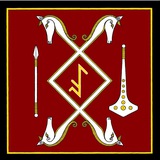
Henġest & Horsa: Part 4
In 'On the Ruin and Conquest of Britain', 5th c. British monk Gildas wrote that Vortigern invited "the fierce and impious Saxons" to aid in driving out the Picts & Scots. Soon after their victory, more Northmen came. When they later demanded that "their monthly allotments" be increased, which Vortigern refused, they ravaged the Celtic land. Note* written through the perspective of a Celt, it’s likely that Gildas’ account is skewed with a hostile perspective
12th c. British cleric Geoffrey of Monmouth stated that Vortigern married Henġest’s daughter Rowena, resulting in Vortigern’s son Vortimer, staging a revolt against his father.
https://linktr.ee/TheFrithstead
In 'On the Ruin and Conquest of Britain', 5th c. British monk Gildas wrote that Vortigern invited "the fierce and impious Saxons" to aid in driving out the Picts & Scots. Soon after their victory, more Northmen came. When they later demanded that "their monthly allotments" be increased, which Vortigern refused, they ravaged the Celtic land. Note* written through the perspective of a Celt, it’s likely that Gildas’ account is skewed with a hostile perspective
12th c. British cleric Geoffrey of Monmouth stated that Vortigern married Henġest’s daughter Rowena, resulting in Vortigern’s son Vortimer, staging a revolt against his father.
https://linktr.ee/TheFrithstead
Henġest & Horsa: Part 5
In the 800s CE, Nennius l, in Historia Brittonum, recorded that although the British were defeated, Horsa, along with Vortimer & Categirn, Vortigern’s sons, fell in the battle. Similar to Henġest & Horsa’s earlier incident between Prince Hnæf Hocingas Healfdene & King Finn, violence erupted between Henġest & Horsa’s men & King Vortigern’s Nobles (& remaining men). At Stonehenge, a meeting took place between the two sides, to discuss the terms of ceding more lands to the Germanic conquerors, at some point, Henġest ordered his men to attack the British, which resulted in their near complete slaughter. This event, known as the The Night of the Long Knives sealed the fate of the Britain’s southern lands & Henġest became King, calling his new Kingsom, the Cantwara Ríċe (the Kingdom of Kent). Note* it’s likely that the events regarding The Night of the Long Knives is a negatively biased account, lending skepticism about the events accuracy.
https://linktr.ee/TheFrithstead
In the 800s CE, Nennius l, in Historia Brittonum, recorded that although the British were defeated, Horsa, along with Vortimer & Categirn, Vortigern’s sons, fell in the battle. Similar to Henġest & Horsa’s earlier incident between Prince Hnæf Hocingas Healfdene & King Finn, violence erupted between Henġest & Horsa’s men & King Vortigern’s Nobles (& remaining men). At Stonehenge, a meeting took place between the two sides, to discuss the terms of ceding more lands to the Germanic conquerors, at some point, Henġest ordered his men to attack the British, which resulted in their near complete slaughter. This event, known as the The Night of the Long Knives sealed the fate of the Britain’s southern lands & Henġest became King, calling his new Kingsom, the Cantwara Ríċe (the Kingdom of Kent). Note* it’s likely that the events regarding The Night of the Long Knives is a negatively biased account, lending skepticism about the events accuracy.
https://linktr.ee/TheFrithstead
Episode 3: The Power Process
The Fyrgen
The Fyrgen Podcast - Episode 3: The Power Process
In this episode I'm joined by Heiðrūn to discuss and expand upon Ted Kaczynski's concept of The Power Process and resulting Surrogate Activities. How have we lost personal agency? Was it taken from us or did we give it away? What are the long-term effects upon the folk?
Find out more about Heiðrūn's work at: freefolk.org
Please consider supporting me if you've enjoyed the episodes. Time and effort goes into this and patrons get early and exclusive stuff. Visit fyrgen.com for links, information and an archive of past episodes.
In this episode I'm joined by Heiðrūn to discuss and expand upon Ted Kaczynski's concept of The Power Process and resulting Surrogate Activities. How have we lost personal agency? Was it taken from us or did we give it away? What are the long-term effects upon the folk?
Find out more about Heiðrūn's work at: freefolk.org
Please consider supporting me if you've enjoyed the episodes. Time and effort goes into this and patrons get early and exclusive stuff. Visit fyrgen.com for links, information and an archive of past episodes.
Forwarded from Hwitgeard
I'm quite a fan of Ted Kaczynski for many of his ideas, but one of the most important is the Power Process. The Power Process describes how technology makes us feel unfulfilled because it takes away the process whereby we feel achievement, meaning and purpose in our lives, and many people replace this process with surrogate activities that fill this desire but are ultimately fruitless.
I have often mentioned my Naturalist, biocentric worldview which informs the fundamental layer of both my spiritual beliefs and my political ideals. I see man as mammal as the lowest common denominator for all things, and while not everything can be reduced to the biological level (such as the spiritual), it is epiphenomenal to it. Consequently I see most human behaviour, including writing this post for you to read, as superfluous nonsense.
The Natural state of man is reproducing and raising a family, becoming strong warriors and loving mothers to defend ones family and home. Everything else is either a betterment or a detriment to that goal. The goal of politics is to defend that goal, the goal of economics should be a means to an end of that goal too, and of course spirituality should be concurrent with that goal, and it is on this issue that paganism finally made sense to me many years ago, as well as how harmful an inclusive, universal faith can be. Some people feign superiority that such a primitive mindset is somehow below them, or they make excuses for how it can be more nuanced, but ultimately that's what matters on the most foundational level of all things. If one were to answer the question of 'Why does race matter?', it is because it is informed by such a biocentric worldview of natural human tribalism.
Returning to Kaczynski, it is from this position that the Power Process spoke to me, and it answered the question which I have long asked myself about the decay of modern society and the depression which is associated with it — we are not living according to our natural state, but completely against it for superficial ends. It is such a simple idea, and yet its implications are wide and interconnected. Those who are deeply invested in surrogate activities will put up complex walls of defense for why he is wrong or why their surrogate activity is actually part of the Power Process. I recall a Counter Currents podcast with Greg Johnson and Rich Houck about the legacy of Ted Kaczynski, where Greg accused Ted of naivety for considering culture and science surrogate activities. Cope. In the grand scheme of things, they are, especially in so far as people would be willing to die for culture and science but not for their own flesh and blood. Surrogate activities have inverted our priorities and we no longer see the world through the natural and organic lens of kinship, blood, life, home and hearth. Is it any wonder we are so detached from reality and depressed? It's why we're losing — too proud of our cultural, technological and intellectual accomplishments to even know how to do the basics of life.
Anyway — my good friend @Fyrgen recently recorded a new podcast for his website (which you can subscribe via Substack, SubscribeStar and Patreon), in which he discusses the Power Process with Heiðrūn. If you haven't subscribed, please do so, and help support his efforts, or if you cannot, please give them your time and share them.
https://news.1rj.ru/str/fyrgen/1394
His new episode discusses his thoughts on The Northman and the moral paradigm of the film from a Heathen perspective.
I have often mentioned my Naturalist, biocentric worldview which informs the fundamental layer of both my spiritual beliefs and my political ideals. I see man as mammal as the lowest common denominator for all things, and while not everything can be reduced to the biological level (such as the spiritual), it is epiphenomenal to it. Consequently I see most human behaviour, including writing this post for you to read, as superfluous nonsense.
The Natural state of man is reproducing and raising a family, becoming strong warriors and loving mothers to defend ones family and home. Everything else is either a betterment or a detriment to that goal. The goal of politics is to defend that goal, the goal of economics should be a means to an end of that goal too, and of course spirituality should be concurrent with that goal, and it is on this issue that paganism finally made sense to me many years ago, as well as how harmful an inclusive, universal faith can be. Some people feign superiority that such a primitive mindset is somehow below them, or they make excuses for how it can be more nuanced, but ultimately that's what matters on the most foundational level of all things. If one were to answer the question of 'Why does race matter?', it is because it is informed by such a biocentric worldview of natural human tribalism.
Returning to Kaczynski, it is from this position that the Power Process spoke to me, and it answered the question which I have long asked myself about the decay of modern society and the depression which is associated with it — we are not living according to our natural state, but completely against it for superficial ends. It is such a simple idea, and yet its implications are wide and interconnected. Those who are deeply invested in surrogate activities will put up complex walls of defense for why he is wrong or why their surrogate activity is actually part of the Power Process. I recall a Counter Currents podcast with Greg Johnson and Rich Houck about the legacy of Ted Kaczynski, where Greg accused Ted of naivety for considering culture and science surrogate activities. Cope. In the grand scheme of things, they are, especially in so far as people would be willing to die for culture and science but not for their own flesh and blood. Surrogate activities have inverted our priorities and we no longer see the world through the natural and organic lens of kinship, blood, life, home and hearth. Is it any wonder we are so detached from reality and depressed? It's why we're losing — too proud of our cultural, technological and intellectual accomplishments to even know how to do the basics of life.
Anyway — my good friend @Fyrgen recently recorded a new podcast for his website (which you can subscribe via Substack, SubscribeStar and Patreon), in which he discusses the Power Process with Heiðrūn. If you haven't subscribed, please do so, and help support his efforts, or if you cannot, please give them your time and share them.
https://news.1rj.ru/str/fyrgen/1394
His new episode discusses his thoughts on The Northman and the moral paradigm of the film from a Heathen perspective.
Telegram
The Fyrgen • ᚫᛚᚢ:ᚢᛚᚫ
The Fyrgen Podcast - Episode 3: The Power Process
In this episode I'm joined by Heiðrūn to discuss and expand upon Ted Kaczynski's concept of The Power Process and resulting Surrogate Activities. How have we lost personal agency? Was it taken from us or did…
In this episode I'm joined by Heiðrūn to discuss and expand upon Ted Kaczynski's concept of The Power Process and resulting Surrogate Activities. How have we lost personal agency? Was it taken from us or did…
Forwarded from COLE WOLFSSON (COLE WOLFSSON)
Media is too big
VIEW IN TELEGRAM
Original Cole Wolfsson Classic
“Tradition, which is always old, is at the same time ever new because it is always reviving - born again in each new generation, to be lived and applied in a new and particular way. Convention is simply the ossification of social customs. The activities of conventional people are merely excuses for NOT acting in a more integrally human way. Tradition nourishes the life of the spirit; convention merely disguises its interior decay.”
~Thomas Merton
~Thomas Merton
👍6
Henġest and Horsa: Divine Twins: Part 1
Found as early as the time of the ancient Indo-Europeans, the Divine Twins appear throughout European history and form a part of Europe’s mythological foundation. The naming of twins follows distinct patterns, such as being called by a single name in the plural, or dual, e.g. Dioskouroi, Alcis, & Aśvins & or share a single meaning, such as Henġest and Horsa (both meaning Horse). The twins are known as the sons of a sky deity, such as the Greek Dios Kouroi, who are Castor and Pollux, the sons of Zeus. In Baltic mythology, there’s the Latvian Dieva deli & Lithuanian Dievo suneliai; both meaning ‘Sons of God.’ In Bede’s Ecclesiastical History of the English People, records that Henġest & Horsa were the great-great grandsons of Wóden. Nennius, Æðelweard, & William of Malmesbury also mention their Wódenic heritage.
https://linktr.ee/TheFrithstead
Found as early as the time of the ancient Indo-Europeans, the Divine Twins appear throughout European history and form a part of Europe’s mythological foundation. The naming of twins follows distinct patterns, such as being called by a single name in the plural, or dual, e.g. Dioskouroi, Alcis, & Aśvins & or share a single meaning, such as Henġest and Horsa (both meaning Horse). The twins are known as the sons of a sky deity, such as the Greek Dios Kouroi, who are Castor and Pollux, the sons of Zeus. In Baltic mythology, there’s the Latvian Dieva deli & Lithuanian Dievo suneliai; both meaning ‘Sons of God.’ In Bede’s Ecclesiastical History of the English People, records that Henġest & Horsa were the great-great grandsons of Wóden. Nennius, Æðelweard, & William of Malmesbury also mention their Wódenic heritage.
https://linktr.ee/TheFrithstead
❤3
Henġest and Horsa: Divine Twins: Part 2
In accounts of the Divine Twins, the warrior helper gods, they’re connected to a woman, usually, but not always, a sister. In the Rig Veda she is Surya, the feminine equivalent of Suryas the Sun; known as Duhita Suryasya Daughter of the Sun (RV 1.116.17; 1.118.5; 4.43.2). This name finds parallel in the name of the Latvian Divine Twins’ sister, Saules meita Daughter of the Sun, who in the Lithuanian songs is called Saules dukterys - Daughter of the Sun. To the Greeks, the sister of the Dioskouroi is Helen, Divine Splendor, who is known as the daughter of Helios the Sun (Ptolem., Hist. Nov. 189; Phot. Bibl., 149a). The Rig Veda mentions a female divinity associated with the Aśvins: Usas the Dawn, corresponding mythologically & etymologically to Greek Eos & Latvian Austra, Auseklis and to the Lithuanian Ausra, Ausrine. Usas, like Surya, is reported to be the sister of the Aśvins (RV 7.71.1). (D. Ward, The Divine Twins, 1968).
https://linktr.ee/TheFrithstead
In accounts of the Divine Twins, the warrior helper gods, they’re connected to a woman, usually, but not always, a sister. In the Rig Veda she is Surya, the feminine equivalent of Suryas the Sun; known as Duhita Suryasya Daughter of the Sun (RV 1.116.17; 1.118.5; 4.43.2). This name finds parallel in the name of the Latvian Divine Twins’ sister, Saules meita Daughter of the Sun, who in the Lithuanian songs is called Saules dukterys - Daughter of the Sun. To the Greeks, the sister of the Dioskouroi is Helen, Divine Splendor, who is known as the daughter of Helios the Sun (Ptolem., Hist. Nov. 189; Phot. Bibl., 149a). The Rig Veda mentions a female divinity associated with the Aśvins: Usas the Dawn, corresponding mythologically & etymologically to Greek Eos & Latvian Austra, Auseklis and to the Lithuanian Ausra, Ausrine. Usas, like Surya, is reported to be the sister of the Aśvins (RV 7.71.1). (D. Ward, The Divine Twins, 1968).
https://linktr.ee/TheFrithstead
👍2
Henġest and Horsa: Divine Twins: Part 3
The chronicle of Æðelweard speaks of the British King Vortigern’s plight. Besieged by enemies, he sent messengers to the “Saxons” for help. Soon, Henġest & Horsa, the renowned grandsons of Wóden, arrived with three ships & succeeded in defeating Vortigern’s foes. This reflects the Indo-European legend where twin brothers appear to save those in need. The appearance of three ships to aid a king in distress is reminiscent of the Greenlandic Lay of Atli where Guðrún speaks of herself & her two brothers, each of whom steers a ship at sea. They arrive at an unnamed seashore, rout the enemy, & free the prisoners. Although the chronicle of Æðelweard makes no mention of a sister, it is curious that the two brothers are reported to have arrived with three ships. One can conjecture that the appearance of a third ship reflects the original participation of a third member, perhaps a maiden? (D. Ward, The Divine Twins, 1968).
https://linktr.ee/TheFrithstead
The chronicle of Æðelweard speaks of the British King Vortigern’s plight. Besieged by enemies, he sent messengers to the “Saxons” for help. Soon, Henġest & Horsa, the renowned grandsons of Wóden, arrived with three ships & succeeded in defeating Vortigern’s foes. This reflects the Indo-European legend where twin brothers appear to save those in need. The appearance of three ships to aid a king in distress is reminiscent of the Greenlandic Lay of Atli where Guðrún speaks of herself & her two brothers, each of whom steers a ship at sea. They arrive at an unnamed seashore, rout the enemy, & free the prisoners. Although the chronicle of Æðelweard makes no mention of a sister, it is curious that the two brothers are reported to have arrived with three ships. One can conjecture that the appearance of a third ship reflects the original participation of a third member, perhaps a maiden? (D. Ward, The Divine Twins, 1968).
https://linktr.ee/TheFrithstead
👍3
Henġest and Horsa: Divine Twins: Part 4
Although the histories & chronicle of Æðelweard make no mention of a maiden coming to Britain with the brothers, they do report that Henġest later became the father of a girl who was given the name Rowena. The name is evidently from the Celtic rhon-wen ‘with a white mane,’ indicating a horse connection, paralleling the nature of Henġest & Horsa. In view of the widespread Indo-European tradition of the triad within twin divinities, one must weigh the possibility that this white-maned maiden was originally the sister of the twin heroes; the original relationship having been forgotten when the histories were recorded. Her Celtic name could have been, as Jan de Vries speculates, a translation of the Old English Hwítmanu, which would represent an alliterative parallel to the names Henġest & Horsa. (D. Ward, The Divine Twins, 1968).
https://linktr.ee/TheFrithstead
Although the histories & chronicle of Æðelweard make no mention of a maiden coming to Britain with the brothers, they do report that Henġest later became the father of a girl who was given the name Rowena. The name is evidently from the Celtic rhon-wen ‘with a white mane,’ indicating a horse connection, paralleling the nature of Henġest & Horsa. In view of the widespread Indo-European tradition of the triad within twin divinities, one must weigh the possibility that this white-maned maiden was originally the sister of the twin heroes; the original relationship having been forgotten when the histories were recorded. Her Celtic name could have been, as Jan de Vries speculates, a translation of the Old English Hwítmanu, which would represent an alliterative parallel to the names Henġest & Horsa. (D. Ward, The Divine Twins, 1968).
https://linktr.ee/TheFrithstead
👍2
Henġest and Horsa: Divine Twins: Part 5
In the history of Suffridus Petrus (De Fris. Antiq. et Orig. II, 15), it’s told that a maiden named Swana, a great-granddaughter of Wóden, had two brothers, Henġest & Horsa, who were killed. She later married Duke Udolphus of Frisia & bore him two sons, naming them Henġest and Horsa in memory of her brothers. These sons grew up to become the famous brethren who led the settlement of Britain. The name Swana ‘swan’ warrants special attention, as the swan is a common manifestation of the divine. A similar name occurs elsewhere within Germanic heroic tradition where it can likewise be associated with the Divine Twins. It’s evident that Swana & her brothers, descendants of Wóden, represent a Germanic twin triad. When Suffridus Petrus attests that the historic Henġest and Horsa were named after these brothers, it may indicate that the former were considered the mortal incarnations of their divine ancestors (D. Ward, The Divine Twins, 1968).
https://linktr.ee/TheFrithstead
In the history of Suffridus Petrus (De Fris. Antiq. et Orig. II, 15), it’s told that a maiden named Swana, a great-granddaughter of Wóden, had two brothers, Henġest & Horsa, who were killed. She later married Duke Udolphus of Frisia & bore him two sons, naming them Henġest and Horsa in memory of her brothers. These sons grew up to become the famous brethren who led the settlement of Britain. The name Swana ‘swan’ warrants special attention, as the swan is a common manifestation of the divine. A similar name occurs elsewhere within Germanic heroic tradition where it can likewise be associated with the Divine Twins. It’s evident that Swana & her brothers, descendants of Wóden, represent a Germanic twin triad. When Suffridus Petrus attests that the historic Henġest and Horsa were named after these brothers, it may indicate that the former were considered the mortal incarnations of their divine ancestors (D. Ward, The Divine Twins, 1968).
https://linktr.ee/TheFrithstead
👍2
Forwarded from 𝗔𝗿𝘆𝗮𝗻 𝗘𝘁𝗵𝗼𝘀
The history of our ancestors lives through us. We are not separate nor distinct, but a byproduct of them and their legacies. We bear the responsibility of holding the torch of greatness, then passing it on to our posterity when the time comes. When it’s time to pass the torch, as our forebears did before us, we must ensure our progeny is trained up well and correctly guided. We decide the future of our people. We must make them strong, tough, and resilient to nature’s unexpected. We must secure their existence, to guarantee a future for our children.
👍6
By paying honor and respect to one’s kinfolk and all who share in the worship of the gods of the tribe and who also share descent and blood, a person will also enjoy the favor of the gods of the household who will be well disposed toward his own begetting of children.
Plato, Laws 729c
https://linktr.ee/TheFrithstead
Plato, Laws 729c
https://linktr.ee/TheFrithstead
❤9👍4
Forwarded from Víðarr Rising
This media is not supported in your browser
VIEW IN TELEGRAM
This 14,000 Year Old Toy Might Be The World’s First Animation
This small bone disc is carved with a deer on either side. When you spin it, it looks like the deer is running.
https://digventures.com/2018/02/amazing-artefacts-this-14000-year-old-toy-might-be-the-worlds-first-animation/amp/
This small bone disc is carved with a deer on either side. When you spin it, it looks like the deer is running.
https://digventures.com/2018/02/amazing-artefacts-this-14000-year-old-toy-might-be-the-worlds-first-animation/amp/
❤12
Forwarded from ȺηтнαѕGαтє
Returning to your ancient original Ethnic Spirituality is the greatest way to empower yourself. It awakens you to every part of the false existence and revitalizes your natural defenses and spiritual power of your Ancestors.⚔️
❤10👍6
While you’re looking at another woman/man, another man/woman is looking at yours… learn to appreciate what you have. Why go get a burger when you’ve probably got steak at home. Loyalty costs nothing, it’s a shame not many people have that or morals in this day in age. 🖤
~ Ian McKee
https://linktr.ee/TheFrithstead
~ Ian McKee
https://linktr.ee/TheFrithstead
❤9👍1
* A Frithstead Update *
I haven’t put out any YouTube videos or Spotify episodes lately, as I’ve been a bit busy, but I hope to change this. In releasing these platform specific content, I’ll probably focus more on the Spotify side of things, as the video production, although is aesthetically pleasing, is time consuming. My hope is to put out something (at least) once a month. That said, my time is served best in continuing to offer quality research content and valuable posts on Telegram while spending the bulk of my time writing books. I have two I’m currently working on. Think long term. When I look around, I find it difficult to find quality Heathen researchers; hence, why The Frithstead was born. A channel that educates and encourages. A white pill amongst a black-pilled world. Check out the link tree and explore all The Frithstead has to offer. Hail good folk and béo ġesunde.
https://linktr.ee/TheFrithstead
I haven’t put out any YouTube videos or Spotify episodes lately, as I’ve been a bit busy, but I hope to change this. In releasing these platform specific content, I’ll probably focus more on the Spotify side of things, as the video production, although is aesthetically pleasing, is time consuming. My hope is to put out something (at least) once a month. That said, my time is served best in continuing to offer quality research content and valuable posts on Telegram while spending the bulk of my time writing books. I have two I’m currently working on. Think long term. When I look around, I find it difficult to find quality Heathen researchers; hence, why The Frithstead was born. A channel that educates and encourages. A white pill amongst a black-pilled world. Check out the link tree and explore all The Frithstead has to offer. Hail good folk and béo ġesunde.
https://linktr.ee/TheFrithstead
👍4
The Wælcyrġe, /ˈwæl.kɪr.je/, is a chooser of the slain. Under Wóden & or Frówe’s command, & led by the Norn, Sċyld, the Wælcyrġan gather select battle-slain warriors & accompany them, first to Hell, then to Ósġeard. In later Anglo-Saxon texts, something of the old idea is still shown as various glosses, where the word was rendered as a fury, or goddess of war. What’s interesting, is that the Wælcyrġan have connections with birds, such as swans, ravens, and or falcons. As seen in Suffridus Petrus’ account of Henġest & Horsa, their sister/mother is Swana. Is this a coincidence or can we, within Germanic lore, find a divine twin parallel connecting two closely related male figures and a close female relative with birds and or a Wælcyrġe?
https://linktr.ee/TheFrithstead
https://linktr.ee/TheFrithstead
👍3
Forwarded from wandering spΛrtan
Whatever the goal is, consistency is everything.
Consistency comes through discipline.
Discipline comes from strength of character and willpower.
You need the fire in the belly, hunger, anger...
It all comes down to how bad you want it. If you're lukewarm about your goal, you will never attain it.
Consistency comes through discipline.
Discipline comes from strength of character and willpower.
You need the fire in the belly, hunger, anger...
It all comes down to how bad you want it. If you're lukewarm about your goal, you will never attain it.
👍2
Luck
The ancient Anglo-Saxon word, ræd — is a perfect illustration of Teutonic psychology. When given to others, it means counsel; when applied to the luck working within the mind, it means wisdom, or a good plan, and from an ethical point of view, just and honest thoughts. But the word naturally includes the idea of success, which accompanies wise and upright devising, and on the other hand power and authority, which are the working of a sound will. Men setting about to discuss difficult matters stand in need of ræd and quickness of mind, says an Old-English writer. A rædless man is weakened by lack of will, lack of power and lack of self-assertion.
― Vilhelm Grønbech, The Culture of the Teutons: Volume 1
https://linktr.ee/TheFrithstead
The ancient Anglo-Saxon word, ræd — is a perfect illustration of Teutonic psychology. When given to others, it means counsel; when applied to the luck working within the mind, it means wisdom, or a good plan, and from an ethical point of view, just and honest thoughts. But the word naturally includes the idea of success, which accompanies wise and upright devising, and on the other hand power and authority, which are the working of a sound will. Men setting about to discuss difficult matters stand in need of ræd and quickness of mind, says an Old-English writer. A rædless man is weakened by lack of will, lack of power and lack of self-assertion.
― Vilhelm Grønbech, The Culture of the Teutons: Volume 1
https://linktr.ee/TheFrithstead
👍5