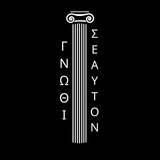
O, Absolutely Transcendent! (what else is it rightful to call Thee?)
How shall I fittingly hymn Thee, that art of all things most exalted?
How would words speak Thy Splendor? For words cannot name or denote Thee,
Sole Unspeakable Being, since Thou art the cause of all speaking.
How might the mind know Thy Nature? For mind cannot grasp or conceive Thee,
Sole Unknowable Being, since Thou art the cause of all knowing.
All things existing, the speaking and speechless together proclaim Thee.
All things existing, the knowing and nescient together, adore Thee.
All keen desires or lust, all painful passions are yearnings
Only for Thee. Thine is the whole world’s prayer; to Thee all,
Sensing Thy tokens within them, utter a paean of silence.
Everything issues from Thee. Only Thou art dependent on nothing.
Everything nestles within Thee. Everything surges upon Thee.
For Thou art the Goal of all beings. And Thou art One Thing, and All Things,
And yet neither one thing, nor all things.
O, Most-Named, how then shall I name Thee?
That art alone the Unnamable? What even Heaven-born Mind then
Could possibly penetrate Thy distant Shroud? I Pray Thee, be gracious!
O, Absolutely Transcendent, what else is it rightful to call Thee?
Uncertain authorship, Hymn to God
How shall I fittingly hymn Thee, that art of all things most exalted?
How would words speak Thy Splendor? For words cannot name or denote Thee,
Sole Unspeakable Being, since Thou art the cause of all speaking.
How might the mind know Thy Nature? For mind cannot grasp or conceive Thee,
Sole Unknowable Being, since Thou art the cause of all knowing.
All things existing, the speaking and speechless together proclaim Thee.
All things existing, the knowing and nescient together, adore Thee.
All keen desires or lust, all painful passions are yearnings
Only for Thee. Thine is the whole world’s prayer; to Thee all,
Sensing Thy tokens within them, utter a paean of silence.
Everything issues from Thee. Only Thou art dependent on nothing.
Everything nestles within Thee. Everything surges upon Thee.
For Thou art the Goal of all beings. And Thou art One Thing, and All Things,
And yet neither one thing, nor all things.
O, Most-Named, how then shall I name Thee?
That art alone the Unnamable? What even Heaven-born Mind then
Could possibly penetrate Thy distant Shroud? I Pray Thee, be gracious!
O, Absolutely Transcendent, what else is it rightful to call Thee?
Uncertain authorship, Hymn to God
👍9🔥4
Forwarded from The Classical Wisdom Tradition
The whole combination of soul and body is called a living thing, or animal, and has the designation ‘mortal’ as well. Such a combination cannot be immortal, not on any reasonable account. In fact it is pure fiction, based neither on observation nor on adequate reasoning, that a god is an immortal living thing which has a body and a soul, and that these are bound together by nature for all time.
Plato, Phaedrus 246c-d
Plato, Phaedrus 246c-d
👍8
Forwarded from The Classical Wisdom Tradition
Consider that what I said before about anger has also been said about the other diseases of the soul. First, we must not leave the diagnosis of these passions to ourselves but we must entrust it to others; second, we must not leave this task to anyone at all but to older men who are commonly considered to be good and noble — men to whom we ourselves have given full approval because, on many occasions, we have found them free from these passions. We must further show that we are grateful to these men and not annoyed with them when they mention any of our faults. Furthermore, one should remind oneself of these things each day. It would be better to do this many times, but otherwise at least in the morning, before starting with your business, and in the evening, before going to rest. I in any case am accustomed first to read those exhortations circulating in Pythagoras’s name twice during the day, and to say them out loud later. It is not enough for us to practice self-control over our anger; we must also cleanse ourselves of voluptuous eating, carnal lust, drunkenness, excessive curiosity, and envy. Let someone else keep watch over us to see that we are not seen greedily filling ourselves with food as dogs do, or, as do those who are on fire with a nonintermittent fever, that we do not lift the drink to our lips more greedily than becomes a man of dignity.
Galen, On the Diagnosis and Cure of the Passions in One's Soul 6.10-11
Galen, On the Diagnosis and Cure of the Passions in One's Soul 6.10-11
🔥10
O Powerful Victory, by men desir'd,
With adverse breasts to dreadful fury fir'd,
Thee I invoke, whose might alone can quell
Contending rage and molestation fell.
'Tis thine in battle to confer the crown,
The victor's prize, the mark of sweet renown;
For thou rul'st all things, Victory divine!
And glorious strife, and joyful shouts are thine.
Come, mighty Goddess, and thy suppliant bless,
With sparkling eyes, elated with success;
May deeds illustrious thy protections claim,
And find, led on by thee, immortal fame.
Orphic Hymn to Victory
With adverse breasts to dreadful fury fir'd,
Thee I invoke, whose might alone can quell
Contending rage and molestation fell.
'Tis thine in battle to confer the crown,
The victor's prize, the mark of sweet renown;
For thou rul'st all things, Victory divine!
And glorious strife, and joyful shouts are thine.
Come, mighty Goddess, and thy suppliant bless,
With sparkling eyes, elated with success;
May deeds illustrious thy protections claim,
And find, led on by thee, immortal fame.
Orphic Hymn to Victory
👍10
But know that to die has been destined for all,
And that possessions are wont to be acquired at one time and lost at another.
As many pains as mortals have by heaven-sent fortunes,
Bear lightly your portion of these and be not distressed.
The Golden Verses 15-18
And that possessions are wont to be acquired at one time and lost at another.
As many pains as mortals have by heaven-sent fortunes,
Bear lightly your portion of these and be not distressed.
The Golden Verses 15-18
❤9👍4
Forwarded from The Classical Wisdom Tradition
Or have you ever grasped [the Just itself, Beauty, or the Good] with any of your bodily senses? I am speaking of all things such as Bigness, Health, Strength and, in a word, the reality of all other things, that which each of them essentially is. Is what is most true in them contemplated through the body, or is this the position: whoever of us prepares himself best and most accurately to grasp that thing itself which he is investigating will come closest to the knowledge of it? Then he will do this most perfectly who approaches the object with thought alone, without associating any sight with his thought, or dragging in any sense perception with his reasoning, but who, using pure thought alone, tries to track down each reality pure and by itself, freeing himself as far as possible from eyes and ears and, in a word, from the whole body, because the body confuses the soul and does not allow it to acquire truth and wisdom whenever it is associated with it. Will not that man reach reality, Simmias, if anyone does?
Plato, Phaedo 65d-66a
Plato, Phaedo 65d-66a
❤8👍1
The Classical Wisdom Tradition
Or have you ever grasped [the Just itself, Beauty, or the Good] with any of your bodily senses? I am speaking of all things such as Bigness, Health, Strength and, in a word, the reality of all other things, that which each of them essentially is. Is what is…
Philosophy is meditation.
As originally practiced, it seeks to attain a vision of the immaterial structural causes of reality.
By deeply focusing the mind on some aspect of reality - beauty, justice, the soul... anything - and thinking about it carefully and thoroughly, the philosopher eventually comes to see the thing itself.
At that point he has abandoned theories and treatises for genuine knowledge of the intellectual realities which he contemplates.
As originally practiced, it seeks to attain a vision of the immaterial structural causes of reality.
By deeply focusing the mind on some aspect of reality - beauty, justice, the soul... anything - and thinking about it carefully and thoroughly, the philosopher eventually comes to see the thing itself.
At that point he has abandoned theories and treatises for genuine knowledge of the intellectual realities which he contemplates.
❤14
Forwarded from The Classical Wisdom Tradition
What is the subject of our present enquiry?
'Pleasure.'
Submit it to the standard, put it on the scales. For something to be good, must it be something that we can properly place confidence in and trust in?
'Indeed it must.'
Can we properly place confidence, then, in something that is unstable?
'No.'
Is pleasure stable?
'No, it isn't.'
Away with it, then; take it out of the scales, and drive it away from the realm of good things. But if your sight is none too keen and one set of scales isn't enough for you, bring another. Is the good something that can properly inspire us with pride?
'It is indeed.'
Is the pleasure of the moment, then, something that can properly inspire us with pride? Take care not to say that it is, or I'll no longer regard you as being worthy of even using the scales!
Epictetus, Discourses 2.11
'Pleasure.'
Submit it to the standard, put it on the scales. For something to be good, must it be something that we can properly place confidence in and trust in?
'Indeed it must.'
Can we properly place confidence, then, in something that is unstable?
'No.'
Is pleasure stable?
'No, it isn't.'
Away with it, then; take it out of the scales, and drive it away from the realm of good things. But if your sight is none too keen and one set of scales isn't enough for you, bring another. Is the good something that can properly inspire us with pride?
'It is indeed.'
Is the pleasure of the moment, then, something that can properly inspire us with pride? Take care not to say that it is, or I'll no longer regard you as being worthy of even using the scales!
Epictetus, Discourses 2.11
👍11❤1
"Something is said to be a cause if it is: [1] The component from which a thing comes to be - for example, the bronze of a statue or the silver of a bowl... [2] The form or paradigm, that is, the account of the essence...(for example, of the octave, the ratio 2:1 and number in general)... [3] Further, that from which the change or rest from change first starts - for example, the person who has deliberated is cause [of the action] and the father of his child and in general the producer is cause of the thing being produced and the change-maker of the change. [4] Further, the end, and this is the for-the-sake-of-which - for example, of taking walks health is the end."
Aristotle, Metaphysics 1013a
Aristotle, Metaphysics 1013a
👍5
"Life, connectedly-contains in itself bodies; but of this, soul is the cause. Harmony comprehends, connectedly, the world; but of this, God is the cause. Concord binds together families and cities; and of this, law is the cause. Hence, there is a certain cause and nature which perpetually adapts the parts of the world to each other, and never suffers them to be disorderly and without connection."
Ocellus Lucanus, On Laws
Ocellus Lucanus, On Laws
👍6
Forwarded from Survive the Jive: All-feed
Fragment from a Greek red-figure calyx crater found in Taranto, Italy - 400-390 BC. It depicts a gilded and/or polished bronze statue of Apollo in his temple at Delphi. Beneath the temple was a chamber in which his oracle would receive and relate prophecies
👍9🆒1
"The intellect derived from philosophy is similar to a charioteer; for it is present with our desires, and always conducts them to the beautiful."
The Similitudes of Demophilus 34
The Similitudes of Demophilus 34
👏9
"The proper incense:
🔸 of Kronos is styrax, for it is heavy and fragrant;
🔸 of Zeus, malabathron;
🔸 of Ares, kostos;
🔸 of Helios, frankincense;
🔸 of Aphrodite, Indian nard;
🔸 of Hermes, cassia;
🔸 of Selene, myrhh."
The Greek Magical Papyri XIII.15-20
🔸 of Kronos is styrax, for it is heavy and fragrant;
🔸 of Zeus, malabathron;
🔸 of Ares, kostos;
🔸 of Helios, frankincense;
🔸 of Aphrodite, Indian nard;
🔸 of Hermes, cassia;
🔸 of Selene, myrhh."
The Greek Magical Papyri XIII.15-20
❤19
"Neither let us accuse our flesh as the cause of great evils, nor attribute our troubles to outward things. Rather let us seek the cause of these things in our souls, and casting away every vain striving and hope for fleeting joys, become completely masters of ourselves. For a man is unhappy either through fear or through unlimited and empty desire. Yet if he bridle these, he can attain to a happy mind."
Porphyry, Letter to his wife Marcella 29
Porphyry, Letter to his wife Marcella 29
🔥9❤1
"Plato, for instance, compared life to a game of dice in which we must try, not only to throw what suits us best, but also, when we have thrown, to make good use of whatever turns up. ... Men of sense, just as bees extract honey from thyme, the most pungent and the driest of plants, often in like manner draw from the most unfavorable circumstances something which suits them and is useful. This, then, we should practice and cultivate first of all, like the man who threw a stone at his dog, but missed her and hit his stepmother, whereupon he exclaimed, "Not so bad after all!" For it is possible to change the direction of Fortune when she has given us things we do not wish."
Plutarch, Moralia: On Tranquility of Mind 5-6 (467b-c)
Plutarch, Moralia: On Tranquility of Mind 5-6 (467b-c)
🔥12👏1
"The pontifices have authority over the most important matters. They give judgments on all religious cases involving private citizens, magistrates and religious officials. They make laws for the observance of any religious rites that are not established either in writing or by custom, but which seems to them suitable to receive the sanction of law and custom. ... For private citizens who are not knowledgeable about worship of the gods and divine spirits, the pontifices are explainers and interpreters."
Dionysius of Halicarnassus, Antiquities 2.73.1-2
Dionysius of Halicarnassus, Antiquities 2.73.1-2
👍8🔥1
"On the subject of fate, Plato's views are roughly as follows. All things, he says, are within the sphere of fate, but not all things are fated. Fate, in fact, has the status of a law. It does not say, as it were, that such-and-such a person will do this, and that such-and-such another will suffer that...then the concept of what is in our power would go out of the window, and so would praise and blame, and everything like that. But fate consists rather in the fact that if a soul chooses a given type of life and performs such-and-such actions, such-and-such consequences will follow for it. ... For example, from the fact that Paris will steal away Helen, this being a voluntary action of his, there will follow that the Greeks will go to war about Helen."
Alcinous, The Handbook of Platonism 26.1-2
Alcinous, The Handbook of Platonism 26.1-2
❤10👎1🤔1
"Since men live but for a very short period, if their life is compared with the whole of time, they will make a most beautiful journey as it were, if they pass through life with tranquility. This however they will possess in the most eminent degree, if they accurately and scientifically know themselves, that is, if they know that they are mortal and of a fleshly nature, and that they have a body which is corruptible and can be easily injured, and which is exposed to every thing most grievous and severe, even to their latest breath."
Hipparchus, On Tranquility
Hipparchus, On Tranquility
👍7
Forwarded from The Classical Wisdom Tradition
The universe is always happy; and our soul will likewise be happy, when it is assimilated to the universe; for thus it will be led back to its cause. Hence, when the sensible man is assimilated to the universe, he also imitates his paradigm after an appropriate manner, becoming a world through similitude to the world, and happy through resemblance to that blessed God, the universe.
Proclus, Commentary on the Timaeus, Book I
Proclus, Commentary on the Timaeus, Book I
❤12
"Choose rather to be strong in soul than in body.
Every passion of the soul is most hostile to its salvation.
It is difficult to walk at one and the same time in many paths of life.
All the parts of human life, in the same manner as those of a statue, ought to be beautiful."
Selected from Pythagoric Ethical Sentences from Stobaeus
Every passion of the soul is most hostile to its salvation.
It is difficult to walk at one and the same time in many paths of life.
All the parts of human life, in the same manner as those of a statue, ought to be beautiful."
Selected from Pythagoric Ethical Sentences from Stobaeus
👍14👎1