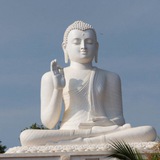
Forwarded from Words of the Buddha
If we practice meditation diligently with perseverance, then one day we’ll get over this illusion of separation. Meditation makes it possible to see the totality of all manifestation. There is one creation and we are all part of it. What can we be afraid of? We are afraid to love ourselves, afraid to love creation, afraid to love others because we know negative things about ourselves. Knowing that we do things wrong, that we have unhappy or unwholesome thoughts, is no reason not to love. A mother who loves her children doesn’t stop loving them when they act silly or unpleasant. Small children have hundreds of unwholesome thoughts a day and give voice to them quite loudly. We have them too, but we do not express them all. So, if a mother can love a child who is making difficulties for her, why can’t we love ourselves?
Loving oneself and knowing oneself are not the same thing. Love is the warmth of the heart, the connectedness, the protection, the caring, the concern, the embrace that comes from acceptance and understanding for oneself. Having practiced that, we are in a much better position to practice love toward others. They are just as unlovable as we are, and they have just as many unwholesome thoughts. But that doesn’t matter. We are not judge and jury. When we realize that we can actually love ourselves, there is a feeling of being at ease. We don’t constantly have to become or pretend, or strive to be somebody. We can just be. It’s nice to just be, and not be “somebody.” Love makes that possible. By the same token, when we relate to other people, we can let them just be and love them. We all have daily opportunities to practice this. It’s a skill, like any other.
Ayya Khema (1923–1997) was an international Buddhist teacher, and the first Western woman to become a Theravada Buddhist nun. An advocate of Buddhist women's rights, in 1987 she helped coordinate the first conference for the Sakyadhita International Association of Buddhist Women in Bodh Gaya, India.
===
Ajahn Chah, Buddhist teacher of Thai forest meditation of Theravada Buddhism channel:
https://news.1rj.ru/str/ajahnchah_buddhism
===
Loving oneself and knowing oneself are not the same thing. Love is the warmth of the heart, the connectedness, the protection, the caring, the concern, the embrace that comes from acceptance and understanding for oneself. Having practiced that, we are in a much better position to practice love toward others. They are just as unlovable as we are, and they have just as many unwholesome thoughts. But that doesn’t matter. We are not judge and jury. When we realize that we can actually love ourselves, there is a feeling of being at ease. We don’t constantly have to become or pretend, or strive to be somebody. We can just be. It’s nice to just be, and not be “somebody.” Love makes that possible. By the same token, when we relate to other people, we can let them just be and love them. We all have daily opportunities to practice this. It’s a skill, like any other.
Ayya Khema (1923–1997) was an international Buddhist teacher, and the first Western woman to become a Theravada Buddhist nun. An advocate of Buddhist women's rights, in 1987 she helped coordinate the first conference for the Sakyadhita International Association of Buddhist Women in Bodh Gaya, India.
===
Ajahn Chah, Buddhist teacher of Thai forest meditation of Theravada Buddhism channel:
https://news.1rj.ru/str/ajahnchah_buddhism
===
Telegram
Ajahn Chah - Theravada Thailand Buddhism
Collection of teachings of Venerable Ajahn Chah, a foremost meditation and Buddhist teacher from Thailand
💯2👍1🏆1
Forwarded from Buddha Dharma books
Free Buddha Dharma ebook
The Anattalakkhana Sutta
By Mahasi Sayadaw Gyi
The Anattalakkhana Sutta was the Second* Sermon of Lord Buddha delivered after His Enlightenment at Sarnath, Benares, India, to five Bikkhus (monks) who had already become Sottapan (Stream- Winner) after listening to Dhammacakka Sutta preached by Lord Buddha on full moon day of Waso, 589 BC. The five Bikkhus finally attained Arahatship, having heard this Second Sermon delivered on 5th waning Day of Waso. This Sutta in Pali just covered only one page in the original book published by the Sixth Buddhist Synod.
However when Mahasi Sayadawgyi delivered this Sermon with detailed explanations on methods of Vipassana meditation, at the Mahasi Meditation Centre, Yangon, it took 12 Sabbath days starting from 30th , May 1963 and ending on 10th September 1963 to complete. (* Third sermon if Hemavata Sutta is counted) This Sermon by Mahasi Sayadawgyi was taperecorded, transcribed and finally edited and summarised, by himself, and put into book form and published in August 1977. Since then, there had been five Editions up to now.
For the benefit of foreign yogis, this discourse had been translated into English by U Ko Lay (Zeya Maung), and the Foreword of Wetlet-Masoyein Sayadaw U Teiktha was translated by U Min Swe (Min Kyaw Thu) and the translated text was published in 1983.
Free download here:
http://www.mediafire.com/file/ddivjiv88pxxx12/
=============
The Anattalakkhana Sutta
By Mahasi Sayadaw Gyi
The Anattalakkhana Sutta was the Second* Sermon of Lord Buddha delivered after His Enlightenment at Sarnath, Benares, India, to five Bikkhus (monks) who had already become Sottapan (Stream- Winner) after listening to Dhammacakka Sutta preached by Lord Buddha on full moon day of Waso, 589 BC. The five Bikkhus finally attained Arahatship, having heard this Second Sermon delivered on 5th waning Day of Waso. This Sutta in Pali just covered only one page in the original book published by the Sixth Buddhist Synod.
However when Mahasi Sayadawgyi delivered this Sermon with detailed explanations on methods of Vipassana meditation, at the Mahasi Meditation Centre, Yangon, it took 12 Sabbath days starting from 30th , May 1963 and ending on 10th September 1963 to complete. (* Third sermon if Hemavata Sutta is counted) This Sermon by Mahasi Sayadawgyi was taperecorded, transcribed and finally edited and summarised, by himself, and put into book form and published in August 1977. Since then, there had been five Editions up to now.
For the benefit of foreign yogis, this discourse had been translated into English by U Ko Lay (Zeya Maung), and the Foreword of Wetlet-Masoyein Sayadaw U Teiktha was translated by U Min Swe (Min Kyaw Thu) and the translated text was published in 1983.
Free download here:
http://www.mediafire.com/file/ddivjiv88pxxx12/
=============
💯2🏆1
Dhammapada Verse 145
Sukhasamanera Vatthu
Udakam hi nayanti nettika
usukara namayanti tejanam
darum namayanti tacchaka
attanam damayanti subbata.
Verse 145: Farmers1 channel the water; fletchers straighten the arrows; carpenters work the timber; the wise tame themselves.
1. Farmers: lit., makers of irrigation canals.
The Story of Samanera* Sukha
While residing at the Jetavana monastery, the Buddha uttered Verse (145) of this book, with reference to a samanera named Sukha.
Sukha was made a samanera at the age of seven years by Thera Sariputta. On the eighth day after being made a samanera he followed Thera Sariputta on his alms-round. While doing the round they came across some farmers irrigating their fields, some fletchers straightening their arrows and some carpenters making things like cart-wheels, etc. Seeing these, he asked Thera Sariputta whether these inanimate things could be guided to where one wished or be made into things one wished to make, and the thera answered him in the affirmative. The young samanera then pondered that if that were so, there could be no reason why a person could not tame his mind and practise Tranquillity and Insight Meditation.
So, he asked permission from the thera to return to the monastery. There, he shut himself up in his room and practised meditation in solitude, Sakka and the devas also helped him in his practice by keeping the monastery very quiet. That same day, the eighth day after his becoming a samanera, Sukha attained arahatship. In connection with this, the Buddha said to the congregation of bhikkhus, "When a person earnestly practises the Dhamma, even Sakka and the devas give protection and help. I myself have kept Sariputta at the entrance so that Sukha should not be disturbed. The samanera, having seen the farmers irrigating their fields, the fletchers straightening their arrows and the carpenters making cart-wheels and other things, trains his mind and practises the Dhamma. Thus, he has now become an arahat."
Then the Buddha spoke in verse as follows:
Verse 145: Farmers** channel the water; fletchers straighten the arrows; carpenters work the timber; the wise tame themselves.
====================
Dhammapada, beloved and favorite teachings of the Buddha channel:
https://news.1rj.ru/str/dhammapadas
Sukhasamanera Vatthu
Udakam hi nayanti nettika
usukara namayanti tejanam
darum namayanti tacchaka
attanam damayanti subbata.
Verse 145: Farmers1 channel the water; fletchers straighten the arrows; carpenters work the timber; the wise tame themselves.
1. Farmers: lit., makers of irrigation canals.
The Story of Samanera* Sukha
While residing at the Jetavana monastery, the Buddha uttered Verse (145) of this book, with reference to a samanera named Sukha.
Sukha was made a samanera at the age of seven years by Thera Sariputta. On the eighth day after being made a samanera he followed Thera Sariputta on his alms-round. While doing the round they came across some farmers irrigating their fields, some fletchers straightening their arrows and some carpenters making things like cart-wheels, etc. Seeing these, he asked Thera Sariputta whether these inanimate things could be guided to where one wished or be made into things one wished to make, and the thera answered him in the affirmative. The young samanera then pondered that if that were so, there could be no reason why a person could not tame his mind and practise Tranquillity and Insight Meditation.
So, he asked permission from the thera to return to the monastery. There, he shut himself up in his room and practised meditation in solitude, Sakka and the devas also helped him in his practice by keeping the monastery very quiet. That same day, the eighth day after his becoming a samanera, Sukha attained arahatship. In connection with this, the Buddha said to the congregation of bhikkhus, "When a person earnestly practises the Dhamma, even Sakka and the devas give protection and help. I myself have kept Sariputta at the entrance so that Sukha should not be disturbed. The samanera, having seen the farmers irrigating their fields, the fletchers straightening their arrows and the carpenters making cart-wheels and other things, trains his mind and practises the Dhamma. Thus, he has now become an arahat."
Then the Buddha spoke in verse as follows:
Verse 145: Farmers** channel the water; fletchers straighten the arrows; carpenters work the timber; the wise tame themselves.
====================
Dhammapada, beloved and favorite teachings of the Buddha channel:
https://news.1rj.ru/str/dhammapadas
Telegram
Dhammapada - Buddha Dharma Teachings
Daily teachings of the Dhammapada, beloved and favorite teachings of the Buddha
👍2💯1
Dhammapada Verse 146
Visakhaya Sahayikanam Vatthu
Ko nu haso kimanando
niccam pajjalite1 sati
andhakarena2 onaddha
padipam3 na gavesatha.
Verse 146: Why is there laughter? Why is there joy although (the world) is always burning? Shrouded in darkness why not seek the light?
1. pajjalite: burning, in this context, it means burning with fires of passion, etc. (The Commentary)
2. andhakarena: darkness, in this context, ignorance of the Four Noble Truths. (The Commentary)
3. padipam: light, in this context, wisdom. (The Commentary)
The Story of the Companions of Visakha
While residing at the Jetavana monastery, the Buddha uttered Verse (146) of this book, with reference to companions of Visakha.
Five hundred men from Savatthi, wishing to make their wives to be generous, kind-hearted and virtuous like Visakha, sent them to Visakha to be her constant companions. During a bacchanalian festival which lasted for seven days, the wives of those men took all the drinks left by their husbands and got drunk in the absence of Visakha. For this misbehaviour they were beaten by their husbands. On another occasion, saying that they wished to listen to the Buddha's discourse, they asked Visakha to take them to the Buddha and secretly took small bottles of liquor hidden in their clothes.
On arrival at the monastery, they drank all the liquor they had brought and threw away the bottles. Visakha requested the Buddha to teach them the Dhamma. By that time, the women were getting intoxicated and felt like singing and dancing. Mara, taking this opportunity made them bold and shameless, and soon they were boisterously singing, dancing, clapping and jumping about in the monastery. The Buddha saw the hand of Mara in the shameless behaviour of these women and said to himself, "Mara must not be given the opportunity." So, the Buddha sent forth dark-blue rays from his body and the whole room was darkened; the women were frightened and began to get sober. Then, the Buddha vanished from his seat and stood on top of Mount Meru, and from there he sent forth white rays and the sky was lit up as if by a thousand moons. After thus manifesting his powers, the Buddha said to those five hundred women, "You ladies should not have come to my monastery in this unmindful state. Because you have been negligent Mara has had the opportunity to make you behave shamelessly, laughing and singing loudly, in my monastery. Now, strive to put out the fire of passion (raga) which is in you".
Then the Buddha spoke in verse as follows:
Verse 146: Why is there laughter? Why is there joy although (the world) is always burning? Shrouded in darkness why not seek the light?
At the end of the discourse those five hundred women attained Sotapatti Fruition.
====================
Buddha dharma teachings channel:
https://invite.viber.com/?g2=AQAKw1y3rv%2F6sk61PI2W4izuIiaEZj8YZujhY1tSzL%2B07s7rFnVFDAd0bAYFaMLw
Visakhaya Sahayikanam Vatthu
Ko nu haso kimanando
niccam pajjalite1 sati
andhakarena2 onaddha
padipam3 na gavesatha.
Verse 146: Why is there laughter? Why is there joy although (the world) is always burning? Shrouded in darkness why not seek the light?
1. pajjalite: burning, in this context, it means burning with fires of passion, etc. (The Commentary)
2. andhakarena: darkness, in this context, ignorance of the Four Noble Truths. (The Commentary)
3. padipam: light, in this context, wisdom. (The Commentary)
The Story of the Companions of Visakha
While residing at the Jetavana monastery, the Buddha uttered Verse (146) of this book, with reference to companions of Visakha.
Five hundred men from Savatthi, wishing to make their wives to be generous, kind-hearted and virtuous like Visakha, sent them to Visakha to be her constant companions. During a bacchanalian festival which lasted for seven days, the wives of those men took all the drinks left by their husbands and got drunk in the absence of Visakha. For this misbehaviour they were beaten by their husbands. On another occasion, saying that they wished to listen to the Buddha's discourse, they asked Visakha to take them to the Buddha and secretly took small bottles of liquor hidden in their clothes.
On arrival at the monastery, they drank all the liquor they had brought and threw away the bottles. Visakha requested the Buddha to teach them the Dhamma. By that time, the women were getting intoxicated and felt like singing and dancing. Mara, taking this opportunity made them bold and shameless, and soon they were boisterously singing, dancing, clapping and jumping about in the monastery. The Buddha saw the hand of Mara in the shameless behaviour of these women and said to himself, "Mara must not be given the opportunity." So, the Buddha sent forth dark-blue rays from his body and the whole room was darkened; the women were frightened and began to get sober. Then, the Buddha vanished from his seat and stood on top of Mount Meru, and from there he sent forth white rays and the sky was lit up as if by a thousand moons. After thus manifesting his powers, the Buddha said to those five hundred women, "You ladies should not have come to my monastery in this unmindful state. Because you have been negligent Mara has had the opportunity to make you behave shamelessly, laughing and singing loudly, in my monastery. Now, strive to put out the fire of passion (raga) which is in you".
Then the Buddha spoke in verse as follows:
Verse 146: Why is there laughter? Why is there joy although (the world) is always burning? Shrouded in darkness why not seek the light?
At the end of the discourse those five hundred women attained Sotapatti Fruition.
====================
Buddha dharma teachings channel:
https://invite.viber.com/?g2=AQAKw1y3rv%2F6sk61PI2W4izuIiaEZj8YZujhY1tSzL%2B07s7rFnVFDAd0bAYFaMLw
Viber
Buddha
Buddha dharma teachings from the suttas and commentaries from Theravada tradition
👍2💯1
Forwarded from Buddha Dharma books
Free Buddha Dharma ebook
Happiness of a Beautiful Mind
By Sayalay Dipankara
Her humility in her teachings and spoken English, have been the main reasons for 'not sharing' although any student of hers know in their hearts, she gave her fullest in every talk and retreat.
We hope all Buddhists may find this a breathing-work of dhamma by the author-inspiring, compassionate, beautiful, and deeply personal.
About Sayalay Dipankara
Sayalay Dīpaṅkara was born in Myanmar 9 May 1964. It was also Vesak Day in Myanmar. At a very young age, every time whenever there were members of the Saṅgha passing near, she would be filled with reverence and faith. At age 25, she was ordained, abandoning her University degree to seek higher Dhamma knowledge with Pa Auk Sayadaw.
As an ordained Theravāda nun in Myanmar, Sayalay Dīpaṅkara remains a Ten Preceptor. Her mission was to share the Dhamma through teaching meditation. She travelled out of her country in 1995, teaching in Singapore, Malaysia, Indonesia, Thailand, Sri Lanka, Australia, Germany, England, United States, Canada, Taiwan, Hong Kong, Japan, Korea and run long term retreats in her motherland, Myanmar. Thus began her journey to ‘mend broken pots’ - the minds of sentient beings.
Sayalay travelled widely and walked lands of varying cultures to spread the Dhamma. Sayalay persevered in spreading the teachings for those who have the utmost sincerity to the practice, With her compassion and sensitivity towards the lay devotees, her student number grew. Now, many of her students from different parts of the world invite her to their homes and their countries to give meditation guidance.
She generously extends her good conditions to other practitioners by conceptualizing, designing, and overseeing the construction of what is now the Brahma Vihāri Meditation Centre at Maymyo, Myanmar. Meditators benefited from her deeper intentions and abided unknowingly in the conditions, true to the Visuddhimagga and the Tipiṭaka.
In devoting her energy in sharing the Dhamma worldwide, students are able to stay within Brahma Vihāri for longer retreats through acts of dāna. The rest of the year, Sayalay travels to the people who wish to learn, leaving little time for herself for self-practice and rest.
Sayalay teaches the forty kammaṭṭhāna leading to samādhi and vipassanā practice, and many other qualities a Buddhist needs to know and embody...
Free download here:
https://sayalaydipankara.org/wp-content/uploads/2022/02/beautiful-mind-eng.pdf
=============
Happiness of a Beautiful Mind
By Sayalay Dipankara
Her humility in her teachings and spoken English, have been the main reasons for 'not sharing' although any student of hers know in their hearts, she gave her fullest in every talk and retreat.
We hope all Buddhists may find this a breathing-work of dhamma by the author-inspiring, compassionate, beautiful, and deeply personal.
About Sayalay Dipankara
Sayalay Dīpaṅkara was born in Myanmar 9 May 1964. It was also Vesak Day in Myanmar. At a very young age, every time whenever there were members of the Saṅgha passing near, she would be filled with reverence and faith. At age 25, she was ordained, abandoning her University degree to seek higher Dhamma knowledge with Pa Auk Sayadaw.
As an ordained Theravāda nun in Myanmar, Sayalay Dīpaṅkara remains a Ten Preceptor. Her mission was to share the Dhamma through teaching meditation. She travelled out of her country in 1995, teaching in Singapore, Malaysia, Indonesia, Thailand, Sri Lanka, Australia, Germany, England, United States, Canada, Taiwan, Hong Kong, Japan, Korea and run long term retreats in her motherland, Myanmar. Thus began her journey to ‘mend broken pots’ - the minds of sentient beings.
Sayalay travelled widely and walked lands of varying cultures to spread the Dhamma. Sayalay persevered in spreading the teachings for those who have the utmost sincerity to the practice, With her compassion and sensitivity towards the lay devotees, her student number grew. Now, many of her students from different parts of the world invite her to their homes and their countries to give meditation guidance.
She generously extends her good conditions to other practitioners by conceptualizing, designing, and overseeing the construction of what is now the Brahma Vihāri Meditation Centre at Maymyo, Myanmar. Meditators benefited from her deeper intentions and abided unknowingly in the conditions, true to the Visuddhimagga and the Tipiṭaka.
In devoting her energy in sharing the Dhamma worldwide, students are able to stay within Brahma Vihāri for longer retreats through acts of dāna. The rest of the year, Sayalay travels to the people who wish to learn, leaving little time for herself for self-practice and rest.
Sayalay teaches the forty kammaṭṭhāna leading to samādhi and vipassanā practice, and many other qualities a Buddhist needs to know and embody...
Free download here:
https://sayalaydipankara.org/wp-content/uploads/2022/02/beautiful-mind-eng.pdf
=============
👍1💯1🏆1
Dhammapada Verse 147
Sirima Vatthu
Passa cittakatam bimbam
arukayam samussitam
aturam babusankappam1
yassa natthi dhuvam thiti.
Verse 147: Look at this dressed up body, a mass of sores, supported (by bones), sickly, a subject of many thoughts (of sensual desire). Indeed, that body is neither permanent nor enduring.
1. bahusankappam: the body, which is the subject of many thoughts of sensual desire and admiration.
The Story of Sirima
While residing at the Jetavana monastery, the Buddha uttered Verse (147) of this book, with reference to Sirima the courtesan.
Once, there lived in Rajagaha, a very beautiful courtesan by the name of Sirima. Every day Sirima offered alms-food to eight bhikkhus. One of these bhikkhus happened to mention to other bhikkhus how beautiful Sirima was and also that she offered very delicious food to the bhikkhus every day. On hearing this, a young bhikkhu fell in love with Sirima even without seeing her. The next day, the young bhikkhu went with the other bhikkhus to the house of Sirima. Sirima was not well on that day, but since she wanted to pay obeisance to the bhikkhus, she was carried to their presence. The young bhikkhu, seeing Sirima, thought to himself, "Even though she is sick, she is very beautiful !" And he felt a strong desire for her.
That very night, Sirima died. King Bimbisara went to the Buddha and reported to him that Sirima, the sister of Jivaka, had died. The Buddha told King Bimbisara to take the dead body to the cemetery and keep it there for three days without burying it, but to have it protected from crows and vultures. The king did as he was told. On the fourth day, the dead body of the beautiful Sirima was no longer beautiful or desirable; it got bloated and maggots came out from the nine orifices. On that day, the Buddha took his bhikkhus to the cemetery to observe the body of Sirima. The king also came with his men. The young bhikkhu, who was so desperately in love with Sirima, did not know that Sirima had died. When he learnt that the Buddha and the bhikkhus were going to see Sirima, he joined them. At the cemetery, the corpse of Sirima was surrounded by the bhikkhus headed by the Buddha, and also by the king and his men.
The Buddha then asked the king to get a town crier announce that Sirima would be available on payment of one thousand in cash per night. But no body would take her for one thousand, or for five hundred, or for two hundred and fifty, or even if she were to be given free of charge. Then the Buddha said to the audience, "Bhikkhus! Look at Sirima. When she was living, there were many who were willing to give one thousand to spend one night with her; but now none would take her even if given without any payment. The body of a person is subject to deterioration and decay."
Then the Buddha spoke in verse as follows:
Verse 147: Look at this dressed up body, a mass of sores, supported (by bones), sickly, a subject of many thoughts (of sensual desire). Indeed, that body is neither permanent nor enduring.
At the end of the discourse, the young bhikkhu attained Sotapatti Fruition.
====================
Words of the Buddha channel:
https://invite.viber.com/?g2=AQAFqzqlj7FmI061PX17rxWMAtZ%2BRuso%2FH2KmHKZSgnv7v9DD8X0bDkKnZDr9JDq
Sirima Vatthu
Passa cittakatam bimbam
arukayam samussitam
aturam babusankappam1
yassa natthi dhuvam thiti.
Verse 147: Look at this dressed up body, a mass of sores, supported (by bones), sickly, a subject of many thoughts (of sensual desire). Indeed, that body is neither permanent nor enduring.
1. bahusankappam: the body, which is the subject of many thoughts of sensual desire and admiration.
The Story of Sirima
While residing at the Jetavana monastery, the Buddha uttered Verse (147) of this book, with reference to Sirima the courtesan.
Once, there lived in Rajagaha, a very beautiful courtesan by the name of Sirima. Every day Sirima offered alms-food to eight bhikkhus. One of these bhikkhus happened to mention to other bhikkhus how beautiful Sirima was and also that she offered very delicious food to the bhikkhus every day. On hearing this, a young bhikkhu fell in love with Sirima even without seeing her. The next day, the young bhikkhu went with the other bhikkhus to the house of Sirima. Sirima was not well on that day, but since she wanted to pay obeisance to the bhikkhus, she was carried to their presence. The young bhikkhu, seeing Sirima, thought to himself, "Even though she is sick, she is very beautiful !" And he felt a strong desire for her.
That very night, Sirima died. King Bimbisara went to the Buddha and reported to him that Sirima, the sister of Jivaka, had died. The Buddha told King Bimbisara to take the dead body to the cemetery and keep it there for three days without burying it, but to have it protected from crows and vultures. The king did as he was told. On the fourth day, the dead body of the beautiful Sirima was no longer beautiful or desirable; it got bloated and maggots came out from the nine orifices. On that day, the Buddha took his bhikkhus to the cemetery to observe the body of Sirima. The king also came with his men. The young bhikkhu, who was so desperately in love with Sirima, did not know that Sirima had died. When he learnt that the Buddha and the bhikkhus were going to see Sirima, he joined them. At the cemetery, the corpse of Sirima was surrounded by the bhikkhus headed by the Buddha, and also by the king and his men.
The Buddha then asked the king to get a town crier announce that Sirima would be available on payment of one thousand in cash per night. But no body would take her for one thousand, or for five hundred, or for two hundred and fifty, or even if she were to be given free of charge. Then the Buddha said to the audience, "Bhikkhus! Look at Sirima. When she was living, there were many who were willing to give one thousand to spend one night with her; but now none would take her even if given without any payment. The body of a person is subject to deterioration and decay."
Then the Buddha spoke in verse as follows:
Verse 147: Look at this dressed up body, a mass of sores, supported (by bones), sickly, a subject of many thoughts (of sensual desire). Indeed, that body is neither permanent nor enduring.
At the end of the discourse, the young bhikkhu attained Sotapatti Fruition.
====================
Words of the Buddha channel:
https://invite.viber.com/?g2=AQAFqzqlj7FmI061PX17rxWMAtZ%2BRuso%2FH2KmHKZSgnv7v9DD8X0bDkKnZDr9JDq
Viber
Words Of The Buddha
Daily teachings from Buddha Dharma
👍1💯1🏆1
Forwarded from Buddha Dharma books
Free Buddha Dharma ebook
Malukyaputta Sutta
A dhamma discourse by Mahasi Sayadaw Gyi
Malukyaputta Sutta was a very concise discourse given by Lord Buddha to an old bhikkhu known as Malukyaputta, on the subjects of vipassana meditation. When Sir. U Thwin, the first president of the Buddha Sasana Nuggaha Organization, was searching a suitable meditation teacher for the Yangon Sasana Yeiktha, he requested his friend U Ba Thin, a rich rice mill owner, to invite Mahasi Sayadaw from Seikkhun Village in Shwebo Township to deliver a sermon.
Sayadaw came on 2nd August 1947 and delivered Malukyaputta Sutta at Thameikdawdaya retreat at Sagaing Hills. In fact, it could be said that this sutta brought Mahasi Sayadaw to Yangon Sasana Yeiktha because Sir U Thwin found the preaching of this sutta went in harmony with the composure, respectable appearance and bahaviour of the Sayadaw. After listening to the Sayadaw preachings for five days on the practical aspect of Vipassana meditation, Sir U Thwin and the Buddha Sasana Nuggaha Organization decided to invite Sayadaw to Yangon to act as the meditation teacher at the newly formed Sasana Yeiktha. As mentioned in the Short Biography of the Sayadaw, at the invitation of the then Prime Minister of Myanmar U Nu, and Sir U Thwin, Sayadaw came down to Yangon in 1949 and first batch of meditators were given training in meditation practice on 4th December 1945. Since the Sutta spelled out the method of insight meditation in detail, the Mahasi Sayadaw had preached this sutta many times including one at Thaddhamma Thitagu Yeiktha in Pathein during 1981.
Free download available:
http://www.mediafire.com/file/zdsjareg1y26ipj/
=============
Malukyaputta Sutta
A dhamma discourse by Mahasi Sayadaw Gyi
Malukyaputta Sutta was a very concise discourse given by Lord Buddha to an old bhikkhu known as Malukyaputta, on the subjects of vipassana meditation. When Sir. U Thwin, the first president of the Buddha Sasana Nuggaha Organization, was searching a suitable meditation teacher for the Yangon Sasana Yeiktha, he requested his friend U Ba Thin, a rich rice mill owner, to invite Mahasi Sayadaw from Seikkhun Village in Shwebo Township to deliver a sermon.
Sayadaw came on 2nd August 1947 and delivered Malukyaputta Sutta at Thameikdawdaya retreat at Sagaing Hills. In fact, it could be said that this sutta brought Mahasi Sayadaw to Yangon Sasana Yeiktha because Sir U Thwin found the preaching of this sutta went in harmony with the composure, respectable appearance and bahaviour of the Sayadaw. After listening to the Sayadaw preachings for five days on the practical aspect of Vipassana meditation, Sir U Thwin and the Buddha Sasana Nuggaha Organization decided to invite Sayadaw to Yangon to act as the meditation teacher at the newly formed Sasana Yeiktha. As mentioned in the Short Biography of the Sayadaw, at the invitation of the then Prime Minister of Myanmar U Nu, and Sir U Thwin, Sayadaw came down to Yangon in 1949 and first batch of meditators were given training in meditation practice on 4th December 1945. Since the Sutta spelled out the method of insight meditation in detail, the Mahasi Sayadaw had preached this sutta many times including one at Thaddhamma Thitagu Yeiktha in Pathein during 1981.
Free download available:
http://www.mediafire.com/file/zdsjareg1y26ipj/
=============
👏1💯1🏆1