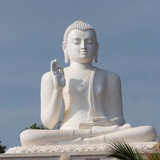
Furthermore, I have explained to my disciples a practice that they use to develop the ten universal dimensions of meditation.
Someone perceives the meditation on universal (= kasina) earth above, below, across, undivided and limitless.
They perceive the meditation on universal water … the meditation on universal fire … the meditation on universal air … the meditation on universal blue … the meditation on universal yellow … the meditation on universal red … the meditation on universal white … the meditation on universal space … the meditation on universal consciousness above, below, across, undivided and limitless.
And many of my disciples meditate on that having attained perfection and consummation of insight.
MN 77 : Mahāsakuludāyisutta
Someone perceives the meditation on universal (= kasina) earth above, below, across, undivided and limitless.
They perceive the meditation on universal water … the meditation on universal fire … the meditation on universal air … the meditation on universal blue … the meditation on universal yellow … the meditation on universal red … the meditation on universal white … the meditation on universal space … the meditation on universal consciousness above, below, across, undivided and limitless.
And many of my disciples meditate on that having attained perfection and consummation of insight.
MN 77 : Mahāsakuludāyisutta
❤1👏1😘1
Dhammapada Verses 153 and 1541
Udana Vatthu
Anekajatisamsaram
sandhavissam anibbisam
gahakaram gavesanto2
dukkha jati punappunam3.
Gahakaraka ditthosi4
puna geham na kahasi5
sabba te phasuka bhagga6
gahakotam visankhatam7
visankharagatam cittam8
tanhanam khayamajjhaga9.
Verse 153: I, who have been seeking the builder of this house (body), failing to attain Enlightenment (Bodhi nana or Sabbannuta nana) which would enable me to find him, have wandered through innumerable births in samsara. To be born again and again is, indeed, dukkha!
Verse 154: Oh house-builder! You are seen, you shall build no house (for me) again. All your rafters are broken, your roof-tree is destroyed. My mind has reached the unconditioned (i.e., Nibbana); the end of craving (Arahatta Phala) has been attained.
1. Footnotes to Verses 153 and 154: These two verses are expressions of intense and sublime joy the Buddha felt at the very moment of his attainment of Enlightenment; as such, they are replete with a wealth of sublime meaning and deep feeling.
2. gahakaram gavesanto: lit., "I who have tried to find the builder of the house" The house is the body, the builder is Craving (Tanha). The meaning of Verse (153) as given in the Commentary is as follows:
I who have been seeking the builder of this house, knowing that he could be seen only with a certain wisdom, have been trying to attain such wisdom (Bodhi nana) ever since Dipankara Buddha prophesied that I would, one day, become a Buddha like him. But failing to attain Bodhi nana, I have wandered through this course of hundreds of thousands of existences in the endless round of rebirths.
3. dukkha jati punappunam: To be born again and again is dukkha. This is the reason for trying to find the builder of this house, the Carpenter Craving.
Birth which comes together with aging, disease and death is dukkha; that is why I have been incessantly looking for the Householder Craving.
4. ditthosi: You are seen: I have seen you now that I have attained Enlightenment or Bodhi nana, the all comprehending wisdom, with my own Insight.
5. puna geham na kahasi: No house shall be built again: You shall not build another house (for me) in this round of rebirths.
6. sabba te phasuka bhagga: All your rafters are broken: I have destroyed all the remaining defilements.
7. gahakutam visankhatam The roof-tree has been destroyed: I have dispelled Ignorance.
8. visankharagatam cittam: lit., my mind has reached the Unconditioned, having Nibbana as its object, my mind has realized Nibbana.
9. tanhanam khayamajjhaga: The end of craving has been attained. I have attained Arahatta Fruition.
The Story Concerning the "Words of Exultation of the Buddha"
These two verses are expressions of intense and sublime joy felt by the Buddha at the moment of attainment of Supreme Enlightenment (Bodhi nana or Sabbannuta nana). These verses were repeated at the Jetavana monastery at the request of the Venerable Ananda.
Prince Siddhattha, of the family of Gotama, son of King Suddhodana and Queen Maya of the kingdom of the Sakyans, renounced the world at the age of twenty-nine and became an ascetic in search of the Dhamma (Truth). For six years, he wandered about the valley of the Ganges, approaching famous religious leaders, studying their doctrines and methods. He lived austerely and submitted himself strictly to rigorous ascetic discipline; but he found all these traditional practices to be unsound. He was determined to find the Truth in his own way, and by avoiding the two extremes of excessive sensual indulgence and self-mortification*, he found the Middle Path which would lead to Perfect Peace, Nibbana. This Middle Path (Majjhimapatipada) is the Noble Path of Eight Constituents, viz., Right view, Right thought, Right speech, Right action, Right livelihood, Right effort, Right mindfulness and Right concentration.
Udana Vatthu
Anekajatisamsaram
sandhavissam anibbisam
gahakaram gavesanto2
dukkha jati punappunam3.
Gahakaraka ditthosi4
puna geham na kahasi5
sabba te phasuka bhagga6
gahakotam visankhatam7
visankharagatam cittam8
tanhanam khayamajjhaga9.
Verse 153: I, who have been seeking the builder of this house (body), failing to attain Enlightenment (Bodhi nana or Sabbannuta nana) which would enable me to find him, have wandered through innumerable births in samsara. To be born again and again is, indeed, dukkha!
Verse 154: Oh house-builder! You are seen, you shall build no house (for me) again. All your rafters are broken, your roof-tree is destroyed. My mind has reached the unconditioned (i.e., Nibbana); the end of craving (Arahatta Phala) has been attained.
1. Footnotes to Verses 153 and 154: These two verses are expressions of intense and sublime joy the Buddha felt at the very moment of his attainment of Enlightenment; as such, they are replete with a wealth of sublime meaning and deep feeling.
2. gahakaram gavesanto: lit., "I who have tried to find the builder of the house" The house is the body, the builder is Craving (Tanha). The meaning of Verse (153) as given in the Commentary is as follows:
I who have been seeking the builder of this house, knowing that he could be seen only with a certain wisdom, have been trying to attain such wisdom (Bodhi nana) ever since Dipankara Buddha prophesied that I would, one day, become a Buddha like him. But failing to attain Bodhi nana, I have wandered through this course of hundreds of thousands of existences in the endless round of rebirths.
3. dukkha jati punappunam: To be born again and again is dukkha. This is the reason for trying to find the builder of this house, the Carpenter Craving.
Birth which comes together with aging, disease and death is dukkha; that is why I have been incessantly looking for the Householder Craving.
4. ditthosi: You are seen: I have seen you now that I have attained Enlightenment or Bodhi nana, the all comprehending wisdom, with my own Insight.
5. puna geham na kahasi: No house shall be built again: You shall not build another house (for me) in this round of rebirths.
6. sabba te phasuka bhagga: All your rafters are broken: I have destroyed all the remaining defilements.
7. gahakutam visankhatam The roof-tree has been destroyed: I have dispelled Ignorance.
8. visankharagatam cittam: lit., my mind has reached the Unconditioned, having Nibbana as its object, my mind has realized Nibbana.
9. tanhanam khayamajjhaga: The end of craving has been attained. I have attained Arahatta Fruition.
The Story Concerning the "Words of Exultation of the Buddha"
These two verses are expressions of intense and sublime joy felt by the Buddha at the moment of attainment of Supreme Enlightenment (Bodhi nana or Sabbannuta nana). These verses were repeated at the Jetavana monastery at the request of the Venerable Ananda.
Prince Siddhattha, of the family of Gotama, son of King Suddhodana and Queen Maya of the kingdom of the Sakyans, renounced the world at the age of twenty-nine and became an ascetic in search of the Dhamma (Truth). For six years, he wandered about the valley of the Ganges, approaching famous religious leaders, studying their doctrines and methods. He lived austerely and submitted himself strictly to rigorous ascetic discipline; but he found all these traditional practices to be unsound. He was determined to find the Truth in his own way, and by avoiding the two extremes of excessive sensual indulgence and self-mortification*, he found the Middle Path which would lead to Perfect Peace, Nibbana. This Middle Path (Majjhimapatipada) is the Noble Path of Eight Constituents, viz., Right view, Right thought, Right speech, Right action, Right livelihood, Right effort, Right mindfulness and Right concentration.
Telegram
Dhammapada - Buddha Dharma Teachings
Daily teachings of the Dhammapada, beloved and favorite teachings of the Buddha
👏1😘1
Thus, one evening, seated under a Bo tree on the bank of the Neranjara river, Prince Siddhattha Gotama attained Supreme Enlightenment (Bodhi nana or Sabbannuta nana) at the age of thirty-five. During the first watch of the night, the prince attained the power of recollection of past existences (Pubbenivasanussati-nana) and during the second watch he attained the divine power of sight (Dibbacakkhu nana). Then, during the third watch of the night he contemplated the Doctrine of Dependent Origination (Paticcasamuppada) in the order of arising (anuloma) as well as in the order of cessation (patiloma). At the crack of dawn, Prince Siddhattha Gotama by his own intellect and insight fully and completely comprehended the Four Noble Truths. The Four Noble Truths are: The Noble Truth of Dukkha (Dukkha Ariya Sacca), the Noble Truth of the Cause of Dukkha (Dukkha Samudaya Ariya Sacca), the Noble Truth of the Cessation of Dukkha (Dukkha Nirodha Ariya Sacca), and The Noble Truth of the Path Leading to the Cessation of Dukkha (Dukkha Nirodha Gamini Patipada Ariya Sacca). There also appeared in him, in all their purity. The knowledge of the nature of each Noble Truth (Sacca nana), knowledge of the performance required for each Noble Truth (Kicca nana), and the knowledge of the completion of the performance required for each Noble Truth (Kata nana); and thus, he attained the Sabbannuta nana (also called Bodhi nana) of a Buddha. From that time, he was known as Gotama the Buddha.
In this connection, it should be noted that only when the Four Noble Truths, under their three aspects (therefore, the twelve modes), had become perfectly clear to him that the Buddha acknowledged in the world of Men, the world of Devas and that of Brahmas that he had attained the Supreme Enlightenment and therefore had become a Buddha.
At the moment of the attainment of Buddhahood,
the Buddha uttered the following two verses:
Verse 153: I, who have been seeking the builder of this house (body), failing to attain Enlightenment (Bodhi nana or Sabbannuta nana) which would enable me to find him, have wandered through innumerable births in samsara. To be born again and again is, indeed, dukkha!
Verse 154: Oh house-builder! You are seen, you shall build no house (for me) again. All your rafters are broken, your roof-tree is destroyed. My mind has reached the unconditioned (i.e., Nibbana); the end of craving (Arahatta Phala) has been attained.
* Kamasukhallikanuyoga and Attakiamathanuyoga.
===
Dhammapada, beloved and favorite teachings of the Buddha channel:
https://news.1rj.ru/str/dhammapadas
====================
In this connection, it should be noted that only when the Four Noble Truths, under their three aspects (therefore, the twelve modes), had become perfectly clear to him that the Buddha acknowledged in the world of Men, the world of Devas and that of Brahmas that he had attained the Supreme Enlightenment and therefore had become a Buddha.
At the moment of the attainment of Buddhahood,
the Buddha uttered the following two verses:
Verse 153: I, who have been seeking the builder of this house (body), failing to attain Enlightenment (Bodhi nana or Sabbannuta nana) which would enable me to find him, have wandered through innumerable births in samsara. To be born again and again is, indeed, dukkha!
Verse 154: Oh house-builder! You are seen, you shall build no house (for me) again. All your rafters are broken, your roof-tree is destroyed. My mind has reached the unconditioned (i.e., Nibbana); the end of craving (Arahatta Phala) has been attained.
* Kamasukhallikanuyoga and Attakiamathanuyoga.
===
Dhammapada, beloved and favorite teachings of the Buddha channel:
https://news.1rj.ru/str/dhammapadas
====================
Telegram
Dhammapada - Buddha Dharma Teachings
Daily teachings of the Dhammapada, beloved and favorite teachings of the Buddha
💯1🤗1
Forwarded from Buddha Dharma books
Free Buddha Dharma ebook
Handbook Vipassana Meditation for beginners
by Phra Athikan Somsak Sorado
Abbot of Wat Bhaddanta Asabharam
This is a beginners’ handbook for awareness development according to the Four Foundations of Mindfulness. I have compiled here a set of instructions from my own personal experience that I have heard, read, written and taken into memory from the Tipitika and other Buddhist texts. I have received instructions from Meditation Masters of the Vipassana Lineage that I have directly and intensively put into practice.
Vipassana Meditation Grandmaster Dr. Bhaddanta Asabha Mahathera was my kalyanamittata who gave instructions and interviews with good results.
The core substance of this handbook has been compiled directly from personal experience and is especially for meditators who wish to put the instructions into practice. Many meditators have provided feedback that they have greatly benefited from this handbook and that they have received good results to a certain extent.
They further urged that more copies should be printed and that they were willing to sponsor the cost of printing.
Before being compiled, this manual only consisted of a few pages of notes which I had distributed to meditators who came to practice. Later, all the notes were compiled into a handbook.
Free download available:
https://static.sariputta.com/pdf/tipitaka/850/vipassana-meditation-handbookpdf.pdf
Handbook Vipassana Meditation for beginners
by Phra Athikan Somsak Sorado
Abbot of Wat Bhaddanta Asabharam
This is a beginners’ handbook for awareness development according to the Four Foundations of Mindfulness. I have compiled here a set of instructions from my own personal experience that I have heard, read, written and taken into memory from the Tipitika and other Buddhist texts. I have received instructions from Meditation Masters of the Vipassana Lineage that I have directly and intensively put into practice.
Vipassana Meditation Grandmaster Dr. Bhaddanta Asabha Mahathera was my kalyanamittata who gave instructions and interviews with good results.
The core substance of this handbook has been compiled directly from personal experience and is especially for meditators who wish to put the instructions into practice. Many meditators have provided feedback that they have greatly benefited from this handbook and that they have received good results to a certain extent.
They further urged that more copies should be printed and that they were willing to sponsor the cost of printing.
Before being compiled, this manual only consisted of a few pages of notes which I had distributed to meditators who came to practice. Later, all the notes were compiled into a handbook.
Free download available:
https://static.sariputta.com/pdf/tipitaka/850/vipassana-meditation-handbookpdf.pdf
👍1👏1💯1😘1
“And what, Ānanda, is mindfulness of breathing? Here, a bhikkhu, having gone to the forest, to the foot of a tree, or to an empty hut, sits down. Having folded his legs crosswise, straightened his body, and established mindfulness in front of him, just mindful he breathes in, mindful he breathes out.
Partial excerpts from AN 10.60: Girimānandasutta
Partial excerpts from AN 10.60: Girimānandasutta
😘2🤗1
Dhammapada Verses 155 and 156
Mahadhanasetthiputta Vatthu
Acaritva brahmacariyam
aladdha yobbane dhanam
jinnakoncava jhayanti
khinamaccheva pallale.
Acaritva brahmacariyam
aladdha yobbane dhanam
senti capatikhinava
puranani anutthunam.
Verse 155: They, who in youth have neither led the life of Purity nor have acquired wealth, waste away in dejection like decrepit herons on a drying pond deplete of fish.
Verse 156: They, who in youth have neither led the Life of Purity nor have acquired wealth, lie helplessly like arrows that have lost momentum, moaning and sighing after the past.
The Story of the Son of Mahadhana
While residing at the Migadaya wood, the Buddha uttered Verses (155) and (156) of this book, with reference to the son of Mahadhana, a rich man from Baranasi.
The son of Mahadhana did not study while he was young; when he came of age he married the daughter of a rich man, who, like him, also had no education. When the parents on both sides died, they inherited eighty crores from each side and so were very rich. But both of them were ignorant and knew only how to spend money and not how to keep it or to make it grow. They just ate and drank and had a good time, squandering their money. When they had spent all, they sold their fields and gardens and finally their house. Thus, they became very poor and helpless; and because they did not know how to earn a living they had to go begging. One day, the Buddha saw the rich man's son leaning against a wall of the monastery, taking the leftovers given him by the samaneras; seeing him, the Buddha smiled.
The Venerable Ananda asked the Buddha why he smiled, and the Buddha replied, "Ananda, look at this son of a very rich man; he had lived a useless life, an aimless life of pleasure. If he had learnt to look after his riches in the first stage of his life he would have been a top-ranking rich man; or if he had become a bhikkhu, he could have been an arahat, and his wife could have been an anagami. If he had learnt to look after his riches in the second stage of his life he would have been a second rank rich man, or if he had become a bhikkhu he could have been an anagami, and his wife could have been a sakadagami. If he had learnt to look after his riches in the third stage of his life he would have been a third rank rich man, or if he had become a bhikkhu he could have been a sakadagami, and his wife could have been a sotapanna. However, because he had done nothing in all the three stages of his life he had lost all his worldly riches, he had also lost all opportunities of attaining any of the Maggas and Phalas."
Then the Buddha spoke in verse as follows:
Verse 155: They, who in youth have neither led the life of Purity nor have acquired wealth, waste away in dejection like decrepit herons on a drying pond deplete of fish.
Verse 156: They, who in youth have neither led the Life of Purity nor have acquired wealth, lie helplessly like arrows that have lost momentum, moaning and sighing after the past.
===
Buddha dharma teachings channel:
https://invite.viber.com/?g2=AQAKw1y3rv%2F6sk61PI2W4izuIiaEZj8YZujhY1tSzL%2B07s7rFnVFDAd0bAYFaMLw
====================
Mahadhanasetthiputta Vatthu
Acaritva brahmacariyam
aladdha yobbane dhanam
jinnakoncava jhayanti
khinamaccheva pallale.
Acaritva brahmacariyam
aladdha yobbane dhanam
senti capatikhinava
puranani anutthunam.
Verse 155: They, who in youth have neither led the life of Purity nor have acquired wealth, waste away in dejection like decrepit herons on a drying pond deplete of fish.
Verse 156: They, who in youth have neither led the Life of Purity nor have acquired wealth, lie helplessly like arrows that have lost momentum, moaning and sighing after the past.
The Story of the Son of Mahadhana
While residing at the Migadaya wood, the Buddha uttered Verses (155) and (156) of this book, with reference to the son of Mahadhana, a rich man from Baranasi.
The son of Mahadhana did not study while he was young; when he came of age he married the daughter of a rich man, who, like him, also had no education. When the parents on both sides died, they inherited eighty crores from each side and so were very rich. But both of them were ignorant and knew only how to spend money and not how to keep it or to make it grow. They just ate and drank and had a good time, squandering their money. When they had spent all, they sold their fields and gardens and finally their house. Thus, they became very poor and helpless; and because they did not know how to earn a living they had to go begging. One day, the Buddha saw the rich man's son leaning against a wall of the monastery, taking the leftovers given him by the samaneras; seeing him, the Buddha smiled.
The Venerable Ananda asked the Buddha why he smiled, and the Buddha replied, "Ananda, look at this son of a very rich man; he had lived a useless life, an aimless life of pleasure. If he had learnt to look after his riches in the first stage of his life he would have been a top-ranking rich man; or if he had become a bhikkhu, he could have been an arahat, and his wife could have been an anagami. If he had learnt to look after his riches in the second stage of his life he would have been a second rank rich man, or if he had become a bhikkhu he could have been an anagami, and his wife could have been a sakadagami. If he had learnt to look after his riches in the third stage of his life he would have been a third rank rich man, or if he had become a bhikkhu he could have been a sakadagami, and his wife could have been a sotapanna. However, because he had done nothing in all the three stages of his life he had lost all his worldly riches, he had also lost all opportunities of attaining any of the Maggas and Phalas."
Then the Buddha spoke in verse as follows:
Verse 155: They, who in youth have neither led the life of Purity nor have acquired wealth, waste away in dejection like decrepit herons on a drying pond deplete of fish.
Verse 156: They, who in youth have neither led the Life of Purity nor have acquired wealth, lie helplessly like arrows that have lost momentum, moaning and sighing after the past.
===
Buddha dharma teachings channel:
https://invite.viber.com/?g2=AQAKw1y3rv%2F6sk61PI2W4izuIiaEZj8YZujhY1tSzL%2B07s7rFnVFDAd0bAYFaMLw
====================
Viber
Buddha
Buddha dharma teachings from the suttas and commentaries from Theravada tradition
🏆1🤗1
Forwarded from Buddha Dharma books
Free Buddha Dharma ebook
Mahasatipatthana Sutta
A dhamma discourse by Mahasi Sayadaw Gyi
Buddha Sasana Nuggaha Organization on 5th May 1951 evening (Sabbath day of Tagu- New Moon day or 14th waxing day 1303 B.E) speaking from the B.B.S referred to the speech of the Prime Minister U Nu and explained about the Buddha Sasana Nuggaha Organization. And then he talked about the efforts of Mahasi Sayadawgyi in preaching and teaching the vipassana meditation methods to yogis coming from all parts of the country. Finally he concluded by saying that with effect from that evening Sayadawgyi will give discourses on meditation practice in 4 parts on 4 consecutive Sabbath days.
The Sayadawgyi delivered the Discourse on Mahasatipatthana Sutta on that evening and also on next Sabbath days which fell on 13th May, 20th May and 28th May 1951. Sayadawgyi’s Discourse, U Nu’s New Year speech and U San Thein’s introduction speeches were compiled together and the Buddha Sasana Nuggaha Organization published the first edition in June 1951.
Free download here:
http://www.mediafire.com/file/6dijpb2b3olrdi0/
=============
Mahasatipatthana Sutta
A dhamma discourse by Mahasi Sayadaw Gyi
Buddha Sasana Nuggaha Organization on 5th May 1951 evening (Sabbath day of Tagu- New Moon day or 14th waxing day 1303 B.E) speaking from the B.B.S referred to the speech of the Prime Minister U Nu and explained about the Buddha Sasana Nuggaha Organization. And then he talked about the efforts of Mahasi Sayadawgyi in preaching and teaching the vipassana meditation methods to yogis coming from all parts of the country. Finally he concluded by saying that with effect from that evening Sayadawgyi will give discourses on meditation practice in 4 parts on 4 consecutive Sabbath days.
The Sayadawgyi delivered the Discourse on Mahasatipatthana Sutta on that evening and also on next Sabbath days which fell on 13th May, 20th May and 28th May 1951. Sayadawgyi’s Discourse, U Nu’s New Year speech and U San Thein’s introduction speeches were compiled together and the Buddha Sasana Nuggaha Organization published the first edition in June 1951.
Free download here:
http://www.mediafire.com/file/6dijpb2b3olrdi0/
=============
💯2👏1
Dhammapada Verse 157
Bodhirajakumara Vatthu
Attanance piyam janna
rakkheyya nam surakkhitam
tinnam annataram yamam1
patijaggeyya pandito.
If one knows that one is dear to oneself, one should protect oneself well. During any of the three watches (of life) the wise man should be on guard (against evil).
1. yamam: A night is divided into three watches. According to the Commentary, the watches in this context are the three stages in Man's life, viz., childhood, youth and old age.
The Story of Bodhirajakumara
While residing at the Bhesakala wood, the Buddha uttered Verse (157) of this book, with reference to Prince Bodhi (Bodhirajakumara).
Once, Prince Bodhi built a magnificent palace for himself. When the palace was finished he invited the Buddha for alms-food. For this special occasion, he had the building decorated and perfumed with four kinds of scents and incense. Also, a long length of cloth was spread on the floor, starting from the threshold to the interior of the room. Then, because he had no children, the prince made a solemn asseveration that if he were to have any children the Buddha should step on the cloth. When the Buddha came, Prince Bodhi respectfully requested the Buddha three times to enter the room. But the Buddha, instead of moving, only looked at Ananda. Ananda understood him and so asked Prince Bodhi to remove the cloth from the door-step. Then only, the Buddha entered the palace. The prince then offered delicious and choice food to the Buddha. After the meal, the prince asked the Buddha why he did not step on the cloth. The Buddha in turn asked the prince whether he had not spread the cloth making a solemn asseveration that if he were to be blessed with a child, the Buddha would step on it; and the prince replied in the affirmative. To him, the Buddha said that he and his wife were not going to have any children because of their past evil deeds. The Buddha then related their past story.
In one of their past existences, the prince and his wife were the sole survivors of a shipwreck. They were stranded on a deserted island, and there they lived by eating birds' eggs, fledglings and birds, without any feeling of remorse at any time. For that evil deed, they would not be blessed with any children. If they had felt even a slight remorse for their deed at any stage of their lives, they could have a child or two in this existence. Then turning to the prince, the Buddha said, "One who loves himself should guard himself in all stages of life, or at least, during one stage in his life."
Then the Buddha spoke in verse as follows:
Verse 157: If one knows that one is dear to oneself, one should protect oneself well. During any of the three watches (of life) the wise man should be on guard (against evil).
At the end of the discourse, Bodhirajakumara attained Sotapatti Fruition.
===
Words of the Buddha channel:
https://invite.viber.com/?g2=AQAFqzqlj7FmI061PX17rxWMAtZ%2BRuso%2FH2KmHKZSgnv7v9DD8X0bDkKnZDr9JDq
====================
Bodhirajakumara Vatthu
Attanance piyam janna
rakkheyya nam surakkhitam
tinnam annataram yamam1
patijaggeyya pandito.
If one knows that one is dear to oneself, one should protect oneself well. During any of the three watches (of life) the wise man should be on guard (against evil).
1. yamam: A night is divided into three watches. According to the Commentary, the watches in this context are the three stages in Man's life, viz., childhood, youth and old age.
The Story of Bodhirajakumara
While residing at the Bhesakala wood, the Buddha uttered Verse (157) of this book, with reference to Prince Bodhi (Bodhirajakumara).
Once, Prince Bodhi built a magnificent palace for himself. When the palace was finished he invited the Buddha for alms-food. For this special occasion, he had the building decorated and perfumed with four kinds of scents and incense. Also, a long length of cloth was spread on the floor, starting from the threshold to the interior of the room. Then, because he had no children, the prince made a solemn asseveration that if he were to have any children the Buddha should step on the cloth. When the Buddha came, Prince Bodhi respectfully requested the Buddha three times to enter the room. But the Buddha, instead of moving, only looked at Ananda. Ananda understood him and so asked Prince Bodhi to remove the cloth from the door-step. Then only, the Buddha entered the palace. The prince then offered delicious and choice food to the Buddha. After the meal, the prince asked the Buddha why he did not step on the cloth. The Buddha in turn asked the prince whether he had not spread the cloth making a solemn asseveration that if he were to be blessed with a child, the Buddha would step on it; and the prince replied in the affirmative. To him, the Buddha said that he and his wife were not going to have any children because of their past evil deeds. The Buddha then related their past story.
In one of their past existences, the prince and his wife were the sole survivors of a shipwreck. They were stranded on a deserted island, and there they lived by eating birds' eggs, fledglings and birds, without any feeling of remorse at any time. For that evil deed, they would not be blessed with any children. If they had felt even a slight remorse for their deed at any stage of their lives, they could have a child or two in this existence. Then turning to the prince, the Buddha said, "One who loves himself should guard himself in all stages of life, or at least, during one stage in his life."
Then the Buddha spoke in verse as follows:
Verse 157: If one knows that one is dear to oneself, one should protect oneself well. During any of the three watches (of life) the wise man should be on guard (against evil).
At the end of the discourse, Bodhirajakumara attained Sotapatti Fruition.
===
Words of the Buddha channel:
https://invite.viber.com/?g2=AQAFqzqlj7FmI061PX17rxWMAtZ%2BRuso%2FH2KmHKZSgnv7v9DD8X0bDkKnZDr9JDq
====================
Viber
Words Of The Buddha
Daily teachings from Buddha Dharma
👏1💯1