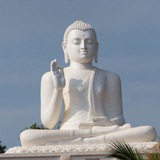
King Milinda asks:
"What is the benefit of building stupas and paying respect to them? The Buddha has passed away, so how can such acts bring merit?"
Nagasena replies:
"Great king, even though the Buddha has passed away, his relics remain as a focus of veneration. When people build stupas or offer respect to them, they create merit. Just as the fragrance of a flower spreads with the wind, the act of reverence brings joy and spiritual benefit to the devotees."
He further explains:
"The stupa is like a great rain cloud, bringing blessings and relief to those who seek it. By honoring the stupa, one honors the Buddha, his teachings, and the Sangha, cultivating wholesome qualities and a peaceful mind."
Milindapanha, Chapter 4 (Veneration of Stupas)
"What is the benefit of building stupas and paying respect to them? The Buddha has passed away, so how can such acts bring merit?"
Nagasena replies:
"Great king, even though the Buddha has passed away, his relics remain as a focus of veneration. When people build stupas or offer respect to them, they create merit. Just as the fragrance of a flower spreads with the wind, the act of reverence brings joy and spiritual benefit to the devotees."
He further explains:
"The stupa is like a great rain cloud, bringing blessings and relief to those who seek it. By honoring the stupa, one honors the Buddha, his teachings, and the Sangha, cultivating wholesome qualities and a peaceful mind."
Milindapanha, Chapter 4 (Veneration of Stupas)
❤1🥰1
Dhammapada Verses 168 and 169
Suddhodana Vatthu
Uttitthe nappamajjeyya
dhammam sucaritam1 care
dhammacari sukham seti
asmim loke paramhi ca.
Dhammam care sucaritarm
na nam duccaritam2 care
dhammacari sukham seti
asmim loke paramhi ca.
Verse 168: Do not neglect the duty of going on alms-round; observe proper practice (in going on alms-round). One who observes proper practice lives happily both in this world and in the next.
Verse 169: Observe proper practice (in going on alms-round); do not observe improper practice. One who observes proper practice lives happily both in this world and in the next.
1. dhammam sucaritam: proper practice. The Commentary says that here proper practice means stopping for alms-food at one house after another in the course of the alms-round except where it is not proper to go (such as a courtesan's house).
2. na nam duccaritam: improper practice. Here it means not observing the above rules.
The Story of King Suddhodana
While residing at the Nigrodharama monastery, the Buddha uttered Verses (168) and (169) of this book, with reference to King Suddhodana, father of Gotama Buddha.
When the Buddha revisited Kapilavatthu for the first time he stayed at the Nigrodharama monastery. There, he expounded the Dhamma to his relatives. King Suddhodana thought that Gotama Buddha, who was his own son, would go to no other place, but would surely come to his palace for alms-food the next day; but he did not specifically invite the Buddha to come for alms-food. However, the next day, he prepared alms-food for twenty thousand bhikkhus. On that morning the Buddha went on his alms-round with a retinue of bhikkhus, as was the custom of all the Buddhas.
Yasodhara, wife of Prince Siddhattha before he renounced the world, saw the Buddha going on an alms-round, from the palace window. She informed her father-in-law, King Suddhodana, and the King went in great haste to the Buddha. The king told the Buddha that for a member of the royal Khattiya family, to go round begging for food from door to door was a disgrace. Whereupon the Buddha replied that it was the custom of all the Buddhas to go round for alms-food from house to house, and therefore it was right and proper for him to keep up the tradition.
Verse 168: Do not neglect the duty of going on alms-round; observe proper practice (in going on alms-round). One who observes proper practice lives happily both in this world and in the next.
Verse 169: Observe proper practice (in going on alms-round); do not observe improper practice. One who observes proper practice lives happily both in this world and in the next.
At the end of the discourse the father of Gotama Buddha attained Sotapatti Fruition.
===
Ajahn Chah, Buddhist teacher of Thai forest meditation of Theravada Buddhism channel:
https://news.1rj.ru/str/ajahnchah_buddhism
====================
Suddhodana Vatthu
Uttitthe nappamajjeyya
dhammam sucaritam1 care
dhammacari sukham seti
asmim loke paramhi ca.
Dhammam care sucaritarm
na nam duccaritam2 care
dhammacari sukham seti
asmim loke paramhi ca.
Verse 168: Do not neglect the duty of going on alms-round; observe proper practice (in going on alms-round). One who observes proper practice lives happily both in this world and in the next.
Verse 169: Observe proper practice (in going on alms-round); do not observe improper practice. One who observes proper practice lives happily both in this world and in the next.
1. dhammam sucaritam: proper practice. The Commentary says that here proper practice means stopping for alms-food at one house after another in the course of the alms-round except where it is not proper to go (such as a courtesan's house).
2. na nam duccaritam: improper practice. Here it means not observing the above rules.
The Story of King Suddhodana
While residing at the Nigrodharama monastery, the Buddha uttered Verses (168) and (169) of this book, with reference to King Suddhodana, father of Gotama Buddha.
When the Buddha revisited Kapilavatthu for the first time he stayed at the Nigrodharama monastery. There, he expounded the Dhamma to his relatives. King Suddhodana thought that Gotama Buddha, who was his own son, would go to no other place, but would surely come to his palace for alms-food the next day; but he did not specifically invite the Buddha to come for alms-food. However, the next day, he prepared alms-food for twenty thousand bhikkhus. On that morning the Buddha went on his alms-round with a retinue of bhikkhus, as was the custom of all the Buddhas.
Yasodhara, wife of Prince Siddhattha before he renounced the world, saw the Buddha going on an alms-round, from the palace window. She informed her father-in-law, King Suddhodana, and the King went in great haste to the Buddha. The king told the Buddha that for a member of the royal Khattiya family, to go round begging for food from door to door was a disgrace. Whereupon the Buddha replied that it was the custom of all the Buddhas to go round for alms-food from house to house, and therefore it was right and proper for him to keep up the tradition.
Verse 168: Do not neglect the duty of going on alms-round; observe proper practice (in going on alms-round). One who observes proper practice lives happily both in this world and in the next.
Verse 169: Observe proper practice (in going on alms-round); do not observe improper practice. One who observes proper practice lives happily both in this world and in the next.
At the end of the discourse the father of Gotama Buddha attained Sotapatti Fruition.
===
Ajahn Chah, Buddhist teacher of Thai forest meditation of Theravada Buddhism channel:
https://news.1rj.ru/str/ajahnchah_buddhism
====================
Telegram
Ajahn Chah - Theravada Thailand Buddhism
Collection of teachings of Venerable Ajahn Chah, a foremost meditation and Buddhist teacher from Thailand
💯1🏆1
Dhammapada Verse 170
Pancasatavipassakabhikkhu Vatthu
Yatha pubbulakam passe
yatha passe maracikam
evam lokam avekkhantam1
maccuraja na passati.
Verse 170: If a man looks at the world (i.e., the five khandhas) in the same way as one looks at a bubble or a mirage, the King of Death will not find him.
1. evam jokam avekkhantam: one who looks at the world in the same way, i.e., looks at the world as being impermanent as a bubble and as non-material as a mirage.
The Story of Five Hundred Bhikkhus
While residing at the Jetavana monastery, the Buddha uttered Verse (170) of this book, with reference to five hundred bhikkhus.
On one occasion, five hundred bhikkhus, after taking a subject of meditation from the Buddha, went into the forest to practise meditation. But they made very little progress; so they returned to the Buddha to ask for a more suitable subject of meditation. On their way to the Buddha, seeing a mirage they meditated on it. As soon as they entered the compound of the monastery, a storm broke out; as big drops of rain fell, bubbles were formed on the ground and soon disappeared. Seeing those bubbles, the bhikkhus reflected "This body of ours is perishable like the bubbles", and perceived the impermanent nature of the aggregates (khandhas).
The Buddha saw them from his perfumed chamber and sent forth the radiance and appeared in their vision.
Then the Buddha spoke in verse as follows:
Verse 170: If a man looks at the world (i.e., the five khandhas) in the same way as one looks at a bubble or a mirage, the King of Death will not find him.
At the end of the discourse, those five hundred bhikkhus attained arahatship.
===
Free Buddhism books, teachings, podcasts and videos from Theravada, Mahayana and Vajrayana traditions:
https://news.1rj.ru/str/buddha_ebooks
====================
Pancasatavipassakabhikkhu Vatthu
Yatha pubbulakam passe
yatha passe maracikam
evam lokam avekkhantam1
maccuraja na passati.
Verse 170: If a man looks at the world (i.e., the five khandhas) in the same way as one looks at a bubble or a mirage, the King of Death will not find him.
1. evam jokam avekkhantam: one who looks at the world in the same way, i.e., looks at the world as being impermanent as a bubble and as non-material as a mirage.
The Story of Five Hundred Bhikkhus
While residing at the Jetavana monastery, the Buddha uttered Verse (170) of this book, with reference to five hundred bhikkhus.
On one occasion, five hundred bhikkhus, after taking a subject of meditation from the Buddha, went into the forest to practise meditation. But they made very little progress; so they returned to the Buddha to ask for a more suitable subject of meditation. On their way to the Buddha, seeing a mirage they meditated on it. As soon as they entered the compound of the monastery, a storm broke out; as big drops of rain fell, bubbles were formed on the ground and soon disappeared. Seeing those bubbles, the bhikkhus reflected "This body of ours is perishable like the bubbles", and perceived the impermanent nature of the aggregates (khandhas).
The Buddha saw them from his perfumed chamber and sent forth the radiance and appeared in their vision.
Then the Buddha spoke in verse as follows:
Verse 170: If a man looks at the world (i.e., the five khandhas) in the same way as one looks at a bubble or a mirage, the King of Death will not find him.
At the end of the discourse, those five hundred bhikkhus attained arahatship.
===
Free Buddhism books, teachings, podcasts and videos from Theravada, Mahayana and Vajrayana traditions:
https://news.1rj.ru/str/buddha_ebooks
====================
Telegram
Buddha Dharma books
Free Buddhism books, teachings, podcasts and videos from Theravada, Mahayana and Vajrayana traditions
❤1👍1💯1
When you realize that worldly fun and games and pleasure are unsatisfying, disregarding them, as one unadorned, a speaker of truth, live alone like a horned rhino.
Children, partner, father, mother, wealth and grain and relatives: having given up sensual pleasures to this extent, live alone like a horned rhino.
“This is a snare. Here there’s hardly any happiness, little gratification, and it’s full of drawbacks. It’s a hook.” Knowing this, a thoughtful person would live alone like a horned rhino.
Partial excepts from Snp 1.3 : Khaggavisāṇasutta
===
Children, partner, father, mother, wealth and grain and relatives: having given up sensual pleasures to this extent, live alone like a horned rhino.
“This is a snare. Here there’s hardly any happiness, little gratification, and it’s full of drawbacks. It’s a hook.” Knowing this, a thoughtful person would live alone like a horned rhino.
Partial excepts from Snp 1.3 : Khaggavisāṇasutta
===
❤2😍1
Dhammapada Verse 171
Abhayarajakumara Vatthu
Etha passathimam lokam
cittam rajarathupamam
yattha bala visidanti
nattbi sango vijanatam.
Verse 171: Come, look at this world (i.e., the five khandhas), which is like an ornamented royal carriage. Fools flounder in this world of the khandhas, but the wise are not attached to it.
The Story of Prince Abhaya
While residing at the Veluvana monastery, the Buddha uttered Verse (71) of this book, with reference to Prince Abhaya (Abhayarajakumara).
On one occasion, Prince Abhaya triumphantly returned after suppressing a rebellion at the frontier. King Bimbisara was so pleased with him that for seven days, Abhaya was given the glory and honour of a ruler, together with a dancing girl to entertain him. On the last day, while the dancer was entertaining the prince and his company in the garden, she had a severe stroke; she collapsed and died on the spot. The prince was shocked and very much distressed. Sorrowfully, he went to the Buddha to find solace. To him the Buddha said, "O prince, the tears you have shed all through the round of rebirths cannot be measured. This world of aggregates (i.e., khandhas) is the place where fools flounder."
Then the Buddha spoke in verse as follows:
Verse 171: Come, look at this world (i.e., the five khandhas), which is like an ornamented royal carriage. Fools flounder in this world of the khandhas, but the wise are not attached to it.
===
Buddha dharma teachings channel:
https://news.1rj.ru/str/lorddivinebuddha
====================
Abhayarajakumara Vatthu
Etha passathimam lokam
cittam rajarathupamam
yattha bala visidanti
nattbi sango vijanatam.
Verse 171: Come, look at this world (i.e., the five khandhas), which is like an ornamented royal carriage. Fools flounder in this world of the khandhas, but the wise are not attached to it.
The Story of Prince Abhaya
While residing at the Veluvana monastery, the Buddha uttered Verse (71) of this book, with reference to Prince Abhaya (Abhayarajakumara).
On one occasion, Prince Abhaya triumphantly returned after suppressing a rebellion at the frontier. King Bimbisara was so pleased with him that for seven days, Abhaya was given the glory and honour of a ruler, together with a dancing girl to entertain him. On the last day, while the dancer was entertaining the prince and his company in the garden, she had a severe stroke; she collapsed and died on the spot. The prince was shocked and very much distressed. Sorrowfully, he went to the Buddha to find solace. To him the Buddha said, "O prince, the tears you have shed all through the round of rebirths cannot be measured. This world of aggregates (i.e., khandhas) is the place where fools flounder."
Then the Buddha spoke in verse as follows:
Verse 171: Come, look at this world (i.e., the five khandhas), which is like an ornamented royal carriage. Fools flounder in this world of the khandhas, but the wise are not attached to it.
===
Buddha dharma teachings channel:
https://news.1rj.ru/str/lorddivinebuddha
====================
Telegram
Buddha
Buddha dharma teachings from the suttas and commentaries
❤1👍1👏1
Forwarded from Buddha Dharma books
Free Buddha Dharma ebook
To Nibbana The Noble Eightfold Path
By Mahasi Sayadaw Gyi
The Venerable Mahasi Sayadawgyi had delivered the discourse on “Nibbana via the Noble Eightfold Path” for the first time on 2nd waxing of Tawthalin, 1323 B.E (22nd August 1971) at the Ariyavasa Dhamma Hall near Moe Kaung Pagoda, Yangon. He had delivered the same discourse several times in various places, including Mahasi Meditation Centre, at Yangon, and other townships as well. This discourse was tape- recorded and after the written draft was edited by Mahasi Sayadaw, the first Myanmar edition was published in 1339, B.E. (June 1977). Up to now, this Myanmar Edition has run into fifth edition. Mahasi Sayadawgyi in delivering this discourse, made reference to Subhadda Sutta which described the queries made by one ascetic “Subhadda” and the answers given by Lord Buddha on the eve of Maha Parinibbana.
In effect it is the last sermon of Lord Buddha. Sayadawgyi had discoursed this Sutta with the aim of yogis and meditators realising Nibbana, by means of the Noble Eightfold Path, which was also explained by Lord Buddha as the first sermon soon after his enlightenment, as the Dhammacakka sutta preached to first group of five monks. In order for the foreign yogis and meditators to study, the Buddha Sasana Nuggaha Organization had entrusted this discourse in Myanmar to Sayagyi U Htin Fatt (Pen Name-Maung Htin) (1909-2006) to translate into English.
Free download available:
http://www.mediafire.com/file/ggsxhg7gjv5b4ao/
=============
To Nibbana The Noble Eightfold Path
By Mahasi Sayadaw Gyi
The Venerable Mahasi Sayadawgyi had delivered the discourse on “Nibbana via the Noble Eightfold Path” for the first time on 2nd waxing of Tawthalin, 1323 B.E (22nd August 1971) at the Ariyavasa Dhamma Hall near Moe Kaung Pagoda, Yangon. He had delivered the same discourse several times in various places, including Mahasi Meditation Centre, at Yangon, and other townships as well. This discourse was tape- recorded and after the written draft was edited by Mahasi Sayadaw, the first Myanmar edition was published in 1339, B.E. (June 1977). Up to now, this Myanmar Edition has run into fifth edition. Mahasi Sayadawgyi in delivering this discourse, made reference to Subhadda Sutta which described the queries made by one ascetic “Subhadda” and the answers given by Lord Buddha on the eve of Maha Parinibbana.
In effect it is the last sermon of Lord Buddha. Sayadawgyi had discoursed this Sutta with the aim of yogis and meditators realising Nibbana, by means of the Noble Eightfold Path, which was also explained by Lord Buddha as the first sermon soon after his enlightenment, as the Dhammacakka sutta preached to first group of five monks. In order for the foreign yogis and meditators to study, the Buddha Sasana Nuggaha Organization had entrusted this discourse in Myanmar to Sayagyi U Htin Fatt (Pen Name-Maung Htin) (1909-2006) to translate into English.
Free download available:
http://www.mediafire.com/file/ggsxhg7gjv5b4ao/
=============
👏1💯1
Dhammapada Verse 172
Sammajjanatthera Vatthu
Yo ca pubbe pamajjit va
pacchi so nappamajjati
so'mam lokam pabhaseti
abbha muttova candima.
Verse 172: He, who has been formerly unmindful, but is mindful later on, lights up the world with the light of Magga Insight as does the moon freed from clouds.
The Story of Thera Sammajjana
While residing at the Jetavana monastery, the Buddha uttered Verse (172) of this book, with reference to Thera Sammajjana.
Thera Sammajjana spent most of his time sweeping the precincts of the monastery. At that time, Thera Revata was also staying at the monastery; unlike Sammajjana, Thera Revata spent most of his time in meditation or deep mental absorption. Seeing Thera Revata's behaviour, Thera Sammajjana thought the other thera was just idling away his time. Thus, one day Sammajjana went to Thera Revata and said to him, "You are being very lazy, living on the food offered out of faith and generosity; don't you think you should sometimes sweep the floors or the compound or some other place?" To him, Thera Revata replied, "Friend, a bhikkhu should not spend all his times sweeping. He should sweep early in the morning, then go out on the alms-round. After the meal, contemplating his body he should try to perceive the true nature of the aggregates, or else, recite the texts until nightfall. Then he can do the sweeping again if he so wishes." Thera Sammajjana strictly followed the advice given by Thera Revata and soon attained arahatship.
Other bhikkhus noticed some rubbish piling up in the compound and they asked Sammajjana why he was not sweeping as much as he used to, and he replied, "When I was not mindful, I was all the time sweeping; but now I am no longer unmindful." When the bhikkhus heard his reply they were sceptical; so they went to the Buddha and said, "Venerable Sir! Thera Sammajjana falsely claims himself to be an arahat; he is telling lies." To them the Buddha said, "Sammajjana has indeed attained arahatship; he is telling the truth."
Then the Buddha spoke in verse as follows:
Verse 172: He, who has been formerly unmindful, but is mindful later on, lights up the world with the light of Magga Insight as does the moon freed from clouds.
===
Tibetan Buddhism - Vajrayana, Tantrayana and esoteric Buddhism channel:
https://news.1rj.ru/str/tibetanbuddha
Vajrayana Tantrayana Buddhism channel:
https://news.1rj.ru/str/tantrayanabuddhism
====================
Sammajjanatthera Vatthu
Yo ca pubbe pamajjit va
pacchi so nappamajjati
so'mam lokam pabhaseti
abbha muttova candima.
Verse 172: He, who has been formerly unmindful, but is mindful later on, lights up the world with the light of Magga Insight as does the moon freed from clouds.
The Story of Thera Sammajjana
While residing at the Jetavana monastery, the Buddha uttered Verse (172) of this book, with reference to Thera Sammajjana.
Thera Sammajjana spent most of his time sweeping the precincts of the monastery. At that time, Thera Revata was also staying at the monastery; unlike Sammajjana, Thera Revata spent most of his time in meditation or deep mental absorption. Seeing Thera Revata's behaviour, Thera Sammajjana thought the other thera was just idling away his time. Thus, one day Sammajjana went to Thera Revata and said to him, "You are being very lazy, living on the food offered out of faith and generosity; don't you think you should sometimes sweep the floors or the compound or some other place?" To him, Thera Revata replied, "Friend, a bhikkhu should not spend all his times sweeping. He should sweep early in the morning, then go out on the alms-round. After the meal, contemplating his body he should try to perceive the true nature of the aggregates, or else, recite the texts until nightfall. Then he can do the sweeping again if he so wishes." Thera Sammajjana strictly followed the advice given by Thera Revata and soon attained arahatship.
Other bhikkhus noticed some rubbish piling up in the compound and they asked Sammajjana why he was not sweeping as much as he used to, and he replied, "When I was not mindful, I was all the time sweeping; but now I am no longer unmindful." When the bhikkhus heard his reply they were sceptical; so they went to the Buddha and said, "Venerable Sir! Thera Sammajjana falsely claims himself to be an arahat; he is telling lies." To them the Buddha said, "Sammajjana has indeed attained arahatship; he is telling the truth."
Then the Buddha spoke in verse as follows:
Verse 172: He, who has been formerly unmindful, but is mindful later on, lights up the world with the light of Magga Insight as does the moon freed from clouds.
===
Tibetan Buddhism - Vajrayana, Tantrayana and esoteric Buddhism channel:
https://news.1rj.ru/str/tibetanbuddha
Vajrayana Tantrayana Buddhism channel:
https://news.1rj.ru/str/tantrayanabuddhism
====================
Telegram
Tibetan Buddhism Vajrayana Tantrayana esoteric tradition
Buddha Dharma teachings from the esoteric Vajrayana or Tantrayana Buddhism, includes all major schools Nyingma, Kagyu, Gelug, Sakya, Jonang and Bonpo.
❤1🥰1🙏1💯1