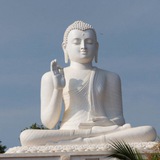
Forwarded from Words of the Buddha
Learn how to be patient when you need to be patient, and the patience here goes together with persistence. We know the Buddha said to be heedful, to act “as if your head were on fire.” Learn to translate that into a consistent persistence. Don’t bash your head trying to put out the fire.
===
Thanissaro Bhikkhu is an American Theravada Buddhist monk trained in the Thai Forest Tradition. He currently serves as abbot of the Metta Forest Monastery in San Diego County, California. His latest book is Good Heart, Good Mind: The Practice of the Ten Perfections.
Thanissaro Bhikkhu’s talks, writings, and translations are all freely available at his website
dhammatalks.org
===
Words of the Buddha channel:
https://news.1rj.ru/str/wordsofbuddha
===
===
Thanissaro Bhikkhu is an American Theravada Buddhist monk trained in the Thai Forest Tradition. He currently serves as abbot of the Metta Forest Monastery in San Diego County, California. His latest book is Good Heart, Good Mind: The Practice of the Ten Perfections.
Thanissaro Bhikkhu’s talks, writings, and translations are all freely available at his website
dhammatalks.org
===
Words of the Buddha channel:
https://news.1rj.ru/str/wordsofbuddha
===
Telegram
Words of the Buddha
Daily teachings of Buddha Dharma
👏1🙏1🤗1
Namakāra Gāthā
Araham Sammā-Sambuddho Bhagavā,
Buddham Bhagavantam abhivādemi.
Svākkhāto Bhagavatā Dhammo,
Dhammam namassāmi.
Supaṭipanno Bhagavato sāvaka-sangho,
Sangham namāmi.
The Blessed One is the Arahant, the Perfectly and Fully Awakened One;
I pay homage to the Buddha, the Blessed One.
The Dhamma is well-expounded by the Blessed One;
I pay homage to the Dhamma.
The Saṅgha of the Blessed One's disciples has practiced well;
I pay homage to the Saṅgha.
Araham Sammā-Sambuddho Bhagavā,
Buddham Bhagavantam abhivādemi.
Svākkhāto Bhagavatā Dhammo,
Dhammam namassāmi.
Supaṭipanno Bhagavato sāvaka-sangho,
Sangham namāmi.
The Blessed One is the Arahant, the Perfectly and Fully Awakened One;
I pay homage to the Buddha, the Blessed One.
The Dhamma is well-expounded by the Blessed One;
I pay homage to the Dhamma.
The Saṅgha of the Blessed One's disciples has practiced well;
I pay homage to the Saṅgha.
❤4🙏2🥰1🤗1
Dhammapada Verse 218
Eka Anagamitthera Vatthu
Chandajato anakkhate
manasa ca phuto siya
kamesu ca appatibaddhacitto
"uddhamsoto"1 ti vuccati.
Verse 218: He who has developed a desire for the Ineffable (i.e., Nibbana), whose mind reaches the same, and is no longer attached to the sensual world (kamaloka), is called one who is bound upstream (uddhamsoto).
1. uddhamsoto: one who is going upstream, i.e., one who is bound for the "Pure Abodes", (Sudahavasa Brahmaloka). The reference is to the anagami or now-returner, who is born in the Aviha Suddhavasa and from there passes upwards till he reaches the Akanittha Suddhavasa, the highest of the five Pure Abodes. (The Commentary)
The Story of an Anagami Thera
While residing at the Jetavana monastery, the Buddha uttered Verse (218) of this book, with reference to a thera who was an Anagami.
On one occasion, the pupils of the thera asked him whether he had attained any of the maggas; but he did not say anything although he had attained the Anagami Magga, the third magga. He kept silent because he had resolved not to talk about his attainment until he had attained arahatship. But the thera passed away without attaining arahatship, and also without saying anything about his attainment of Anagami Magga Insight.
His pupils thought their teacher had passed away without attaining any of the maggas and they felt sorry for him. They went to the Buddha and asked him where their teacher was reborn. The Buddha replied, "Bhikkhus! Your teacher, who was an Anagami before he passed away, is now reborn in the abodes of the Brahmas (Suddhavasa Brahmaloka). He did not reveal his attainment of Anagami Magga because he felt ashamed that he had achieved only that much, and he was ardently striving to attain arahatship. Your teacher is now freed from the attachment to the sensual world (kamaloka) and would certainly rise to higher realms."
Then the Buddha spoke in verse as follows:
Verse 218: He who has developed a desire for the Ineffable (i.e., Nibbana), whose mind reaches the same, and is no longer attached to the sensual world (kamaloka), is called one who is bound upstream (uddhamsoto).
At the end of the discourse those bhikkhus attained arahatship.
====================
Words of the Buddha channel:
https://invite.viber.com/?g2=AQAFqzqlj7FmI061PX17rxWMAtZ%2BRuso%2FH2KmHKZSgnv7v9DD8X0bDkKnZDr9JDq
===
Eka Anagamitthera Vatthu
Chandajato anakkhate
manasa ca phuto siya
kamesu ca appatibaddhacitto
"uddhamsoto"1 ti vuccati.
Verse 218: He who has developed a desire for the Ineffable (i.e., Nibbana), whose mind reaches the same, and is no longer attached to the sensual world (kamaloka), is called one who is bound upstream (uddhamsoto).
1. uddhamsoto: one who is going upstream, i.e., one who is bound for the "Pure Abodes", (Sudahavasa Brahmaloka). The reference is to the anagami or now-returner, who is born in the Aviha Suddhavasa and from there passes upwards till he reaches the Akanittha Suddhavasa, the highest of the five Pure Abodes. (The Commentary)
The Story of an Anagami Thera
While residing at the Jetavana monastery, the Buddha uttered Verse (218) of this book, with reference to a thera who was an Anagami.
On one occasion, the pupils of the thera asked him whether he had attained any of the maggas; but he did not say anything although he had attained the Anagami Magga, the third magga. He kept silent because he had resolved not to talk about his attainment until he had attained arahatship. But the thera passed away without attaining arahatship, and also without saying anything about his attainment of Anagami Magga Insight.
His pupils thought their teacher had passed away without attaining any of the maggas and they felt sorry for him. They went to the Buddha and asked him where their teacher was reborn. The Buddha replied, "Bhikkhus! Your teacher, who was an Anagami before he passed away, is now reborn in the abodes of the Brahmas (Suddhavasa Brahmaloka). He did not reveal his attainment of Anagami Magga because he felt ashamed that he had achieved only that much, and he was ardently striving to attain arahatship. Your teacher is now freed from the attachment to the sensual world (kamaloka) and would certainly rise to higher realms."
Then the Buddha spoke in verse as follows:
Verse 218: He who has developed a desire for the Ineffable (i.e., Nibbana), whose mind reaches the same, and is no longer attached to the sensual world (kamaloka), is called one who is bound upstream (uddhamsoto).
At the end of the discourse those bhikkhus attained arahatship.
====================
Words of the Buddha channel:
https://invite.viber.com/?g2=AQAFqzqlj7FmI061PX17rxWMAtZ%2BRuso%2FH2KmHKZSgnv7v9DD8X0bDkKnZDr9JDq
===
Viber
Words Of The Buddha
Daily teachings from Buddha Dharma
👍2🙏1👌1🏆1🤝1
Forwarded from Buddha Dharma books
Free Buddha Dharma ebook
DYING TO LIVE
The Role of Kamma in Dying and Rebirth
By Aggacitta Bhikkhu
DIFFERENT PEOPLE HAVE different views and beliefs about what happens after death. Although all Buddhist Schools are unanimous that death marks the end and beginning of life for sentient beings still bound to saüsàra [the round of births], not all share the same views, observations and interpretations with regard to the actual process of dying and rebirth.
Tibetan (Vajrayàna) and Chinese (Mahàyàna) Buddhists believe that after death, the spirit of the dead person passes through an intermediate period (bardo in Tibetan, zhong yin in Mandarin)—which may last for as long as forty-nine days—during which it undergoes a series of unearthly, extraordinary experiences, including a “small death” at the end of each week, before it is finally reborn into another realm of existence. In contrast, orthodox Theravada Buddhism, which is the earliest, most authentic, extant record of Gotama Buddha’s teaching, asserts that rebirth takes place immediately after death.
It may not be too naive to suggest that this difference between the schools could be more apparent than real; for if one regarded the entity in the bardo/zhong yin as another reborn being, then this doctrinal inconsistency could very well be reconciled, although Theravadins may still question the weekly “small deaths” and forty-nine day duration. But it is not within the scope of this booklet to speculate on the rationale and credibility of this belief. Rather, the purpose of this work is to present a comprehensive picture of kamma and the often unpredictable role it plays in the process of dying and rebirth according to orthodox Theravada doctrine.
Free download available:
https://static.sariputta.com/pdf/tipitaka/763/dietolivepdf.pdf
===
DYING TO LIVE
The Role of Kamma in Dying and Rebirth
By Aggacitta Bhikkhu
DIFFERENT PEOPLE HAVE different views and beliefs about what happens after death. Although all Buddhist Schools are unanimous that death marks the end and beginning of life for sentient beings still bound to saüsàra [the round of births], not all share the same views, observations and interpretations with regard to the actual process of dying and rebirth.
Tibetan (Vajrayàna) and Chinese (Mahàyàna) Buddhists believe that after death, the spirit of the dead person passes through an intermediate period (bardo in Tibetan, zhong yin in Mandarin)—which may last for as long as forty-nine days—during which it undergoes a series of unearthly, extraordinary experiences, including a “small death” at the end of each week, before it is finally reborn into another realm of existence. In contrast, orthodox Theravada Buddhism, which is the earliest, most authentic, extant record of Gotama Buddha’s teaching, asserts that rebirth takes place immediately after death.
It may not be too naive to suggest that this difference between the schools could be more apparent than real; for if one regarded the entity in the bardo/zhong yin as another reborn being, then this doctrinal inconsistency could very well be reconciled, although Theravadins may still question the weekly “small deaths” and forty-nine day duration. But it is not within the scope of this booklet to speculate on the rationale and credibility of this belief. Rather, the purpose of this work is to present a comprehensive picture of kamma and the often unpredictable role it plays in the process of dying and rebirth according to orthodox Theravada doctrine.
Free download available:
https://static.sariputta.com/pdf/tipitaka/763/dietolivepdf.pdf
===
👍2🙏1🏆1
Dhammapada Verses 219 and 220
Nandiya Vatthu
Cirappavsim purisam
durato sotthimagatam
natimitta suhajja ca
abhinandanti agatam.
Tatheva katapunnampi
asma loka param gatam
punnani patiganhanti
piyam nativa agatam.
Verse 219: A man who has long been absent and has returned home safely from a distance is welcomed with joy by relatives, friends and well-wishers on his return.
Verse 220: In the same way, his good deeds will receive him who has done good when he goes from this world to the other, as relatives receive a dear one on his return.
The Story of Nandiya
While residing at the Isipatana wood, the Buddha uttered Verses (219) and (220) of this book, with reference to Nandiya.
Nandiya was a rich man from Baranasi. After listening to the Buddha's discourse on the benefits of building monasteries for bhikkhus, Nandiya built the Mahavihara monastery at Isipatana. The building was pinnacled and fully furnished. As soon as the monastery was offered to the Buddha, a mansion came up for Nandiya at the Tavatimsa deva world.
One day, when Thera Maha Moggalana visited the Tavatimsa deva world he saw the mansion which was meant for the donor of the Mahavihara monastery at Isipatana. On his return from the Tavatimsa deva world, Thera Maha Moggalana asked the Buddha, "Venerable Sir! For those who perform meritorious deeds, do they have mansions and other riches prepared in the deva world even while they are still living in this world ?" To him the Buddha said, "My son, why do you ask? Have you not yourself seen the mansion and riches waiting for Nandiya in the Tavatimsa deva world? The devas await the coming of the good and generous ones, as relatives await the return of one who is long absent. When the good ones die, they are welcomed joyously to the abode of the devas."
Then the Buddha spoke in verse as follows:
Verse 219: A man who has long been absent and has returned home safely from a distance is welcomed with joy by relatives, friends and well-wishers on his return.
Verse 220: In the same way, his good deeds will receive him who has done good when he goes from this world to the other, as relatives receive a dear one on his return.
End of Chapter Sixteen: Affection (Piyavagga)
====================
Dhammapada, beloved and favorite teachings of the Buddha channel:
https://invite.viber.com/?g2=AQBLD6phsgvP%2F061YjEM3K%2BNeH1Yb372b9mtfQX2EmuBpgoLUoc99BDMfzHghrme
===
Nandiya Vatthu
Cirappavsim purisam
durato sotthimagatam
natimitta suhajja ca
abhinandanti agatam.
Tatheva katapunnampi
asma loka param gatam
punnani patiganhanti
piyam nativa agatam.
Verse 219: A man who has long been absent and has returned home safely from a distance is welcomed with joy by relatives, friends and well-wishers on his return.
Verse 220: In the same way, his good deeds will receive him who has done good when he goes from this world to the other, as relatives receive a dear one on his return.
The Story of Nandiya
While residing at the Isipatana wood, the Buddha uttered Verses (219) and (220) of this book, with reference to Nandiya.
Nandiya was a rich man from Baranasi. After listening to the Buddha's discourse on the benefits of building monasteries for bhikkhus, Nandiya built the Mahavihara monastery at Isipatana. The building was pinnacled and fully furnished. As soon as the monastery was offered to the Buddha, a mansion came up for Nandiya at the Tavatimsa deva world.
One day, when Thera Maha Moggalana visited the Tavatimsa deva world he saw the mansion which was meant for the donor of the Mahavihara monastery at Isipatana. On his return from the Tavatimsa deva world, Thera Maha Moggalana asked the Buddha, "Venerable Sir! For those who perform meritorious deeds, do they have mansions and other riches prepared in the deva world even while they are still living in this world ?" To him the Buddha said, "My son, why do you ask? Have you not yourself seen the mansion and riches waiting for Nandiya in the Tavatimsa deva world? The devas await the coming of the good and generous ones, as relatives await the return of one who is long absent. When the good ones die, they are welcomed joyously to the abode of the devas."
Then the Buddha spoke in verse as follows:
Verse 219: A man who has long been absent and has returned home safely from a distance is welcomed with joy by relatives, friends and well-wishers on his return.
Verse 220: In the same way, his good deeds will receive him who has done good when he goes from this world to the other, as relatives receive a dear one on his return.
End of Chapter Sixteen: Affection (Piyavagga)
====================
Dhammapada, beloved and favorite teachings of the Buddha channel:
https://invite.viber.com/?g2=AQBLD6phsgvP%2F061YjEM3K%2BNeH1Yb372b9mtfQX2EmuBpgoLUoc99BDMfzHghrme
===
Viber
Dhammapada - Buddha Dharma Teachings
Daily teachings of the Dhammapada, beloved and favorite teachings of the Buddha
👍1🥰1🙏1🏆1🤗1
Dhammapada Verse 221
Rohinikkattiyakanna Vatthu
Kodham jahe vippajaheyya manam
samyojanam1 sabbamatikkameyya
tam namarupasmimasajjanamam
akincanam2 nanupatanti dukkha.
Verse 221: Give up anger, abandon conceit, overcome all fetters. Ills of life (dukkha) do not befall one who does not cling to mind and body and is free from moral defilements.
1. samyojanam: a fetter. There are ten fetters of human passion which bind man to the round of rebirths; these are cast off at different stages of Magga Insight.
2. akincanam: free from kincana: the three kincana are passion, ill will and ignorance.
Rohinikkattiyakanna Vatthu
While residing at the Nigrodharama monastery, the Buddha uttered Verse (221) of this book, with reference to Princess Rohini, sister of Thera Anuruddha.
On one occasion, Thera Anuruddha visited Kapilavatthu. While he was staying at the monastery there, all his relatives, with the exception of his sister Rohini, came to see him. On learning from them that Rohini did not come because she was suffering from leprosy, he sent for her. Covering her head in shame, Rohini came when she was sent for. Thera Anuruddha told her to do some meritorious deed and he suggested that she should sell some of her clothing and jewelry; and with the money raised, to build a refectory for the bhikkhu. Rohini agreed to do as she was told. Thera Anuruddha also asked his other relatives to help in the construction of the hall. Further, he told Rohini to sweep the floor and fill the water-pots every day even while the construction was still going on. She did as she was instructed and she began to get better.
When the hall was completed, the Buddha and his bhikkhus were invited for alms-food. After the meal, the Buddha asked for the donor of the building and alms-food, but Rohini was not there. So the Buddha sent for her and she came. The Buddha asked her whether she knew why she was inflicted with this dreaded disease and she answered that she did not know. So the Buddha told her that she had the dreadful disease because of an evil deed she bad done out of spite and anger, in one of her past existences. As explained by the Buddha, Rohini was, at one time, the chief queen of the king of Baranasi. It so happened that the king had a favourite dancer and the chief queen was very jealous of her. So the queen wanted to punish the dancer. Thus one day, she had her attendants put some itching powder made from cow-hage pods in the dancer's bed, her blankets, etc. Next, they called the dancer, and as though in jest, they threw some itching powder on her. The girl itched all over and was in great pain and discomfort. Thus itching unbearably, she ran to her room and her bed, which made her suffer even more.
As a result of that evil deed Rohini had become a leper in this existence. The Buddha then exhorted the congregation not to act foolishly in anger and not to bear any ill will towards others.
Then the Buddha spoke in verse as follows:
Verse 221: Give up anger, abandon conceit, overcome all fetters. Ills of life (dukkha) do not befall one who does not cling to mind and body and is free from moral defilements.
At the end of the discourse, many in the congregation attained Sotapatti Fruition. Princess Rohini also attained Sotapatti Fruition, and at the same time her skin disease disappeared, and her complexion became fair, smooth and very attractive.
====================
Ajahn Chah, Buddhist teacher of Thai forest meditation of Theravada Buddhism channel:
https://news.1rj.ru/str/ajahnchah_buddhism
===
Rohinikkattiyakanna Vatthu
Kodham jahe vippajaheyya manam
samyojanam1 sabbamatikkameyya
tam namarupasmimasajjanamam
akincanam2 nanupatanti dukkha.
Verse 221: Give up anger, abandon conceit, overcome all fetters. Ills of life (dukkha) do not befall one who does not cling to mind and body and is free from moral defilements.
1. samyojanam: a fetter. There are ten fetters of human passion which bind man to the round of rebirths; these are cast off at different stages of Magga Insight.
2. akincanam: free from kincana: the three kincana are passion, ill will and ignorance.
Rohinikkattiyakanna Vatthu
While residing at the Nigrodharama monastery, the Buddha uttered Verse (221) of this book, with reference to Princess Rohini, sister of Thera Anuruddha.
On one occasion, Thera Anuruddha visited Kapilavatthu. While he was staying at the monastery there, all his relatives, with the exception of his sister Rohini, came to see him. On learning from them that Rohini did not come because she was suffering from leprosy, he sent for her. Covering her head in shame, Rohini came when she was sent for. Thera Anuruddha told her to do some meritorious deed and he suggested that she should sell some of her clothing and jewelry; and with the money raised, to build a refectory for the bhikkhu. Rohini agreed to do as she was told. Thera Anuruddha also asked his other relatives to help in the construction of the hall. Further, he told Rohini to sweep the floor and fill the water-pots every day even while the construction was still going on. She did as she was instructed and she began to get better.
When the hall was completed, the Buddha and his bhikkhus were invited for alms-food. After the meal, the Buddha asked for the donor of the building and alms-food, but Rohini was not there. So the Buddha sent for her and she came. The Buddha asked her whether she knew why she was inflicted with this dreaded disease and she answered that she did not know. So the Buddha told her that she had the dreadful disease because of an evil deed she bad done out of spite and anger, in one of her past existences. As explained by the Buddha, Rohini was, at one time, the chief queen of the king of Baranasi. It so happened that the king had a favourite dancer and the chief queen was very jealous of her. So the queen wanted to punish the dancer. Thus one day, she had her attendants put some itching powder made from cow-hage pods in the dancer's bed, her blankets, etc. Next, they called the dancer, and as though in jest, they threw some itching powder on her. The girl itched all over and was in great pain and discomfort. Thus itching unbearably, she ran to her room and her bed, which made her suffer even more.
As a result of that evil deed Rohini had become a leper in this existence. The Buddha then exhorted the congregation not to act foolishly in anger and not to bear any ill will towards others.
Then the Buddha spoke in verse as follows:
Verse 221: Give up anger, abandon conceit, overcome all fetters. Ills of life (dukkha) do not befall one who does not cling to mind and body and is free from moral defilements.
At the end of the discourse, many in the congregation attained Sotapatti Fruition. Princess Rohini also attained Sotapatti Fruition, and at the same time her skin disease disappeared, and her complexion became fair, smooth and very attractive.
====================
Ajahn Chah, Buddhist teacher of Thai forest meditation of Theravada Buddhism channel:
https://news.1rj.ru/str/ajahnchah_buddhism
===
Telegram
Ajahn Chah - Theravada Thailand Buddhism
Collection of teachings of Venerable Ajahn Chah, a foremost meditation and Buddhist teacher from Thailand
👍1🥰1👏1🤗1
Forwarded from Words of the Buddha
Free Buddhism Dharma ebook
You and Your Problems
By K. Sri Dhammananda
Some problems that beset humanity in the midst of the spiritual famine that sweeps across the globe in the twentieth century and their solutions in the light of Buddhism. Ven.Dr.K Sri Dhammananda has done it again.
Free download here:
https://ftp.budaedu.org/ebooks/pdf/EN177.pdf
===
You and Your Problems
By K. Sri Dhammananda
Some problems that beset humanity in the midst of the spiritual famine that sweeps across the globe in the twentieth century and their solutions in the light of Buddhism. Ven.Dr.K Sri Dhammananda has done it again.
Free download here:
https://ftp.budaedu.org/ebooks/pdf/EN177.pdf
===
👍2🥰1👏1💯1
Dhammapada Verse 222
Annatarabhikkhu Vatthu
Yo ve uppatitam kodham
ratham bhantamva varaye
tamaham sarathim brumi
rasmiggaho itaro jano.
Verse 222: He who restrains his rising anger as a skilful charioteer checks a speeding chariot, — him I call a true charioteer; other charioteers only hold the reins.
The Story of a Bhikkhu
While residing at the Aggalava stupa in the city of Alavi, the Buddha uttered Verse (222) of this book, with reference to a bhikkhu.
Once, a bhikkhu from Alavi wanted to build a monastery for himself and so he began to cut down a tree. The deva dwelling in that tree (rukkha devata) tried to stop him, saying that she and her infant son had nowhere to go. Failing to stop the bhikkhu she put her son on a branch, hoping that it would stop him from felling the tree. By then, the bhikkhu was already swinging his axe and he could not stop it in time and unintentionally cut off an arm of the child. Seeing her child being harmed in this way, the mother flew in a rage and was about to kill the bhikkhu. As she raised her hands to strike the bhikkhu, she suddenly checked herself and thought, "If I were to kill a bhikkhu, I would be killing one who observes the moral precepts (sila); in that case, I would surely suffer in niraya. Other guardian devas of the trees would be following my example and other bhikkhus would also be killed. But this bhikkhu has a master; I must go and see his master." So she went weeping to the Buddha and related all that had happened.
To her the Buddha said, "O rukkha devata! You have done well to control yourself."
Then the Buddha spoke in verse as follows:
Verse 222: He who restrains his rising anger as a skilful charioteer checks a speeding chariot, — him I call a true charioteer; other charioteers only hold the reins.
At the end of the discourse the deva attained Sotapatti Fruition, and for her dwelling place she was offered a tree near the Perfumed Chamber of the Buddha. After this incident, the Buddha forbade bhikkhus to cut vegetation, such as grass, plants, shrubs and trees.
====================
Free Buddhism books, teachings, podcasts and videos from Theravada, Mahayana and Vajrayana traditions:
https://news.1rj.ru/str/buddha_ebooks
===
Annatarabhikkhu Vatthu
Yo ve uppatitam kodham
ratham bhantamva varaye
tamaham sarathim brumi
rasmiggaho itaro jano.
Verse 222: He who restrains his rising anger as a skilful charioteer checks a speeding chariot, — him I call a true charioteer; other charioteers only hold the reins.
The Story of a Bhikkhu
While residing at the Aggalava stupa in the city of Alavi, the Buddha uttered Verse (222) of this book, with reference to a bhikkhu.
Once, a bhikkhu from Alavi wanted to build a monastery for himself and so he began to cut down a tree. The deva dwelling in that tree (rukkha devata) tried to stop him, saying that she and her infant son had nowhere to go. Failing to stop the bhikkhu she put her son on a branch, hoping that it would stop him from felling the tree. By then, the bhikkhu was already swinging his axe and he could not stop it in time and unintentionally cut off an arm of the child. Seeing her child being harmed in this way, the mother flew in a rage and was about to kill the bhikkhu. As she raised her hands to strike the bhikkhu, she suddenly checked herself and thought, "If I were to kill a bhikkhu, I would be killing one who observes the moral precepts (sila); in that case, I would surely suffer in niraya. Other guardian devas of the trees would be following my example and other bhikkhus would also be killed. But this bhikkhu has a master; I must go and see his master." So she went weeping to the Buddha and related all that had happened.
To her the Buddha said, "O rukkha devata! You have done well to control yourself."
Then the Buddha spoke in verse as follows:
Verse 222: He who restrains his rising anger as a skilful charioteer checks a speeding chariot, — him I call a true charioteer; other charioteers only hold the reins.
At the end of the discourse the deva attained Sotapatti Fruition, and for her dwelling place she was offered a tree near the Perfumed Chamber of the Buddha. After this incident, the Buddha forbade bhikkhus to cut vegetation, such as grass, plants, shrubs and trees.
====================
Free Buddhism books, teachings, podcasts and videos from Theravada, Mahayana and Vajrayana traditions:
https://news.1rj.ru/str/buddha_ebooks
===
Telegram
Buddha Dharma books
Free Buddhism books, teachings, podcasts and videos from Theravada, Mahayana and Vajrayana traditions
👍2❤1🥰1🤗1😘1