Forwarded from Buddha Dharma books
Free Buddha Dharma ebook
Starting Out Small: A Collection of Talks for Beginning Meditators, by Ajaan Lee Dhammadharo. (revised Dec. 15, 2018)
In this collection of talks Ajaan Lee covers the sorts of questions that occur to people new to meditation—Why meditate? How should I meditate? And why in that particular way?—and in his own style he provided not only straightforward answers to these questions but also vivid analogies.
Free download available:
https://www.dhammatalks.org/Archive/Writings/Ebooks/StartingOutSmall_181215.pdf
===
Starting Out Small: A Collection of Talks for Beginning Meditators, by Ajaan Lee Dhammadharo. (revised Dec. 15, 2018)
In this collection of talks Ajaan Lee covers the sorts of questions that occur to people new to meditation—Why meditate? How should I meditate? And why in that particular way?—and in his own style he provided not only straightforward answers to these questions but also vivid analogies.
Free download available:
https://www.dhammatalks.org/Archive/Writings/Ebooks/StartingOutSmall_181215.pdf
===
👏1🤗1
Dhammapada Verses 277, 278 and 279
Aniccalakkhana Vatthu
Dukkhalakkhana Vatthu
Anattalakkhana Vatthu
"Sabbe sankhara anicca" ti
yada pannaya1 passati
atha nibbindati dukkhe
esa maggo visuddhiya.
"Sabbe sankhara dukkha" ti
yada pannaya passati
atha nibbindati dukkhe
esa maggo visuddhiya.
"Sabbe sankhara anatta" ti
yada pannaya passati
atha nibbindati dukkhe
esa maggo visuddhiya.
Verse 277: "All conditioned phenomena are impermanent"; when one sees this with Insight-wisdom, one becomes weary of dukkha (i.e., the khandhas). This is the Path to Purity.
Verse 278: "All conditioned phenomena are dukkha"; when one sees this with Insight-wisdom, one becomes weary of dukkha (i.e., the khandhas). This is the Path to Purity.
Verse 279: "All phenomena (dhammas) are without Self"; when one sees this with Insight-wisdom, one becomes weary of dukkha (i.e., the khandhas). This is the Path to Purity.
1. panna: Insight-wisdom (Vipassana panna).
Stories Relating to Anicca, Dukkha and Anatta
While residing at the Jetavana monastery, the Buddha uttered Verses (277), (278) and (279) of this book, with reference to three groups of five hundred bhikkhus each.
On Impermanence (Anicca)
Five hundred bhikkhus, after receiving their subject of meditation from the Buddha, went into the forest to practise meditation, but they made little progress. So, they returned to the Buddha to ask for another subject of meditation which would suit them better. On reflection, the Buddha found that those bhikkhus had, during the time of Kassapa Buddha, meditated on impermanence. So, he said, "Bhikkhus, all conditioned phenomena are subject to change and decay and are therefore impermanent."
Then the Buddha spoke in verse as follows:
Verse 277: "All conditioned phenomena are impermanent"; when one sees this with Insight-wisdom, one becomes weary of dukkha (i.e., the khandhas). This is the Path to Purity.
At the end of the discourse those five hundred bhikkhus attained arahatship.
On Dukkha
The story is the same as the story on Anicca. Here, the Buddha on reflection found that another group of five hundred bhikkhus had meditated on dukkha. So, he said, "Bhikkhus, all khandha aggregates are oppressive and unsatisfactory; thus all khandhas are dukkha."
Then the Buddha spoke in verse as follows:
Verse 278: "All conditioned phenomena are dukkha"; when one sees this with Insight-wisdom, one becomes weary of dukkha (i.e., the khandhas). This is the Path to Purity.
At the end of the discourse those five hundred bhikkhus attained arahatship.
On Insubstantiality or Non-Self (Anatta)
The story is the same as the stories on Anicca and Dukkha. Here, the Buddha on reflection found that still another group of five hundred bhikkhus had meditated on insubstantiality or non-self (anatta). So, he said, "Bhikkhus, all khandha aggregates are insubstantial; they are not subject to one's control."
Then the Buddha spoke in verse as follows:
Verse 279: "All phenomena (dhammas) are without Self"; when one sees this with Insight-wisdom, one becomes weary of dukkha (i.e., the khandhas). This is the Path to Purity.
At the end of the discourse all those five hundred bhikkhus attained arahatship.
===
Tibetan Buddhism - Vajrayana, Tantrayana and esoteric Buddhism channel:
https://news.1rj.ru/str/tibetanbuddha
Vajrayana Tantrayana Buddhism channel:
https://news.1rj.ru/str/tantrayanabuddhism
===
Aniccalakkhana Vatthu
Dukkhalakkhana Vatthu
Anattalakkhana Vatthu
"Sabbe sankhara anicca" ti
yada pannaya1 passati
atha nibbindati dukkhe
esa maggo visuddhiya.
"Sabbe sankhara dukkha" ti
yada pannaya passati
atha nibbindati dukkhe
esa maggo visuddhiya.
"Sabbe sankhara anatta" ti
yada pannaya passati
atha nibbindati dukkhe
esa maggo visuddhiya.
Verse 277: "All conditioned phenomena are impermanent"; when one sees this with Insight-wisdom, one becomes weary of dukkha (i.e., the khandhas). This is the Path to Purity.
Verse 278: "All conditioned phenomena are dukkha"; when one sees this with Insight-wisdom, one becomes weary of dukkha (i.e., the khandhas). This is the Path to Purity.
Verse 279: "All phenomena (dhammas) are without Self"; when one sees this with Insight-wisdom, one becomes weary of dukkha (i.e., the khandhas). This is the Path to Purity.
1. panna: Insight-wisdom (Vipassana panna).
Stories Relating to Anicca, Dukkha and Anatta
While residing at the Jetavana monastery, the Buddha uttered Verses (277), (278) and (279) of this book, with reference to three groups of five hundred bhikkhus each.
On Impermanence (Anicca)
Five hundred bhikkhus, after receiving their subject of meditation from the Buddha, went into the forest to practise meditation, but they made little progress. So, they returned to the Buddha to ask for another subject of meditation which would suit them better. On reflection, the Buddha found that those bhikkhus had, during the time of Kassapa Buddha, meditated on impermanence. So, he said, "Bhikkhus, all conditioned phenomena are subject to change and decay and are therefore impermanent."
Then the Buddha spoke in verse as follows:
Verse 277: "All conditioned phenomena are impermanent"; when one sees this with Insight-wisdom, one becomes weary of dukkha (i.e., the khandhas). This is the Path to Purity.
At the end of the discourse those five hundred bhikkhus attained arahatship.
On Dukkha
The story is the same as the story on Anicca. Here, the Buddha on reflection found that another group of five hundred bhikkhus had meditated on dukkha. So, he said, "Bhikkhus, all khandha aggregates are oppressive and unsatisfactory; thus all khandhas are dukkha."
Then the Buddha spoke in verse as follows:
Verse 278: "All conditioned phenomena are dukkha"; when one sees this with Insight-wisdom, one becomes weary of dukkha (i.e., the khandhas). This is the Path to Purity.
At the end of the discourse those five hundred bhikkhus attained arahatship.
On Insubstantiality or Non-Self (Anatta)
The story is the same as the stories on Anicca and Dukkha. Here, the Buddha on reflection found that still another group of five hundred bhikkhus had meditated on insubstantiality or non-self (anatta). So, he said, "Bhikkhus, all khandha aggregates are insubstantial; they are not subject to one's control."
Then the Buddha spoke in verse as follows:
Verse 279: "All phenomena (dhammas) are without Self"; when one sees this with Insight-wisdom, one becomes weary of dukkha (i.e., the khandhas). This is the Path to Purity.
At the end of the discourse all those five hundred bhikkhus attained arahatship.
===
Tibetan Buddhism - Vajrayana, Tantrayana and esoteric Buddhism channel:
https://news.1rj.ru/str/tibetanbuddha
Vajrayana Tantrayana Buddhism channel:
https://news.1rj.ru/str/tantrayanabuddhism
===
Telegram
Tibetan Buddhism Vajrayana Tantrayana esoteric tradition
Buddha Dharma teachings from the esoteric Vajrayana or Tantrayana Buddhism, includes all major schools Nyingma, Kagyu, Gelug, Sakya, Jonang and Bonpo.
👍1👎1👏1🙏1
Forwarded from Ajahn Chah - Theravada Thailand Buddhism
Free Buddha Dharma ebook
Food for the Heart
By Ajahn Chah
ONE OF THE MOST NOTABLE FEATURES of Venerable Ajahn Chah’s teaching was the emphasis he gave to the Sangha, the monastic order, and its use as a vehicle for Dhamma practice. This is not to deny his unique gift for teaching lay people, which enabled him to communicate brilliantly with people from all walks of life, be they simple farmers or University professors. But the results he obtained with teaching and creating solid Sangha communities are plainly visible in the many monasteries which grew up around him, both within Thailand and, later, in England, Australia, Europe and elsewhere. Ajahn Chah foresaw the necessity of establishing the Sangha in the West if long-term results were to be realized.
This book is a collection of talks he gave to both laypeople and monks. The talks he gave to monks are exhortations given to the communities of bhikkhus, or Buddhist monks, at his own monastery, Wat Nong Pah Pong, and some of its branches in both Thailand and the West. This fact should be borne in mind by the lay reader reading those talks. These talks to monks are not intended to, and indeed cannot, serve as an introduction to Buddhism and meditation practice. They are monastic teachings, addressed primarily to the lifestyle and problems particular to that situation. A knowledge of the basics of Buddhism on the part of the listener was assumed. Many of these talks will thus seem strange and even daunting to the lay reader, with their emphasis on conformity and renunciation.
Free download here:
https://static.sariputta.com/pdf/tipitaka/264/food_for_the_heart_pdf.pdf
===
Food for the Heart
By Ajahn Chah
ONE OF THE MOST NOTABLE FEATURES of Venerable Ajahn Chah’s teaching was the emphasis he gave to the Sangha, the monastic order, and its use as a vehicle for Dhamma practice. This is not to deny his unique gift for teaching lay people, which enabled him to communicate brilliantly with people from all walks of life, be they simple farmers or University professors. But the results he obtained with teaching and creating solid Sangha communities are plainly visible in the many monasteries which grew up around him, both within Thailand and, later, in England, Australia, Europe and elsewhere. Ajahn Chah foresaw the necessity of establishing the Sangha in the West if long-term results were to be realized.
This book is a collection of talks he gave to both laypeople and monks. The talks he gave to monks are exhortations given to the communities of bhikkhus, or Buddhist monks, at his own monastery, Wat Nong Pah Pong, and some of its branches in both Thailand and the West. This fact should be borne in mind by the lay reader reading those talks. These talks to monks are not intended to, and indeed cannot, serve as an introduction to Buddhism and meditation practice. They are monastic teachings, addressed primarily to the lifestyle and problems particular to that situation. A knowledge of the basics of Buddhism on the part of the listener was assumed. Many of these talks will thus seem strange and even daunting to the lay reader, with their emphasis on conformity and renunciation.
Free download here:
https://static.sariputta.com/pdf/tipitaka/264/food_for_the_heart_pdf.pdf
===
👍1👏1🙏1🏆1
Dhammapada Verse 280
Padhanakammikatissatthera Vatthu
Utthana kalamhi anutthahano
yuva bali Alasiyam upeto
samsanna sankappamano kusito
pannaya maggam alaso na vindati.
Verse 280: The idler who does not strive when he should be striving, who though young and strong is given to idleness, whose thoughts are weak and wandering, will not attain Magga Insight which can only be perceived by wisdom.
The Story of Thera Tissa the Idle One
While residing at the Jetavana monastery, the Buddha uttered Verse (280) of this book, with reference to Tissa, a lazy bhikkhu.
Once, five hundred young men were admitted into the Order by the Buddha in Savatthi. After receiving a subject of meditation from the Buddha, all the new bhikkhus except one went to the forest to practise meditation. They practised zealously and vigilantly so that in due course all of them attained arahatship. When they returned to the monastery to pay homage to him, the Buddha was very pleased and satisfied with their achievement. Bhikkhu Tissa who stayed behind did not try hard and therefore achieved nothing.
When Tissa found that the relationship between the Buddha and those bhikkhus was very cordial and intimate, he felt rather neglected, and regretted that he had wasted all that time. So he resolved to practise meditation throughout the night. As he was walking in meditation on that night, he slipped and broke a thigh bone. Other bhikkhus hearing his cry went to help him. On hearing about the above incident the Buddha said, "Bhikkhus, one who does not strive when he should be striving but idle away his time will not attain mental absorption (jhana) and Magga Insight."
Then the Buddha spoke in verse as follows:
Verse 280: The idler who does not strive when he should be striving, who though young and strong is given to idleness, whose thoughts are weak and wandering, will not attain Magga Insight which can only be perceived by wisdom.
===
Words of the Buddha channel:
https://news.1rj.ru/str/wordsofbuddha
===
Padhanakammikatissatthera Vatthu
Utthana kalamhi anutthahano
yuva bali Alasiyam upeto
samsanna sankappamano kusito
pannaya maggam alaso na vindati.
Verse 280: The idler who does not strive when he should be striving, who though young and strong is given to idleness, whose thoughts are weak and wandering, will not attain Magga Insight which can only be perceived by wisdom.
The Story of Thera Tissa the Idle One
While residing at the Jetavana monastery, the Buddha uttered Verse (280) of this book, with reference to Tissa, a lazy bhikkhu.
Once, five hundred young men were admitted into the Order by the Buddha in Savatthi. After receiving a subject of meditation from the Buddha, all the new bhikkhus except one went to the forest to practise meditation. They practised zealously and vigilantly so that in due course all of them attained arahatship. When they returned to the monastery to pay homage to him, the Buddha was very pleased and satisfied with their achievement. Bhikkhu Tissa who stayed behind did not try hard and therefore achieved nothing.
When Tissa found that the relationship between the Buddha and those bhikkhus was very cordial and intimate, he felt rather neglected, and regretted that he had wasted all that time. So he resolved to practise meditation throughout the night. As he was walking in meditation on that night, he slipped and broke a thigh bone. Other bhikkhus hearing his cry went to help him. On hearing about the above incident the Buddha said, "Bhikkhus, one who does not strive when he should be striving but idle away his time will not attain mental absorption (jhana) and Magga Insight."
Then the Buddha spoke in verse as follows:
Verse 280: The idler who does not strive when he should be striving, who though young and strong is given to idleness, whose thoughts are weak and wandering, will not attain Magga Insight which can only be perceived by wisdom.
===
Words of the Buddha channel:
https://news.1rj.ru/str/wordsofbuddha
===
Telegram
Words of the Buddha
Daily teachings of Buddha Dharma
👏2❤1
Forwarded from Words of the Buddha
Cutting the Roots of Craving
Desire is beginningless. Yet through right mindfulness we can learn to abandon it.
By Bhante Henepola Gunaratana and Veronique Ziegler
Part 1 of 2
Craving sews one life to another. It is like moisture that exhibits the property of adhesion and keeps us glued to the cycle of samsara. Everything we do pivots around craving because it is deeply entrenched in our minds and lives. Like a magnet with a powerful attractive force, it brings about rebirth when combined with ignorance, kamma, and consciousness. Craving, along with ignorance, is the link from one life to the next. But due to ignorance we do not see the danger in craving, which is why it has such a dominating and self-generating power. Even though craving is impermanent it repeats itself, along with delight and attachment. Its insatiability is such that it yields more craving, and as a result it leads to renewed existence in samsara.
We constantly try to satisfy desire in this life. However, we are never fully satisfied, and thus we keep repeating the endless chase to fulfill our desires. This quest goes on day after day, month after month, and year after year. In fact, it consumes our entire lives. And whenever we ask ourselves the question “Am I satisfied?” we always get the same answer: “Not yet.” There is always another desire that is not yet satisfied. With these unfulfilled desires in the mind, our lives come to an end at some point, and we die hoping to satisfy them in our next life. But there we find ourselves in the same predicament, as desire arises from the same places.
Hence, there is seemingly no end to this. This is why the Buddha said that the beginning of desire is indiscernible. There is no point in time before which a state of desirelessness can be found. To make matters worse, the presence of ignorance in the mind blocks clear understanding. Therefore, when our mind is fettered by desires and our view is blocked by ignorance, the result is endless rounds of death and rebirth in samsara. This situation seems at first quite hopeless. However, the Buddha did find a way out, the method to end this cycle. That which can end samsara, this endless cycle of birth and death, is called the dhamma. And when the Buddha went to Benares to teach his first sermon, he started rolling the wheel of dhamma to end it.
Even though the dhamma cannot be seen with the eyes, it remains our escape hatch from suffering. In the same way, even though samsara is invisible to the eyes, the workings of the mind that trap us in it—jealousy, greed, craving, and suffering—can be directly experienced. All these factors are mental states that can be perceived not by the five physical senses but by the mind. So can we see the invisible dhamma with the invisible mind? At this very moment, while reading these words, you can see your invisible mind and the invisible dhamma. You can experience mental states arising from seeing the words on the page and from understanding or not understanding what you are reading. You are the only one who can see the dhamma cycle happening in your own mind.
In The Discourse on the Great Causation, the Buddha explains that in dependence upon feeling, there is craving. In dependence upon craving, there is pursuit. In dependence upon pursuit, there is gain. In dependence upon gain, there is decision-making. In dependence upon decision-making, there is desire and lust. In dependence upon desire and lust, there is attachment. In dependence upon attachment, there is possessiveness. In dependence upon possessiveness, there is stinginess. In dependence upon stinginess, there is safeguarding. Because of safeguarding, various evil, unwholesome phenomena originate. These unwholesome acts involve warfare, fighting, quarrels, slander, insulting speech, and lies.
Desire is beginningless. Yet through right mindfulness we can learn to abandon it.
By Bhante Henepola Gunaratana and Veronique Ziegler
Part 1 of 2
Craving sews one life to another. It is like moisture that exhibits the property of adhesion and keeps us glued to the cycle of samsara. Everything we do pivots around craving because it is deeply entrenched in our minds and lives. Like a magnet with a powerful attractive force, it brings about rebirth when combined with ignorance, kamma, and consciousness. Craving, along with ignorance, is the link from one life to the next. But due to ignorance we do not see the danger in craving, which is why it has such a dominating and self-generating power. Even though craving is impermanent it repeats itself, along with delight and attachment. Its insatiability is such that it yields more craving, and as a result it leads to renewed existence in samsara.
We constantly try to satisfy desire in this life. However, we are never fully satisfied, and thus we keep repeating the endless chase to fulfill our desires. This quest goes on day after day, month after month, and year after year. In fact, it consumes our entire lives. And whenever we ask ourselves the question “Am I satisfied?” we always get the same answer: “Not yet.” There is always another desire that is not yet satisfied. With these unfulfilled desires in the mind, our lives come to an end at some point, and we die hoping to satisfy them in our next life. But there we find ourselves in the same predicament, as desire arises from the same places.
Hence, there is seemingly no end to this. This is why the Buddha said that the beginning of desire is indiscernible. There is no point in time before which a state of desirelessness can be found. To make matters worse, the presence of ignorance in the mind blocks clear understanding. Therefore, when our mind is fettered by desires and our view is blocked by ignorance, the result is endless rounds of death and rebirth in samsara. This situation seems at first quite hopeless. However, the Buddha did find a way out, the method to end this cycle. That which can end samsara, this endless cycle of birth and death, is called the dhamma. And when the Buddha went to Benares to teach his first sermon, he started rolling the wheel of dhamma to end it.
Even though the dhamma cannot be seen with the eyes, it remains our escape hatch from suffering. In the same way, even though samsara is invisible to the eyes, the workings of the mind that trap us in it—jealousy, greed, craving, and suffering—can be directly experienced. All these factors are mental states that can be perceived not by the five physical senses but by the mind. So can we see the invisible dhamma with the invisible mind? At this very moment, while reading these words, you can see your invisible mind and the invisible dhamma. You can experience mental states arising from seeing the words on the page and from understanding or not understanding what you are reading. You are the only one who can see the dhamma cycle happening in your own mind.
In The Discourse on the Great Causation, the Buddha explains that in dependence upon feeling, there is craving. In dependence upon craving, there is pursuit. In dependence upon pursuit, there is gain. In dependence upon gain, there is decision-making. In dependence upon decision-making, there is desire and lust. In dependence upon desire and lust, there is attachment. In dependence upon attachment, there is possessiveness. In dependence upon possessiveness, there is stinginess. In dependence upon stinginess, there is safeguarding. Because of safeguarding, various evil, unwholesome phenomena originate. These unwholesome acts involve warfare, fighting, quarrels, slander, insulting speech, and lies.
Telegram
Buddha
Buddha dharma teachings from the suttas and commentaries
💯2🤗1
Forwarded from Words of the Buddha
Everything happens in your mind. When you talk, write, perform any deed whatsoever, watch your mind at all times in order to guard it against defilements and prevent craving from invading it. You should never put the blame on anyone else for your moods. You must not point a finger at others when things do not go according to your liking but rather at yourself. Look at your own mind to see the invisible greed, anger, jealousy, and all the other defilements that are the real cause of your suffering. Looking at the mind must be done objectively, without a sense of guilt or self-deprecation and without trying to uncover an external cause of depression or blaming others or your circumstances. Look at your mind. You created it. Thus, you are responsible for its moods. If you create a wholesome state of mind, you are responsible for this. Likewise, if you create an unwholesome state of mind, you are also responsible for the moods that such a mind brings.
Therefore, this invisible cycle is in you. And the way to end this cycle of birth and death is in your mind right now. If you end greed now, you attain liberation now. If you end greed one minute later, you attain liberation one minute later. If you end greed tomorrow, you attain liberation tomorrow. Henceforth, the end of this beginningless cycle of samsara is in sight. It is within our power, will, mindfulness, practice, determination, and commitment. When we make this kind of commitment, we can end this cycle whenever we choose to do so.
The way to end this cycle of birth and death is in your mind right now.
It is craving and ignorance that ensnare us in this cycle of repeated life and birth. This was the Buddha’s insight that led him to discover dependent origination, which lays out the causes and conditions resulting in repeated rebirths. Therefore, when the Buddha attained enlightenment he declared, “The eye arose in me.” This is the eye of wisdom that arose when he saw dependent origination, and with it he saw the beginning and end of craving and the cycle of samsara. Craving can be found in our very own mind. Understanding it is a personal exploration that must be undertaken individually, for the solution to abandon it is also in our own minds.
===
Buddha dharma teachings channel:
https://news.1rj.ru/str/lorddivinebuddha
===
Therefore, this invisible cycle is in you. And the way to end this cycle of birth and death is in your mind right now. If you end greed now, you attain liberation now. If you end greed one minute later, you attain liberation one minute later. If you end greed tomorrow, you attain liberation tomorrow. Henceforth, the end of this beginningless cycle of samsara is in sight. It is within our power, will, mindfulness, practice, determination, and commitment. When we make this kind of commitment, we can end this cycle whenever we choose to do so.
The way to end this cycle of birth and death is in your mind right now.
It is craving and ignorance that ensnare us in this cycle of repeated life and birth. This was the Buddha’s insight that led him to discover dependent origination, which lays out the causes and conditions resulting in repeated rebirths. Therefore, when the Buddha attained enlightenment he declared, “The eye arose in me.” This is the eye of wisdom that arose when he saw dependent origination, and with it he saw the beginning and end of craving and the cycle of samsara. Craving can be found in our very own mind. Understanding it is a personal exploration that must be undertaken individually, for the solution to abandon it is also in our own minds.
===
Buddha dharma teachings channel:
https://news.1rj.ru/str/lorddivinebuddha
===
Telegram
Buddha
Buddha dharma teachings from the suttas and commentaries
👍1🙏1🏆1
Forwarded from Words of the Buddha
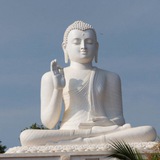
Big Buddha of Wat Khao Wongphrachan temple, Lopburi, Thailand.
❤2🤩1🙏1😍1😎1
Forwarded from Ajahn Chah - Theravada Thailand Buddhism
Cutting the Roots of Craving
Desire is beginningless. Yet through right mindfulness we can learn to abandon it.
By Bhante Henepola Gunaratana and Veronique Ziegler
Part 2 of 2
How to Abandon Craving
People sometimes say that they want to experiment with sensual pleasures: trying a particular kind of food or drink or indulging in a certain sensory experience. Before his enlightenment the Buddha experimented too. However, he had the insight to conclude that there would be no end to this exercise and that this type of behavior would keep him in bondage indefinitely. He understood that there is a great danger in sensual pleasures—not that they cause immediate harm or risk to one’s life (although some sensory pleasures can definitely be lethal) but that sense enjoyments are impermanent. And because they are impermanent they can never be satisfactory.
And so, understanding this, the Buddha began searching for something else. His deep insight led him to the complete abandonment of sensual pleasures. This point must be properly understood: This abandonment is not the forceful shunning of pleasurable sensation as in sense mortification. Rather, it is the wisdom to see the danger and degradation in these pleasures.
When we acquire a possession with greed, we stingily hold on to it and go to great lengths to protect it, thereby accumulating much stress. Craving is the cause of many personal and social problems. Therefore, the solution to these problems is to remove craving, which is attained by abandoning our attachment to sensual pleasures. Note that the key word here is attachment. Letting go of attachment does not mean that we must torture ourselves and make abstractions of what is necessary to live a happy and healthy life. We must use our senses, but we must do so with wisdom, because with wisdom we understand how the influxes of sensual pleasures, becoming, ignorance, and wrong views operate in us. The mind should always be ready to apply itself to restraining the influxes. And mindfulness is the tool we use to apply it.
Mindfulness has become a cliché, but it must be properly understood for one to avoid practicing it the wrong way. And what is the difference between right and wrong mindfulness? When planning an unwholesome deed, the mind can be focused and concentrated in order to achieve the goal at hand, but this is still wrong mindfulness. Right mindfulness, on the other hand, is always wholesome and beneficial.
If you have practiced mindfulness your entire life, constantly thinking about its practice, focusing on the breath at every moment, and have not reduced greed by one iota, then you have been wasting your time and practicing wrong mindfulness. But if your mindfulness leads to reducing your greed, hatred, and delusion, it is right mindfulness, and every minute of this practice is beneficial. Practicing right mindfulness does not mean that you have to sit in one place all day long. It can be practiced anytime, anywhere. Anytime greed arises, one becomes aware of it and lets it go.
Ideally mindfulness is present all the time, whether we sit with our eyes closed in meditation or are fully involved in activities. Right mindfulness is therefore a constant practice, a personal attainment that has nothing to do with mere theory. This repeated practice makes mindfulness strong and so powerful that one day one is able to overcome greed, hatred, and delusion. Of course this does not happen suddenly but bit by bit, moment by moment.
Mindfulness is a means for overcoming craving. It is not always present; it arises and passes away depending on the situation. When whatever conditions responsible for the arising of craving pass, so too does craving. Consider the following analogy laid out by the Buddha. Suppose there were a great tree with all its roots going downward and across. That tree would be sustained and well nourished by its sap, and it would stand for a long time.
Desire is beginningless. Yet through right mindfulness we can learn to abandon it.
By Bhante Henepola Gunaratana and Veronique Ziegler
Part 2 of 2
How to Abandon Craving
People sometimes say that they want to experiment with sensual pleasures: trying a particular kind of food or drink or indulging in a certain sensory experience. Before his enlightenment the Buddha experimented too. However, he had the insight to conclude that there would be no end to this exercise and that this type of behavior would keep him in bondage indefinitely. He understood that there is a great danger in sensual pleasures—not that they cause immediate harm or risk to one’s life (although some sensory pleasures can definitely be lethal) but that sense enjoyments are impermanent. And because they are impermanent they can never be satisfactory.
And so, understanding this, the Buddha began searching for something else. His deep insight led him to the complete abandonment of sensual pleasures. This point must be properly understood: This abandonment is not the forceful shunning of pleasurable sensation as in sense mortification. Rather, it is the wisdom to see the danger and degradation in these pleasures.
When we acquire a possession with greed, we stingily hold on to it and go to great lengths to protect it, thereby accumulating much stress. Craving is the cause of many personal and social problems. Therefore, the solution to these problems is to remove craving, which is attained by abandoning our attachment to sensual pleasures. Note that the key word here is attachment. Letting go of attachment does not mean that we must torture ourselves and make abstractions of what is necessary to live a happy and healthy life. We must use our senses, but we must do so with wisdom, because with wisdom we understand how the influxes of sensual pleasures, becoming, ignorance, and wrong views operate in us. The mind should always be ready to apply itself to restraining the influxes. And mindfulness is the tool we use to apply it.
Mindfulness has become a cliché, but it must be properly understood for one to avoid practicing it the wrong way. And what is the difference between right and wrong mindfulness? When planning an unwholesome deed, the mind can be focused and concentrated in order to achieve the goal at hand, but this is still wrong mindfulness. Right mindfulness, on the other hand, is always wholesome and beneficial.
If you have practiced mindfulness your entire life, constantly thinking about its practice, focusing on the breath at every moment, and have not reduced greed by one iota, then you have been wasting your time and practicing wrong mindfulness. But if your mindfulness leads to reducing your greed, hatred, and delusion, it is right mindfulness, and every minute of this practice is beneficial. Practicing right mindfulness does not mean that you have to sit in one place all day long. It can be practiced anytime, anywhere. Anytime greed arises, one becomes aware of it and lets it go.
Ideally mindfulness is present all the time, whether we sit with our eyes closed in meditation or are fully involved in activities. Right mindfulness is therefore a constant practice, a personal attainment that has nothing to do with mere theory. This repeated practice makes mindfulness strong and so powerful that one day one is able to overcome greed, hatred, and delusion. Of course this does not happen suddenly but bit by bit, moment by moment.
Mindfulness is a means for overcoming craving. It is not always present; it arises and passes away depending on the situation. When whatever conditions responsible for the arising of craving pass, so too does craving. Consider the following analogy laid out by the Buddha. Suppose there were a great tree with all its roots going downward and across. That tree would be sustained and well nourished by its sap, and it would stand for a long time.
Telegram
Words of the Buddha
Daily teachings of Buddha Dharma
👍1🆒1