Forwarded from Words of the Buddha
Everything happens in your mind. When you talk, write, perform any deed whatsoever, watch your mind at all times in order to guard it against defilements and prevent craving from invading it. You should never put the blame on anyone else for your moods. You must not point a finger at others when things do not go according to your liking but rather at yourself. Look at your own mind to see the invisible greed, anger, jealousy, and all the other defilements that are the real cause of your suffering. Looking at the mind must be done objectively, without a sense of guilt or self-deprecation and without trying to uncover an external cause of depression or blaming others or your circumstances. Look at your mind. You created it. Thus, you are responsible for its moods. If you create a wholesome state of mind, you are responsible for this. Likewise, if you create an unwholesome state of mind, you are also responsible for the moods that such a mind brings.
Therefore, this invisible cycle is in you. And the way to end this cycle of birth and death is in your mind right now. If you end greed now, you attain liberation now. If you end greed one minute later, you attain liberation one minute later. If you end greed tomorrow, you attain liberation tomorrow. Henceforth, the end of this beginningless cycle of samsara is in sight. It is within our power, will, mindfulness, practice, determination, and commitment. When we make this kind of commitment, we can end this cycle whenever we choose to do so.
The way to end this cycle of birth and death is in your mind right now.
It is craving and ignorance that ensnare us in this cycle of repeated life and birth. This was the Buddha’s insight that led him to discover dependent origination, which lays out the causes and conditions resulting in repeated rebirths. Therefore, when the Buddha attained enlightenment he declared, “The eye arose in me.” This is the eye of wisdom that arose when he saw dependent origination, and with it he saw the beginning and end of craving and the cycle of samsara. Craving can be found in our very own mind. Understanding it is a personal exploration that must be undertaken individually, for the solution to abandon it is also in our own minds.
===
Buddha dharma teachings channel:
https://news.1rj.ru/str/lorddivinebuddha
===
Therefore, this invisible cycle is in you. And the way to end this cycle of birth and death is in your mind right now. If you end greed now, you attain liberation now. If you end greed one minute later, you attain liberation one minute later. If you end greed tomorrow, you attain liberation tomorrow. Henceforth, the end of this beginningless cycle of samsara is in sight. It is within our power, will, mindfulness, practice, determination, and commitment. When we make this kind of commitment, we can end this cycle whenever we choose to do so.
The way to end this cycle of birth and death is in your mind right now.
It is craving and ignorance that ensnare us in this cycle of repeated life and birth. This was the Buddha’s insight that led him to discover dependent origination, which lays out the causes and conditions resulting in repeated rebirths. Therefore, when the Buddha attained enlightenment he declared, “The eye arose in me.” This is the eye of wisdom that arose when he saw dependent origination, and with it he saw the beginning and end of craving and the cycle of samsara. Craving can be found in our very own mind. Understanding it is a personal exploration that must be undertaken individually, for the solution to abandon it is also in our own minds.
===
Buddha dharma teachings channel:
https://news.1rj.ru/str/lorddivinebuddha
===
Telegram
Buddha
Buddha dharma teachings from the suttas and commentaries
👍1🙏1🏆1
Forwarded from Words of the Buddha
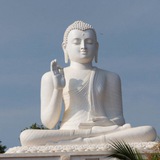
Big Buddha of Wat Khao Wongphrachan temple, Lopburi, Thailand.
❤2🤩1🙏1😍1😎1
Forwarded from Ajahn Chah - Theravada Thailand Buddhism
Cutting the Roots of Craving
Desire is beginningless. Yet through right mindfulness we can learn to abandon it.
By Bhante Henepola Gunaratana and Veronique Ziegler
Part 2 of 2
How to Abandon Craving
People sometimes say that they want to experiment with sensual pleasures: trying a particular kind of food or drink or indulging in a certain sensory experience. Before his enlightenment the Buddha experimented too. However, he had the insight to conclude that there would be no end to this exercise and that this type of behavior would keep him in bondage indefinitely. He understood that there is a great danger in sensual pleasures—not that they cause immediate harm or risk to one’s life (although some sensory pleasures can definitely be lethal) but that sense enjoyments are impermanent. And because they are impermanent they can never be satisfactory.
And so, understanding this, the Buddha began searching for something else. His deep insight led him to the complete abandonment of sensual pleasures. This point must be properly understood: This abandonment is not the forceful shunning of pleasurable sensation as in sense mortification. Rather, it is the wisdom to see the danger and degradation in these pleasures.
When we acquire a possession with greed, we stingily hold on to it and go to great lengths to protect it, thereby accumulating much stress. Craving is the cause of many personal and social problems. Therefore, the solution to these problems is to remove craving, which is attained by abandoning our attachment to sensual pleasures. Note that the key word here is attachment. Letting go of attachment does not mean that we must torture ourselves and make abstractions of what is necessary to live a happy and healthy life. We must use our senses, but we must do so with wisdom, because with wisdom we understand how the influxes of sensual pleasures, becoming, ignorance, and wrong views operate in us. The mind should always be ready to apply itself to restraining the influxes. And mindfulness is the tool we use to apply it.
Mindfulness has become a cliché, but it must be properly understood for one to avoid practicing it the wrong way. And what is the difference between right and wrong mindfulness? When planning an unwholesome deed, the mind can be focused and concentrated in order to achieve the goal at hand, but this is still wrong mindfulness. Right mindfulness, on the other hand, is always wholesome and beneficial.
If you have practiced mindfulness your entire life, constantly thinking about its practice, focusing on the breath at every moment, and have not reduced greed by one iota, then you have been wasting your time and practicing wrong mindfulness. But if your mindfulness leads to reducing your greed, hatred, and delusion, it is right mindfulness, and every minute of this practice is beneficial. Practicing right mindfulness does not mean that you have to sit in one place all day long. It can be practiced anytime, anywhere. Anytime greed arises, one becomes aware of it and lets it go.
Ideally mindfulness is present all the time, whether we sit with our eyes closed in meditation or are fully involved in activities. Right mindfulness is therefore a constant practice, a personal attainment that has nothing to do with mere theory. This repeated practice makes mindfulness strong and so powerful that one day one is able to overcome greed, hatred, and delusion. Of course this does not happen suddenly but bit by bit, moment by moment.
Mindfulness is a means for overcoming craving. It is not always present; it arises and passes away depending on the situation. When whatever conditions responsible for the arising of craving pass, so too does craving. Consider the following analogy laid out by the Buddha. Suppose there were a great tree with all its roots going downward and across. That tree would be sustained and well nourished by its sap, and it would stand for a long time.
Desire is beginningless. Yet through right mindfulness we can learn to abandon it.
By Bhante Henepola Gunaratana and Veronique Ziegler
Part 2 of 2
How to Abandon Craving
People sometimes say that they want to experiment with sensual pleasures: trying a particular kind of food or drink or indulging in a certain sensory experience. Before his enlightenment the Buddha experimented too. However, he had the insight to conclude that there would be no end to this exercise and that this type of behavior would keep him in bondage indefinitely. He understood that there is a great danger in sensual pleasures—not that they cause immediate harm or risk to one’s life (although some sensory pleasures can definitely be lethal) but that sense enjoyments are impermanent. And because they are impermanent they can never be satisfactory.
And so, understanding this, the Buddha began searching for something else. His deep insight led him to the complete abandonment of sensual pleasures. This point must be properly understood: This abandonment is not the forceful shunning of pleasurable sensation as in sense mortification. Rather, it is the wisdom to see the danger and degradation in these pleasures.
When we acquire a possession with greed, we stingily hold on to it and go to great lengths to protect it, thereby accumulating much stress. Craving is the cause of many personal and social problems. Therefore, the solution to these problems is to remove craving, which is attained by abandoning our attachment to sensual pleasures. Note that the key word here is attachment. Letting go of attachment does not mean that we must torture ourselves and make abstractions of what is necessary to live a happy and healthy life. We must use our senses, but we must do so with wisdom, because with wisdom we understand how the influxes of sensual pleasures, becoming, ignorance, and wrong views operate in us. The mind should always be ready to apply itself to restraining the influxes. And mindfulness is the tool we use to apply it.
Mindfulness has become a cliché, but it must be properly understood for one to avoid practicing it the wrong way. And what is the difference between right and wrong mindfulness? When planning an unwholesome deed, the mind can be focused and concentrated in order to achieve the goal at hand, but this is still wrong mindfulness. Right mindfulness, on the other hand, is always wholesome and beneficial.
If you have practiced mindfulness your entire life, constantly thinking about its practice, focusing on the breath at every moment, and have not reduced greed by one iota, then you have been wasting your time and practicing wrong mindfulness. But if your mindfulness leads to reducing your greed, hatred, and delusion, it is right mindfulness, and every minute of this practice is beneficial. Practicing right mindfulness does not mean that you have to sit in one place all day long. It can be practiced anytime, anywhere. Anytime greed arises, one becomes aware of it and lets it go.
Ideally mindfulness is present all the time, whether we sit with our eyes closed in meditation or are fully involved in activities. Right mindfulness is therefore a constant practice, a personal attainment that has nothing to do with mere theory. This repeated practice makes mindfulness strong and so powerful that one day one is able to overcome greed, hatred, and delusion. Of course this does not happen suddenly but bit by bit, moment by moment.
Mindfulness is a means for overcoming craving. It is not always present; it arises and passes away depending on the situation. When whatever conditions responsible for the arising of craving pass, so too does craving. Consider the following analogy laid out by the Buddha. Suppose there were a great tree with all its roots going downward and across. That tree would be sustained and well nourished by its sap, and it would stand for a long time.
Telegram
Words of the Buddha
Daily teachings of Buddha Dharma
👍1🆒1
Forwarded from Ajahn Chah - Theravada Thailand Buddhism
In the same way, sense gratification, born out of ignorance, keeps us in a state of suffering, going endlessly through the cycle of birth and death. Now, suppose that someone cut the tree down at the base and put the trunk back in place so that the tree would look whole once more: that tree would still never grow again. Cutting down the tree can be likened to the destruction of craving. This reflection on the arising and ceasing of craving is of the utmost importance to help us understand craving and so put an end to it.
===
Excerpted from Bhante Gunaratana and Veronique Ziegler, Dependent Origination in Plain English.
Bhante Henepola Gunaratana is a Buddhist monk from Sri Lanka and the author of Mindfulness in Plain English. He is president of the Bhavana Society in High View, West Virginia, an organization that promotes meditation and monastic life.
Veronique Ziegler earned her doctorate degree in experimental high-energy physics from the University of Iowa working on the BaBar experiment at SLAC National Laboratory in Menlo Park, California. In 2018, she started attending Bhante Gunaratana’s dhamma classes. She has been an avid dhamma student ever since.
===
Part 1 of 2:
https://news.1rj.ru/str/wordsofbuddha/2713
Part 2 of 2:
https://news.1rj.ru/str/lorddivinebuddha/2258
===
Words of the Buddha channel:
https://news.1rj.ru/str/wordsofbuddha
===
===
Excerpted from Bhante Gunaratana and Veronique Ziegler, Dependent Origination in Plain English.
Bhante Henepola Gunaratana is a Buddhist monk from Sri Lanka and the author of Mindfulness in Plain English. He is president of the Bhavana Society in High View, West Virginia, an organization that promotes meditation and monastic life.
Veronique Ziegler earned her doctorate degree in experimental high-energy physics from the University of Iowa working on the BaBar experiment at SLAC National Laboratory in Menlo Park, California. In 2018, she started attending Bhante Gunaratana’s dhamma classes. She has been an avid dhamma student ever since.
===
Part 1 of 2:
https://news.1rj.ru/str/wordsofbuddha/2713
Part 2 of 2:
https://news.1rj.ru/str/lorddivinebuddha/2258
===
Words of the Buddha channel:
https://news.1rj.ru/str/wordsofbuddha
===
Telegram
Words of the Buddha
Daily teachings of Buddha Dharma
❤1👍1😘1
Dhammapada Verse 281
Sukarapeta Vatthu
Vacanurakkhi manasa susamvuto
kayena ca nakusalam kayira
ete tayo kammapathe visodhaye
aradhaye magga' misippaveditam.
Verse 281: One should be careful in speech, be well-restrained in mind, and physically, too, one should do no evil. One should purify these three courses of action and accomplish the practice of the Path of Eight Constituents made known by the Buddhas.
The Story of a Swine-Peta
While residing at the Veluvana monastery, the Buddha uttered Verse (281) of this book, with reference to a swine-peta.
Once Thera Maha Moggallana was coming down the Gijjhakuta hill with Thera Lakkhana when he saw a miserable, ever-hungry peta, with the head of a swine and the body of a human being. On seeing the peta, Thera Maha Moggallana smiled but did not say anything. Back at the monastery, Thera Maha Moggallana, in the presence of the Buddha, talked about the swine-peta with its mouth swarming with maggots. The Buddha also said that he himself had seen that very peta soon after his attainment of Buddhahood, but that he did not say anything about it because people might not believe him and thus they would be doing wrong to him. Then the Buddha proceeded to relate the story about the swine-peta.
During the time of Kassapa Buddha, this particular peta was a bhikkhu who often expounded the Dhamma. On one occasion, he came to a monastery where two bhikkhus were staying together. After staying with those two for some time, he found that he was doing quite well because people liked his expositions. Then it occurred to him that it would be even better if he could make the other two bhikkhus leave the place and have the monastery all to himself. Thus, he tried to set one against the other. The two bhikkhus quarrelled and left the monastery in different directions. On account of this evil deed, that bhikkhu was reborn in Avici Niraya and he was serving out the remaining part of his term of suffering as a swine-peta with its mouth swarming with maggots. Then the Buddha exhorted, "A bhikkhu should be calm and well-restrained in thought, word and deed."
Then the Buddha spoke in verse as follows:
Verse 281: One should be careful in speech, be well-restrained in mind, and physically, too, one should do no evil. One should purify these three courses of action and accomplish the practice of the Path of Eight Constituents made known by the Buddhas.
===
Dhammapada, beloved and favorite teachings of the Buddha channel:
https://news.1rj.ru/str/dhammapadas
===
Sukarapeta Vatthu
Vacanurakkhi manasa susamvuto
kayena ca nakusalam kayira
ete tayo kammapathe visodhaye
aradhaye magga' misippaveditam.
Verse 281: One should be careful in speech, be well-restrained in mind, and physically, too, one should do no evil. One should purify these three courses of action and accomplish the practice of the Path of Eight Constituents made known by the Buddhas.
The Story of a Swine-Peta
While residing at the Veluvana monastery, the Buddha uttered Verse (281) of this book, with reference to a swine-peta.
Once Thera Maha Moggallana was coming down the Gijjhakuta hill with Thera Lakkhana when he saw a miserable, ever-hungry peta, with the head of a swine and the body of a human being. On seeing the peta, Thera Maha Moggallana smiled but did not say anything. Back at the monastery, Thera Maha Moggallana, in the presence of the Buddha, talked about the swine-peta with its mouth swarming with maggots. The Buddha also said that he himself had seen that very peta soon after his attainment of Buddhahood, but that he did not say anything about it because people might not believe him and thus they would be doing wrong to him. Then the Buddha proceeded to relate the story about the swine-peta.
During the time of Kassapa Buddha, this particular peta was a bhikkhu who often expounded the Dhamma. On one occasion, he came to a monastery where two bhikkhus were staying together. After staying with those two for some time, he found that he was doing quite well because people liked his expositions. Then it occurred to him that it would be even better if he could make the other two bhikkhus leave the place and have the monastery all to himself. Thus, he tried to set one against the other. The two bhikkhus quarrelled and left the monastery in different directions. On account of this evil deed, that bhikkhu was reborn in Avici Niraya and he was serving out the remaining part of his term of suffering as a swine-peta with its mouth swarming with maggots. Then the Buddha exhorted, "A bhikkhu should be calm and well-restrained in thought, word and deed."
Then the Buddha spoke in verse as follows:
Verse 281: One should be careful in speech, be well-restrained in mind, and physically, too, one should do no evil. One should purify these three courses of action and accomplish the practice of the Path of Eight Constituents made known by the Buddhas.
===
Dhammapada, beloved and favorite teachings of the Buddha channel:
https://news.1rj.ru/str/dhammapadas
===
Telegram
Dhammapada - Buddha Dharma Teachings
Daily teachings of the Dhammapada, beloved and favorite teachings of the Buddha
👍1🥰1
Forwarded from Buddha Dharma books
Free Buddha Dharma ebook
Food for Thought: Eighteen Talks on the Training of the Heart, by Phra Ajaan Lee Dhammadharo. (revised Dec. 15, 2018) The noscript of this collection reflects how it invites the reader to fill in the spaces suggested by the talks to reflect on how the images and teachings they contain relate to one another and to one’s own situation in life.
Free download here:
https://www.dhammatalks.org/Archive/Writings/Ebooks/FoodforThought_181215.pdf
===
Food for Thought: Eighteen Talks on the Training of the Heart, by Phra Ajaan Lee Dhammadharo. (revised Dec. 15, 2018) The noscript of this collection reflects how it invites the reader to fill in the spaces suggested by the talks to reflect on how the images and teachings they contain relate to one another and to one’s own situation in life.
Free download here:
https://www.dhammatalks.org/Archive/Writings/Ebooks/FoodforThought_181215.pdf
===
🤩1🏆1
Dhammapada Verse 282
Potthilatthera Vatthu
Yoga ve jayati bhuri
ayoga bhurisankhayo
etam dvedhapatham natva
bhavaya vibhavaya ca
tatha ttanam niveseyya
yatha bhuri pavaddhati.
Verse 282: Indeed, wisdom is born of meditation; without meditation wisdom is lost. Knowing this twofold path of gain and loss of wisdom, one should conduct oneself so that wisdom may increase.
The Story of Thera Potthila
While residing at the Jetavana monastery, the Buddha uttered Verse (282) of this book, with reference to Thera Potthila.
Potthila was a senior bhikkhu who knew the Pitaka well and was actually teaching the Dhamma to five hundred bhikkhus. Because he knew the Pitaka, he was also very conceited. The Buddha knew his weakness and wanted him to mend his ways and put him on the right path. So, whenever Potthila came to pay obeisance, the Buddha would address him as 'Useless Potthila'. When Potthila heard these remarks, he pondered over those words of the Buddha and came to realize that the Buddha had made those unkind remarks because he, Potthila, had not made any serious effort to practise meditation and had not achieved any of the Maggas or even any level of mental absorption (jhana).
Thus, without telling anyone Thera Potthila left for a monastery at a place twenty yojanas away from the Jetavana monastery. At that monastery there were thirty bhikkhus. First, he went to the most senior bhikkhu and humbly requested him to be his mentor; but the thera, wishing to humble him, asked him to go to the next senior bhikkhu, who in his turn sent him on to the next. In this way, he was sent from one to the other until he came to a seven year old arahat samanera. The young samanera accepted him as a pupil only after ascertaining that Potthila would obediently follow his instructions. As instructed by the samanera, Thera Potthila kept his mind firmly fixed on the true nature of the body; he was very ardent and vigilant in his meditation.
The Buddha saw Potthila in his vision and through supernormal power made Potthila feel his presence and encouraged him to be steadfast and ardent.
Then the Buddha spoke in verse as follows:
Verse 282: Indeed, wisdom is born of meditation; without meditation wisdom is lost. Knowing this twofold path of gain and loss of wisdom, one should conduct oneself so that wisdom may increase.
At the end of the discourse Potthila attained arahatship.
===
Buddha dharma teachings channel:
https://invite.viber.com/?g2=AQAKw1y3rv%2F6sk61PI2W4izuIiaEZj8YZujhY1tSzL%2B07s7rFnVFDAd0bAYFaMLw
===
Potthilatthera Vatthu
Yoga ve jayati bhuri
ayoga bhurisankhayo
etam dvedhapatham natva
bhavaya vibhavaya ca
tatha ttanam niveseyya
yatha bhuri pavaddhati.
Verse 282: Indeed, wisdom is born of meditation; without meditation wisdom is lost. Knowing this twofold path of gain and loss of wisdom, one should conduct oneself so that wisdom may increase.
The Story of Thera Potthila
While residing at the Jetavana monastery, the Buddha uttered Verse (282) of this book, with reference to Thera Potthila.
Potthila was a senior bhikkhu who knew the Pitaka well and was actually teaching the Dhamma to five hundred bhikkhus. Because he knew the Pitaka, he was also very conceited. The Buddha knew his weakness and wanted him to mend his ways and put him on the right path. So, whenever Potthila came to pay obeisance, the Buddha would address him as 'Useless Potthila'. When Potthila heard these remarks, he pondered over those words of the Buddha and came to realize that the Buddha had made those unkind remarks because he, Potthila, had not made any serious effort to practise meditation and had not achieved any of the Maggas or even any level of mental absorption (jhana).
Thus, without telling anyone Thera Potthila left for a monastery at a place twenty yojanas away from the Jetavana monastery. At that monastery there were thirty bhikkhus. First, he went to the most senior bhikkhu and humbly requested him to be his mentor; but the thera, wishing to humble him, asked him to go to the next senior bhikkhu, who in his turn sent him on to the next. In this way, he was sent from one to the other until he came to a seven year old arahat samanera. The young samanera accepted him as a pupil only after ascertaining that Potthila would obediently follow his instructions. As instructed by the samanera, Thera Potthila kept his mind firmly fixed on the true nature of the body; he was very ardent and vigilant in his meditation.
The Buddha saw Potthila in his vision and through supernormal power made Potthila feel his presence and encouraged him to be steadfast and ardent.
Then the Buddha spoke in verse as follows:
Verse 282: Indeed, wisdom is born of meditation; without meditation wisdom is lost. Knowing this twofold path of gain and loss of wisdom, one should conduct oneself so that wisdom may increase.
At the end of the discourse Potthila attained arahatship.
===
Buddha dharma teachings channel:
https://invite.viber.com/?g2=AQAKw1y3rv%2F6sk61PI2W4izuIiaEZj8YZujhY1tSzL%2B07s7rFnVFDAd0bAYFaMLw
===
Viber
Buddha
Buddha dharma teachings from the suttas and commentaries from Theravada tradition
👏1🏆1
Dhammapada Verses 283 and 284
Pancamahallakabhikkhu Vatthu
Vanam chindatha ma rukkham
vanato jayate bhayam
chetva vananca vanathanca
nibbana hotha bhikkhavo.
Yava hi vanatho na chijjati
anumattopi narassa narisu
patibaddhamanova tava so
vaccho khirapakova matari.
Verse 283: O bhikkhus, cut down the forest of craving, not the real tree; the forest of craving breeds danger (of rebirth). Cut down the forest of craving as well as its undergrowth and be free from craving.
Verse 284: So long as craving of man for woman is not cut down and the slightest trace of it remains, so long is his mind in bondage as the calf is bound to its mother.
The Story of Five Old Bhikkhus
While residing at the Jetavana monastery, the Buddha uttered Verses (283) and (284) of this book, with reference to five old bhikkhus.
Once, in Savatthi, there were five friends who became bhikkhus only in their old age. These five bhikkhus were in the habit of going together to their old homes for alms-food. Of the former wives of those five, one lady in particular, by the name of Madhurapacika was a good cook and she looked after them very well. Thus, the five bhikkhus went mostly to her house. But one day, Madhurapacika fell ill and died suddenly. The old bhikkhus felt their loss very deeply and together they cried praising her virtues and lamenting their loss.
The Buddha called those bhikkhus to him and said, "Bhikkhus! You all are feeling pain and sorrow because you are not free from greed, hatred, and ignorance (raga, dosa, moha), which are like a forest. Cut down this forest and you will be freed from greed, hatred and ignorance."
Then the Buddha spoke in verse as follows:
Verse 283: O bhikkhus, cut down the forest of craving, not the real tree; the forest of craving breeds danger (of rebirth). Cut down the forest of craving as well as its undergrowth and be free from craving.
Verse 284: So long as craving of man for woman is not cut down and the slightest trace of it remains, so long is his mind in bondage as the calf is bound to its mother.
At the end of the discourse the five old bhikkhus attained Sotapatti Fruition.
===
Words of the Buddha channel:
https://invite.viber.com/?g2=AQAFqzqlj7FmI061PX17rxWMAtZ%2BRuso%2FH2KmHKZSgnv7v9DD8X0bDkKnZDr9JDq
===
Pancamahallakabhikkhu Vatthu
Vanam chindatha ma rukkham
vanato jayate bhayam
chetva vananca vanathanca
nibbana hotha bhikkhavo.
Yava hi vanatho na chijjati
anumattopi narassa narisu
patibaddhamanova tava so
vaccho khirapakova matari.
Verse 283: O bhikkhus, cut down the forest of craving, not the real tree; the forest of craving breeds danger (of rebirth). Cut down the forest of craving as well as its undergrowth and be free from craving.
Verse 284: So long as craving of man for woman is not cut down and the slightest trace of it remains, so long is his mind in bondage as the calf is bound to its mother.
The Story of Five Old Bhikkhus
While residing at the Jetavana monastery, the Buddha uttered Verses (283) and (284) of this book, with reference to five old bhikkhus.
Once, in Savatthi, there were five friends who became bhikkhus only in their old age. These five bhikkhus were in the habit of going together to their old homes for alms-food. Of the former wives of those five, one lady in particular, by the name of Madhurapacika was a good cook and she looked after them very well. Thus, the five bhikkhus went mostly to her house. But one day, Madhurapacika fell ill and died suddenly. The old bhikkhus felt their loss very deeply and together they cried praising her virtues and lamenting their loss.
The Buddha called those bhikkhus to him and said, "Bhikkhus! You all are feeling pain and sorrow because you are not free from greed, hatred, and ignorance (raga, dosa, moha), which are like a forest. Cut down this forest and you will be freed from greed, hatred and ignorance."
Then the Buddha spoke in verse as follows:
Verse 283: O bhikkhus, cut down the forest of craving, not the real tree; the forest of craving breeds danger (of rebirth). Cut down the forest of craving as well as its undergrowth and be free from craving.
Verse 284: So long as craving of man for woman is not cut down and the slightest trace of it remains, so long is his mind in bondage as the calf is bound to its mother.
At the end of the discourse the five old bhikkhus attained Sotapatti Fruition.
===
Words of the Buddha channel:
https://invite.viber.com/?g2=AQAFqzqlj7FmI061PX17rxWMAtZ%2BRuso%2FH2KmHKZSgnv7v9DD8X0bDkKnZDr9JDq
===
Viber
Words Of The Buddha
Daily teachings from Buddha Dharma
👍2💯1🏆1
Forwarded from Buddha Dharma books
Free Buddha Dharma ebook
Divine Mantra
By Ajaan Lee Dhammadharo, translated from the Thai by Thanissaro Bhikkhu
I have written this book, The Divine Mantra, as a means of drawing to purity those who practice the Dhamma, because the chant given here brings benefits to those who memorize and recite it, inasmuch as it deals directly with matters that exist in each of us. Normally, once we are born, we all dwell in the six properties.
These properties are brought together by our own actions, both good and evil. This being the case, these properties can give a great deal of trouble to those who dwell in them, like a child who can be a constant nuisance to its parents.
Repeating this chant, then, is like nourishing and training a child to be healthy and mature; when the child is healthy and mature, its parents can rest and relax. Repeating this chant is like feeding a child and lulling it to sleep with a beautiful song: the Buddhaguna, the recitation of the Buddha’s virtues.
Free download available:
https://www.accesstoinsight.org/lib/thai/lee/divinemantra.pdf
===
Divine Mantra
By Ajaan Lee Dhammadharo, translated from the Thai by Thanissaro Bhikkhu
I have written this book, The Divine Mantra, as a means of drawing to purity those who practice the Dhamma, because the chant given here brings benefits to those who memorize and recite it, inasmuch as it deals directly with matters that exist in each of us. Normally, once we are born, we all dwell in the six properties.
These properties are brought together by our own actions, both good and evil. This being the case, these properties can give a great deal of trouble to those who dwell in them, like a child who can be a constant nuisance to its parents.
Repeating this chant, then, is like nourishing and training a child to be healthy and mature; when the child is healthy and mature, its parents can rest and relax. Repeating this chant is like feeding a child and lulling it to sleep with a beautiful song: the Buddhaguna, the recitation of the Buddha’s virtues.
Free download available:
https://www.accesstoinsight.org/lib/thai/lee/divinemantra.pdf
===
🏆1🆒1