Forwarded from Words of the Buddha
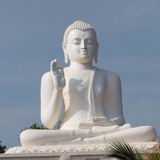
A temple resembles Mount Meru, the axis mundi of the universe in Buddhist cosmology. At the peak is the celestial palace of Cakkavatti, the universal monarch gods king of the four continents.
❤2👏1😍1🏆1
The Bamboo Acrobat
At that time, the Lord said to the monks: “Once upon a time, a bamboo acrobat set up his pole, called to his pupil, and said: ‘Now, my boy, climb the pole and stand on my shoulders.’
‘Alright, master,’ said the pupil, and he did as he was told. Then the master said: ‘Now, my boy, you protect me and I will protect you, and protected and watched by each other we will do our act, get a good fee, and come down safe and sound from the bamboo pole.’ But then the pupil said: ‘No master, no! That will not do. You look after yourself, and I will look after myself and thus watched and guarded each by himself, we will do our act, get a good fee, and come down safe and sound from the bamboo pole. That is the way to do it.’
Then the Lord said: “Just as the pupil said to the master: ‘I will protect myself’ so should you practice the four foundations of mindfulness, which also means: ‘I will protect others.’ Because by protecting oneself, one protects others and by protecting others, one protects oneself. And how does one protect others by protecting oneself? It is by the repeated and frequent practice of meditation. And how does one protect oneself by protecting others? It is by practicing patience, forbearance, harmlessness, love and compassion.”
Samyutta Nikaya V 168
===
Dhammapada, beloved and favorite teachings of the Buddha channel:
https://news.1rj.ru/str/dhammapadas
===
At that time, the Lord said to the monks: “Once upon a time, a bamboo acrobat set up his pole, called to his pupil, and said: ‘Now, my boy, climb the pole and stand on my shoulders.’
‘Alright, master,’ said the pupil, and he did as he was told. Then the master said: ‘Now, my boy, you protect me and I will protect you, and protected and watched by each other we will do our act, get a good fee, and come down safe and sound from the bamboo pole.’ But then the pupil said: ‘No master, no! That will not do. You look after yourself, and I will look after myself and thus watched and guarded each by himself, we will do our act, get a good fee, and come down safe and sound from the bamboo pole. That is the way to do it.’
Then the Lord said: “Just as the pupil said to the master: ‘I will protect myself’ so should you practice the four foundations of mindfulness, which also means: ‘I will protect others.’ Because by protecting oneself, one protects others and by protecting others, one protects oneself. And how does one protect others by protecting oneself? It is by the repeated and frequent practice of meditation. And how does one protect oneself by protecting others? It is by practicing patience, forbearance, harmlessness, love and compassion.”
Samyutta Nikaya V 168
===
Dhammapada, beloved and favorite teachings of the Buddha channel:
https://news.1rj.ru/str/dhammapadas
===
Telegram
Dhammapada - Buddha Dharma Teachings
Daily teachings of the Dhammapada, beloved and favorite teachings of the Buddha
👍1🥰1🏆1
Forwarded from Buddha Dharma books
Free Buddha Dharma ebook
NO INNER CORE
An Introduction to the Doctrine of Anatta
by Sayadaw U Silànanda
The anattà doctrine is one of the most important teachings of Buddhism. It is the most distinctive feature of Buddhism for, as many scholars have recognized, it makes Buddhism different from all other religions. Although the anattà doctrine is so important, so distinctive, and supposedly so universally accepted by Buddhists, it is still the most misunderstood, the most misinterpreted, and the most distorted of all the teachings of the Buddha. Some scholars who have written on Buddhism had a great respect for the Buddha, liked His teachings, revered Him and honoured Him, but they could not imagine that such a profound thinker had actually denied the existence of a soul.
Sayadaw U Sãlànanda is the Abbot of the Dhammananda Vihara, Half Moon Bay, California, and the Spiritual Director of Dhammachakka Meditation Center, Theravada Buddhist Society of America and Tathagata Meditation Center, having been chosen by the renowned Burmese meditation master, the Most Venerable Mahasi Sayadaw, to teach in America and spread the Dhamma in the West.
Free download here:
https://static.sariputta.com/pdf/tipitaka/758/noinnercorepdf.pdf
===
NO INNER CORE
An Introduction to the Doctrine of Anatta
by Sayadaw U Silànanda
The anattà doctrine is one of the most important teachings of Buddhism. It is the most distinctive feature of Buddhism for, as many scholars have recognized, it makes Buddhism different from all other religions. Although the anattà doctrine is so important, so distinctive, and supposedly so universally accepted by Buddhists, it is still the most misunderstood, the most misinterpreted, and the most distorted of all the teachings of the Buddha. Some scholars who have written on Buddhism had a great respect for the Buddha, liked His teachings, revered Him and honoured Him, but they could not imagine that such a profound thinker had actually denied the existence of a soul.
Sayadaw U Sãlànanda is the Abbot of the Dhammananda Vihara, Half Moon Bay, California, and the Spiritual Director of Dhammachakka Meditation Center, Theravada Buddhist Society of America and Tathagata Meditation Center, having been chosen by the renowned Burmese meditation master, the Most Venerable Mahasi Sayadaw, to teach in America and spread the Dhamma in the West.
Free download here:
https://static.sariputta.com/pdf/tipitaka/758/noinnercorepdf.pdf
===
👍1💯1🏆1🆒1
Dhammapada Verse 291
Kukkutandakhadika Vatthu
Paradukkhupadhanena
athno sukhamicchati
verasamsaggasamsattho
vera so na parimuccati.
Verse 291: He who seeks his own happiness by inflicting pain on others, being entangled by bonds of enmity, cannot be free from enmity.
The Story of the Woman Who Ate up the Eggs of a Hen
While residing at the Jetavana monastery, the Buddha uttered Verse (291) of this book, with reference to a feud between a woman and a hen.
Once, there lived a woman in a village near Savatthi. She had a hen in her house; every time the hen laid an egg she would eat it up. The hen was very much hurt and angry and made a vow to have vengeance on the woman and made a wish that it should be reborn as some being that would be in a position to kill the offspring of that woman. The hen's wish was fulfilled as it was reborn as a cat and the woman was reborn as a hen in the same house. The cat ate up the eggs of the hen. In their next existence the hen became a leopard and the cat became a deer. The leopard ate up the deer as well as its offspring. Thus, the feud continued for five hundred existences of the two beings. At the time of the Buddha one of them was born as a woman and the other an ogress.
On one occasion, the woman was returning from the house of her parents to her own house near Savatthi. Her husband and her young son were also with her. While they were resting near a pond at the roadside, her husband went to have a bath in the pond. At that moment the woman saw the ogress and recognized her as her old enemy. Taking her child she fled from the ogress straight to the Jetavana monastery where the Buddha was expounding the Dhamma and put her child at the feet of the Buddha. The ogress who was in hot pursuit of the woman also came to the door of the monastery, but the guardian spirit of the gate did not permit her to enter. The Buddha, seeing her, sent the Venerable Ananda to bring the ogress to his presence. When the ogress arrived, the Buddha reprimanded both the woman and the ogress for the long chain of feud between them. He also added, "If you two had not come to me today, your feud would have continued endlessly. Enmity cannot be appeased by enmity; it can only be appeased by loving-kindness."
Then the Buddha spoke in verse as follows:
Verse 291: He who seeks his own happiness by inflicting pain on others, being entangled by bonds of enmity, cannot be free from enmity.
At the end of the discourse the ogress took refuge in the three Gems, viz., the Buddha, the Dhamma and the Samgha, and the woman attained Sotapatti Fruition.
===
Words of the Buddha channel:
https://news.1rj.ru/str/wordsofbuddha
===
Kukkutandakhadika Vatthu
Paradukkhupadhanena
athno sukhamicchati
verasamsaggasamsattho
vera so na parimuccati.
Verse 291: He who seeks his own happiness by inflicting pain on others, being entangled by bonds of enmity, cannot be free from enmity.
The Story of the Woman Who Ate up the Eggs of a Hen
While residing at the Jetavana monastery, the Buddha uttered Verse (291) of this book, with reference to a feud between a woman and a hen.
Once, there lived a woman in a village near Savatthi. She had a hen in her house; every time the hen laid an egg she would eat it up. The hen was very much hurt and angry and made a vow to have vengeance on the woman and made a wish that it should be reborn as some being that would be in a position to kill the offspring of that woman. The hen's wish was fulfilled as it was reborn as a cat and the woman was reborn as a hen in the same house. The cat ate up the eggs of the hen. In their next existence the hen became a leopard and the cat became a deer. The leopard ate up the deer as well as its offspring. Thus, the feud continued for five hundred existences of the two beings. At the time of the Buddha one of them was born as a woman and the other an ogress.
On one occasion, the woman was returning from the house of her parents to her own house near Savatthi. Her husband and her young son were also with her. While they were resting near a pond at the roadside, her husband went to have a bath in the pond. At that moment the woman saw the ogress and recognized her as her old enemy. Taking her child she fled from the ogress straight to the Jetavana monastery where the Buddha was expounding the Dhamma and put her child at the feet of the Buddha. The ogress who was in hot pursuit of the woman also came to the door of the monastery, but the guardian spirit of the gate did not permit her to enter. The Buddha, seeing her, sent the Venerable Ananda to bring the ogress to his presence. When the ogress arrived, the Buddha reprimanded both the woman and the ogress for the long chain of feud between them. He also added, "If you two had not come to me today, your feud would have continued endlessly. Enmity cannot be appeased by enmity; it can only be appeased by loving-kindness."
Then the Buddha spoke in verse as follows:
Verse 291: He who seeks his own happiness by inflicting pain on others, being entangled by bonds of enmity, cannot be free from enmity.
At the end of the discourse the ogress took refuge in the three Gems, viz., the Buddha, the Dhamma and the Samgha, and the woman attained Sotapatti Fruition.
===
Words of the Buddha channel:
https://news.1rj.ru/str/wordsofbuddha
===
Telegram
Words of the Buddha
Daily teachings of Buddha Dharma
👍1👏1🏆1
Forwarded from Words of the Buddha
So pay heed, all you celestial beings, have love for humankind, who day and night bring offerings; please protect them diligently.
Tasmā hi bhūtā nisāmetha sabbe
Mettam karotha mānusiyā pajāya
Divā ca ratto ca haranti ye balim
Tasmā hi ne rakkhatha appamattā
Ratana Sutta verse 2
Balinese women carrying offerings for the gods, Bali island, Indonesia. Bali means offerings, the entire island 🏝️ is an offering for the divine.
Tasmā hi bhūtā nisāmetha sabbe
Mettam karotha mānusiyā pajāya
Divā ca ratto ca haranti ye balim
Tasmā hi ne rakkhatha appamattā
Ratana Sutta verse 2
Balinese women carrying offerings for the gods, Bali island, Indonesia. Bali means offerings, the entire island 🏝️ is an offering for the divine.
👍2👏1👌1💯1🏆1
Forwarded from Words of the Buddha
Hell realms, Wat Rong Kun, the White Temple, Chiang Rai, Thailand.
❤2👍1🏆1👀1🫡1🆒1
Dhammapada Verses 292 and 293
Bhaddiyanam bhikkhunam Vatthu
Yam hi kiccam apaviddham
akiccam pana kariyati
unnalanam pamattanam
tesam vaddhanti asava.
Yesanca susamaraddha
niccam kayagata sati
akiccam te na sevanti
kicce sataccakarino
satanam Sampajananam
attham gacchanti asava.
Verse 292: In those who leave undone what should indeed be done but do what should not be done, who are conceited and unmindful, moral intoxicants increase.
Verse 293: In those who always make a good effort in meditating on the body, who do not do what should not be done but always do what should be done, who are also mindful and endowed with clear comprehension, moral intoxicants come to an end.
The Story of the Baddiya Bhikkhus
While residing near the town of Baddiya, the Buddha uttered Verses (292) and (293) of this book, with reference to some bhikkhus.
Once, some bhikkhus who were staying in Baddiya made some ornate slippers out of some kinds of reeds and grasses. When the Buddha was told about this he said, "Bhikkhus, you have entered the Buddhist Order for the sake of attaining Arahatta Phala. Yet, you are now striving hard only in making slippers and decorating them."
Then the Buddha spoke in verse as follows:
Verse 292: In those who leave undone what should indeed be done but do what should not be done, who are conceited and unmindful, moral intoxicants increase.
Verse 293: In those who always make a good effort in meditating on the body, who do not do what should not be done but always do what should be done, who are also mindful and endowed with clear comprehension, moral intoxicants come to an end.
At the end of the discourse, those bhikkhus attained arahatship.
===
Dhammapada, beloved and favorite teachings of the Buddha channel:
https://news.1rj.ru/str/dhammapadas
===
Bhaddiyanam bhikkhunam Vatthu
Yam hi kiccam apaviddham
akiccam pana kariyati
unnalanam pamattanam
tesam vaddhanti asava.
Yesanca susamaraddha
niccam kayagata sati
akiccam te na sevanti
kicce sataccakarino
satanam Sampajananam
attham gacchanti asava.
Verse 292: In those who leave undone what should indeed be done but do what should not be done, who are conceited and unmindful, moral intoxicants increase.
Verse 293: In those who always make a good effort in meditating on the body, who do not do what should not be done but always do what should be done, who are also mindful and endowed with clear comprehension, moral intoxicants come to an end.
The Story of the Baddiya Bhikkhus
While residing near the town of Baddiya, the Buddha uttered Verses (292) and (293) of this book, with reference to some bhikkhus.
Once, some bhikkhus who were staying in Baddiya made some ornate slippers out of some kinds of reeds and grasses. When the Buddha was told about this he said, "Bhikkhus, you have entered the Buddhist Order for the sake of attaining Arahatta Phala. Yet, you are now striving hard only in making slippers and decorating them."
Then the Buddha spoke in verse as follows:
Verse 292: In those who leave undone what should indeed be done but do what should not be done, who are conceited and unmindful, moral intoxicants increase.
Verse 293: In those who always make a good effort in meditating on the body, who do not do what should not be done but always do what should be done, who are also mindful and endowed with clear comprehension, moral intoxicants come to an end.
At the end of the discourse, those bhikkhus attained arahatship.
===
Dhammapada, beloved and favorite teachings of the Buddha channel:
https://news.1rj.ru/str/dhammapadas
===
Telegram
Dhammapada - Buddha Dharma Teachings
Daily teachings of the Dhammapada, beloved and favorite teachings of the Buddha
👏2💯1
Forwarded from Buddha Dharma books
Free Buddha Dharma ebook
Inner Strength & Parting Gifts: Talks by Ajaan Lee Dhammadharo, translated by Ṭhānissaro Bhikkhu.
A collection of 20 Dhamma Talks by Ajaan Lee, from the basics of breath meditation to longer talks with extended metaphors on consciousnesses, knowledge and the defilements.
Free download here:
https://www.dhammatalks.org/Archive/Writings/Ebooks/InnerStrength_181215.pdf
===
Inner Strength & Parting Gifts: Talks by Ajaan Lee Dhammadharo, translated by Ṭhānissaro Bhikkhu.
A collection of 20 Dhamma Talks by Ajaan Lee, from the basics of breath meditation to longer talks with extended metaphors on consciousnesses, knowledge and the defilements.
Free download here:
https://www.dhammatalks.org/Archive/Writings/Ebooks/InnerStrength_181215.pdf
===
👏1🏆1
The Forest Container of the Rains Retreat
If you remove the fuel, you stop the fire.
By Phra Ajahn Suchart Abhijato
I arrived at Wat Pa Baan Taad in April. In June, [Ajahn Luangta Maha Bua] considered whom he would allow to stay on during the rains retreat. That year, he accepted Phra Sudjai (Ven. Ajahn Sudjai Tantamano), who had been ordained two years before me at Wat Asokaram. I had been ordained for only one year at that point.
Also staying at the monastery then were Ven. Ajahn Boonmee Paripunno and Ven. Ajahn Lee Kusalataro. I was closer to Phra Sudjai because our kutis were next to each other and we sat next to each other at mealtime. Phra Boonmee (Ven. Ajahn Boonmee Dhammarato), who had been staying at Wat Tham Khao Tao, came after me. Although we had observed the same number of rains, because I had been ordained a few months before him, he would sit after me and walk behind me during alms round.
On that day, before Luangta gave the dhamma talk, he chose the monks who would be staying on for the rains retreat. He said, “You may stay,” or “You may not stay,” and when he got to me, he kept his cards close to his chest. Instead, he asked, “You, from Wat Bowon, do you remember we had an agreement on the first day you arrived? Your stay was to be temporary, which meant that you would not be staying on.” He left it at that, so I resigned myself to the fact that I would not stay; I would have to leave, and so be it.
After that, he gave an hour-long dhamma talk. At the end of the meeting, when he got up to pay respect to the Buddha, he said “You, from Wat Bowon, if youʼd like to stay, you certainly may.”
When he approved my stay, the monks who were already staying there permanently came up to congratulate me. That year, Luangta accepted only four monks; the others had to leave. He was very selective, because having too many monks could be problematic in overseeing how they practiced meditation. If the numbers were small, Luangta was able to watch over everyone and recognize them by face. He could take care of them in all ways, and the quality of the monks would be better. Besides, if we got anything easily, we would not see the value in it. Anything that takes us a lot of difficulty to get, we then take care of.
Once Luangta allowed me to remain at Wat Pa Baan Taad, I stayed there for a long time because I had found a good place to meditate. A great bonus was having Luangta as a teacher, who gave us many methods that we could not find in books, or if we did, the explanations were not as detailed as when we applied them in reality.
***
The Vinaya states that, in the first five years after monks have ordained, they have to stay with their teacher. This same regulation was followed at Wat Pa Baan Taad: We could not go anywhere except for unavoidable reasons, such as the death of a parent.
If anyone wanted to travel to this or to that quiet spot, Luangta would not allow it. For example, a monk of two rains would not be able to travel unless Luangta saw that he had the capacity and that the trip would bring benefit. There was a monk who had two or three rains and was pestering Luangta for permission to go wandering on dhutanga (abiding by a specific set of austere practices). Finally, Luangta said, “If you go, donʼt come back.” Luangta considered the practitionerʼs mind as core, and not how many rains he had. Even if a monk had the requisite five rains, if Luangta thought that he wasnʼt ready, Luangta would not let him leave, because the trip would ruin him and he might end up disrobing. Such a monk, kept in the monastery, could at least keep learning from his teacher.
Whoever wants to develop wisdom must then look for suffering.
It was also more peaceful and secluded at the monastery. If oneʼs practice had been well established, then it would not be necessary to go anywhere else. But the mind doesnʼt like to stay at the same place for long, because it becomes bored and wants someplace new. The mind therefore tricks us into thinking going somewhere else will be better.
If you remove the fuel, you stop the fire.
By Phra Ajahn Suchart Abhijato
I arrived at Wat Pa Baan Taad in April. In June, [Ajahn Luangta Maha Bua] considered whom he would allow to stay on during the rains retreat. That year, he accepted Phra Sudjai (Ven. Ajahn Sudjai Tantamano), who had been ordained two years before me at Wat Asokaram. I had been ordained for only one year at that point.
Also staying at the monastery then were Ven. Ajahn Boonmee Paripunno and Ven. Ajahn Lee Kusalataro. I was closer to Phra Sudjai because our kutis were next to each other and we sat next to each other at mealtime. Phra Boonmee (Ven. Ajahn Boonmee Dhammarato), who had been staying at Wat Tham Khao Tao, came after me. Although we had observed the same number of rains, because I had been ordained a few months before him, he would sit after me and walk behind me during alms round.
On that day, before Luangta gave the dhamma talk, he chose the monks who would be staying on for the rains retreat. He said, “You may stay,” or “You may not stay,” and when he got to me, he kept his cards close to his chest. Instead, he asked, “You, from Wat Bowon, do you remember we had an agreement on the first day you arrived? Your stay was to be temporary, which meant that you would not be staying on.” He left it at that, so I resigned myself to the fact that I would not stay; I would have to leave, and so be it.
After that, he gave an hour-long dhamma talk. At the end of the meeting, when he got up to pay respect to the Buddha, he said “You, from Wat Bowon, if youʼd like to stay, you certainly may.”
When he approved my stay, the monks who were already staying there permanently came up to congratulate me. That year, Luangta accepted only four monks; the others had to leave. He was very selective, because having too many monks could be problematic in overseeing how they practiced meditation. If the numbers were small, Luangta was able to watch over everyone and recognize them by face. He could take care of them in all ways, and the quality of the monks would be better. Besides, if we got anything easily, we would not see the value in it. Anything that takes us a lot of difficulty to get, we then take care of.
Once Luangta allowed me to remain at Wat Pa Baan Taad, I stayed there for a long time because I had found a good place to meditate. A great bonus was having Luangta as a teacher, who gave us many methods that we could not find in books, or if we did, the explanations were not as detailed as when we applied them in reality.
***
The Vinaya states that, in the first five years after monks have ordained, they have to stay with their teacher. This same regulation was followed at Wat Pa Baan Taad: We could not go anywhere except for unavoidable reasons, such as the death of a parent.
If anyone wanted to travel to this or to that quiet spot, Luangta would not allow it. For example, a monk of two rains would not be able to travel unless Luangta saw that he had the capacity and that the trip would bring benefit. There was a monk who had two or three rains and was pestering Luangta for permission to go wandering on dhutanga (abiding by a specific set of austere practices). Finally, Luangta said, “If you go, donʼt come back.” Luangta considered the practitionerʼs mind as core, and not how many rains he had. Even if a monk had the requisite five rains, if Luangta thought that he wasnʼt ready, Luangta would not let him leave, because the trip would ruin him and he might end up disrobing. Such a monk, kept in the monastery, could at least keep learning from his teacher.
Whoever wants to develop wisdom must then look for suffering.
It was also more peaceful and secluded at the monastery. If oneʼs practice had been well established, then it would not be necessary to go anywhere else. But the mind doesnʼt like to stay at the same place for long, because it becomes bored and wants someplace new. The mind therefore tricks us into thinking going somewhere else will be better.
Telegram
Dhammapada - Buddha Dharma Teachings
Daily teachings of the Dhammapada, beloved and favorite teachings of the Buddha
👍1🏆1🫡1
But the truth is that staying with the teacher is best. Staying with Luangta created the feeling of being one of his children. Luangta took care of everything. He made sure that we were comfortable and that we did not have to participate in unnecessary activities.
This is why, when we were first ordained, we needed to stay put, because kilesas tend to want to take us elsewhere. We had to conquer this wanting first, because if it kept dragging us around, there would be no stopping. Thus the Vinaya demands that we stay with the first teacher for five years. All the monks staying with Luangta during my time there knew that once they started their stay, they had to remain for the entire five-year duration. Except for the morning alms round, they were not to go anywhere else, because there were no invitations at that time.
If we could remember that Luangta was our true teacher and that staying with him would be beneficial, we would be able to endure. If he did not want us there, he would probably ask the police to take us away. He always said things to provoke us, to test how much our minds could endure. If we did something incorrectly, he would say whatever he had to say. If he held back, that would be to our detriment. He therefore tested our minds to see if we could take the abrasiveness. So if we reflected on the benefits we were deriving now that we were staying with Luangta, we could endure and become more resilient through his efforts. Without endurance, the spiritual perfections, or parami, cannot be cultivated. Having khanti parami, or patience, is a must, understand? Without it, we will be torn to pieces when we encounter Mara. There has to be Mara to compel us to cultivate our parami for protection; we cultivate khanti so we will not suffer. Wisdom hasnʼt yet arisen, so if we want to be smart, we have to look for suffering. When we face suffering, we will have to find the way to solve it. Only then can wisdom arise.
Wisdom isnʼt something that others can give to us. While they can teach us, it remains words and external knowledge. But when it comes to the crunch, we have to make wisdom arise ourselves. We can take what we have learned as a means to give rise to wisdom, but we have to do the work. If we didnʼt face suffering, we wouldnʼt have to find a solution. Similarly, if we didnʼt have to take an exam, we wouldnʼt study. Only when we have to take an exam, would we have to figure out how best to tackle it. After thinking it through, we can then take the exam. This is wisdom. When suffering arises, we solve it by extinguishing the suffering in our mind. This is wisdom that knows that this particular suffering will not arise again within us. We resolve suffering using wisdom. So whoever wants to develop wisdom must then look for suffering. If they look for happiness, they will only get kilesas: confusion, attachment, and craving for happiness to last. But there isnʼt any happiness that can last; it can change at any time.
This article was excerpted and adapted from Phra Ajahn Suchart Abhijato’s autobiography, Beyond Birth, and was republished with permission from Phra Ajahn Suchart Abhijato at Wat Yannasangwararam.
===
Phra Ajahn Suchart Abhijato is a Thai Forest Tradition monk and teacher at Wat Yannasangwararam in Chonburi, Thailand. His books include My Way (2014), Beyond Birth (2021), and the series, Dhamma for the Asking.
===
Dhammapada, beloved and favorite teachings of the Buddha channel:
https://news.1rj.ru/str/dhammapadas
===
This is why, when we were first ordained, we needed to stay put, because kilesas tend to want to take us elsewhere. We had to conquer this wanting first, because if it kept dragging us around, there would be no stopping. Thus the Vinaya demands that we stay with the first teacher for five years. All the monks staying with Luangta during my time there knew that once they started their stay, they had to remain for the entire five-year duration. Except for the morning alms round, they were not to go anywhere else, because there were no invitations at that time.
If we could remember that Luangta was our true teacher and that staying with him would be beneficial, we would be able to endure. If he did not want us there, he would probably ask the police to take us away. He always said things to provoke us, to test how much our minds could endure. If we did something incorrectly, he would say whatever he had to say. If he held back, that would be to our detriment. He therefore tested our minds to see if we could take the abrasiveness. So if we reflected on the benefits we were deriving now that we were staying with Luangta, we could endure and become more resilient through his efforts. Without endurance, the spiritual perfections, or parami, cannot be cultivated. Having khanti parami, or patience, is a must, understand? Without it, we will be torn to pieces when we encounter Mara. There has to be Mara to compel us to cultivate our parami for protection; we cultivate khanti so we will not suffer. Wisdom hasnʼt yet arisen, so if we want to be smart, we have to look for suffering. When we face suffering, we will have to find the way to solve it. Only then can wisdom arise.
Wisdom isnʼt something that others can give to us. While they can teach us, it remains words and external knowledge. But when it comes to the crunch, we have to make wisdom arise ourselves. We can take what we have learned as a means to give rise to wisdom, but we have to do the work. If we didnʼt face suffering, we wouldnʼt have to find a solution. Similarly, if we didnʼt have to take an exam, we wouldnʼt study. Only when we have to take an exam, would we have to figure out how best to tackle it. After thinking it through, we can then take the exam. This is wisdom. When suffering arises, we solve it by extinguishing the suffering in our mind. This is wisdom that knows that this particular suffering will not arise again within us. We resolve suffering using wisdom. So whoever wants to develop wisdom must then look for suffering. If they look for happiness, they will only get kilesas: confusion, attachment, and craving for happiness to last. But there isnʼt any happiness that can last; it can change at any time.
This article was excerpted and adapted from Phra Ajahn Suchart Abhijato’s autobiography, Beyond Birth, and was republished with permission from Phra Ajahn Suchart Abhijato at Wat Yannasangwararam.
===
Phra Ajahn Suchart Abhijato is a Thai Forest Tradition monk and teacher at Wat Yannasangwararam in Chonburi, Thailand. His books include My Way (2014), Beyond Birth (2021), and the series, Dhamma for the Asking.
===
Dhammapada, beloved and favorite teachings of the Buddha channel:
https://news.1rj.ru/str/dhammapadas
===
Telegram
Dhammapada - Buddha Dharma Teachings
Daily teachings of the Dhammapada, beloved and favorite teachings of the Buddha
❤1👍1💯1🤝1
Dhammapada Verses 294 and 295
Lakundaka Bhaddiya Vatthu
Mataram pitaram hantva
rajano dye ca khattiye
rattham sanucaram hantva
anigho yati1 brahmano.
Mataram pitaram hantva
rajano dve ca sotthiye
veyagghapancamam2 hantva
anigho yati brahmano.
Verse 294: Having killed mother (i.e., Craving), father (i.e., Conceit), and the two kings (i.e., Eternity-belief and Annihilation-belief), and having destroyed the kingdom (i.e., the sense bases and sense objects) together with its revenue officer (i.e., attachment), the brahmana (i.e., the arahat) goes free from dukkha.
Verse 295: Having killed mother, father, the two brahmin kings and having destroyed the hindrances of which the fifth (i.e., doubt) is like a tiger-infested journey, the brahmana (i.e., the arahat) goes free from dukkha.
1. anigho yati: goes unharmed, i.e., liberated from the round of rebirths (samsara).
2. veyagghapancamam: veyaggha + pancamam, i.e., like a tiger + the fifth. There are five hindrances, nivaranas. The reference here is to the fifth hindrance, viz., doubt (vicikiccha).
The Story of Thera Bhaddiya, the Short One
While residing at the Jetavana monastery, the Buddha uttered Verses (294) and (295) of this book, with reference to Thera Bhaddiya who was also known as Lakundaka Bhaddiya because of his short stature.
On one occasion, some bhikkhus came to visit and pay homage to the Buddha at the Jetavana monastery. While they were with the Buddha, Lakundaka Bhaddiya happened to pass by not far from them. The Buddha called their attention to the short thera and said to them, "Bhikkhus, look at that thera. He has killed both his father and his mother, and having killed his parents he goes about without any dukkha." The bhikkhus could not understand the statement made by the Buddha. So, they entreated the Buddha to make it clear to them and the Buddha explained the meaning to them.
In the above statement, the Buddha was referring to an arahat, who had eradicated craving, conceit, wrong beliefs, and attachment to sense bases and sense objects. The Buddha had made the statement by means of metaphors. Thus, the terms 'mother' and 'father' are used to indicate craving and conceit respectively. The Eternity-belief (Sassataditthi) and Annihilation-belief (Ucchedaditthi) are likened to two kings, attachment is likened to a revenue officer and the sense bases and sense objects (the ajjhatta and bahiddha ayatanas) are likened to a kingdom.
After explaining the meaning to them, the Buddha spoke in verse as follows:
Verse 294: Having killed mother (i.e., Craving), father (i.e., Conceit), and the two kings (i.e., Eternity-belief and Annihilation-belief), and having destroyed the kingdom (i.e., the sense bases and sense objects) together with its revenue officer (i.e., attachment), the brahmana (i.e., the arahat) goes free from dukkha.
Verse 295: Having killed mother, father, the two brahmin kings and having destroyed the hindrances of which the fifth (i.e., doubt) is like a tiger-infested journey, the brahmana (i.e., the arahat) goes free from dukkha.
At the end of the discourse the visiting bhikkhus attained arahatship.
===
Buddha dharma teachings channel:
https://invite.viber.com/?g2=AQAKw1y3rv%2F6sk61PI2W4izuIiaEZj8YZujhY1tSzL%2B07s7rFnVFDAd0bAYFaMLw
Lakundaka Bhaddiya Vatthu
Mataram pitaram hantva
rajano dye ca khattiye
rattham sanucaram hantva
anigho yati1 brahmano.
Mataram pitaram hantva
rajano dve ca sotthiye
veyagghapancamam2 hantva
anigho yati brahmano.
Verse 294: Having killed mother (i.e., Craving), father (i.e., Conceit), and the two kings (i.e., Eternity-belief and Annihilation-belief), and having destroyed the kingdom (i.e., the sense bases and sense objects) together with its revenue officer (i.e., attachment), the brahmana (i.e., the arahat) goes free from dukkha.
Verse 295: Having killed mother, father, the two brahmin kings and having destroyed the hindrances of which the fifth (i.e., doubt) is like a tiger-infested journey, the brahmana (i.e., the arahat) goes free from dukkha.
1. anigho yati: goes unharmed, i.e., liberated from the round of rebirths (samsara).
2. veyagghapancamam: veyaggha + pancamam, i.e., like a tiger + the fifth. There are five hindrances, nivaranas. The reference here is to the fifth hindrance, viz., doubt (vicikiccha).
The Story of Thera Bhaddiya, the Short One
While residing at the Jetavana monastery, the Buddha uttered Verses (294) and (295) of this book, with reference to Thera Bhaddiya who was also known as Lakundaka Bhaddiya because of his short stature.
On one occasion, some bhikkhus came to visit and pay homage to the Buddha at the Jetavana monastery. While they were with the Buddha, Lakundaka Bhaddiya happened to pass by not far from them. The Buddha called their attention to the short thera and said to them, "Bhikkhus, look at that thera. He has killed both his father and his mother, and having killed his parents he goes about without any dukkha." The bhikkhus could not understand the statement made by the Buddha. So, they entreated the Buddha to make it clear to them and the Buddha explained the meaning to them.
In the above statement, the Buddha was referring to an arahat, who had eradicated craving, conceit, wrong beliefs, and attachment to sense bases and sense objects. The Buddha had made the statement by means of metaphors. Thus, the terms 'mother' and 'father' are used to indicate craving and conceit respectively. The Eternity-belief (Sassataditthi) and Annihilation-belief (Ucchedaditthi) are likened to two kings, attachment is likened to a revenue officer and the sense bases and sense objects (the ajjhatta and bahiddha ayatanas) are likened to a kingdom.
After explaining the meaning to them, the Buddha spoke in verse as follows:
Verse 294: Having killed mother (i.e., Craving), father (i.e., Conceit), and the two kings (i.e., Eternity-belief and Annihilation-belief), and having destroyed the kingdom (i.e., the sense bases and sense objects) together with its revenue officer (i.e., attachment), the brahmana (i.e., the arahat) goes free from dukkha.
Verse 295: Having killed mother, father, the two brahmin kings and having destroyed the hindrances of which the fifth (i.e., doubt) is like a tiger-infested journey, the brahmana (i.e., the arahat) goes free from dukkha.
At the end of the discourse the visiting bhikkhus attained arahatship.
===
Buddha dharma teachings channel:
https://invite.viber.com/?g2=AQAKw1y3rv%2F6sk61PI2W4izuIiaEZj8YZujhY1tSzL%2B07s7rFnVFDAd0bAYFaMLw
Viber
Buddha
Buddha dharma teachings from the suttas and commentaries from Theravada tradition
💯1🏆1
...“Now this, bhikkhus, is the noble truth of suffering: birth is suffering, aging is suffering, illness is suffering, death is suffering; union with what is displeasing is suffering; separation from what is pleasing is suffering; not to get what one wants is suffering; in brief, the five aggregates subject to clinging are suffering...‘Unshakable is the liberation of my mind. This is my last birth. Now there is no more renewed existence.’”
Excerpts from Samyuta Nikaya 56.11 Dhammacakkappavattana Sutta
Excerpts from Samyuta Nikaya 56.11 Dhammacakkappavattana Sutta
❤3🙏1🕊1🏆1