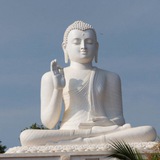
Forwarded from Words of the Buddha
Free Buddha Dharma ebook
THE WAY TO THE HAPPINESS OF PEACE
Understanding the Basics of Insight Meditation
By Sayadaw U Pandita
THE WAY TO THE HAPPINESS OF PEACE was published many years ago under a different noscript of THE PRINCIPLES OF SATIPATTHANA VIPASSANA. They were talks given by Sayadaw U Pandita bhivamsa in Myanmar. It has now been re-edited by Bodhisara and Sumangalo for republished.
This collection of talks is comprehensive teaching of the Buddhist practice in brief. The Dhamma is timeless. That which has been said then is still as relevant to us today. What has been learnt has to be learnt by newcomers to the practice. For the veterans, they should have frequent reminders of what has been said before.
May all who come to the Dhamma put it into practice and reap its benefits to the best of their ability.
Free download here:
https://ftp.budaedu.org/ebooks/pdf/EN240.pdf
===
THE WAY TO THE HAPPINESS OF PEACE
Understanding the Basics of Insight Meditation
By Sayadaw U Pandita
THE WAY TO THE HAPPINESS OF PEACE was published many years ago under a different noscript of THE PRINCIPLES OF SATIPATTHANA VIPASSANA. They were talks given by Sayadaw U Pandita bhivamsa in Myanmar. It has now been re-edited by Bodhisara and Sumangalo for republished.
This collection of talks is comprehensive teaching of the Buddhist practice in brief. The Dhamma is timeless. That which has been said then is still as relevant to us today. What has been learnt has to be learnt by newcomers to the practice. For the veterans, they should have frequent reminders of what has been said before.
May all who come to the Dhamma put it into practice and reap its benefits to the best of their ability.
Free download here:
https://ftp.budaedu.org/ebooks/pdf/EN240.pdf
===
👌1🆒1
Dhammapada Verses 296 to 301
Darusakatikaputta Vatthu
Suppabuddham pabujjhanti
sada gotamasavaka
yesam diva ca ratto ca
niccam buddhagata sati.
Suppabuddham pabujjhanti
sada gotamasavaka
yesam diva ca ratto ca
niccam dhammagata sati.
Suppabuddham pabujjhanti
sada gotamasavaka
yesam diva ca ratto ca
niccam samghagata sati.
Suppabuddham pabujjhanti
sada gotamasavaka
yesam diva ca ratto ca
niccam kayagata sati.
Suppabuddham pabujjhanti
sada gotamasavaka
yesam diva ca ratto ca
ahimsaya rato mano.
Suppabuddham pabujjhanti
sada gotamasavaka
yesam diva ca ratto ca
bhavanaya rato mano.
Verse 296: Fully alert and ever vigilant are Gotama Buddha's disciples, who by day and by night are always mindful of the qualities of the Buddha.
Verse 297: Fully alert and ever vigilant are Gotama Buddha's disciples, who by day and by night are always mindful of the qualities of the Dhamma.
Verse 298: Fully alert and ever vigilant are Gotama Buddha's disciples, who by day and by night are always mindful of the qualities of the Samgha.
Verse 299: Fully alert and ever vigilant are Gotama Buddha's disciples, who by day and by night are always mindful of the component parts of the body.
Verse 300: Fully alert and ever vigilant are Gotama Buddha's disciples, whose mind by day and by night always takes delight in being compassionate (lit., harmless).
Verse 301: Fully alert and ever vigilant are Gotama Buddha's disciples, whose mind by day and by night always takes delight in the cultivation (of good-will towards all).
The Story of a Wood-Cutter's Son
While residing at the Jetavana monastery, the Buddha uttered Verses (296) to (301) of this book, with reference to the son of a wood-cutter.
Once in Rajagaha, a wood-cutter went into the woods with his son to cut some firewood. On their return home in the evening, they stopped near a cemetery to have their meal. They also took off the yoke from the two oxen to enable them to graze nearby; but the two oxen went away without being noticed by them. As soon as they discovered that the oxen were missing, the wood-cutter went to look for them, leaving his son with the cart of firewood. The father entered the town, looking for his oxen. When he returned to his son it was getting late and the city-gate was closed. Therefore, the young boy had to spend the night alone underneath his cart.
The wood-cutter's son, though young, was always mindful and was in the habit of contemplating the unique qualities of the Buddha. That night two ogres came to frighten him and to harm him. When one of the ogres pulled at the leg of the boy, he cried out, "I pay homage to the Buddha (Namo Buddhassa)". Hearing those words from the boy, the ogres got frightened and also felt that they must look after the boy. So, one of them remained near the boy, guarding him from all danger; the other went to the king's palace and brought the food-tray of King Bimbisara. The two ogres then fed the boy as if he were their own son. At the palace, the ogre left a written message concerning the royal food-tray; and this message was visible only to the king.
In the morning, the king's men discovered that the royal food-tray was missing and they were very upset and very much frightened. The king found the message left by the ogre and directed his men where to look for it. The king's men found the royal food-tray among the firewood in the cart. They also found the boy who was still sleeping underneath the cart. When questioned, the boy answered that his parents came to feed him in the night and that he went to sleep contentedly and without fear after taking his food. The boy knew only that much and nothing more. The king sent for the parents of the boy, and took the boy and his parents to the Buddha. The king, by that time, had heard that the boy was always mindful of the unique qualities of the Buddha and also that he had cried out "Namo Buddhassa", when the ogre pulled at his leg in the night.
Darusakatikaputta Vatthu
Suppabuddham pabujjhanti
sada gotamasavaka
yesam diva ca ratto ca
niccam buddhagata sati.
Suppabuddham pabujjhanti
sada gotamasavaka
yesam diva ca ratto ca
niccam dhammagata sati.
Suppabuddham pabujjhanti
sada gotamasavaka
yesam diva ca ratto ca
niccam samghagata sati.
Suppabuddham pabujjhanti
sada gotamasavaka
yesam diva ca ratto ca
niccam kayagata sati.
Suppabuddham pabujjhanti
sada gotamasavaka
yesam diva ca ratto ca
ahimsaya rato mano.
Suppabuddham pabujjhanti
sada gotamasavaka
yesam diva ca ratto ca
bhavanaya rato mano.
Verse 296: Fully alert and ever vigilant are Gotama Buddha's disciples, who by day and by night are always mindful of the qualities of the Buddha.
Verse 297: Fully alert and ever vigilant are Gotama Buddha's disciples, who by day and by night are always mindful of the qualities of the Dhamma.
Verse 298: Fully alert and ever vigilant are Gotama Buddha's disciples, who by day and by night are always mindful of the qualities of the Samgha.
Verse 299: Fully alert and ever vigilant are Gotama Buddha's disciples, who by day and by night are always mindful of the component parts of the body.
Verse 300: Fully alert and ever vigilant are Gotama Buddha's disciples, whose mind by day and by night always takes delight in being compassionate (lit., harmless).
Verse 301: Fully alert and ever vigilant are Gotama Buddha's disciples, whose mind by day and by night always takes delight in the cultivation (of good-will towards all).
The Story of a Wood-Cutter's Son
While residing at the Jetavana monastery, the Buddha uttered Verses (296) to (301) of this book, with reference to the son of a wood-cutter.
Once in Rajagaha, a wood-cutter went into the woods with his son to cut some firewood. On their return home in the evening, they stopped near a cemetery to have their meal. They also took off the yoke from the two oxen to enable them to graze nearby; but the two oxen went away without being noticed by them. As soon as they discovered that the oxen were missing, the wood-cutter went to look for them, leaving his son with the cart of firewood. The father entered the town, looking for his oxen. When he returned to his son it was getting late and the city-gate was closed. Therefore, the young boy had to spend the night alone underneath his cart.
The wood-cutter's son, though young, was always mindful and was in the habit of contemplating the unique qualities of the Buddha. That night two ogres came to frighten him and to harm him. When one of the ogres pulled at the leg of the boy, he cried out, "I pay homage to the Buddha (Namo Buddhassa)". Hearing those words from the boy, the ogres got frightened and also felt that they must look after the boy. So, one of them remained near the boy, guarding him from all danger; the other went to the king's palace and brought the food-tray of King Bimbisara. The two ogres then fed the boy as if he were their own son. At the palace, the ogre left a written message concerning the royal food-tray; and this message was visible only to the king.
In the morning, the king's men discovered that the royal food-tray was missing and they were very upset and very much frightened. The king found the message left by the ogre and directed his men where to look for it. The king's men found the royal food-tray among the firewood in the cart. They also found the boy who was still sleeping underneath the cart. When questioned, the boy answered that his parents came to feed him in the night and that he went to sleep contentedly and without fear after taking his food. The boy knew only that much and nothing more. The king sent for the parents of the boy, and took the boy and his parents to the Buddha. The king, by that time, had heard that the boy was always mindful of the unique qualities of the Buddha and also that he had cried out "Namo Buddhassa", when the ogre pulled at his leg in the night.
Viber
Words Of The Buddha
Daily teachings from Buddha Dharma
👏1🙏1
The king asked the Buddha, "Is mindfulness of the unique qualities of the Buddha, the only dhamma that gives one protection against evil and danger, or is mindfulness of the unique qualities of the Dhamma equally potent and powerful?" To him the Buddha replied, "O king, my disciple! There are six things, mindfulness of which is a good protection against evil and danger."
Then the Buddha spoke in verse as follows:
Verse 296: Fully alert and ever vigilant are Gotama Buddha's disciples, who by day and by night are always mindful of the qualities of the Buddha.
Verse 297: Fully alert and ever vigilant are Gotama Buddha's disciples, who by day and by night are always mindful of the qualities of the Dhamma.
Verse 298: Fully alert and ever vigilant are Gotama Buddha's disciples, who by day and by night are always mindful of the qualities of the Samgha.
Verse 299: Fully alert and ever vigilant are Gotama Buddha's disciples, who by day and by night are always mindful of the component parts of the body.
Verse 300: Fully alert and ever vigilant are Gotama Buddha's disciples, whose mind by day and by night always takes delight in being compassionate (lit., harmless).
Verse 301: Fully alert and ever vigilant are Gotama Buddha's disciples, whose mind by day and by night always takes delight in the cultivation (of good-will towards all).
At the end of the discourse the boy and his parents attained Sotapatti Fruition. Later they joined the Order and eventually they became arahats.
===
Words of the Buddha channel:
https://invite.viber.com/?g2=AQAFqzqlj7FmI061PX17rxWMAtZ%2BRuso%2FH2KmHKZSgnv7v9DD8X0bDkKnZDr9JDq
===
Then the Buddha spoke in verse as follows:
Verse 296: Fully alert and ever vigilant are Gotama Buddha's disciples, who by day and by night are always mindful of the qualities of the Buddha.
Verse 297: Fully alert and ever vigilant are Gotama Buddha's disciples, who by day and by night are always mindful of the qualities of the Dhamma.
Verse 298: Fully alert and ever vigilant are Gotama Buddha's disciples, who by day and by night are always mindful of the qualities of the Samgha.
Verse 299: Fully alert and ever vigilant are Gotama Buddha's disciples, who by day and by night are always mindful of the component parts of the body.
Verse 300: Fully alert and ever vigilant are Gotama Buddha's disciples, whose mind by day and by night always takes delight in being compassionate (lit., harmless).
Verse 301: Fully alert and ever vigilant are Gotama Buddha's disciples, whose mind by day and by night always takes delight in the cultivation (of good-will towards all).
At the end of the discourse the boy and his parents attained Sotapatti Fruition. Later they joined the Order and eventually they became arahats.
===
Words of the Buddha channel:
https://invite.viber.com/?g2=AQAFqzqlj7FmI061PX17rxWMAtZ%2BRuso%2FH2KmHKZSgnv7v9DD8X0bDkKnZDr9JDq
===
Viber
Words Of The Buddha
Daily teachings from Buddha Dharma
👌1🆒1
Forwarded from Words of the Buddha
Big Amitabha Buddha, Eastern Forest Donglin Temple, Mount Lu, Jiujiang, Jiangxi province, China.
🫡3🤩1🙏1
Forwarded from Words of the Buddha
"There are these two extremes that are not to be indulged in by one who has gone forth. Which two? That which is devoted to sensual pleasure with reference to sensual objects: base, vulgar, common, ignoble, unprofitable; & that which is devoted to self-affliction: painful, ignoble, unprofitable. Avoiding both of these extremes, the middle way realized by the Tathagata — producing vision, producing knowledge — leads to calm, to direct knowledge, to self-awakening, to Unbinding.
"What is the middle way realized by the Tathagata that — producing vision, producing knowledge — leads to calm, to direct knowledge, to self-awakening, to Unbinding? Precisely Noble Eightfold Path: right view, right resolve, right speech, right action, right livelihood, right effort, right mindfulness, right concentration. This is the middle way realized by the Tathagata that — producing vision, producing knowledge — leads to calm, to direct knowledge, to self-awakening, to Unbinding.
Samyutta Nikaya 56 :
Dhammacakkappavattana Sutta
"What is the middle way realized by the Tathagata that — producing vision, producing knowledge — leads to calm, to direct knowledge, to self-awakening, to Unbinding? Precisely Noble Eightfold Path: right view, right resolve, right speech, right action, right livelihood, right effort, right mindfulness, right concentration. This is the middle way realized by the Tathagata that — producing vision, producing knowledge — leads to calm, to direct knowledge, to self-awakening, to Unbinding.
Samyutta Nikaya 56 :
Dhammacakkappavattana Sutta
🫡4👏1🏆1
Dhammapada Verse 302
Vajjiputtakabhikkhu Vatthu
Duppabbajjam durabhiramam
duravasa ghara dukha
dukkho' samanasamvaso
dukkhanupatitaddhagu
tasma na caddhagu siya
na ca dukkhanupatito siya.
Verse 302: It is hard to become a bhikkhu; it is hard to be happy in the practice of a bhikkhu. The hard life of a householder is painful; to live with those of a different temperament is painful. A traveller in samsara is continually subject to dukkha; therefore, do not be a traveller in samsara; do not be the one to be subject to dukkha again and again.
The Story of the Bhikkhu from the Country of the Vajjis
While residing at the Veluvana monastery, the Buddha uttered Verse (302) of this book, with reference to a bhikkhu from Vesali, a city in the country of the Vajjis.
On the night of the full moon day of Kattika, the people of Vesali celebrated the festival of the constellations (Nakkhatta) on a grand scale. The whole city was lit up, and there was much merry-making with singing, dancing, etc. As he looked towards the city, standing alone in the monastery, the bhikkhu felt lonely and dissatisfied with his lot. Softly, he murmured to himself, "There can be no one whose lot is worse than mine". At that instant, the spirit guarding the woods appeared to him, and said, "those beings in niraya envy the lot of the beings in the deva world; so also, people envy the lot of those who live alone in the woods." Hearing those words, the bhikkhu realized the truth of those words and he regretted that he had thought so little of the lot of a bhikkhu.
Early in the morning the next day, the bhikkhu went to the Buddha and reported the matter to him. In reply, the Buddha told him about the hardships in the life of all beings.
Then the Buddha spoke in verse as follows:
Verse 302: It is hard to become a bhikkhu; it is hard to be happy in the practice of a bhikkhu. The hard life of a householder is painful; to live with those of a different temperament is painful. A traveller in samsara is continually subject to dukkha; therefore, do not be a traveller in samsara; do not be the one to be subject to dukkha again and again.
At the end of the discourse the bhikkhu attained arahatship.
===
Dhammapada, beloved and favorite teachings of the Buddha channel:
https://invite.viber.com/?g2=AQBLD6phsgvP%2F061YjEM3K%2BNeH1Yb372b9mtfQX2EmuBpgoLUoc99BDMfzHghrme
===
Vajjiputtakabhikkhu Vatthu
Duppabbajjam durabhiramam
duravasa ghara dukha
dukkho' samanasamvaso
dukkhanupatitaddhagu
tasma na caddhagu siya
na ca dukkhanupatito siya.
Verse 302: It is hard to become a bhikkhu; it is hard to be happy in the practice of a bhikkhu. The hard life of a householder is painful; to live with those of a different temperament is painful. A traveller in samsara is continually subject to dukkha; therefore, do not be a traveller in samsara; do not be the one to be subject to dukkha again and again.
The Story of the Bhikkhu from the Country of the Vajjis
While residing at the Veluvana monastery, the Buddha uttered Verse (302) of this book, with reference to a bhikkhu from Vesali, a city in the country of the Vajjis.
On the night of the full moon day of Kattika, the people of Vesali celebrated the festival of the constellations (Nakkhatta) on a grand scale. The whole city was lit up, and there was much merry-making with singing, dancing, etc. As he looked towards the city, standing alone in the monastery, the bhikkhu felt lonely and dissatisfied with his lot. Softly, he murmured to himself, "There can be no one whose lot is worse than mine". At that instant, the spirit guarding the woods appeared to him, and said, "those beings in niraya envy the lot of the beings in the deva world; so also, people envy the lot of those who live alone in the woods." Hearing those words, the bhikkhu realized the truth of those words and he regretted that he had thought so little of the lot of a bhikkhu.
Early in the morning the next day, the bhikkhu went to the Buddha and reported the matter to him. In reply, the Buddha told him about the hardships in the life of all beings.
Then the Buddha spoke in verse as follows:
Verse 302: It is hard to become a bhikkhu; it is hard to be happy in the practice of a bhikkhu. The hard life of a householder is painful; to live with those of a different temperament is painful. A traveller in samsara is continually subject to dukkha; therefore, do not be a traveller in samsara; do not be the one to be subject to dukkha again and again.
At the end of the discourse the bhikkhu attained arahatship.
===
Dhammapada, beloved and favorite teachings of the Buddha channel:
https://invite.viber.com/?g2=AQBLD6phsgvP%2F061YjEM3K%2BNeH1Yb372b9mtfQX2EmuBpgoLUoc99BDMfzHghrme
===
Viber
Dhammapada - Buddha Dharma Teachings
Daily teachings of the Dhammapada, beloved and favorite teachings of the Buddha
👍2❤1🏆1
Forwarded from Buddha Dharma books
Free Buddha Dharma ebook
Four Nutriments of Life
An Anthology of Buddhist Texts
By Nyanaponika Thera
All beings subsist on nutriment” — this, according to the Buddha, is the one single fact about life that, above all, deserves to be remembered, contemplated and understood.
If understood widely and deeply enough, this saying of the Buddha reveals indeed a truth that leads to the root of all existence and also to its uprooting. Here, too, the Buddha proved to be one who “saw to the root of things” (múla-dassávì). Hence, it was thought useful to collect his utterances on the subject of nutriment (áhára), together with the instructive explanations by the teachers of old, the commentators of the Páli noscriptures.
Free download available:
https://www.accesstoinsight.org/lib/authors/nyanaponika/wheel105.pdf
===
Four Nutriments of Life
An Anthology of Buddhist Texts
By Nyanaponika Thera
All beings subsist on nutriment” — this, according to the Buddha, is the one single fact about life that, above all, deserves to be remembered, contemplated and understood.
If understood widely and deeply enough, this saying of the Buddha reveals indeed a truth that leads to the root of all existence and also to its uprooting. Here, too, the Buddha proved to be one who “saw to the root of things” (múla-dassávì). Hence, it was thought useful to collect his utterances on the subject of nutriment (áhára), together with the instructive explanations by the teachers of old, the commentators of the Páli noscriptures.
Free download available:
https://www.accesstoinsight.org/lib/authors/nyanaponika/wheel105.pdf
===
👍1🏆1
Dhammapada Verse 303
Cittagahapati Vatthu
Saddho silena sampanno
yaso bhogasamappito
yam yam padesam bhajati
tattha tattheva pujito.
Verse 303: He who is full of faith and virtue, who also possesses fame and fortune, is held in reverence wherever he goes.
The Story of Citta, the Householder
While residing at the Jetavana monastery, the Buddha uttered Verse (303) of this book, with reference to Citta, a householder of Macchikasanda town.
Citta, after hearing the Dhamma expounded by the Venerable Sariputta, attained Anagami Magga and Phala. One day, Citta loaded five hundred carts with food and other offerings for the Buddha and his disciples, and left for Savatthi, accompanied by three thousand followers. They travelled at the rate of one yojana a day and reached Savatthi at the end of a month. Then Citta went ahead with five hundred of his companions to the Jetavana monastery. While he was paying obeisance to the Buddha, masses of flowers dropped miraculously from above like showers of rain. Citta stayed at the monastery for one whole month, offering alms-food to the Buddha and the bhikkhus and also feeding his own party of three thousand. All this time, the devas were replenishing his stock of food and other offerings.
On the eve of his return journey, Citta put all the things he had brought with him in the rooms of the monastery as offerings to the Buddha. The devas then filled up the empty carts with various items of priceless things. The Venerable Ananda, seeing how Citta's riches were being replenished, asked the Buddha, "Venerable Sir! is it only when Citta approached you that he is blessed with all these riches? Is he similarly blessed when he goes somewhere else?" To him the Buddha replied, "Ananda, this disciple is fully endowed with faith and generosity; he is also virtuous and his reputation spreads far and wide. Such a one is sure to be revered and showered with riches wherever he goes."
Then the Buddha spoke in verse as follows:
Verse 303: He who is full of faith and virtue, who also possesses fame and fortune, is held in reverence wherever he goes.
===
Ajahn Chah, Buddhist teacher of Thai forest meditation of Theravada Buddhism channel:
https://news.1rj.ru/str/ajahnchah_buddhism
===
Cittagahapati Vatthu
Saddho silena sampanno
yaso bhogasamappito
yam yam padesam bhajati
tattha tattheva pujito.
Verse 303: He who is full of faith and virtue, who also possesses fame and fortune, is held in reverence wherever he goes.
The Story of Citta, the Householder
While residing at the Jetavana monastery, the Buddha uttered Verse (303) of this book, with reference to Citta, a householder of Macchikasanda town.
Citta, after hearing the Dhamma expounded by the Venerable Sariputta, attained Anagami Magga and Phala. One day, Citta loaded five hundred carts with food and other offerings for the Buddha and his disciples, and left for Savatthi, accompanied by three thousand followers. They travelled at the rate of one yojana a day and reached Savatthi at the end of a month. Then Citta went ahead with five hundred of his companions to the Jetavana monastery. While he was paying obeisance to the Buddha, masses of flowers dropped miraculously from above like showers of rain. Citta stayed at the monastery for one whole month, offering alms-food to the Buddha and the bhikkhus and also feeding his own party of three thousand. All this time, the devas were replenishing his stock of food and other offerings.
On the eve of his return journey, Citta put all the things he had brought with him in the rooms of the monastery as offerings to the Buddha. The devas then filled up the empty carts with various items of priceless things. The Venerable Ananda, seeing how Citta's riches were being replenished, asked the Buddha, "Venerable Sir! is it only when Citta approached you that he is blessed with all these riches? Is he similarly blessed when he goes somewhere else?" To him the Buddha replied, "Ananda, this disciple is fully endowed with faith and generosity; he is also virtuous and his reputation spreads far and wide. Such a one is sure to be revered and showered with riches wherever he goes."
Then the Buddha spoke in verse as follows:
Verse 303: He who is full of faith and virtue, who also possesses fame and fortune, is held in reverence wherever he goes.
===
Ajahn Chah, Buddhist teacher of Thai forest meditation of Theravada Buddhism channel:
https://news.1rj.ru/str/ajahnchah_buddhism
===
Telegram
Ajahn Chah - Theravada Thailand Buddhism
Collection of teachings of Venerable Ajahn Chah, a foremost meditation and Buddhist teacher from Thailand
👌1🏆1
Forwarded from Words of the Buddha
Phra Phuttha Mahanawamintra Sakayamunee Sri Visejchaicharn, Big Buddha at Wat Muang temple in Ang Thong Province, Thailand
🕊2🙏1🤗1🆒1
Forwarded from Words of the Buddha
Instructions for Metta Meditation
Jack Kornfield on beginning the time-honored, heart-opening practice of metta (loving-kindness) meditation.
In our culture, people find it difficult to direct loving-kindness to themselves. We may feel that we are unworthy, or that it’s egotistical, or that we shouldn’t be happy when other people are suffering. So rather than start loving-kindness practice with ourselves, which is traditional, I find it more helpful to start with those we most naturally love and care about. One of the beautiful principles of compassion and loving-kindness practices is that we start where it works, where it’s easiest. We open our heart in the most natural way, then direct our loving-kindness little by little to the areas where it’s more difficult.
First, sit comfortably and at ease, with your eyes closed. Sense yourself seated here in this mystery of human life. Take your seat halfway between heaven and Earth, as the Buddha did, then bring a kind attention to yourself. Feel your body seated and your breath breathing naturally.
Think of someone you care about and love a lot. Then let natural phrases of good wishes for them come into your mind and heart. Some of the traditional ones are, “May you be safe and protected,” “May you be healthy and strong,” and “May you be truly happy.”
Then picture a second person you care about and express the same good wishes and intentions toward them.
Next, imagine that these two people whom you love are offering you their loving-kindness. Picture how they look at you with concern and love as they say, “May you too be safe and protected. May you be healthy and strong. May you be truly happy.”
Take in their good wishes. Now turn them toward yourself. Sometimes people place their hand on their heart or their body as they repeat the phrases: “May I be safe and protected. May I be healthy and strong. May I be truly happy.”
With the same care let your eyes open, look around the room, and offer your loving-kindness to everyone around you. Feel how great it is to spread the field of loving-kindness.
Now think of yourself as a beacon, spreading the light of loving-kindness like a lighthouse around your city, around the country, around the world, even to distant planets. Think, “May all beings far and near, all beings young and old, beings in every direction, be held in great loving-kindness. May they be safe and protected. May they be healthy and strong. May they be truly happy.”
The Buddha said that the awakened heart of loving-kindness and freedom is our birthright as human beings. “If these things were not possible,” he said, “I would not teach them. But because they are possible for you, I offer these teachings of the dharma of awakening.”
===
Jack Kornfield is a founding teacher of the Insight Meditation Society and Spirit Rock Center and one of the key teachers to introduce Buddhist mindfulness practice to the West. He is a former Buddhist monk, a clinical psychologist, and a husband and father.
===
Words of the Buddha channel:
https://news.1rj.ru/str/wordsofbuddha
===
Jack Kornfield on beginning the time-honored, heart-opening practice of metta (loving-kindness) meditation.
In our culture, people find it difficult to direct loving-kindness to themselves. We may feel that we are unworthy, or that it’s egotistical, or that we shouldn’t be happy when other people are suffering. So rather than start loving-kindness practice with ourselves, which is traditional, I find it more helpful to start with those we most naturally love and care about. One of the beautiful principles of compassion and loving-kindness practices is that we start where it works, where it’s easiest. We open our heart in the most natural way, then direct our loving-kindness little by little to the areas where it’s more difficult.
First, sit comfortably and at ease, with your eyes closed. Sense yourself seated here in this mystery of human life. Take your seat halfway between heaven and Earth, as the Buddha did, then bring a kind attention to yourself. Feel your body seated and your breath breathing naturally.
Think of someone you care about and love a lot. Then let natural phrases of good wishes for them come into your mind and heart. Some of the traditional ones are, “May you be safe and protected,” “May you be healthy and strong,” and “May you be truly happy.”
Then picture a second person you care about and express the same good wishes and intentions toward them.
Next, imagine that these two people whom you love are offering you their loving-kindness. Picture how they look at you with concern and love as they say, “May you too be safe and protected. May you be healthy and strong. May you be truly happy.”
Take in their good wishes. Now turn them toward yourself. Sometimes people place their hand on their heart or their body as they repeat the phrases: “May I be safe and protected. May I be healthy and strong. May I be truly happy.”
With the same care let your eyes open, look around the room, and offer your loving-kindness to everyone around you. Feel how great it is to spread the field of loving-kindness.
Now think of yourself as a beacon, spreading the light of loving-kindness like a lighthouse around your city, around the country, around the world, even to distant planets. Think, “May all beings far and near, all beings young and old, beings in every direction, be held in great loving-kindness. May they be safe and protected. May they be healthy and strong. May they be truly happy.”
The Buddha said that the awakened heart of loving-kindness and freedom is our birthright as human beings. “If these things were not possible,” he said, “I would not teach them. But because they are possible for you, I offer these teachings of the dharma of awakening.”
===
Jack Kornfield is a founding teacher of the Insight Meditation Society and Spirit Rock Center and one of the key teachers to introduce Buddhist mindfulness practice to the West. He is a former Buddhist monk, a clinical psychologist, and a husband and father.
===
Words of the Buddha channel:
https://news.1rj.ru/str/wordsofbuddha
===
Telegram
Words of the Buddha
Daily teachings of Buddha Dharma
❤1🙏1🕊1
Forwarded from Words of the Buddha
Dhammapada Verse 25
Culapanthaka Vatthu
Utthanena' ppamadena
samyamena damena ca
dipam kayiratha medhavi1
yam ogho2 nabhikirati.
Verse 25: Through diligence, mindfulness, discipline (with regard to moral precepts), and control of his senses, let the man of wisdom make (of himself) an island which no flood can overwhelm.
Rajoharanam...
"It is not the piece of cloth alone that is made dirty by the dust; within oneself also there exist the dust of passion (raga), the dust of ill will (dosa), and the dust of ignorance (moha), i.e., the ignorance of the Four Noble Truths. Only by removing these could one achieve one's goal and attain arahatship".
Culapanthaka Vatthu
Utthanena' ppamadena
samyamena damena ca
dipam kayiratha medhavi1
yam ogho2 nabhikirati.
Verse 25: Through diligence, mindfulness, discipline (with regard to moral precepts), and control of his senses, let the man of wisdom make (of himself) an island which no flood can overwhelm.
Rajoharanam...
"It is not the piece of cloth alone that is made dirty by the dust; within oneself also there exist the dust of passion (raga), the dust of ill will (dosa), and the dust of ignorance (moha), i.e., the ignorance of the Four Noble Truths. Only by removing these could one achieve one's goal and attain arahatship".
🕊1🤝1
Forwarded from Words of the Buddha
Free Buddha Dharma ebook
Mahasatipatthana sutta
by U Jotika and U Dhamminda
Please practise in accordance with this Mahàsatipathàna Sutta so that you can see why it is acknowledged as the most important Sutta that the Buddha taught.
Try to practise all the different sections from time to time as they are all useful, but in the beginning start with something simple such as being mindful while walking, or the mindfulness of in and out breathing. Then as you practise these you will be able to practise the other sections contained within this Sutta and you will find that all the four satipathànas can be practised concurrently.
A sutta should be read again and again as you will tend to forget its message. The message here in this Sutta is that you should be mindful of whatever is occurring in the body and mind, whether it be good or bad, and thus you will become aware that all conditioned phenomena are impermanent, unsatisfactory and not-self.
The original Pali text of this Sutta can be found in Mahà-vagga of the Digha Nikàya.
Free download here:
https://static.sariputta.com/pdf/tipitaka/787/maha-satipatthana-sutta-translated-by-u-jotika-u-dhammindapdf.pdf
===
Mahasatipatthana sutta
by U Jotika and U Dhamminda
Please practise in accordance with this Mahàsatipathàna Sutta so that you can see why it is acknowledged as the most important Sutta that the Buddha taught.
Try to practise all the different sections from time to time as they are all useful, but in the beginning start with something simple such as being mindful while walking, or the mindfulness of in and out breathing. Then as you practise these you will be able to practise the other sections contained within this Sutta and you will find that all the four satipathànas can be practised concurrently.
A sutta should be read again and again as you will tend to forget its message. The message here in this Sutta is that you should be mindful of whatever is occurring in the body and mind, whether it be good or bad, and thus you will become aware that all conditioned phenomena are impermanent, unsatisfactory and not-self.
The original Pali text of this Sutta can be found in Mahà-vagga of the Digha Nikàya.
Free download here:
https://static.sariputta.com/pdf/tipitaka/787/maha-satipatthana-sutta-translated-by-u-jotika-u-dhammindapdf.pdf
===
👌1💯1
Dhammapada Verse 304
Culasubhadda Vatthu
Dure santo pakasenti
himavantova pabbato
asantettha na dissanti
rattim khitta yatha sara.
Verse 304: Like the Himalayas, the good are visible even from afar; like arrows shot in the night, the wicked are not seen even though they may be near.
The Story of Culasubhadda
While residing at the Jetavana monastery, the Buddha uttered Verse (304) of this book, with reference to Culasubhadda the daughter of Anathapindika.
Anathapindika and Ugga, the rich man from Ugga, studied under the same teacher when they were both young. Ugga had a son while Anathapindika had a daughter. When their children came of age, Ugga asked for the consent of Anathapindika to the marriage of their two children. So the marriage took place, and Culasubhaddi, the daughter of Anathapindika, had to stay in the house of her parents-in-law. Ugga and his family were followers of non-Buddhist ascetics. Sometimes, they would invite those non-Buddhist ascetics to their house. On such occasions, her parents-in-law would ask Culasubhadda to pay respect to those naked ascetics, but she always refused to comply. Instead, she told her mother-in-law about the Buddha and his unique qualities.
The mother-in-law of Culasubhadda was very anxious to see the Buddha when she was told about him by her daughter-in-law. She even agreed to let Culasubhaddha invite the Buddha for alms-food to their house. So, Culasubhadda prepared food and collected other offerings for the Buddha and his disciples. She then went up to the upper part of the house and looking towards the Jetavana monastery, she made offerings of flowers and incense and contemplate the unique qualities and virtues of the Buddha. She then spoke out her wish, "Venerable Sir! May it please you to come with your disciples, to our house tomorrow. I, your devoted lay-disciple, most respectfully invite you. May this invitation of mine be made known to you by this symbol and gesture." Then she took eight fistfuls of jasmin and threw them up into the sky. The flowers floated through the air all the way to the Jetavana monastery and lay hanging from the ceiling of the congregation hall where the Buddha was expounding the Dhamma.
At the end of the discourse, Anathapindika, the father of Culasubhadda, approached the Buddha to invite him to have alms-food in his house the following day. But the Buddha replied that he had already accepted Culasubhadda's invitation for the next day.
Anathapindika was puzzled at the reply of the Buddha and said,"But, Venerable Sir! Culasubhadda does not live here in Savatthi; she lives in Ugga at a distance of one hundred and twenty yojanas from here." To him the Buddha said, "True, householder, but the good are clearly visible as if they are in one's very presence even though they may be living at a distance".
Then the Buddha spoke in verse as follows:
Verse 304: Like the Himalayas, the good are visible even from afar; like arrows shot in the night, the wicked are not seen even though they may be near.
The next day, the Buddha came to the house of Ugga, the father-in-law of Culasubhadda. The Buddha was accompanied by five hundred bhikkhus on this trip; they all came through the air in decorated floats created by the order of Sakka, king of the devas. Seeing the Buddha in his splendour and glory, the parents-in-law of Culasubhadda were very much impressed and they paid homage to the Buddha. Then, for the next seven days, Ugga, and his family gave alms-food and made other offerings to the Buddha and his disciples.
===
Free Buddhism books, teachings, podcasts and videos from Theravada, Mahayana and Vajrayana traditions:
https://news.1rj.ru/str/buddha_ebooks
===
Culasubhadda Vatthu
Dure santo pakasenti
himavantova pabbato
asantettha na dissanti
rattim khitta yatha sara.
Verse 304: Like the Himalayas, the good are visible even from afar; like arrows shot in the night, the wicked are not seen even though they may be near.
The Story of Culasubhadda
While residing at the Jetavana monastery, the Buddha uttered Verse (304) of this book, with reference to Culasubhadda the daughter of Anathapindika.
Anathapindika and Ugga, the rich man from Ugga, studied under the same teacher when they were both young. Ugga had a son while Anathapindika had a daughter. When their children came of age, Ugga asked for the consent of Anathapindika to the marriage of their two children. So the marriage took place, and Culasubhaddi, the daughter of Anathapindika, had to stay in the house of her parents-in-law. Ugga and his family were followers of non-Buddhist ascetics. Sometimes, they would invite those non-Buddhist ascetics to their house. On such occasions, her parents-in-law would ask Culasubhadda to pay respect to those naked ascetics, but she always refused to comply. Instead, she told her mother-in-law about the Buddha and his unique qualities.
The mother-in-law of Culasubhadda was very anxious to see the Buddha when she was told about him by her daughter-in-law. She even agreed to let Culasubhaddha invite the Buddha for alms-food to their house. So, Culasubhadda prepared food and collected other offerings for the Buddha and his disciples. She then went up to the upper part of the house and looking towards the Jetavana monastery, she made offerings of flowers and incense and contemplate the unique qualities and virtues of the Buddha. She then spoke out her wish, "Venerable Sir! May it please you to come with your disciples, to our house tomorrow. I, your devoted lay-disciple, most respectfully invite you. May this invitation of mine be made known to you by this symbol and gesture." Then she took eight fistfuls of jasmin and threw them up into the sky. The flowers floated through the air all the way to the Jetavana monastery and lay hanging from the ceiling of the congregation hall where the Buddha was expounding the Dhamma.
At the end of the discourse, Anathapindika, the father of Culasubhadda, approached the Buddha to invite him to have alms-food in his house the following day. But the Buddha replied that he had already accepted Culasubhadda's invitation for the next day.
Anathapindika was puzzled at the reply of the Buddha and said,"But, Venerable Sir! Culasubhadda does not live here in Savatthi; she lives in Ugga at a distance of one hundred and twenty yojanas from here." To him the Buddha said, "True, householder, but the good are clearly visible as if they are in one's very presence even though they may be living at a distance".
Then the Buddha spoke in verse as follows:
Verse 304: Like the Himalayas, the good are visible even from afar; like arrows shot in the night, the wicked are not seen even though they may be near.
The next day, the Buddha came to the house of Ugga, the father-in-law of Culasubhadda. The Buddha was accompanied by five hundred bhikkhus on this trip; they all came through the air in decorated floats created by the order of Sakka, king of the devas. Seeing the Buddha in his splendour and glory, the parents-in-law of Culasubhadda were very much impressed and they paid homage to the Buddha. Then, for the next seven days, Ugga, and his family gave alms-food and made other offerings to the Buddha and his disciples.
===
Free Buddhism books, teachings, podcasts and videos from Theravada, Mahayana and Vajrayana traditions:
https://news.1rj.ru/str/buddha_ebooks
===
Telegram
Buddha Dharma books
Free Buddhism books, teachings, podcasts and videos from Theravada, Mahayana and Vajrayana traditions
❤1💯1