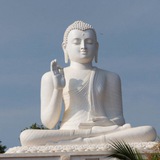
Forwarded from Words of the Buddha
Giant reclining Shwethalyaung Buddha statue, Shwethalyaung temple, Bago, Myanmar.
💯2🤩1
Goodwill for the Real World
A Theravada monk explores the application of boundless metta for a broken world.
By Thanissaro Bhikkhu
Part 2 of 2
The example the Buddha gives is of thieves who have pinned you down and overpowered you, and they’re cutting you into pieces with a two-handled saw. I’ve always liked that detail: the two handles. It means that at least two of the thieves are sawing away at you. The Buddha said that even in a case like that, you still need to have goodwill for them. In fact, you start with goodwill for them and then expand it out into the whole universe, so that you’re not focused on them and what they’re doing to you. You realize that your most important wealth is the state of your mind, and that you protect that above all else, even if it means you’d be faced with death. You protect that because that’s more important than your body.
One of the stories that comes from the forest tradition is of a monk who is sitting in his hut one night and an elephant comes and crashes through the wall right in front of him. Here they are, face-to-face, and the monk realizes that his only protection is goodwill for the elephant. So he spreads goodwill and speaks to the elephant in kind, gentle terms. Elephants are very sensitive to what you say to them, as well as to the tone of your voice. In that case, the elephant withdrew.
Last year, I was staying in a monastery in Thailand, and one morning an elephant started crashing through the monastery wall. Someone happened to be nearby. He spoke to the elephant in very kind terms. He said, “Big Brother, Big Brother, don’t do that. It’s bad karma.” The elephant stopped and walked away.
There’s also the story of Ajaan Lee out in the forest. The villagers had warned him that there was an elephant in rut who was running around, stabbing people with his tusks, and that he’d be wise to get out of the forest. But he wanted to test his determination not to be afraid of that kind of thing. And sure enough, one afternoon, he was sitting in meditation under a tree, and the elephant came into a clearing right in front of him. His first thought was, “If he comes at me, I’m dead.” So he reaches up for a branch. He’s going to climb up the tree, but something inside him says, “If you’re afraid of death, you’re going to keep on dying.” He sat back down in meditation, faced the elephant, and spread goodwill to the elephant. The elephant stopped, shook his ears up and down a bit, and then walked away.
For the forest ajaans, metta, or goodwill, is not a soft, tender, weak emotion. It’s strong. It’s a protection. It protects your genuine valuables. When they talk about having goodwill for all beings, it’s not an airy fairy world that they’re imagining or a “complacent Buddhist bubble.” You need real goodwill for the real world, because the dangers of the world are real, and this is one of your ways of protecting yourself from responding to those dangers in an unskillful way.
You realize that your most important wealth is the state of your mind, and that you protect that above all else, even if it means you’d be faced with death.
When you think about it in those terms, it’s a lot easier to spread thoughts of goodwill to all. If it’s not there, you work on it. We’re sometimes told that goodwill is part of the innate nature of the mind. Now, it is possible for the human mind to have thoughts of goodwill, but remember, human goodwill is very different from Brahma goodwill, and Brahma goodwill is what we’re trying to develop. Human goodwill is partial. You have goodwill for the people who are good to you and not for the people who are not, but that’s no protection at all. It’s like building a fence around the front of your house but leaving the back of the house open. You want goodwill that’s all around.
A Theravada monk explores the application of boundless metta for a broken world.
By Thanissaro Bhikkhu
Part 2 of 2
The example the Buddha gives is of thieves who have pinned you down and overpowered you, and they’re cutting you into pieces with a two-handled saw. I’ve always liked that detail: the two handles. It means that at least two of the thieves are sawing away at you. The Buddha said that even in a case like that, you still need to have goodwill for them. In fact, you start with goodwill for them and then expand it out into the whole universe, so that you’re not focused on them and what they’re doing to you. You realize that your most important wealth is the state of your mind, and that you protect that above all else, even if it means you’d be faced with death. You protect that because that’s more important than your body.
One of the stories that comes from the forest tradition is of a monk who is sitting in his hut one night and an elephant comes and crashes through the wall right in front of him. Here they are, face-to-face, and the monk realizes that his only protection is goodwill for the elephant. So he spreads goodwill and speaks to the elephant in kind, gentle terms. Elephants are very sensitive to what you say to them, as well as to the tone of your voice. In that case, the elephant withdrew.
Last year, I was staying in a monastery in Thailand, and one morning an elephant started crashing through the monastery wall. Someone happened to be nearby. He spoke to the elephant in very kind terms. He said, “Big Brother, Big Brother, don’t do that. It’s bad karma.” The elephant stopped and walked away.
There’s also the story of Ajaan Lee out in the forest. The villagers had warned him that there was an elephant in rut who was running around, stabbing people with his tusks, and that he’d be wise to get out of the forest. But he wanted to test his determination not to be afraid of that kind of thing. And sure enough, one afternoon, he was sitting in meditation under a tree, and the elephant came into a clearing right in front of him. His first thought was, “If he comes at me, I’m dead.” So he reaches up for a branch. He’s going to climb up the tree, but something inside him says, “If you’re afraid of death, you’re going to keep on dying.” He sat back down in meditation, faced the elephant, and spread goodwill to the elephant. The elephant stopped, shook his ears up and down a bit, and then walked away.
For the forest ajaans, metta, or goodwill, is not a soft, tender, weak emotion. It’s strong. It’s a protection. It protects your genuine valuables. When they talk about having goodwill for all beings, it’s not an airy fairy world that they’re imagining or a “complacent Buddhist bubble.” You need real goodwill for the real world, because the dangers of the world are real, and this is one of your ways of protecting yourself from responding to those dangers in an unskillful way.
You realize that your most important wealth is the state of your mind, and that you protect that above all else, even if it means you’d be faced with death.
When you think about it in those terms, it’s a lot easier to spread thoughts of goodwill to all. If it’s not there, you work on it. We’re sometimes told that goodwill is part of the innate nature of the mind. Now, it is possible for the human mind to have thoughts of goodwill, but remember, human goodwill is very different from Brahma goodwill, and Brahma goodwill is what we’re trying to develop. Human goodwill is partial. You have goodwill for the people who are good to you and not for the people who are not, but that’s no protection at all. It’s like building a fence around the front of your house but leaving the back of the house open. You want goodwill that’s all around.
👍1👏1💯1
Think about it: Who is there in the world for whom you feel ill will? Start out with people who are easy to feel goodwill for, and then go to those who are harder and harder until you get to the ones where you find it really hard. Then ask yourself: What would you gain, what would anybody gain, by seeing that person suffer? You think it through, and you realize that nothing would be gained.
Then focus on what you’re doing as you think these thoughts. You’re engaging in directed thought and evaluation. That’s verbal fabrication. And you hold in mind those images—the images of the bandits sawing you into pieces, the mother protecting her child—which are mental fabrications. Fabrications are things you have to do, to put together. So in working on goodwill, you begin to get more sensitive to how the mind has to create these mental states, and how it can create these states by learning to think in new ways, learning how to keep new perceptions in mind.
Basically, what it comes down to is understanding goodwill in the light of karma. On the one hand, there’s the karma of generating goodwill itself. Then there’s the karma that you’re thinking about as you think thoughts of goodwill. What does it mean, in the light of karma, to wish for people to be happy? It means you wish that they would create good karma, that they would be skillful. As the verse said just now, you wish, “May beings not deceive or despise one another or wish for another to suffer.” That’s goodwill in the light of karma, which makes it an extension of right view. As the Buddha said, if you have ill will for anyone, that’s a part of wrong view. Not just a wrong attitude—it’s wrong view.
So when you understand goodwill, you realize that it’s for the real world, and you’re dealing in realities when you try to make your goodwill universal.
It’s not magical thinking. It’s a genuine power in the real world.
===
Thanissaro Bhikkhu is an American Theravada Buddhist monk trained in the Thai Forest Tradition. He currently serves as abbot of the Metta Forest Monastery in San Diego County, California and is a frequent contributor to Tricycle. His latest book is Good Heart, Good Mind: The Practice of the Ten Perfections. Thanissaro Bhikkhu’s talks, writings, and translations are all freely available at his website
www.dhammatalks.org
===
Part 1 of 2:
https://news.1rj.ru/str/wordsofbuddha/2953
Part 2 of 2:
https://news.1rj.ru/str/dhammapadas/2017
===
Dhammapada, beloved and favorite teachings of the Buddha channel:
https://news.1rj.ru/str/dhammapadas
===
Then focus on what you’re doing as you think these thoughts. You’re engaging in directed thought and evaluation. That’s verbal fabrication. And you hold in mind those images—the images of the bandits sawing you into pieces, the mother protecting her child—which are mental fabrications. Fabrications are things you have to do, to put together. So in working on goodwill, you begin to get more sensitive to how the mind has to create these mental states, and how it can create these states by learning to think in new ways, learning how to keep new perceptions in mind.
Basically, what it comes down to is understanding goodwill in the light of karma. On the one hand, there’s the karma of generating goodwill itself. Then there’s the karma that you’re thinking about as you think thoughts of goodwill. What does it mean, in the light of karma, to wish for people to be happy? It means you wish that they would create good karma, that they would be skillful. As the verse said just now, you wish, “May beings not deceive or despise one another or wish for another to suffer.” That’s goodwill in the light of karma, which makes it an extension of right view. As the Buddha said, if you have ill will for anyone, that’s a part of wrong view. Not just a wrong attitude—it’s wrong view.
So when you understand goodwill, you realize that it’s for the real world, and you’re dealing in realities when you try to make your goodwill universal.
It’s not magical thinking. It’s a genuine power in the real world.
===
Thanissaro Bhikkhu is an American Theravada Buddhist monk trained in the Thai Forest Tradition. He currently serves as abbot of the Metta Forest Monastery in San Diego County, California and is a frequent contributor to Tricycle. His latest book is Good Heart, Good Mind: The Practice of the Ten Perfections. Thanissaro Bhikkhu’s talks, writings, and translations are all freely available at his website
www.dhammatalks.org
===
Part 1 of 2:
https://news.1rj.ru/str/wordsofbuddha/2953
Part 2 of 2:
https://news.1rj.ru/str/dhammapadas/2017
===
Dhammapada, beloved and favorite teachings of the Buddha channel:
https://news.1rj.ru/str/dhammapadas
===
Telegram
Dhammapada - Buddha Dharma Teachings
Daily teachings of the Dhammapada, beloved and favorite teachings of the Buddha
🏆1🆒1
Dhammapada Verses 318 and 319
Titthiyasvaka Vatthu
Avajje vajjamatino
vajje cavajjadassi no
micchaditthisamada
satta gacchanti duggatim.
Vajjanca vajjato natva
avajjanca avajjato
sammaditthisamadana
satta gacchanti suggatim.
Verse 318: Beings who imagine wrong in what is not wrong, who do not see wrong in what is wrong, and who hold wrong views go to a lower plane of existence (duggati).
Verse 319: Beings who know what is wrong as wrong. who know what is right as right, and who hold right views go to a happy plane of existence (suggati).
The Story of the Disciples of Non-Buddhist Ascetics
While residing at the Nigrodarama monastery, the Buddha uttered Verses (318) and (319) of this book, with reference to some disciples of the Titthis (non-Buddhist ascetics).
The disciples of the Titthis did not want their children to mix with the children of the followers of the Buddha. They often told their children, "Do not go to the Jetavana monastery, do not pay obeisance to the bhikkhus of the Sakyan clan." On one occasion, while the Titthi boys were playing with a Buddhist boy near the entrance to the Jetavana monastery, they felt very thirsty. As the children of the disciples of the Titthis had been told by their parents not to enter a Buddhist monastery, they asked the Buddhist boy to go to the monastery and bring some water for them. The young Buddhist boy went to pay obeisance to the Buddha after he had had a drink of water, and told the Buddha about his friends who were forbidden by their parents to enter a Buddhist monastery. The Buddha then told the boy to tell the non-Buddhist boys to come and have water at the monastery. When those boys came, the Buddha gave them a discourse to suit their various dispositions. As a result, those boys became established in faith in the Three Gems i.e., the Buddha, the Dhamma and the Samgha.
When the boys went home, they talked about their visit to the Jetavana monastery and about the Buddha teaching them the Three Gems. The parents of the boys, being ignorant, cried, "Our sons have been disloyal to our faith, they have been ruined," etc. Some intelligent neighbours advised the wailing parents to stop weeping and to send their sons to the Buddha. Somehow, they agreed and the boys as well as their parents went to the Buddha.
The Buddha knowing why they had come spoke to them in verse as follows:
Verse 318: Beings who imagine wrong in what is not wrong, who do not see wrong in what is wrong, and who hold wrong views go to a lower plane of existence (duggati).
Verse 319: Beings who know what is wrong as wrong. who know what is right as right, and who hold right views go to a happy plane of existence (suggati).
At the end of the discourse all those people came to be established in faith in the Three Gems, and after listening to the Buddha's further discourses, they subsequently attained Sotapatti Fruition.
End of Chapter Twenty-Two: Niraya
===
Buddha dharma teachings channel:
https://news.1rj.ru/str/lorddivinebuddha
===
Titthiyasvaka Vatthu
Avajje vajjamatino
vajje cavajjadassi no
micchaditthisamada
satta gacchanti duggatim.
Vajjanca vajjato natva
avajjanca avajjato
sammaditthisamadana
satta gacchanti suggatim.
Verse 318: Beings who imagine wrong in what is not wrong, who do not see wrong in what is wrong, and who hold wrong views go to a lower plane of existence (duggati).
Verse 319: Beings who know what is wrong as wrong. who know what is right as right, and who hold right views go to a happy plane of existence (suggati).
The Story of the Disciples of Non-Buddhist Ascetics
While residing at the Nigrodarama monastery, the Buddha uttered Verses (318) and (319) of this book, with reference to some disciples of the Titthis (non-Buddhist ascetics).
The disciples of the Titthis did not want their children to mix with the children of the followers of the Buddha. They often told their children, "Do not go to the Jetavana monastery, do not pay obeisance to the bhikkhus of the Sakyan clan." On one occasion, while the Titthi boys were playing with a Buddhist boy near the entrance to the Jetavana monastery, they felt very thirsty. As the children of the disciples of the Titthis had been told by their parents not to enter a Buddhist monastery, they asked the Buddhist boy to go to the monastery and bring some water for them. The young Buddhist boy went to pay obeisance to the Buddha after he had had a drink of water, and told the Buddha about his friends who were forbidden by their parents to enter a Buddhist monastery. The Buddha then told the boy to tell the non-Buddhist boys to come and have water at the monastery. When those boys came, the Buddha gave them a discourse to suit their various dispositions. As a result, those boys became established in faith in the Three Gems i.e., the Buddha, the Dhamma and the Samgha.
When the boys went home, they talked about their visit to the Jetavana monastery and about the Buddha teaching them the Three Gems. The parents of the boys, being ignorant, cried, "Our sons have been disloyal to our faith, they have been ruined," etc. Some intelligent neighbours advised the wailing parents to stop weeping and to send their sons to the Buddha. Somehow, they agreed and the boys as well as their parents went to the Buddha.
The Buddha knowing why they had come spoke to them in verse as follows:
Verse 318: Beings who imagine wrong in what is not wrong, who do not see wrong in what is wrong, and who hold wrong views go to a lower plane of existence (duggati).
Verse 319: Beings who know what is wrong as wrong. who know what is right as right, and who hold right views go to a happy plane of existence (suggati).
At the end of the discourse all those people came to be established in faith in the Three Gems, and after listening to the Buddha's further discourses, they subsequently attained Sotapatti Fruition.
End of Chapter Twenty-Two: Niraya
===
Buddha dharma teachings channel:
https://news.1rj.ru/str/lorddivinebuddha
===
Telegram
Buddha
Buddha dharma teachings from the suttas and commentaries
👏1🤗1
Forwarded from Words of the Buddha
Taung Kalat Buddhist monastery, Mount Popa, Mandalay, Burma.
👏1🏆1
Forwarded from Buddha Dharma books
Free Buddha Dharma ebook
Abhidhamma in Daily Life
By Ashin Janakavibhamsa
A treatise ennoscriptd "Abhidamma in Daily Life" is written for the welfare of people, with a view to assist them in acquiring good conduct.
The author's aim can be summarized as follows:
(1) For the reader to develop rightful attitude regarding the objects and senses perceived, to be always broad-minded, to live the way of (brahmacariya) noble living, and to conduct a harmonious life.
(2) For the reader to be always in good mood,develop an unwavering attitude towards life and to be able to live in grace whether they be wealthy and happy, being successful and prosperous, or whether they are poor and unhappy meeting with failure and calamity.
(3) For the reader to be able to fulfill the (parami) perfections such as dana (charity), (sila) morality etc. in this existence so that they may be reborn in happy abodes in the existences to come till the attainment of the supreme bliss of nibbana.
Free download available:
https://ftp.budaedu.org/ebooks/pdf/EN295.pdf
===
Abhidhamma in Daily Life
By Ashin Janakavibhamsa
A treatise ennoscriptd "Abhidamma in Daily Life" is written for the welfare of people, with a view to assist them in acquiring good conduct.
The author's aim can be summarized as follows:
(1) For the reader to develop rightful attitude regarding the objects and senses perceived, to be always broad-minded, to live the way of (brahmacariya) noble living, and to conduct a harmonious life.
(2) For the reader to be always in good mood,develop an unwavering attitude towards life and to be able to live in grace whether they be wealthy and happy, being successful and prosperous, or whether they are poor and unhappy meeting with failure and calamity.
(3) For the reader to be able to fulfill the (parami) perfections such as dana (charity), (sila) morality etc. in this existence so that they may be reborn in happy abodes in the existences to come till the attainment of the supreme bliss of nibbana.
Free download available:
https://ftp.budaedu.org/ebooks/pdf/EN295.pdf
===
❤1🤗1
Dhammapada Verses 320, 321 and 322
Attadanta Vatthu
Aham nagova sangame
capato patitam saram
ativakyam titikkhissam
dussilo hi bahujjano.
Dantam nayanti samitim
dantam raja' bhiruhati
danto settho manussesu
yo' tivakyam titikkhati.
Varamassatara danta
ajaniya ca sindhava
kunjara ca mahanaga
attadanto tato varam.
Verse 320: As an elephant in battlefield withstands the arrow shot from a bow, so shall I endure abuse. Indeed, many people are without morality.
Verse 321: Only the trained (horses and elephants) are led to gatherings of people; the King mounts only the trained (horses and elephants). Noblest among men are the tamed, who endure abuse.
Verse 322: Mules, thoroughbred horses, horses from Sindh, and great elephants are noble only when they are trained; but one who has tamed himself (through Magga Insight) is far nobler.
On Subduing Oneself
While residing at the Ghositarama monastery, the Buddha uttered Verses (320), (321) and (322) of this book, with reference to the patience and endurance manifested by himself when abused by the hirelings of Magandiya, one of the three queens of King Udena.
Once, the father of Magandiya, being very much impressed by the personality and looks of the Buddha, had offered his very beautiful daughter in marriage to Gotama Buddha. But the Buddha refused his offer and said that he did not like to touch such a thing which was full of filth and excreta, even with his feet. On hearing this remark both Magandiya's father and mother discerning the truth of the remark attained Anagami Fruition. Magandiya, however, regarded the Buddha as her arch enemy and was bent on having her revenge on him.
Later, she became one of the three queens of King Udena. When Magandiya heard that the Buddha had come to Kosambi, she hired some citizens and their servants to abuse the Buddha when he entered the city on an alms-round. Those hirelings followed the Buddha and abused him using such abusive words as 'thief, fool, camel, donkey, one bound for niraya'. Hearing those abusive words, the Venerable Ananda pleaded with the Buddha to leave the town and go to another place. But the Buddha refused and said, "In another town also we might be abused and it is not feasible to move out every time one is abused. It is better to solve a problem in the place where it arises. I am like an elephant in a battlefield; like an elephant who withstands the arrows that come from all quarters, I also will bear patiently the abuses that come from people without morality."
Then the Buddha spoke in verse as follows:
Verse 320: As an elephant in battlefield withstands the arrow shot from a bow, so shall I endure abuse. Indeed, many people are without morality.
Verse 321: Only the trained (horses and elephants) are led to gatherings of people; the King mounts only the trained (horses and elephants). Noblest among men are the tamed, who endure abuse.
Verse 322: Mules, thoroughbred horses, horses from Sindh, and great elephants are noble only when they are trained; but one who has tamed himself (through Magga Insight) is far nobler.
At the end of the discourse, those who had abused the Buddha realized their mistake and came to respect him; some of them attained Sotapatti Fruition.
===
Tibetan Buddhism - Vajrayana, Tantrayana and esoteric Buddhism channel:
https://news.1rj.ru/str/tibetanbuddha
Vajrayana Tantrayana Buddhism channel:
https://news.1rj.ru/str/tantrayanabuddhism
===
Attadanta Vatthu
Aham nagova sangame
capato patitam saram
ativakyam titikkhissam
dussilo hi bahujjano.
Dantam nayanti samitim
dantam raja' bhiruhati
danto settho manussesu
yo' tivakyam titikkhati.
Varamassatara danta
ajaniya ca sindhava
kunjara ca mahanaga
attadanto tato varam.
Verse 320: As an elephant in battlefield withstands the arrow shot from a bow, so shall I endure abuse. Indeed, many people are without morality.
Verse 321: Only the trained (horses and elephants) are led to gatherings of people; the King mounts only the trained (horses and elephants). Noblest among men are the tamed, who endure abuse.
Verse 322: Mules, thoroughbred horses, horses from Sindh, and great elephants are noble only when they are trained; but one who has tamed himself (through Magga Insight) is far nobler.
On Subduing Oneself
While residing at the Ghositarama monastery, the Buddha uttered Verses (320), (321) and (322) of this book, with reference to the patience and endurance manifested by himself when abused by the hirelings of Magandiya, one of the three queens of King Udena.
Once, the father of Magandiya, being very much impressed by the personality and looks of the Buddha, had offered his very beautiful daughter in marriage to Gotama Buddha. But the Buddha refused his offer and said that he did not like to touch such a thing which was full of filth and excreta, even with his feet. On hearing this remark both Magandiya's father and mother discerning the truth of the remark attained Anagami Fruition. Magandiya, however, regarded the Buddha as her arch enemy and was bent on having her revenge on him.
Later, she became one of the three queens of King Udena. When Magandiya heard that the Buddha had come to Kosambi, she hired some citizens and their servants to abuse the Buddha when he entered the city on an alms-round. Those hirelings followed the Buddha and abused him using such abusive words as 'thief, fool, camel, donkey, one bound for niraya'. Hearing those abusive words, the Venerable Ananda pleaded with the Buddha to leave the town and go to another place. But the Buddha refused and said, "In another town also we might be abused and it is not feasible to move out every time one is abused. It is better to solve a problem in the place where it arises. I am like an elephant in a battlefield; like an elephant who withstands the arrows that come from all quarters, I also will bear patiently the abuses that come from people without morality."
Then the Buddha spoke in verse as follows:
Verse 320: As an elephant in battlefield withstands the arrow shot from a bow, so shall I endure abuse. Indeed, many people are without morality.
Verse 321: Only the trained (horses and elephants) are led to gatherings of people; the King mounts only the trained (horses and elephants). Noblest among men are the tamed, who endure abuse.
Verse 322: Mules, thoroughbred horses, horses from Sindh, and great elephants are noble only when they are trained; but one who has tamed himself (through Magga Insight) is far nobler.
At the end of the discourse, those who had abused the Buddha realized their mistake and came to respect him; some of them attained Sotapatti Fruition.
===
Tibetan Buddhism - Vajrayana, Tantrayana and esoteric Buddhism channel:
https://news.1rj.ru/str/tibetanbuddha
Vajrayana Tantrayana Buddhism channel:
https://news.1rj.ru/str/tantrayanabuddhism
===
Telegram
Tibetan Buddhism Vajrayana Tantrayana esoteric tradition
Buddha Dharma teachings from the esoteric Vajrayana or Tantrayana Buddhism, includes all major schools Nyingma, Kagyu, Gelug, Sakya, Jonang and Bonpo.
👍1🤗1
Forwarded from Words of the Buddha
Dhammapada
The Judge : 266-267
Begging from others
doesn’t mean one’s a monk.
As long as one follows
householders’ ways,
one is no monk at all.
But whoever puts aside
both merit & evil and,
living the chaste life,
judiciously
goes through the world:
he’s called a monk.
The Judge : 266-267
Begging from others
doesn’t mean one’s a monk.
As long as one follows
householders’ ways,
one is no monk at all.
But whoever puts aside
both merit & evil and,
living the chaste life,
judiciously
goes through the world:
he’s called a monk.
👏1💯1
Forwarded from Words of the Buddha
Hands restrained,
feet restrained
speech restrained,
supremely restrained–
delighting in what is inward,
content, centered, alone:
he’s what they call
a monk.
362
Dhammapada XXV : Monks
feet restrained
speech restrained,
supremely restrained–
delighting in what is inward,
content, centered, alone:
he’s what they call
a monk.
362
Dhammapada XXV : Monks
❤2🏆2👍1🙏1
Forwarded from Buddha Dharma books
Free Buddha Dharma ebook
Fundamentals of Buddhism: Four Lectures
By Nyanatiloka Mahathera
I. The Essence of Buddhism (Radio Lecture, Colombo, 1933)
II. Kamma & Rebirth (Lecture, Ceylon University, 1947)
III. Pa†icca-Samuppåda: Dependent Origination (Second Lecture under the Dona Alphina Ratnayaka Trust, University College, Colombo, 1938)
IV. Mental Culture (Based on a lecture delivered in Tokyo, 1920)
Free download here:
https://www.accesstoinsight.org/lib/authors/nyanatiloka/wheel394.pdf
===
Fundamentals of Buddhism: Four Lectures
By Nyanatiloka Mahathera
I. The Essence of Buddhism (Radio Lecture, Colombo, 1933)
II. Kamma & Rebirth (Lecture, Ceylon University, 1947)
III. Pa†icca-Samuppåda: Dependent Origination (Second Lecture under the Dona Alphina Ratnayaka Trust, University College, Colombo, 1938)
IV. Mental Culture (Based on a lecture delivered in Tokyo, 1920)
Free download here:
https://www.accesstoinsight.org/lib/authors/nyanatiloka/wheel394.pdf
===
👍1🆒1
Dhammapada Verse 323
Hatthacariyapubbaka Bhikkhu Vatthu
Na hi etehi yanehi
gaccheyya agatam disam
yatha' ttana sudantena
danto dantena gacchati.
Verse 323: Indeed, not by any means of transport (such as elephants and horses) can one go to the place one has never been before (i.e., Nibbana); but by thoroughly taming oneself, the tamed one1 can get to that place (i.e., Nibbana).
1. The tamed one: One, who having first controlled the senses, has later developed Magga Insight. (The Commentary)
The Story of the Bhikkhu Who Had Been a Trainer of Elephants
While residing at the Jetavana monastery, the Buddha uttered Verse (323) of this book, with reference to a bhikkhu who had previously been an elephant trainer.
On one occasion, some bhikkhus saw an elephant trainer and his elephant on the bank of the river Aciravati. As the trainer was finding it difficult to control the elephant, one of the bhikkhus, who was an ex-elephant trainer, told the other bhikkhus how it could be easily handled. The elephant trainer hearing him did as told by the bhikkhu, and the elephant was quickly subdued. Back at the monastery, the bhikkhus related the incident to the Buddha. The Buddha called the ex-elephant trainer bhikkhu to him and said, "O vain bhikkhu, who is yet far away from Magga and Phala ! You do not gain anything by taming elephants. There is no one who can get to a place where one has never been before (i.e.. Nibbana) by taming elephants; only one who has tamed himself can get there."
Then the Buddha spoke in verse as follows:
Verse 323: Indeed, not by any means of transport (such as elephants and horses) can one go to the place one has never been before (i.e., Nibbana); but by thoroughly taming oneself, the tamed one can get to that place (i.e., Nibbana).
===
Words of the Buddha channel:
https://news.1rj.ru/str/wordsofbuddha
===
Hatthacariyapubbaka Bhikkhu Vatthu
Na hi etehi yanehi
gaccheyya agatam disam
yatha' ttana sudantena
danto dantena gacchati.
Verse 323: Indeed, not by any means of transport (such as elephants and horses) can one go to the place one has never been before (i.e., Nibbana); but by thoroughly taming oneself, the tamed one1 can get to that place (i.e., Nibbana).
1. The tamed one: One, who having first controlled the senses, has later developed Magga Insight. (The Commentary)
The Story of the Bhikkhu Who Had Been a Trainer of Elephants
While residing at the Jetavana monastery, the Buddha uttered Verse (323) of this book, with reference to a bhikkhu who had previously been an elephant trainer.
On one occasion, some bhikkhus saw an elephant trainer and his elephant on the bank of the river Aciravati. As the trainer was finding it difficult to control the elephant, one of the bhikkhus, who was an ex-elephant trainer, told the other bhikkhus how it could be easily handled. The elephant trainer hearing him did as told by the bhikkhu, and the elephant was quickly subdued. Back at the monastery, the bhikkhus related the incident to the Buddha. The Buddha called the ex-elephant trainer bhikkhu to him and said, "O vain bhikkhu, who is yet far away from Magga and Phala ! You do not gain anything by taming elephants. There is no one who can get to a place where one has never been before (i.e.. Nibbana) by taming elephants; only one who has tamed himself can get there."
Then the Buddha spoke in verse as follows:
Verse 323: Indeed, not by any means of transport (such as elephants and horses) can one go to the place one has never been before (i.e., Nibbana); but by thoroughly taming oneself, the tamed one can get to that place (i.e., Nibbana).
===
Words of the Buddha channel:
https://news.1rj.ru/str/wordsofbuddha
===
Telegram
Words of the Buddha
Daily teachings of Buddha Dharma
👍1👏1👌1