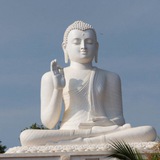
Forwarded from Words of the Buddha
Ulun Danu Beratan water temple, Lake Beratan, Bedugul highlands, North Bali, Indonesia.
❤1🥰1💯1
The Kandy Esala Perahera (the Sri Dalada Perahara procession of Kandy) or The Festival of the Tooth is a historical procession held annually to pay homage to the Sacred Tooth Relic of Buddha housed at the Sri Dalada Maligawa in Kandy. The festival ends with the traditional Diya-kepeema ritual, a water cutting ceremony which is held at the Mahaweli River at Getambe, Kandy.
❤2🎉1😘1
Forwarded from Words of the Buddha
Dragon Temple, Amphoe Sam Phran, Nakhon Pathom province, Thailand. The dragon's body is the stairs leading to the main Buddhist temple on top of the building.
❤1👏1🤩1
Forwarded from Ajahn Chah - Theravada Thailand Buddhism
Free Buddha Dharma ebook
Jataka Tales of the Buddha: Part IV and V
By Ken & Visakha Kawasaki
Free download available:
https://www.accesstoinsight.org/lib/authors/kawasaki/bl144.pdf
https://www.accesstoinsight.org/lib/authors/kawasaki/bl158.pdf
===
Jataka Tales of the Buddha: Part IV and V
By Ken & Visakha Kawasaki
Free download available:
https://www.accesstoinsight.org/lib/authors/kawasaki/bl144.pdf
https://www.accesstoinsight.org/lib/authors/kawasaki/bl158.pdf
===
❤1👌1😘1
Dhammapada Verse 353
Upakajivaka Vatthu
Sabbabhibhu sabbaviduhamasmi
sabbesu dhammesu anupalitto
sabbanjaho tanhakkhaye vimutto
sayam abhinnaya kamuddiseyyam.
Verse 353: I have overcome all, I know all, I am detached from all, I have given up all; I am liberated from moral defilements having eradicated craving, (i.e., I have attained arahatship). Having comprehended the Four Noble Truths by myself, whom should I point out as my teacher?
The Story of Upaka
The Buddha uttered Verse (353) of this book, in answer to the question put up by Upaka, a non-Buddhist ascetic, while the Buddha was on his way to the Deer Park (Migadaya) where the Group of Five Bhikkhus (Panca Vaggis) were staying. The Buddha was going there to expound the Dhamma cakkappavattana Sutta to the Panca Vaggis, his old associates, viz., Kondanna, Bhaddiya, Vappa, Assaji, and Mahanama. When Upaka saw Gotama Buddha, he was very much impressed by the radiant countenance of the Buddha and so said to him, "Friend, you look so serene and pure; may I know who your teacher is?" To him, the Buddha replied that he had no teacher.
Then the Buddha spoke in verse as follows:
Verse 353: I have overcome all, I know all, I am detached from all, I have given up all; I am liberated from moral defilements having eradicated craving, (i.e., I have attained arahatship). Having comprehended the Four Noble Truths by myself, whom should I point out as my teacher?
At the end of the discourse Upaka expressed neither approval nor disapproval but just nodded a few times and went on his way.
===
Dhammapada, beloved and favorite teachings of the Buddha channel:
https://invite.viber.com/?g2=AQBLD6phsgvP%2F061YjEM3K%2BNeH1Yb372b9mtfQX2EmuBpgoLUoc99BDMfzHghrme
===
Upakajivaka Vatthu
Sabbabhibhu sabbaviduhamasmi
sabbesu dhammesu anupalitto
sabbanjaho tanhakkhaye vimutto
sayam abhinnaya kamuddiseyyam.
Verse 353: I have overcome all, I know all, I am detached from all, I have given up all; I am liberated from moral defilements having eradicated craving, (i.e., I have attained arahatship). Having comprehended the Four Noble Truths by myself, whom should I point out as my teacher?
The Story of Upaka
The Buddha uttered Verse (353) of this book, in answer to the question put up by Upaka, a non-Buddhist ascetic, while the Buddha was on his way to the Deer Park (Migadaya) where the Group of Five Bhikkhus (Panca Vaggis) were staying. The Buddha was going there to expound the Dhamma cakkappavattana Sutta to the Panca Vaggis, his old associates, viz., Kondanna, Bhaddiya, Vappa, Assaji, and Mahanama. When Upaka saw Gotama Buddha, he was very much impressed by the radiant countenance of the Buddha and so said to him, "Friend, you look so serene and pure; may I know who your teacher is?" To him, the Buddha replied that he had no teacher.
Then the Buddha spoke in verse as follows:
Verse 353: I have overcome all, I know all, I am detached from all, I have given up all; I am liberated from moral defilements having eradicated craving, (i.e., I have attained arahatship). Having comprehended the Four Noble Truths by myself, whom should I point out as my teacher?
At the end of the discourse Upaka expressed neither approval nor disapproval but just nodded a few times and went on his way.
===
Dhammapada, beloved and favorite teachings of the Buddha channel:
https://invite.viber.com/?g2=AQBLD6phsgvP%2F061YjEM3K%2BNeH1Yb372b9mtfQX2EmuBpgoLUoc99BDMfzHghrme
===
Viber
Dhammapada - Buddha Dharma Teachings
Daily teachings of the Dhammapada, beloved and favorite teachings of the Buddha
👍1🏆1
Arhat Sivali, the Arahant of wealth and prosperity
17. Rakkhantā sīla tejena
Dhanavanto yasassino
Evaṃ tejānu-bhāvena
Sadā rakkhatu Sīvali
Through the power of his moral strength and great merit of generosity, may Arahant Sīvali
who is affluent and glorious, protect us always.
18. Kappaṭṭhāyiti Buddhassa
Bodhimūle nisīdiya
Mārasenappamaddanto
Sadā rakkhatu Sīvali
This way the Buddha, seated at the foot of the Bodhi Tree, vanquished death (Mara) will
remain for an aeon. May Arahant Sīvali protect us.
Sivali paritta
17. Rakkhantā sīla tejena
Dhanavanto yasassino
Evaṃ tejānu-bhāvena
Sadā rakkhatu Sīvali
Through the power of his moral strength and great merit of generosity, may Arahant Sīvali
who is affluent and glorious, protect us always.
18. Kappaṭṭhāyiti Buddhassa
Bodhimūle nisīdiya
Mārasenappamaddanto
Sadā rakkhatu Sīvali
This way the Buddha, seated at the foot of the Bodhi Tree, vanquished death (Mara) will
remain for an aeon. May Arahant Sīvali protect us.
Sivali paritta
🍾1🦄1
Dhammapada Verse 354
Sakkapanha Vatthu
Sabbadanam dhammadanam jinati
sabbarasam dhammaraso jinati
sabbaratim dhammarati jinati
tanhakkhayo sabbadukkham jinati.
Verse 354: The gift of the Dhamma excels all gifts; the taste of the Dhamma excels all tastes; delight in the Dhamma excels all delights. The eradication of Craving (i.e., attainment of arahatship) overcomes all ills (samsara dukkha).
The Story of the Questions Raised by Sakka
While residing at the Jetavana monastery, the Buddha uttered Verse (354) of this book, with reference to four questions raised by Sakka, king of the devas.
On one occasion, at a meeting of the devas in the Tavatimsa realm, four questions were raised, but the devas failed to get the correct answers. Eventually, Sakka took these devas to the Buddha at the Jetavana monastery. After explaining their difficulty, Sakka presented the following four questions:
(a) Among gifts, which is the best?
(b) Among tastes, which is the best?
(c) Among delights, which is the best?
(d) Why is the eradication of craving said to be the most excellent?
To these questions, the Buddha replied, "Oh Sakka, the Dhamma is the noblest of all gifts, the best of all tastes and the best of all delights. Eradication of Craving leads to the attainment of arahatship and is, therefore, the greatest of all conquests."
Then the Buddha spoke in verse as follows:
Verse 354: The gift of tile Dhamma excels all gifts; the taste of the Dhamma excels all tastes; delight in the Dhamma excels all delights. The eradication of Craving (i.e., attainment of arahatship) overcomes all ills (samsara dukkha).
At the end of the discourse, Sakka said to the Buddha, "Venerable Sir, if the gift of the Dhamma excels all gifts why are we not invited to share the merit whenever gifts of the Dhamma are made? Venerable Sir! I pray that, from now on, we may be given a share in the merit of good deeds". Then the Buddha asked all the bhikkhus to assemble and exhorted them to share the merit of all their good deeds with all beings.
Since then, it has become a custom to invite all beings from the thirty-one realms (bhumis) to come and share merit whenever a good deed is done.
===
Ajahn Chah, Buddhist teacher of Thai forest meditation of Theravada Buddhism channel:
https://news.1rj.ru/str/ajahnchah_buddhism
===
Sakkapanha Vatthu
Sabbadanam dhammadanam jinati
sabbarasam dhammaraso jinati
sabbaratim dhammarati jinati
tanhakkhayo sabbadukkham jinati.
Verse 354: The gift of the Dhamma excels all gifts; the taste of the Dhamma excels all tastes; delight in the Dhamma excels all delights. The eradication of Craving (i.e., attainment of arahatship) overcomes all ills (samsara dukkha).
The Story of the Questions Raised by Sakka
While residing at the Jetavana monastery, the Buddha uttered Verse (354) of this book, with reference to four questions raised by Sakka, king of the devas.
On one occasion, at a meeting of the devas in the Tavatimsa realm, four questions were raised, but the devas failed to get the correct answers. Eventually, Sakka took these devas to the Buddha at the Jetavana monastery. After explaining their difficulty, Sakka presented the following four questions:
(a) Among gifts, which is the best?
(b) Among tastes, which is the best?
(c) Among delights, which is the best?
(d) Why is the eradication of craving said to be the most excellent?
To these questions, the Buddha replied, "Oh Sakka, the Dhamma is the noblest of all gifts, the best of all tastes and the best of all delights. Eradication of Craving leads to the attainment of arahatship and is, therefore, the greatest of all conquests."
Then the Buddha spoke in verse as follows:
Verse 354: The gift of tile Dhamma excels all gifts; the taste of the Dhamma excels all tastes; delight in the Dhamma excels all delights. The eradication of Craving (i.e., attainment of arahatship) overcomes all ills (samsara dukkha).
At the end of the discourse, Sakka said to the Buddha, "Venerable Sir, if the gift of the Dhamma excels all gifts why are we not invited to share the merit whenever gifts of the Dhamma are made? Venerable Sir! I pray that, from now on, we may be given a share in the merit of good deeds". Then the Buddha asked all the bhikkhus to assemble and exhorted them to share the merit of all their good deeds with all beings.
Since then, it has become a custom to invite all beings from the thirty-one realms (bhumis) to come and share merit whenever a good deed is done.
===
Ajahn Chah, Buddhist teacher of Thai forest meditation of Theravada Buddhism channel:
https://news.1rj.ru/str/ajahnchah_buddhism
===
Telegram
Ajahn Chah - Theravada Thailand Buddhism
Collection of teachings of Venerable Ajahn Chah, a foremost meditation and Buddhist teacher from Thailand
👍1🏆1
Forwarded from Buddha
Free Buddha Dharma ebook
Satipatthana, The Direct Path To Realization
By Ven. Analayo
My exposition follows the sequence of the passages in the Maha Satipatthana Sutta closely as possible. At the same time, however, my treatment is not restricted to simple comments, but allows for minor digressions in order to explore relevant points and to provide a background for better understanding the section under discussion.
The first chapter deals with general aspects and terminology in relation to satipatthana. The next three chapters are concerned with the second paragraph of the Satipatthana Sutta, the "definition", especially with the implications of sati and the role of concentration. In the fifth chapter I turn to a set of general instructions repeated throughout the discourse after each meditation exercise, the "refrain". With the sixth chapter I begin to examine the actual exercises of the "direct path" of mindfulness meditation, concerned with contemplating the body, feelings, mind, and dhammas. At the end of this examination of the individual meditation practices I turn to the final paragraph ofthe discourse and to the implications of Nibbana. By way of conclusion, I try to highlight some key aspects of Satipatthana and to evaluate its importance.
In general, my purpose in the present inquiry is less to prove and establish a particular point of view than provide suggestions and reflections in thehope of opening up new perspectives in regard to Satipatthana, and in the hope of inspiring the reader to engage in its actual practice.
Free download available:
https://ftp.budaedu.org/ebooks/pdf/EN345.pdf
===
Satipatthana, The Direct Path To Realization
By Ven. Analayo
My exposition follows the sequence of the passages in the Maha Satipatthana Sutta closely as possible. At the same time, however, my treatment is not restricted to simple comments, but allows for minor digressions in order to explore relevant points and to provide a background for better understanding the section under discussion.
The first chapter deals with general aspects and terminology in relation to satipatthana. The next three chapters are concerned with the second paragraph of the Satipatthana Sutta, the "definition", especially with the implications of sati and the role of concentration. In the fifth chapter I turn to a set of general instructions repeated throughout the discourse after each meditation exercise, the "refrain". With the sixth chapter I begin to examine the actual exercises of the "direct path" of mindfulness meditation, concerned with contemplating the body, feelings, mind, and dhammas. At the end of this examination of the individual meditation practices I turn to the final paragraph ofthe discourse and to the implications of Nibbana. By way of conclusion, I try to highlight some key aspects of Satipatthana and to evaluate its importance.
In general, my purpose in the present inquiry is less to prove and establish a particular point of view than provide suggestions and reflections in thehope of opening up new perspectives in regard to Satipatthana, and in the hope of inspiring the reader to engage in its actual practice.
Free download available:
https://ftp.budaedu.org/ebooks/pdf/EN345.pdf
===
👍1💯1
Forwarded from Ajahn Chah - Theravada Thailand Buddhism
Meeting the Dharma Alone
A late Thai master’s final advice on walking the path to enlightenment
By Ajahn Chah
Part 1 of 2
People may look at you and feel that your way of life, your interest in dharma, makes no sense. Others may say that if you want to practice dharma, you ought to ordain. Ordaining or not ordaining isn’t the crucial point. It’s how you practice.
Laypeople live in the realm of sensuality. They have families, money, and possessions, and are deeply involved in all sorts of activities. Yet sometimes they will gain insight and see dharma before monks and nuns do. Why is this? It’s because of their suffering from all these things. They see the fault and can let go. They can put it down after seeing clearly in their experience. Seeing the harm and letting go, they are able to make good sense of their position in the world and benefit others.
We ordained people, on the other hand, might sit here daydreaming about lay life, thinking how great it could be. “Oh yeah, I’d work my fields and make money, then I could have a nice family and a comfortable home.” We don’t know what it’s really like. The laypeople are out there doing it, breaking their backs in the fields, struggling to earn some money and survive. But for us, it’s only fantasy.
The laypeople live in a certain kind of thoroughness and clarity. Whatever they do, they really do it. Even getting drunk, they do it thoroughly and have the experience of what it actually is, while we can only imagine what it’s like. So, because of their experience, they may become tired of things and realize the dharma quicker than monks can.
You should be your own witness. Don’t take others as your witness. This means learning to trust yourself. People may think you’re crazy, but never mind. It only means they don’t know anything about dharma. But if you lack confidence and instead rely on the opinions of unenlightened people, you can easily be deterred. In Thailand these days, it’s hard for young people to sustain an interest in dharma. Maybe they come to the monastery a few times, and then their friends start teasing them, complaining: “Since you started going to the monastery, you don’t want to hang out or go drinking anymore. What’s wrong with you?” So they often give up the path.
Others’ words can’t measure your practice, and you don’t realize the dharma because of what others say. I mean the real dharma. The teachings others can give you are to show you the path, but that isn’t real knowledge. When people genuinely meet the dharma, they realize it directly within themselves. So the Buddha said that he is merely the one who shows the way. In teaching us, he is not accomplishing the way for us. It is not so easy as that. It’s like someone who sells us a plow to till the fields. He isn’t going to do the plowing for us. We have to do that ourselves. Don’t wait for the salesman to do it. Once he’s made the sale, he takes the money and splits. That’s his part.That’s how it is in practice. The Buddha shows the way. He’s not the one who does it for us. Don’t expect the salesman to till your field. If we understand the path in this way, it’s a little more comfortable for us, and we will do it ourselves. Then there will be fruition.
Teachings can be most profound, but those who listen may not understand. Never mind. Don’t be perplexed over profundity or lack of it. Just do the practice wholeheartedly, and you can arrive at real understanding—it will bring you to the place the teachings talk about.
Don’t rely on the perceptions of ordinary people. Have you read the story about the blind men and the elephant? It’s a good illustration. Suppose there’s an elephant, and a group of blind people are trying to describe it. One touches the leg and says it’s like a pillar. Another touches the ear and says it’s like a fan. Another touches the tail and says, “No, it’s not a fan, it’s like a broom.” Another touches the body and says it’s something else again from what the others say.
A late Thai master’s final advice on walking the path to enlightenment
By Ajahn Chah
Part 1 of 2
People may look at you and feel that your way of life, your interest in dharma, makes no sense. Others may say that if you want to practice dharma, you ought to ordain. Ordaining or not ordaining isn’t the crucial point. It’s how you practice.
Laypeople live in the realm of sensuality. They have families, money, and possessions, and are deeply involved in all sorts of activities. Yet sometimes they will gain insight and see dharma before monks and nuns do. Why is this? It’s because of their suffering from all these things. They see the fault and can let go. They can put it down after seeing clearly in their experience. Seeing the harm and letting go, they are able to make good sense of their position in the world and benefit others.
We ordained people, on the other hand, might sit here daydreaming about lay life, thinking how great it could be. “Oh yeah, I’d work my fields and make money, then I could have a nice family and a comfortable home.” We don’t know what it’s really like. The laypeople are out there doing it, breaking their backs in the fields, struggling to earn some money and survive. But for us, it’s only fantasy.
The laypeople live in a certain kind of thoroughness and clarity. Whatever they do, they really do it. Even getting drunk, they do it thoroughly and have the experience of what it actually is, while we can only imagine what it’s like. So, because of their experience, they may become tired of things and realize the dharma quicker than monks can.
You should be your own witness. Don’t take others as your witness. This means learning to trust yourself. People may think you’re crazy, but never mind. It only means they don’t know anything about dharma. But if you lack confidence and instead rely on the opinions of unenlightened people, you can easily be deterred. In Thailand these days, it’s hard for young people to sustain an interest in dharma. Maybe they come to the monastery a few times, and then their friends start teasing them, complaining: “Since you started going to the monastery, you don’t want to hang out or go drinking anymore. What’s wrong with you?” So they often give up the path.
Others’ words can’t measure your practice, and you don’t realize the dharma because of what others say. I mean the real dharma. The teachings others can give you are to show you the path, but that isn’t real knowledge. When people genuinely meet the dharma, they realize it directly within themselves. So the Buddha said that he is merely the one who shows the way. In teaching us, he is not accomplishing the way for us. It is not so easy as that. It’s like someone who sells us a plow to till the fields. He isn’t going to do the plowing for us. We have to do that ourselves. Don’t wait for the salesman to do it. Once he’s made the sale, he takes the money and splits. That’s his part.That’s how it is in practice. The Buddha shows the way. He’s not the one who does it for us. Don’t expect the salesman to till your field. If we understand the path in this way, it’s a little more comfortable for us, and we will do it ourselves. Then there will be fruition.
Teachings can be most profound, but those who listen may not understand. Never mind. Don’t be perplexed over profundity or lack of it. Just do the practice wholeheartedly, and you can arrive at real understanding—it will bring you to the place the teachings talk about.
Don’t rely on the perceptions of ordinary people. Have you read the story about the blind men and the elephant? It’s a good illustration. Suppose there’s an elephant, and a group of blind people are trying to describe it. One touches the leg and says it’s like a pillar. Another touches the ear and says it’s like a fan. Another touches the tail and says, “No, it’s not a fan, it’s like a broom.” Another touches the body and says it’s something else again from what the others say.
Telegram
Words of the Buddha
Daily teachings of Buddha Dharma
👏1😍1
Forwarded from Ajahn Chah - Theravada Thailand Buddhism
There’s no resolution. Each blind person touches part of the elephant and has a completely different idea of what it is. But it’s the same one elephant. It’s like this in practice. With a little understanding or experience, you get limited ideas. You can go from one teacher to the next seeking explanations and instructions, trying to figure out if they are teaching correctly or incorrectly and how their teachings compare to each other. Some people are always traveling around to learn from different teachers. They try to judge and measure, so when they sit down to meditate they are constantly in confusion about what is right and what is wrong. “This teacher said this, but that teacher said that. One guy teaches in this way, but the other guy’s methods are different. They don’t seem to agree.” It can lead to a lot of doubt.
You might hear that certain teachers are really good, and so you go to receive teachings from Thai ajahns, Zen masters, Vipassana teachers, and others. It seems to me that most of you have probably had enough teaching, but the tendency is to always want to hear more, to compare, and to end up in doubt as a result. Each successive teacher might well increase your confusion further.
Thus the Buddha said, “I am enlightened through my own efforts, without any teacher.” A wandering ascetic asked him, “Who is your teacher?” The Buddha answered, “I have no teacher. I attained enlightenment by myself.” But that wanderer just shook his head and went away. He thought the Buddha was making up a story and had no interest in what he said. He believed it wasn’t possible to achieve anything without a teacher or a guide.
===
Words of the Buddha channel:
https://news.1rj.ru/str/wordsofbuddha
===
You might hear that certain teachers are really good, and so you go to receive teachings from Thai ajahns, Zen masters, Vipassana teachers, and others. It seems to me that most of you have probably had enough teaching, but the tendency is to always want to hear more, to compare, and to end up in doubt as a result. Each successive teacher might well increase your confusion further.
Thus the Buddha said, “I am enlightened through my own efforts, without any teacher.” A wandering ascetic asked him, “Who is your teacher?” The Buddha answered, “I have no teacher. I attained enlightenment by myself.” But that wanderer just shook his head and went away. He thought the Buddha was making up a story and had no interest in what he said. He believed it wasn’t possible to achieve anything without a teacher or a guide.
===
Words of the Buddha channel:
https://news.1rj.ru/str/wordsofbuddha
===
Telegram
Words of the Buddha
Daily teachings of Buddha Dharma
🙏1🤗1
Dhammapada Verse 355
Aputtakasetthi Vatthu
Hananti bhoga dummedham
no ca paragavesino
bhogatanhaya dummedho
hanti anneva attanam.
Verse 355: Wealth destroys the foolish; but it cannot destroy those who seek the other shore (i.e., Nibbana). By his craving for wealth the fool destroys himself, as he would destroy others.
The Story of a Childless Rich Man
While residing at the Jetavana monastery, the Buddha uttered Verse (355) of this book, with reference to a childless rich man.
On one occasion, King Pasenadi of Kosala came to pay homage to the Buddha. He explained to the Buddha that he was late because earlier that day a rich man had died in Savatthi without leaving any heirs, and so he had to confiscate all that man's property. Then, he proceeded to relate about the man, who, although very rich, was very stingy. While he lived, he did not give away anything in charity. He was reluctant to spend his money even on himself, and therefore, ate very sparingly and wore cheap, coarse clothes only. On hearing this the Buddha told the king and the audience about the man in a past existence. In that existence also he was a rich man.
One day, when a paccekabuddha came and stood for alms at his house, he told his wife to offer some thing to the paccekabuddha. His wife thought it was very rarely that her husband gave her permission to give anything to anybody. So, she filled up the alms-bowl with some choice food. The rich man again met the paccekabuddha on his way home and he had a look at the alms-bowl. Seeing that his wife had offered a substantial amount of good food, he thought, "Oh, this bhikkhu would only have a good sleep after a good meal. It would have been better if my servants were given such good food; at least, they would have given me better service." In other words, he regretted that he had asked his wife to offer food to the paccekabuddha. This same man had a brother who also was a rich man. His brother had an only son. Coveting his brother's wealth, he had killed his young nephew and had thus wrongfully inherited his brother's wealth on the latter's death.
Because the man had offered alms-food to the paccekabuddha he became a rich man in his present life; because he regretted having offered food to the paccekabuddha he had no wish to spend anything even on himself. Because he had killed his own nephew for the sake of his brother's wealth he had to suffer in niraya for seven existences. His bad kamma having come to an end he was born into the human world but here also he had not gained any good kamma. The king then remarked, "Venerable Sir! Even though he had lived here in the lifetime of the Buddha himself, he had not made any offering of anything to the Buddha or to his disciples. Indeed, he had missed a very good opportunity; he had been very foolish."
Then the Buddha spoke in verse as follows:
Verse 355: Wealth destroys the foolish; but it cannot destroy those who seek the other shore (i.e., Nibbana). By his craving for wealth the fool destroys himself, as he would destroy others.
===
Free Buddhism books, teachings, podcasts and videos from Theravada, Mahayana and Vajrayana traditions:
https://news.1rj.ru/str/buddha_ebooks
===
Aputtakasetthi Vatthu
Hananti bhoga dummedham
no ca paragavesino
bhogatanhaya dummedho
hanti anneva attanam.
Verse 355: Wealth destroys the foolish; but it cannot destroy those who seek the other shore (i.e., Nibbana). By his craving for wealth the fool destroys himself, as he would destroy others.
The Story of a Childless Rich Man
While residing at the Jetavana monastery, the Buddha uttered Verse (355) of this book, with reference to a childless rich man.
On one occasion, King Pasenadi of Kosala came to pay homage to the Buddha. He explained to the Buddha that he was late because earlier that day a rich man had died in Savatthi without leaving any heirs, and so he had to confiscate all that man's property. Then, he proceeded to relate about the man, who, although very rich, was very stingy. While he lived, he did not give away anything in charity. He was reluctant to spend his money even on himself, and therefore, ate very sparingly and wore cheap, coarse clothes only. On hearing this the Buddha told the king and the audience about the man in a past existence. In that existence also he was a rich man.
One day, when a paccekabuddha came and stood for alms at his house, he told his wife to offer some thing to the paccekabuddha. His wife thought it was very rarely that her husband gave her permission to give anything to anybody. So, she filled up the alms-bowl with some choice food. The rich man again met the paccekabuddha on his way home and he had a look at the alms-bowl. Seeing that his wife had offered a substantial amount of good food, he thought, "Oh, this bhikkhu would only have a good sleep after a good meal. It would have been better if my servants were given such good food; at least, they would have given me better service." In other words, he regretted that he had asked his wife to offer food to the paccekabuddha. This same man had a brother who also was a rich man. His brother had an only son. Coveting his brother's wealth, he had killed his young nephew and had thus wrongfully inherited his brother's wealth on the latter's death.
Because the man had offered alms-food to the paccekabuddha he became a rich man in his present life; because he regretted having offered food to the paccekabuddha he had no wish to spend anything even on himself. Because he had killed his own nephew for the sake of his brother's wealth he had to suffer in niraya for seven existences. His bad kamma having come to an end he was born into the human world but here also he had not gained any good kamma. The king then remarked, "Venerable Sir! Even though he had lived here in the lifetime of the Buddha himself, he had not made any offering of anything to the Buddha or to his disciples. Indeed, he had missed a very good opportunity; he had been very foolish."
Then the Buddha spoke in verse as follows:
Verse 355: Wealth destroys the foolish; but it cannot destroy those who seek the other shore (i.e., Nibbana). By his craving for wealth the fool destroys himself, as he would destroy others.
===
Free Buddhism books, teachings, podcasts and videos from Theravada, Mahayana and Vajrayana traditions:
https://news.1rj.ru/str/buddha_ebooks
===
Telegram
Buddha Dharma books
Free Buddhism books, teachings, podcasts and videos from Theravada, Mahayana and Vajrayana traditions
👍1🏆1