Forwarded from Buddha Dharma books
Free Buddhism Dharma ebook
Colour illustrated Life of the Buddha
By Dharma Realms University and Buddhist Text Translation Society, California
Free download available:
https://ftp.budaedu.org/ebooks/pdf/EN300.pdf
===
Colour illustrated Life of the Buddha
By Dharma Realms University and Buddhist Text Translation Society, California
Free download available:
https://ftp.budaedu.org/ebooks/pdf/EN300.pdf
===
❤1👍1💯1
Dhammapada Verse 367
Pancaggadayaka Brahmana Vatthu
Sabbaso namarupasmim
yassa natthi mamayitam
asata ca na socati
sa ve "bhikkhu" ti vuccati.
Verse 367: He who does not take the mind-and-body aggregate (nama-rupa) as "I and mine", and who does not grieve over the dissolution (of mind and body) is, indeed, called a bhikkhu.
The Story of the Giver of the First-Fruits of His Labour
While residing at the Jetavana monastery, the Buddha uttered Verse (367) of this book, with reference to a brahmin who was in the habit of making five offerings of first-fruits in charity. The first-fruits here refer to the first-fruits of the field. The first-fruits of the field are given in charity at the time of harvesting, at the time of threshing, at the time of storing, at the time of cooking and at the time of filling the plate.
One day, the Buddha saw the brahmin and his wife in his vision and knew that time was ripe for the couple to attain Anagami Fruition. Accordingly, the Buddha set out for their house and stood at the door for alms food. The brahmin who was then having his meal, facing the interior part of the house, did not see the Buddha. His wife who was near him saw the Buddha, but she was afraid that if her husband saw the Buddha standing at the door for alms-food, he would offer all his rice in the plate and, in that case, she would have to cook again. With this thought in her mind, she stood behind her husband so that he would not see the Buddha; when she quietly stepped backwards and slowly came to where the Buddha was standing, and whispered to him, "Venerable Sir! We do not have any alms-food for you today." But the Buddha had decided not to leave the house; he just shook his head. Seeing this gesture, the brahmin's wife could not control herself and she burst out laughing.
At that instant, the brahmin turned round and saw the Buddha. At once he knew what his wife had done, and he cried out, "O you, my wretched wife! You have ruined me." Then, taking up his plate of rice, he approached the Buddha and apologetically requested, "Venerable Sir! Please accept this rice which I have partly consumed." To him the Buddha replied, "O brahmin! Any rice is suitable for me, whether it is not yet consumed, or is partly consumed, or even if it is the last remaining spoonful." The brahmin was very much surprised by the Buddha's reply; at the same time, it made him happy because his offer of rice was accepted by the Buddha. The brahmin next asked the Buddha by what standard a bhikkhu was judged and how a bhikkhu was defined. The Buddha knew that both the brahmin and his wife had already learned something about mind and body (nama-rupa); so he answered, "O brahmin! One who is not attached to mind and body is called a bhikkhu."
Then the Buddha spoke in verse as follows:
Verse 367: He who does not take the mind-and-body aggregate (nama-rupa) as "I and mine", and who does not grieve over the dissolution (of mind and body) is, indeed, called a bhikkhu.
At the end of the discourse both the brahmin and his wife attained Anagami Fruition.
===
Dhammapada, beloved and favorite teachings of the Buddha channel:
https://invite.viber.com/?g2=AQBLD6phsgvP%2F061YjEM3K%2BNeH1Yb372b9mtfQX2EmuBpgoLUoc99BDMfzHghrme
===
Pancaggadayaka Brahmana Vatthu
Sabbaso namarupasmim
yassa natthi mamayitam
asata ca na socati
sa ve "bhikkhu" ti vuccati.
Verse 367: He who does not take the mind-and-body aggregate (nama-rupa) as "I and mine", and who does not grieve over the dissolution (of mind and body) is, indeed, called a bhikkhu.
The Story of the Giver of the First-Fruits of His Labour
While residing at the Jetavana monastery, the Buddha uttered Verse (367) of this book, with reference to a brahmin who was in the habit of making five offerings of first-fruits in charity. The first-fruits here refer to the first-fruits of the field. The first-fruits of the field are given in charity at the time of harvesting, at the time of threshing, at the time of storing, at the time of cooking and at the time of filling the plate.
One day, the Buddha saw the brahmin and his wife in his vision and knew that time was ripe for the couple to attain Anagami Fruition. Accordingly, the Buddha set out for their house and stood at the door for alms food. The brahmin who was then having his meal, facing the interior part of the house, did not see the Buddha. His wife who was near him saw the Buddha, but she was afraid that if her husband saw the Buddha standing at the door for alms-food, he would offer all his rice in the plate and, in that case, she would have to cook again. With this thought in her mind, she stood behind her husband so that he would not see the Buddha; when she quietly stepped backwards and slowly came to where the Buddha was standing, and whispered to him, "Venerable Sir! We do not have any alms-food for you today." But the Buddha had decided not to leave the house; he just shook his head. Seeing this gesture, the brahmin's wife could not control herself and she burst out laughing.
At that instant, the brahmin turned round and saw the Buddha. At once he knew what his wife had done, and he cried out, "O you, my wretched wife! You have ruined me." Then, taking up his plate of rice, he approached the Buddha and apologetically requested, "Venerable Sir! Please accept this rice which I have partly consumed." To him the Buddha replied, "O brahmin! Any rice is suitable for me, whether it is not yet consumed, or is partly consumed, or even if it is the last remaining spoonful." The brahmin was very much surprised by the Buddha's reply; at the same time, it made him happy because his offer of rice was accepted by the Buddha. The brahmin next asked the Buddha by what standard a bhikkhu was judged and how a bhikkhu was defined. The Buddha knew that both the brahmin and his wife had already learned something about mind and body (nama-rupa); so he answered, "O brahmin! One who is not attached to mind and body is called a bhikkhu."
Then the Buddha spoke in verse as follows:
Verse 367: He who does not take the mind-and-body aggregate (nama-rupa) as "I and mine", and who does not grieve over the dissolution (of mind and body) is, indeed, called a bhikkhu.
At the end of the discourse both the brahmin and his wife attained Anagami Fruition.
===
Dhammapada, beloved and favorite teachings of the Buddha channel:
https://invite.viber.com/?g2=AQBLD6phsgvP%2F061YjEM3K%2BNeH1Yb372b9mtfQX2EmuBpgoLUoc99BDMfzHghrme
===
Viber
Dhammapada - Buddha Dharma Teachings
Daily teachings of the Dhammapada, beloved and favorite teachings of the Buddha
❤1💯1🏆1
Nandopanandabhujagam vibhudhammahiddhim,
Puttena therabhujagena damapayanto.
Iddhupadesa vidhina jitava Munindo,
Tam tejasa bhavatu me jayamangalani.
The gifted but perverted king of the nagas, Nandopananda by name, possessed great psychic power and was hostile. By instructing the Elder Moggallana, his spiritual son, mighty in supernatural attainments, the Sovereign Sage rendered the Naga king powerless and transformed him. Thus, through a supernormal mode of spiritual instruction intelligible to his kind, did the Master conquer the naga. By this mighty triumph may joyous victory be mine!
Jaya Mangala Gatha
Puttena therabhujagena damapayanto.
Iddhupadesa vidhina jitava Munindo,
Tam tejasa bhavatu me jayamangalani.
The gifted but perverted king of the nagas, Nandopananda by name, possessed great psychic power and was hostile. By instructing the Elder Moggallana, his spiritual son, mighty in supernatural attainments, the Sovereign Sage rendered the Naga king powerless and transformed him. Thus, through a supernormal mode of spiritual instruction intelligible to his kind, did the Master conquer the naga. By this mighty triumph may joyous victory be mine!
Jaya Mangala Gatha
❤1👏1🏆1
Dhammapada Verses 368 to 376
Sambahulabhikkhu Vatthu
Mettavihari yo bhikkhu
pasanno buddhasasane
adhigacche padam santam
sankharupasamam sukham.
Sinca bhikkhu imam navam
sitta te lahumessati
chetva raganca dosanca
tato nibbanamehisi.
Panca1 chinde panca2 jahe
panca3 cuttari bhavaye
pancasangatigo4 bhikkhu
"oghatinno" ti vuccati.
Jhaya bhikkhu ma pamado
ma te kamagune ramessu cittam
ma lohagulam gili pamatto
ma kandi "dukkhamidan" ti dayhamano.
Natthi jhanam apannassa
panna natthi ajhayato
yamhi jhananca panna ca
sa ve nibbanasantike.
Sunnagaram pavitthassa
santacittassa bhikkhuno
amanusi rati hoti
samma dhammam vipassato.
Yato yato sammasati
khandhanam udayabbayam
labhati pitipamojjam
amatam tam vijanatam.
Tatrayamadi bhavati
idha pannassa bhikkhuno
indriyagutti santutthi
patimokkhe ca samvaro.
Mitte bhajassu kalyane
suddhajive atandite
patisantharavutyassa
acarakusalo siya
tato pamojjabahulo5
dukkhassantam karissati.
Verse 368: The bhikkhu who lives exercising loving-kindness and is devoted to the Teaching of the Buddha will realize Nibbana — the Tranquil, the Unconditioned, the Blissful.
Verse 369: O bhikkhu, bale out the water (of wrong thoughts) from this boat (your body); when empty it will sail swiftly; having cut off passion and ill will you will realize Nibbana.
Verse 370: Cut off the five (the lower five fetters) give up the five (the upper five fetters); and develop the five (controlling faculties). The bhikkhu who has freed himself of the five bonds (passion, ill will, ignorance, pride and wrong view) is called "One who has crossed the flood (of samsara)."
Verse 371: O Bhikkhu, mediate, and do not be unmindful; do not let your mind rejoice in sensual pleasures. Do not be unmindful and swallow the (hot) lump of iron; as you burn (in niraya) do not cry, "This, indeed, is suffering."
Verse 372: There can be no concentration in one who lacks wisdom; there can be no wisdom in one who lacks concentration. He who has concentration as well as wisdom is, indeed, close to Nibbana.
Verse 373: The bhikkhu who goes into seclusion (to meditate), whose mind is tranquil, who clearly perceives the Dhamma, experiences the joy which transcends that of (ordinary) men.
Verse 374: Every time he clearly comprehends the arising and the perishing of the khandhas, he finds joy and rapture. That, to the wise, is the way to Nibbana (the Deathless).
Verse 375: For a wise bhikkhu in this Teaching, this is the beginning (of the practice leading to Nibbana): control of the senses, contentment, and restraint according to the Fundamental Precepts.
Verse 376: Associate with good friends, who are energetic and whose livelihood is pure; let him be amiable and be correct in his conduct. Then, (frequently) feeling much joy he will make an end of dukkha (of the round of rebirths).
1. The lower five fetters (Orambhagiya samyojana) are: ego belief (sakkayaditthi); doubt (vicikkiccha); wrong views of morality and practices (silabbataparamasa); sensual desire (kamaraga) and ill will (byapada). These can be got rid of by the first, second and third Maggas.
2. The upper five fetters (Uddhambhagiya samyojana) are: craving for fine material existences (rupa raga); craving for non-material existences (arupa raga); pride (mana); restlessness (uddhacca) and ignorance (avijja). These five can be got rid of by arahatship.
3. The five controlling faculties (Pancindriya) are: faith (saddha); diligence (viriya); mindfulness (sati); concentration (samadhi) and wisdom (panna).
4. The five sangas are: passion, ill will, ignorance, pride and wrong views.
5. pamojjabahulo: lit., much joy; according to the Commentary, in this context, frequently feeling joy.
The Story of a Great Many Bhikkhus
While residing at the Jetavana monastery, the Buddha uttered Verses (368) to (376) of this book, with reference to nine hundred bhikkhus.
Sambahulabhikkhu Vatthu
Mettavihari yo bhikkhu
pasanno buddhasasane
adhigacche padam santam
sankharupasamam sukham.
Sinca bhikkhu imam navam
sitta te lahumessati
chetva raganca dosanca
tato nibbanamehisi.
Panca1 chinde panca2 jahe
panca3 cuttari bhavaye
pancasangatigo4 bhikkhu
"oghatinno" ti vuccati.
Jhaya bhikkhu ma pamado
ma te kamagune ramessu cittam
ma lohagulam gili pamatto
ma kandi "dukkhamidan" ti dayhamano.
Natthi jhanam apannassa
panna natthi ajhayato
yamhi jhananca panna ca
sa ve nibbanasantike.
Sunnagaram pavitthassa
santacittassa bhikkhuno
amanusi rati hoti
samma dhammam vipassato.
Yato yato sammasati
khandhanam udayabbayam
labhati pitipamojjam
amatam tam vijanatam.
Tatrayamadi bhavati
idha pannassa bhikkhuno
indriyagutti santutthi
patimokkhe ca samvaro.
Mitte bhajassu kalyane
suddhajive atandite
patisantharavutyassa
acarakusalo siya
tato pamojjabahulo5
dukkhassantam karissati.
Verse 368: The bhikkhu who lives exercising loving-kindness and is devoted to the Teaching of the Buddha will realize Nibbana — the Tranquil, the Unconditioned, the Blissful.
Verse 369: O bhikkhu, bale out the water (of wrong thoughts) from this boat (your body); when empty it will sail swiftly; having cut off passion and ill will you will realize Nibbana.
Verse 370: Cut off the five (the lower five fetters) give up the five (the upper five fetters); and develop the five (controlling faculties). The bhikkhu who has freed himself of the five bonds (passion, ill will, ignorance, pride and wrong view) is called "One who has crossed the flood (of samsara)."
Verse 371: O Bhikkhu, mediate, and do not be unmindful; do not let your mind rejoice in sensual pleasures. Do not be unmindful and swallow the (hot) lump of iron; as you burn (in niraya) do not cry, "This, indeed, is suffering."
Verse 372: There can be no concentration in one who lacks wisdom; there can be no wisdom in one who lacks concentration. He who has concentration as well as wisdom is, indeed, close to Nibbana.
Verse 373: The bhikkhu who goes into seclusion (to meditate), whose mind is tranquil, who clearly perceives the Dhamma, experiences the joy which transcends that of (ordinary) men.
Verse 374: Every time he clearly comprehends the arising and the perishing of the khandhas, he finds joy and rapture. That, to the wise, is the way to Nibbana (the Deathless).
Verse 375: For a wise bhikkhu in this Teaching, this is the beginning (of the practice leading to Nibbana): control of the senses, contentment, and restraint according to the Fundamental Precepts.
Verse 376: Associate with good friends, who are energetic and whose livelihood is pure; let him be amiable and be correct in his conduct. Then, (frequently) feeling much joy he will make an end of dukkha (of the round of rebirths).
1. The lower five fetters (Orambhagiya samyojana) are: ego belief (sakkayaditthi); doubt (vicikkiccha); wrong views of morality and practices (silabbataparamasa); sensual desire (kamaraga) and ill will (byapada). These can be got rid of by the first, second and third Maggas.
2. The upper five fetters (Uddhambhagiya samyojana) are: craving for fine material existences (rupa raga); craving for non-material existences (arupa raga); pride (mana); restlessness (uddhacca) and ignorance (avijja). These five can be got rid of by arahatship.
3. The five controlling faculties (Pancindriya) are: faith (saddha); diligence (viriya); mindfulness (sati); concentration (samadhi) and wisdom (panna).
4. The five sangas are: passion, ill will, ignorance, pride and wrong views.
5. pamojjabahulo: lit., much joy; according to the Commentary, in this context, frequently feeling joy.
The Story of a Great Many Bhikkhus
While residing at the Jetavana monastery, the Buddha uttered Verses (368) to (376) of this book, with reference to nine hundred bhikkhus.
Telegram
Ajahn Chah - Theravada Thailand Buddhism
Collection of teachings of Venerable Ajahn Chah, a foremost meditation and Buddhist teacher from Thailand
👍2❤1👏1
Once there was a very rich lady in the town of Kuraraghara, about one hundred and twenty yojanas from Savatthi. She had a son who had become a bhikkhu; his name was Sona. On one occasion, Bhikkhu Sona passed through his home town. On his return from the Jetavana monastery his mother met him and organized a grand charity in his honour. Having heard that Bhikkhu Sona could expound the Dhamma very well she also requested him to expound the Dhamma to her and other people of the home town. Bhikkhu Sona complied with her request. So a pavilion was built and a meeting was organized for Bhikkhu Sona to give a discourse. There was a large gathering at the pavilion; the mother of the bhikkhu also went to listen to the Dhamma expounded by her son. She took all the members of her household with her leaving only a maid to look after the house.
While the lady was away, some thieves broke into the house. Their leader, however, went to the pavilion where the mistress of the house was, sat down near her and kept an eye on her. His intention was to get rid of her should she return home early on learning about the theft at her house. The maid seeing the thieves breaking into the house went to report the matter to her mistress, but the lady only said, "Let the thieves take all my money, I don't care; but do not come and disturb me while I am listening to the Dhamma. You'd better go back." So the maid went home.
There the girl saw the thieves breaking into the room where her mistress kept all her silverware. Again she went to the pavilion where her mistress was and reported to her that the thieves were taking away her silverware, but she was given the same answer as before. So she had to go back to the house. There she saw the thieves breaking into the room where her mistress kept her gold and she reported the matter to her mistress. This time, her mistress shouted at her, "O dear! Let the thieves take whatever they wish to take; why do you have to come and worry me again when I am listening to a discourse on the Dhamma? Why did you not go back when I told you to? Don't you dare come near me again and say things about the theft or the thieves."
The leader of the gang of thieves who was close at hand heard everything the lady had said and he was extremely surprised. Her words also kept him thinking, "If we take away the property of this wise and noble person, we will surely be punished; we might even be struck by lightning and our heads broken into many pieces." The leader got alarmed over this possibility and he hurried back to the house of the lady and made his followers return all the things they had taken. He then took all his followers to where the mistress of the house was; she was still at the pavilion, listening attentively to the Dhamma.
Thera Sona finished his exposition on the Dhamma with the crack of dawn and came down from the dais from where he had expounded the Dhamma. The leader of the thieves approached the rich, noble lady, paid respect to her and revealed his identity to her. He also related to her how they had plundered her house and also that they had returned all her property on hearing her words to her maid, who reported the theft to her during the night. Then, the leader and all the thieves asked the lady to forgive them for having wronged her. Then, they asked Thera Sona to admit them to the Order of bhikkhus. After the admission, each one of the nine hundred bhikkhus took a subject of meditation from Thera Sona and went to the nearby forest to practise meditation in seclusion.
From a distance of one hundred and twenty yojanas, the Buddha saw those bhikkhus and sent forth his radiance to them so that he seemed to be sitting in their midst.
Then noticing their individual dispositions, the Buddha spoke in verse as follows:
While the lady was away, some thieves broke into the house. Their leader, however, went to the pavilion where the mistress of the house was, sat down near her and kept an eye on her. His intention was to get rid of her should she return home early on learning about the theft at her house. The maid seeing the thieves breaking into the house went to report the matter to her mistress, but the lady only said, "Let the thieves take all my money, I don't care; but do not come and disturb me while I am listening to the Dhamma. You'd better go back." So the maid went home.
There the girl saw the thieves breaking into the room where her mistress kept all her silverware. Again she went to the pavilion where her mistress was and reported to her that the thieves were taking away her silverware, but she was given the same answer as before. So she had to go back to the house. There she saw the thieves breaking into the room where her mistress kept her gold and she reported the matter to her mistress. This time, her mistress shouted at her, "O dear! Let the thieves take whatever they wish to take; why do you have to come and worry me again when I am listening to a discourse on the Dhamma? Why did you not go back when I told you to? Don't you dare come near me again and say things about the theft or the thieves."
The leader of the gang of thieves who was close at hand heard everything the lady had said and he was extremely surprised. Her words also kept him thinking, "If we take away the property of this wise and noble person, we will surely be punished; we might even be struck by lightning and our heads broken into many pieces." The leader got alarmed over this possibility and he hurried back to the house of the lady and made his followers return all the things they had taken. He then took all his followers to where the mistress of the house was; she was still at the pavilion, listening attentively to the Dhamma.
Thera Sona finished his exposition on the Dhamma with the crack of dawn and came down from the dais from where he had expounded the Dhamma. The leader of the thieves approached the rich, noble lady, paid respect to her and revealed his identity to her. He also related to her how they had plundered her house and also that they had returned all her property on hearing her words to her maid, who reported the theft to her during the night. Then, the leader and all the thieves asked the lady to forgive them for having wronged her. Then, they asked Thera Sona to admit them to the Order of bhikkhus. After the admission, each one of the nine hundred bhikkhus took a subject of meditation from Thera Sona and went to the nearby forest to practise meditation in seclusion.
From a distance of one hundred and twenty yojanas, the Buddha saw those bhikkhus and sent forth his radiance to them so that he seemed to be sitting in their midst.
Then noticing their individual dispositions, the Buddha spoke in verse as follows:
👍2💯1
Verse 368: The bhikkhu who lives exercising loving-kindness and is devoted to the Teaching of the Buddha will realize Nibbana — the Tranquil, the Unconditioned, the Blissful.
Verse 369: O bhikkhu, bale out the water (of wrong thoughts) from this boat (your body); when empty it will sail swiftly; having cut off passion and ill will you will realize Nibbana.
Verse 370: Cut off the five (the lower five fetters) give up the five (the upper five fetters); and develop the five (controlling faculties). The bhikkhu who has freed himself of the five bonds (passion, ill will, ignorance, pride and wrong view) is called "One who has crossed the flood (of samsara)."
Verse 371: O Bhikkhu, mediate, and do not be unmindful; do not let your mind rejoice in sensual pleasures. Do not be unmindful and swallow the (hot) lump of iron; as you burn (in niraya) do not cry, "This, indeed, is suffering."
Verse 372: There can be no concentration in one who lacks wisdom; there can be no wisdom in one who lacks concentration. He who has concentration as well as wisdom is, indeed, close to Nibbana.
Verse 373: The bhikkhu who goes into seclusion (to meditate), whose mind is tranquil, who clearly perceives the Dhamma, experiences the joy which transcends that of (ordinary) men.
Verse 374: Every time he clearly comprehends the arising and the perishing of the khandhas, he finds joy and rapture. That, to the wise, is the way to Nibbana (the Deathless).
Verse 375: For a wise bhikkhu in this Teaching, this is the beginning (of the practice leading to Nibbana): control of the senses, contentment, and restraint according to the Fundamental Precepts.
Verse 376: Associate with good friends, who are energetic and whose livelihood is pure; let him be amiable and be correct in his conduct. Then, (frequently) feeling much joy he will make an end of dukkha (of the round of rebirths).
At the end of each verse, one hundred out of the nine hundred bhikkhus attained arahatship.
===
Ajahn Chah, Buddhist teacher of Thai forest meditation of Theravada Buddhism channel:
https://news.1rj.ru/str/ajahnchah_buddhism
===
Verse 369: O bhikkhu, bale out the water (of wrong thoughts) from this boat (your body); when empty it will sail swiftly; having cut off passion and ill will you will realize Nibbana.
Verse 370: Cut off the five (the lower five fetters) give up the five (the upper five fetters); and develop the five (controlling faculties). The bhikkhu who has freed himself of the five bonds (passion, ill will, ignorance, pride and wrong view) is called "One who has crossed the flood (of samsara)."
Verse 371: O Bhikkhu, mediate, and do not be unmindful; do not let your mind rejoice in sensual pleasures. Do not be unmindful and swallow the (hot) lump of iron; as you burn (in niraya) do not cry, "This, indeed, is suffering."
Verse 372: There can be no concentration in one who lacks wisdom; there can be no wisdom in one who lacks concentration. He who has concentration as well as wisdom is, indeed, close to Nibbana.
Verse 373: The bhikkhu who goes into seclusion (to meditate), whose mind is tranquil, who clearly perceives the Dhamma, experiences the joy which transcends that of (ordinary) men.
Verse 374: Every time he clearly comprehends the arising and the perishing of the khandhas, he finds joy and rapture. That, to the wise, is the way to Nibbana (the Deathless).
Verse 375: For a wise bhikkhu in this Teaching, this is the beginning (of the practice leading to Nibbana): control of the senses, contentment, and restraint according to the Fundamental Precepts.
Verse 376: Associate with good friends, who are energetic and whose livelihood is pure; let him be amiable and be correct in his conduct. Then, (frequently) feeling much joy he will make an end of dukkha (of the round of rebirths).
At the end of each verse, one hundred out of the nine hundred bhikkhus attained arahatship.
===
Ajahn Chah, Buddhist teacher of Thai forest meditation of Theravada Buddhism channel:
https://news.1rj.ru/str/ajahnchah_buddhism
===
Telegram
Ajahn Chah - Theravada Thailand Buddhism
Collection of teachings of Venerable Ajahn Chah, a foremost meditation and Buddhist teacher from Thailand
👏1🏆1
Forwarded from Buddha Dharma books
Free Buddha Dharma ebook
The Thirty-One Planes of Existence
By Venerable Bhante Suvanno
One of the main tenets in the Buddha’s Teachings is that all things happen due to a cause. In the context of birth and death, these two phenomena are actually one process. Death is followed by immediate rebirth in accordance with a law known as the Law of Causality. Death signals the end of a phase of kamma and at that point the beginning of the next phase of kamma gives immediate rebirth in another plane of existence as dictated by the quality of the kamma arising at that moment in time. I can do no better than to append herewith some pertinent writings by Anagarika Sugatananda (Francis Story) on the spirit world in introducing “The Thirty-One Planes of Existence” by Venerable Bhante Suvanno.
Free download available:
https://static.sariputta.com/pdf/tipitaka/760/allexistencepdf.pdf
===
The Thirty-One Planes of Existence
By Venerable Bhante Suvanno
One of the main tenets in the Buddha’s Teachings is that all things happen due to a cause. In the context of birth and death, these two phenomena are actually one process. Death is followed by immediate rebirth in accordance with a law known as the Law of Causality. Death signals the end of a phase of kamma and at that point the beginning of the next phase of kamma gives immediate rebirth in another plane of existence as dictated by the quality of the kamma arising at that moment in time. I can do no better than to append herewith some pertinent writings by Anagarika Sugatananda (Francis Story) on the spirit world in introducing “The Thirty-One Planes of Existence” by Venerable Bhante Suvanno.
Free download available:
https://static.sariputta.com/pdf/tipitaka/760/allexistencepdf.pdf
===
❤1💯1🏆1
Then with the passing of those seven days, the Gracious One arose from that concentration. Then the Naga King Mucalinda, having understood that the sky was now clear without a cloud, having unravelled his coils from the Gracious One’s body, and after withdrawing his own form, and creating the appearance of a young brahmana, stood in front of the Gracious One, revering the Gracious One with raised hands.
Then the Gracious One, having understood the significance of it, on that occasion uttered this exalted utterance:
“There is happiness and detachment for the one who is satisfied,
who has heard the Dhamma, and who sees,
There is happiness for him who is free from ill-will in the world,
who is restrained towards breathing beings.
“The state of dispassion in the world is happiness,
the complete transcending of sense desires,
But for he who has removed the conceit ‘I am’—
this is indeed the highest happiness.”
Udana 2.1
Mucalindasuttam 11
Then the Gracious One, having understood the significance of it, on that occasion uttered this exalted utterance:
“There is happiness and detachment for the one who is satisfied,
who has heard the Dhamma, and who sees,
There is happiness for him who is free from ill-will in the world,
who is restrained towards breathing beings.
“The state of dispassion in the world is happiness,
the complete transcending of sense desires,
But for he who has removed the conceit ‘I am’—
this is indeed the highest happiness.”
Udana 2.1
Mucalindasuttam 11
👍1👌1🏆1
Forwarded from Words of the Buddha
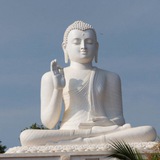
Buddha Sakolsima Mongkhon, Wat Thep Phithak Punnaram Buddhist temple, Klang Dong Subdistrict, Pak Chong District, Nakhon Ratchasima, Thailand.
🥰2🔥1🙏1🤗1
Dhammapada Verse 377
Pancasatabhikkhu Vatthu
Vassika viya pupphani
maddavani pamuncati
evam raganca dosanca
vippamuncetha bhikkhavo.
Verse 377: O bhikkhus! As the jasmine (vassika) plant sheds its withered flowers, so also, should you shed passion and ill will.
The Story of Five Hundred Bhikkhus
While residing at the Jetavana monastery, the Buddha uttered Verse (377) of this book, with reference to five hundred bhikkhus.
Five hundred bhikkhus from Savatthi, after taking a subject of meditation from the Buddha, set out for the forest to practise meditation. There, they noticed that the jasmine flowers which bloomed in the early morning dropped off from the plants onto the ground in the evening. Then the bhikkhus resolved that they would strive hard to free themselves from all moral defilements even before the flowers were shed from the plants. The Buddha, through his supernormal power, saw them from his Perfumed Chamber. He therefore sent forth his radiance to them and made them feel his presence. To them the Buddha said, "Bhikkhus! As the withered flower is shed from the plant, so also, should a bhikkhu strive to free himself from the round of rebirths."
Then the Buddha spoke in verse as follows:
Verse 377: O bhikkhus! As the jasmin (vassika) plant sheds its withered flowers, so also, should you shed passion and ill will.
At the end of the discourse the five hundred bhikkhus attained arahatship.
===
Free Buddhism books, teachings, podcasts and videos from Theravada, Mahayana and Vajrayana traditions:
https://news.1rj.ru/str/buddha_ebooks
===
Pancasatabhikkhu Vatthu
Vassika viya pupphani
maddavani pamuncati
evam raganca dosanca
vippamuncetha bhikkhavo.
Verse 377: O bhikkhus! As the jasmine (vassika) plant sheds its withered flowers, so also, should you shed passion and ill will.
The Story of Five Hundred Bhikkhus
While residing at the Jetavana monastery, the Buddha uttered Verse (377) of this book, with reference to five hundred bhikkhus.
Five hundred bhikkhus from Savatthi, after taking a subject of meditation from the Buddha, set out for the forest to practise meditation. There, they noticed that the jasmine flowers which bloomed in the early morning dropped off from the plants onto the ground in the evening. Then the bhikkhus resolved that they would strive hard to free themselves from all moral defilements even before the flowers were shed from the plants. The Buddha, through his supernormal power, saw them from his Perfumed Chamber. He therefore sent forth his radiance to them and made them feel his presence. To them the Buddha said, "Bhikkhus! As the withered flower is shed from the plant, so also, should a bhikkhu strive to free himself from the round of rebirths."
Then the Buddha spoke in verse as follows:
Verse 377: O bhikkhus! As the jasmin (vassika) plant sheds its withered flowers, so also, should you shed passion and ill will.
At the end of the discourse the five hundred bhikkhus attained arahatship.
===
Free Buddhism books, teachings, podcasts and videos from Theravada, Mahayana and Vajrayana traditions:
https://news.1rj.ru/str/buddha_ebooks
===
Telegram
Buddha Dharma books
Free Buddhism books, teachings, podcasts and videos from Theravada, Mahayana and Vajrayana traditions
👏1🏆1
Forwarded from Buddha Dharma books
Free Buddha Dharma ebook
Itivuttaka: This Was Said by the Buddha By Thanissaro Bhikkhu
The Itivuttaka, a collection of 112 short discourses, takes its name from the statement at the beginning of each of its discourses: this (iti) was said (vutta) by the Blessed One. The collection as a whole is attributed to a laywoman named Khujjuttara, who worked in the palace of King Udena of Kosambı as a servant to one of his queens, Samavati. Because the Queen could not leave the palace to hear the Buddha’s discourses, Khujjuttara went in her place, memorized what the Buddha said, and then returned to the palace to teach the Queen and her 500 ladies-in-waiting. For her efforts, the Buddha cited Khujjuttara as the foremost of his laywomen disciples in terms of her learning. She was also an effective teacher: when the inner apartments of the palace later burned down, killing the Queen and her entourage, the Buddha commented (in Udana 7:10) that all of the women had reached at least the first stage of awakening.
Free download here:
https://www.accesstoinsight.org/tipitaka/kn/iti/iti-than.pdf
===
Itivuttaka: This Was Said by the Buddha By Thanissaro Bhikkhu
The Itivuttaka, a collection of 112 short discourses, takes its name from the statement at the beginning of each of its discourses: this (iti) was said (vutta) by the Blessed One. The collection as a whole is attributed to a laywoman named Khujjuttara, who worked in the palace of King Udena of Kosambı as a servant to one of his queens, Samavati. Because the Queen could not leave the palace to hear the Buddha’s discourses, Khujjuttara went in her place, memorized what the Buddha said, and then returned to the palace to teach the Queen and her 500 ladies-in-waiting. For her efforts, the Buddha cited Khujjuttara as the foremost of his laywomen disciples in terms of her learning. She was also an effective teacher: when the inner apartments of the palace later burned down, killing the Queen and her entourage, the Buddha commented (in Udana 7:10) that all of the women had reached at least the first stage of awakening.
Free download here:
https://www.accesstoinsight.org/tipitaka/kn/iti/iti-than.pdf
===
❤1👍1🔥1🙏1
Forwarded from Words of the Buddha
When Conditions Come Together
By Zen Master Dogen
Enlightenment and clarity of the mind occur only in response to the sustained effort of study and practice. Endeavoring in the way ripens the conditions of your practice. It is not that the sound of the bamboo is sharp or the color of the blossoms is vivid. Although the sound of the bamboo is wondrous, it is heard at the moment when it’s hit by a pebble. Although the color of the blossoms is beautiful, they do not open by themselves but unfold in the light of springtime. Studying the way is like this. You attain the way when conditions come together. Although you have your own capacity, you practice the way with the combined strength of the community. So you should practice and search with one mind with others.
Excerpted from The Essential Dogen: Writings of the Great Zen Master By Zen Master Dogen, Edited by Kazuaki Tanahashi and Peter Levitt, page 53.
By Zen Master Dogen
Enlightenment and clarity of the mind occur only in response to the sustained effort of study and practice. Endeavoring in the way ripens the conditions of your practice. It is not that the sound of the bamboo is sharp or the color of the blossoms is vivid. Although the sound of the bamboo is wondrous, it is heard at the moment when it’s hit by a pebble. Although the color of the blossoms is beautiful, they do not open by themselves but unfold in the light of springtime. Studying the way is like this. You attain the way when conditions come together. Although you have your own capacity, you practice the way with the combined strength of the community. So you should practice and search with one mind with others.
Excerpted from The Essential Dogen: Writings of the Great Zen Master By Zen Master Dogen, Edited by Kazuaki Tanahashi and Peter Levitt, page 53.
🙏2❤1👏1💯1
Dhammapada Verse 378
Santakayatthera Vatthu
Santakayo santavaco
santava susamahito
vantalokamiso bhikkhu
"Upasanto" ti vuccati.
Verse 378: The bhikkhu who is calm in body, calm in speech, and calm in mind, who is well-composed and has given up (lit., vomited) worldly pleasures, is called a "Tranquil One".
The Story of Thera Santakaya
While residing at the Jetavana monastery, the Buddha uttered Verse (378) of this book, with reference to Thera Santakaya.
There was once a Thera named Santakaya, who had been a lion in his past existence. It is said that lions usually go out in search of food one day and then rest in a cave for the next seven days without moving. Thera Santakaya, having been a lion in his last existence, behaved very much like a lion. He moved about very little; his moments were slow and steady; and he was usually calm and composed. Other bhikkhus took his behaviour to be very queer and they reported about him to the Buddha. After hearing the account given by the bhikkhus, the Buddha said to all of them "Bhikkhus! A bhikkhu should be calm and composed; he should behave like Santakaya."
Then the Buddha spoke in verse as follows:
Verse 378: The bhikkhu who is calm in body, calm in speech, and calm in mind, who is well-composed and has given up (lit., vomited) worldly pleasures, is called a "Tranquil One".
At the end of the discourse Thera Santakaya attained arahatship.
===
Buddha dharma teachings channel:
https://news.1rj.ru/str/lorddivinebuddha
===
Santakayatthera Vatthu
Santakayo santavaco
santava susamahito
vantalokamiso bhikkhu
"Upasanto" ti vuccati.
Verse 378: The bhikkhu who is calm in body, calm in speech, and calm in mind, who is well-composed and has given up (lit., vomited) worldly pleasures, is called a "Tranquil One".
The Story of Thera Santakaya
While residing at the Jetavana monastery, the Buddha uttered Verse (378) of this book, with reference to Thera Santakaya.
There was once a Thera named Santakaya, who had been a lion in his past existence. It is said that lions usually go out in search of food one day and then rest in a cave for the next seven days without moving. Thera Santakaya, having been a lion in his last existence, behaved very much like a lion. He moved about very little; his moments were slow and steady; and he was usually calm and composed. Other bhikkhus took his behaviour to be very queer and they reported about him to the Buddha. After hearing the account given by the bhikkhus, the Buddha said to all of them "Bhikkhus! A bhikkhu should be calm and composed; he should behave like Santakaya."
Then the Buddha spoke in verse as follows:
Verse 378: The bhikkhu who is calm in body, calm in speech, and calm in mind, who is well-composed and has given up (lit., vomited) worldly pleasures, is called a "Tranquil One".
At the end of the discourse Thera Santakaya attained arahatship.
===
Buddha dharma teachings channel:
https://news.1rj.ru/str/lorddivinebuddha
===
Telegram
Buddha
Buddha dharma teachings from the suttas and commentaries
❤1💯1🏆1