Forwarded from Words of the Buddha
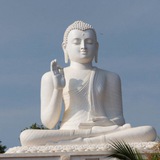
Phra Phuttha Mahanawamintra Sakayamunee Sri Visejchaicharn, Big Buddha at Wat Muang temple in Ang Thong Province, Thailand
👍1🥰1💯1
Forwarded from Buddha
Give Before You Get
On the ultimate happiness that comes from developing the skill of generosity
By Thanissaro Bhikkhu
Part 1 of 2
We meditate to find happiness, but we have to bring some happiness to the meditation first if we want to get results. This is why the Buddha’s training doesn’t start with meditating. It starts with generosity. You learn how to be happy through giving.
A king once came to see the Buddha and asked him, “Where should a gift be given?” He may have expected the Buddha to say, “Give to Buddhists,” because the Brahmins would say, “Give to the Brahmins.” Other sectarians would have said to give to their sects. But the Buddha said something different. He said, “Give where you feel inspired, where you feel the gift would be well used.”
That gives you freedom. This is one of the reasons the Buddha would start mundane right view with the statement, “There is giving.” It sounds obvious, but there were people at that time who said that giving had no meaning at all, either because the people you gave things to would be annihilated at death—so nothing in terms of long-term consequences could be expected—or because you had no free will. If you gave something, it was because the stars or some other outside force made you do it. But the Buddha said something else. He said, in effect, “It’s your free choice, and when you make the free choice to give, that’s a good choice.”
When you were a child, this was probably how you first realized that you had that power of choice and could use it in a good way. You had something that you could use, and there was no compulsion to give it away, but you felt that it would be good to give it to somebody else. You weren’t driven by your appetites. That was your first taste of freedom and the benefits of freedom.
But then the king asked, “A gift given where gives the best results?” That, the Buddha said, was a different question. It required a different answer. This was where he talked about how to approach the act of giving as a skill. There’s a certain pleasure that comes with having freedom to choose where and what to give. But there’s a higher level of happiness that comes when you realize that you can put some thought into what you want to give and how you want to give it, and that increases its benefits.
There are several things that would make a difference in the results.
One of them has to do with the recipient: You want to choose someone who’s free of greed, aversion, and delusion, or who’s on the path of trying to achieve freedom from greed, aversion, and delusion.
You learn how to be happy through giving.
As for the gift itself, it’s interesting—the Buddha never talks about the material value of the gift as being important. It’s more, “Is this a gift that’s in season? Will it harm either you or the person who’s going to receive it?”
Then there’s the attitude you adopt while you’re giving it. You have to believe that something important will come from this—you’re not just throwing it away.
And there is your motivation: What do you want to gain from giving a gift? For the Buddha, the best motivations are those that focus on training the mind. The lowest motivation, he says, is in line with the teaching on karma, that you basically get back what you’ve given. This was very common in India, and it’s been common throughout the Buddhist world ever since: You give x and you hope that in the next lifetime, you’ll get it back, one hopes, with interest. It’s not a bad motivation—it’s better than not giving at all—but it’s not the best. The higher motivations have to do with how giving is inherently good, or how it’s not right when you have more than enough—and there are the people who don’t have enough—that you don’t give something to them. If you belong to a family with a long tradition of being generous, you want to maintain the family tradition. Or you find that it makes the mind serene: It’s a source of happiness simply to give. And finally, it’s an ornament for the mind. You’re doing it because it’s a natural expression of your inner goodness.
On the ultimate happiness that comes from developing the skill of generosity
By Thanissaro Bhikkhu
Part 1 of 2
We meditate to find happiness, but we have to bring some happiness to the meditation first if we want to get results. This is why the Buddha’s training doesn’t start with meditating. It starts with generosity. You learn how to be happy through giving.
A king once came to see the Buddha and asked him, “Where should a gift be given?” He may have expected the Buddha to say, “Give to Buddhists,” because the Brahmins would say, “Give to the Brahmins.” Other sectarians would have said to give to their sects. But the Buddha said something different. He said, “Give where you feel inspired, where you feel the gift would be well used.”
That gives you freedom. This is one of the reasons the Buddha would start mundane right view with the statement, “There is giving.” It sounds obvious, but there were people at that time who said that giving had no meaning at all, either because the people you gave things to would be annihilated at death—so nothing in terms of long-term consequences could be expected—or because you had no free will. If you gave something, it was because the stars or some other outside force made you do it. But the Buddha said something else. He said, in effect, “It’s your free choice, and when you make the free choice to give, that’s a good choice.”
When you were a child, this was probably how you first realized that you had that power of choice and could use it in a good way. You had something that you could use, and there was no compulsion to give it away, but you felt that it would be good to give it to somebody else. You weren’t driven by your appetites. That was your first taste of freedom and the benefits of freedom.
But then the king asked, “A gift given where gives the best results?” That, the Buddha said, was a different question. It required a different answer. This was where he talked about how to approach the act of giving as a skill. There’s a certain pleasure that comes with having freedom to choose where and what to give. But there’s a higher level of happiness that comes when you realize that you can put some thought into what you want to give and how you want to give it, and that increases its benefits.
There are several things that would make a difference in the results.
One of them has to do with the recipient: You want to choose someone who’s free of greed, aversion, and delusion, or who’s on the path of trying to achieve freedom from greed, aversion, and delusion.
You learn how to be happy through giving.
As for the gift itself, it’s interesting—the Buddha never talks about the material value of the gift as being important. It’s more, “Is this a gift that’s in season? Will it harm either you or the person who’s going to receive it?”
Then there’s the attitude you adopt while you’re giving it. You have to believe that something important will come from this—you’re not just throwing it away.
And there is your motivation: What do you want to gain from giving a gift? For the Buddha, the best motivations are those that focus on training the mind. The lowest motivation, he says, is in line with the teaching on karma, that you basically get back what you’ve given. This was very common in India, and it’s been common throughout the Buddhist world ever since: You give x and you hope that in the next lifetime, you’ll get it back, one hopes, with interest. It’s not a bad motivation—it’s better than not giving at all—but it’s not the best. The higher motivations have to do with how giving is inherently good, or how it’s not right when you have more than enough—and there are the people who don’t have enough—that you don’t give something to them. If you belong to a family with a long tradition of being generous, you want to maintain the family tradition. Or you find that it makes the mind serene: It’s a source of happiness simply to give. And finally, it’s an ornament for the mind. You’re doing it because it’s a natural expression of your inner goodness.
Telegram
Buddha
Buddha dharma teachings from the suttas and commentaries
👍2💯2
Forwarded from Buddha
These are higher motivations, and the higher motivations get better results.
So you can see that approaching the act of generosity as a skill is aimed mainly at the mind. When you give to others, you want to give attentively, you want to give with respect, you want to give out of compassion. And the best motivation, of course, is that you want to benefit your mind.
You see this clearly when you sit down and meditate. There are times when you’re trying to stay with the breath, and the mind just won’t stay. It’s got other issues. The thought comes to you, “Maybe I’m not cut out to be a meditator. Maybe I don’t have the merit.” At times like that, you can think back on the times you’ve been generous, the times you’ve been virtuous—generous when you didn’t have to be, or generous when you really put some thought into it. You weren’t just going through the motions.
===
Buddha dharma teachings channel:
https://news.1rj.ru/str/lorddivinebuddha
===
So you can see that approaching the act of generosity as a skill is aimed mainly at the mind. When you give to others, you want to give attentively, you want to give with respect, you want to give out of compassion. And the best motivation, of course, is that you want to benefit your mind.
You see this clearly when you sit down and meditate. There are times when you’re trying to stay with the breath, and the mind just won’t stay. It’s got other issues. The thought comes to you, “Maybe I’m not cut out to be a meditator. Maybe I don’t have the merit.” At times like that, you can think back on the times you’ve been generous, the times you’ve been virtuous—generous when you didn’t have to be, or generous when you really put some thought into it. You weren’t just going through the motions.
===
Buddha dharma teachings channel:
https://news.1rj.ru/str/lorddivinebuddha
===
Telegram
Buddha
Buddha dharma teachings from the suttas and commentaries
👏2🏆1
Dhammapada Verse 397
Uggasenasetthiputta Vatthu
Sabbasamyojanam chetva
yo ve na paritassati
sangatigam visamyuttam
tamaham brumi brahamanam.
Verse 397: Him I call a brahmana, who has cut off all fetters and is fearless, who is beyond attachment and is free from moral defilements.
The Story of Uggasena, the Son of a Rich Man*
While residing at the Jetavana monastery, the Buddha uttered Verse (397) of this book, with reference to Uggasena, son of a rich man.
After marrying a dancer from a theatrical troupe, Uggasena was trained by his father-in-law who was an acrobat, and became very skilful in acrobatics. One day while he was demonstrating his skill, the Buddha came on the scene. After hearing the Buddha's teaching, Uggasena attained arahatship while he was still performing his feats on top of a long bamboo pole. After that, he climbed down from the pole and pleaded with the Buddha to accept him as a bhikkhu and was accordingly admitted into the Order.
One day, when other bhikkhus asked him whether he did not have any feeling of fear while climbing down from such a great height (i.e., about ninety feet), he answered in the negative. The bhikkhus took that to mean that Uggasena was claiming to have attained arahatship even then. So, they went to the Buddha and said, "Venerable Sir! Uggasena claims himself to be an arahat; he must be telling lies." To them the Buddha replied, "Bhikkhus, one who has cut off all fetters, like my son Uggasena, has no fear."
Then the Buddha spoke in verse as follows:
Verse 397: Him I call a brahmana, who has cut off all fetters and is fearless, who is beyond attachment and is free from moral defilements.
===
Free Buddhism books, teachings, podcasts and videos from Theravada, Mahayana and Vajrayana traditions:
https://news.1rj.ru/str/buddha_ebooks
===
Uggasenasetthiputta Vatthu
Sabbasamyojanam chetva
yo ve na paritassati
sangatigam visamyuttam
tamaham brumi brahamanam.
Verse 397: Him I call a brahmana, who has cut off all fetters and is fearless, who is beyond attachment and is free from moral defilements.
The Story of Uggasena, the Son of a Rich Man*
While residing at the Jetavana monastery, the Buddha uttered Verse (397) of this book, with reference to Uggasena, son of a rich man.
After marrying a dancer from a theatrical troupe, Uggasena was trained by his father-in-law who was an acrobat, and became very skilful in acrobatics. One day while he was demonstrating his skill, the Buddha came on the scene. After hearing the Buddha's teaching, Uggasena attained arahatship while he was still performing his feats on top of a long bamboo pole. After that, he climbed down from the pole and pleaded with the Buddha to accept him as a bhikkhu and was accordingly admitted into the Order.
One day, when other bhikkhus asked him whether he did not have any feeling of fear while climbing down from such a great height (i.e., about ninety feet), he answered in the negative. The bhikkhus took that to mean that Uggasena was claiming to have attained arahatship even then. So, they went to the Buddha and said, "Venerable Sir! Uggasena claims himself to be an arahat; he must be telling lies." To them the Buddha replied, "Bhikkhus, one who has cut off all fetters, like my son Uggasena, has no fear."
Then the Buddha spoke in verse as follows:
Verse 397: Him I call a brahmana, who has cut off all fetters and is fearless, who is beyond attachment and is free from moral defilements.
===
Free Buddhism books, teachings, podcasts and videos from Theravada, Mahayana and Vajrayana traditions:
https://news.1rj.ru/str/buddha_ebooks
===
Telegram
Buddha Dharma books
Free Buddhism books, teachings, podcasts and videos from Theravada, Mahayana and Vajrayana traditions
🥰1👏1
Forwarded from Buddha
Phra Phuttha Mahanawamintra Sakayamunee Sri Visejchaicharn, Big Buddha at Wat Muang temple in Ang Thong Province, Thailand
❤1🥰1🙏1
Forwarded from Words of the Buddha
Give Before You Get
On the ultimate happiness that comes from developing the skill of generosity
By Thanissaro Bhikkhu
Part 2 of 2
In Thailand, they have ready-made packages for Sanghadana, when you want to give to the sangha. You go down to a store, and the items are already wrapped for you. That kind of gift doesn’t go into the heart nearly as much as when you stop to think, “What do the monks need? What would be something special for them that would really be in line with their needs?” The more thought you put into a gift, the more happiness comes when you reflect on that act of giving. And when you reflect that it was given out of the goodness of your heart, for the sake of making your heart serene, that gives you even more happiness. You have a strong sense of your own worth, that you’re not dead weight on the earth. You’ve actually given something. You’ve contributed something to the goodness of the world. And the world needs a lot of goodness. The fires of greed, aversion, and delusion always threaten to burn it up. With your act of generosity, it’s like putting water on the fires.
When you have that background, and when you’ve learned the lesson from giving that there’s a greater happiness that comes from giving rather than from consuming, it puts you in the right frame of mind to meditate—not only when you meet with obstacles but also when you approach meditation as a whole.
The world needs a lot of goodness. The fires of greed, aversion, and delusion always threaten to burn it up. With your act of generosity, it’s like putting water on the fires.
All too often, when people start meditating, they say, “What can I get out of this?” But if you come to it from the act of giving, your first thought should be, “What can I give here?” You can give your time. You can give your energy. The three qualities the Buddha says are necessary for getting the mind into concentration are mindfulness, alertness, and ardency. The ardency requires that you give energy, that you’re going to give before you can get. It’s through your ardency that you develop more mindfulness—in other words, the ability to keep in mind the fact that you’re going to try to stay here with the breath—and more alertness, because it takes energy to be alert. There’s a part of the mind that’s aware without any effort, but that’s not what the Buddha is talking about when he talks about alertness. Alertness means clearly knowing what you’re doing and the results you’re getting from your actions. You have to put energy into paying attention, because all too often we do things without paying full attention to what we’re doing. We’ve got our mind on something else. As a result, we can’t really connect our actions with the results of those actions, because we weren’t paying attention. That’s why we don’t learn much from our actions.
So you have to be resolute in being mindful, ardent, and alert. You give before you get. You start giving with the practice of mindfulness, with the practice of right effort, and those two factors help to develop your concentration. The concentration is the reward, but then the concentration itself requires effort to maintain the sense of well-being that comes with getting the mind to settle down and let go of all of its other preoccupations.
That’s the other aspect of mindfulness. You’re mindful to stay with your one object, but you’re also mindful to put aside all thoughts about the world that are not related to staying with that object. As you give up outside preoccupations, you find that the mind is wealthier as a result. We tend to think that the more opinions we have, the more ideas we have, the richer our mind. But the Buddha is showing us that the mind reveals its luminous nature—what goodness it’s capable of—when you let go through the act of being generous, through the act of giving things up and seeing the good qualities of alertness, of mindfulness, and of awareness that develop as a result when the mind is not weighed down with a lot of opinions, not weighed down with a lot of possessions.
On the ultimate happiness that comes from developing the skill of generosity
By Thanissaro Bhikkhu
Part 2 of 2
In Thailand, they have ready-made packages for Sanghadana, when you want to give to the sangha. You go down to a store, and the items are already wrapped for you. That kind of gift doesn’t go into the heart nearly as much as when you stop to think, “What do the monks need? What would be something special for them that would really be in line with their needs?” The more thought you put into a gift, the more happiness comes when you reflect on that act of giving. And when you reflect that it was given out of the goodness of your heart, for the sake of making your heart serene, that gives you even more happiness. You have a strong sense of your own worth, that you’re not dead weight on the earth. You’ve actually given something. You’ve contributed something to the goodness of the world. And the world needs a lot of goodness. The fires of greed, aversion, and delusion always threaten to burn it up. With your act of generosity, it’s like putting water on the fires.
When you have that background, and when you’ve learned the lesson from giving that there’s a greater happiness that comes from giving rather than from consuming, it puts you in the right frame of mind to meditate—not only when you meet with obstacles but also when you approach meditation as a whole.
The world needs a lot of goodness. The fires of greed, aversion, and delusion always threaten to burn it up. With your act of generosity, it’s like putting water on the fires.
All too often, when people start meditating, they say, “What can I get out of this?” But if you come to it from the act of giving, your first thought should be, “What can I give here?” You can give your time. You can give your energy. The three qualities the Buddha says are necessary for getting the mind into concentration are mindfulness, alertness, and ardency. The ardency requires that you give energy, that you’re going to give before you can get. It’s through your ardency that you develop more mindfulness—in other words, the ability to keep in mind the fact that you’re going to try to stay here with the breath—and more alertness, because it takes energy to be alert. There’s a part of the mind that’s aware without any effort, but that’s not what the Buddha is talking about when he talks about alertness. Alertness means clearly knowing what you’re doing and the results you’re getting from your actions. You have to put energy into paying attention, because all too often we do things without paying full attention to what we’re doing. We’ve got our mind on something else. As a result, we can’t really connect our actions with the results of those actions, because we weren’t paying attention. That’s why we don’t learn much from our actions.
So you have to be resolute in being mindful, ardent, and alert. You give before you get. You start giving with the practice of mindfulness, with the practice of right effort, and those two factors help to develop your concentration. The concentration is the reward, but then the concentration itself requires effort to maintain the sense of well-being that comes with getting the mind to settle down and let go of all of its other preoccupations.
That’s the other aspect of mindfulness. You’re mindful to stay with your one object, but you’re also mindful to put aside all thoughts about the world that are not related to staying with that object. As you give up outside preoccupations, you find that the mind is wealthier as a result. We tend to think that the more opinions we have, the more ideas we have, the richer our mind. But the Buddha is showing us that the mind reveals its luminous nature—what goodness it’s capable of—when you let go through the act of being generous, through the act of giving things up and seeing the good qualities of alertness, of mindfulness, and of awareness that develop as a result when the mind is not weighed down with a lot of opinions, not weighed down with a lot of possessions.
Telegram
Words of the Buddha
Daily teachings of Buddha Dharma
❤2🏆1
Forwarded from Words of the Buddha
So come to the meditation with the right attitude. You give before you get, and whatever you get, you’re going to give that away, too, but it’s like a trade. Keep trading up and you finally get to the point where there’s no further “up.” In other words, you’ve reached the ultimate happiness, which the Buddha said is also the ultimate emptiness. It’s empty of disturbance, empty of defilement, but it’s full of well-being. There is that potential in the mind, but we’re not going to know it until we learn how to give up the things that hold us back.
Luang Pu Dune, one of the masters of the forest, was visiting Ajaan Suwat one time, and when he left, he made a comment that “The world is all about things that come in pairs, but the dhamma is one thing clear through.” He didn’t say what that one thing was, but the attitude of generosity is a good candidate.
This article was adapted from a talk given on September 29, 2024, and originally appeared on www.dhammatalks.org
===
Part 1 of 2:
https://news.1rj.ru/str/lorddivinebuddha/2786
Part 2 of 2:
https://news.1rj.ru/str/wordsofbuddha/3404
===
Words of the Buddha channel:
https://news.1rj.ru/str/wordsofbuddha
===
Luang Pu Dune, one of the masters of the forest, was visiting Ajaan Suwat one time, and when he left, he made a comment that “The world is all about things that come in pairs, but the dhamma is one thing clear through.” He didn’t say what that one thing was, but the attitude of generosity is a good candidate.
This article was adapted from a talk given on September 29, 2024, and originally appeared on www.dhammatalks.org
===
Part 1 of 2:
https://news.1rj.ru/str/lorddivinebuddha/2786
Part 2 of 2:
https://news.1rj.ru/str/wordsofbuddha/3404
===
Words of the Buddha channel:
https://news.1rj.ru/str/wordsofbuddha
===
Telegram
Words of the Buddha
Daily teachings of Buddha Dharma
❤2🥰1👏1
Free Buddha Dharma ebook
A Buddhist Perspective On Pain Stress And Illness
By Bhikkhu Sumedha
This work, which deals with the inherent nature of mind during pain and chronic illnesses and the Buddhist method of managing it, is based on personal experiences with Ven. Sumedha. It is dedicated to his memory, as the spiritual patron of Peradeniya Teaching Hospital, and for his invaluable services for over 30 years in Sri Lanka as a Buddhist monk.
Free download here:
https://ftp.budaedu.org/ebooks/pdf/EN370.pdf
===
A Buddhist Perspective On Pain Stress And Illness
By Bhikkhu Sumedha
This work, which deals with the inherent nature of mind during pain and chronic illnesses and the Buddhist method of managing it, is based on personal experiences with Ven. Sumedha. It is dedicated to his memory, as the spiritual patron of Peradeniya Teaching Hospital, and for his invaluable services for over 30 years in Sri Lanka as a Buddhist monk.
Free download here:
https://ftp.budaedu.org/ebooks/pdf/EN370.pdf
===
🥰2🤗1
Free Buddha Dharma ebook
A Buddhist Perspective On Pain Stress And Illness
By Bhikkhu Sumedha
This work, which deals with the inherent nature of mind during pain and chronic illnesses and the Buddhist method of managing it, is based on personal experiences with Ven. Sumedha. It is dedicated to his memory, as the spiritual patron of Peradeniya Teaching Hospital, and for his invaluable services for over 30 years in Sri Lanka as a Buddhist monk.
Free download here:
https://ftp.budaedu.org/ebooks/pdf/EN370.pdf
===
A Buddhist Perspective On Pain Stress And Illness
By Bhikkhu Sumedha
This work, which deals with the inherent nature of mind during pain and chronic illnesses and the Buddhist method of managing it, is based on personal experiences with Ven. Sumedha. It is dedicated to his memory, as the spiritual patron of Peradeniya Teaching Hospital, and for his invaluable services for over 30 years in Sri Lanka as a Buddhist monk.
Free download here:
https://ftp.budaedu.org/ebooks/pdf/EN370.pdf
===
👍1💯1
Dhammapada Verse 398
Dve Brahmana Vatthu
Chetva naddhim varattanca
sandanam sahanukkamam
ukkhittapaligham buddham
tamaham brumi brahamanam.
Verse 398: Him I call a brahmana, who has cut the strap (of ill will), the thong (of craving) and the cord (of wrong views together with latent defilements), who has lifted the bar that fastens the door (of ignorance), and who knows the Truth.
The Story of Two Brahmins
While residing at the Jetavana monastery, the Buddha uttered Verse (398) of this book, with reference to two brahmins.
Once there lived in Savatthi two brahmins, each of whom owned a bullock. Each claimed that his bullock was better and stronger. At last, they agreed to put their animals to a test. So they went to the bank of the Aciravati River and there they filled up a cart with sand. One after the other, the bullocks pulled the cart, but they only pulled in vain, because the cart, did not move and only the ropes broke off. The bhikkhus seeing this reported to the Buddha and the Buddha said to them, "Bhikkhus! It is easy to break off the straps which you can see with your eyes; anyone can break them or cut them. But my sons, a bhikkhu should cut the strap of ill will and the thong of craving which are within you and which bind you."
Verse 398: Him I call a brahmana, who has cut the strap (of ill will), the thong (of craving) and the cord (of wrong views together with latent defilements), who has lifted the bar that fastens the door (of ignorance), and who knows the Truth.
At the end of the discourse five hundred bhikkhus attained arahatship.
===
Buddha dharma teachings channel:
https://news.1rj.ru/str/lorddivinebuddha
===
Dve Brahmana Vatthu
Chetva naddhim varattanca
sandanam sahanukkamam
ukkhittapaligham buddham
tamaham brumi brahamanam.
Verse 398: Him I call a brahmana, who has cut the strap (of ill will), the thong (of craving) and the cord (of wrong views together with latent defilements), who has lifted the bar that fastens the door (of ignorance), and who knows the Truth.
The Story of Two Brahmins
While residing at the Jetavana monastery, the Buddha uttered Verse (398) of this book, with reference to two brahmins.
Once there lived in Savatthi two brahmins, each of whom owned a bullock. Each claimed that his bullock was better and stronger. At last, they agreed to put their animals to a test. So they went to the bank of the Aciravati River and there they filled up a cart with sand. One after the other, the bullocks pulled the cart, but they only pulled in vain, because the cart, did not move and only the ropes broke off. The bhikkhus seeing this reported to the Buddha and the Buddha said to them, "Bhikkhus! It is easy to break off the straps which you can see with your eyes; anyone can break them or cut them. But my sons, a bhikkhu should cut the strap of ill will and the thong of craving which are within you and which bind you."
Verse 398: Him I call a brahmana, who has cut the strap (of ill will), the thong (of craving) and the cord (of wrong views together with latent defilements), who has lifted the bar that fastens the door (of ignorance), and who knows the Truth.
At the end of the discourse five hundred bhikkhus attained arahatship.
===
Buddha dharma teachings channel:
https://news.1rj.ru/str/lorddivinebuddha
===
Telegram
Buddha
Buddha dharma teachings from the suttas and commentaries
👍1🏆1
Then the Holy One, the Teacher, went on to say:
“When an ethical person with trusting heart gives a proper gift to unethical persons, trusting in the ample fruit of deeds, that offering is purified by the giver.
When an unethical and untrusting person, gives an improper gift to ethical persons, not trusting in the ample fruit of deeds, that offering is purified by the receivers.
When an unethical and untrusting person, gives an improper gift to unethical persons, not trusting in the ample fruit of deeds, I declare that gift is not very fruitful.
When an ethical person with trusting heart gives a proper gift to ethical persons, trusting in the ample fruit of deeds, I declare that gift is abundantly fruitful.
But when a passionless one gives to the passionless a proper gift with trusting heart, trusting in the ample fruit of deeds, that’s truly the best of material gifts.”
Partial excerpts from MN 142 : Dakkhiṇāvibhaṅgasutta
“When an ethical person with trusting heart gives a proper gift to unethical persons, trusting in the ample fruit of deeds, that offering is purified by the giver.
When an unethical and untrusting person, gives an improper gift to ethical persons, not trusting in the ample fruit of deeds, that offering is purified by the receivers.
When an unethical and untrusting person, gives an improper gift to unethical persons, not trusting in the ample fruit of deeds, I declare that gift is not very fruitful.
When an ethical person with trusting heart gives a proper gift to ethical persons, trusting in the ample fruit of deeds, I declare that gift is abundantly fruitful.
But when a passionless one gives to the passionless a proper gift with trusting heart, trusting in the ample fruit of deeds, that’s truly the best of material gifts.”
Partial excerpts from MN 142 : Dakkhiṇāvibhaṅgasutta
❤1🙏1💯1
Dhammapada Verse 399
Akkosakabharadvaja Vatthu
Akkosam vadhabandhanca
aduttho yo titikkhati
khantibalam balanikam
tamaham brumi brahmanam.
Verse 399: Him I call a brahmana, who, without anger endures abuse, beating and being bound, and to whom the strength of patience is like the strength of an army.
The Story of the Abusive Brahmin Brothers
While residing at the Veluvana monastery, the Buddha uttered Verse (399) of this book, with reference to the abusive Bharadvaja brothers.
Once there was a brahmin, whose wife was in the habit of blurting out a string of words whenever she sneezed or when something or someone touched her unawares. One day, the brahmin invited some of his friends to a meal and suddenly she blurted out some words. Since she was a Sotapanna, the words "Namo tassa bhagavato arahato sammsambhuddassa" automatically came out of her mouth. These words of veneration to the Buddha were very much disliked by her husband, the brahmin. So, in anger, he went to the Buddha hoping to put some challenging questions to the Buddha. His first question was, "What do we have to kill to be able to live happily and peacefully?" and his second question was, "Killing of what dhamma do you approve of?" To these questions, the Buddha replied, " O brahmin, to be able to live happily and peacefully, one will have to kill ill will (dosa). Killing one's ill will is liked and praised by the Buddhas and the arahats." After hearing the Buddha, the brahmin was so impressed and satisfied with the answer that he asked to be permitted to enter the Order. Accordingly, he entered the Order and later became an arahat.
This brahmin had a brother who was very notorious for his abusive words and was known as Akkosaka Bharadvaja, the abusive Bharadvaja. When Akkosaka Bharadvaja heard that his brother had joined the Order of the bhikkhus, he was furious. He went straight away to the monastery and abused the Buddha. The Buddha in his turn asked, "O brahmin, let us suppose you offered some food to some guests and they left the house without taking the food. Since the guests did not accept your food, to whom would that food belong?" To this question the brahmin answered that the food would be his. On receiving that answer, the Buddha said, "In the same way, O brahmin, since I do not accept your abuse, the abuse would only go back to you." Akkosaka Bharadvaja instantly realized the sagacity of those words and he felt a great respect for the Buddha. He also entered the Order and in due course became an arahat.
After Akkosaka Bharadvaja had entered the Order, his two younger brothers also came to see the Buddha with the same intention of abusing the Buddha. They too were made to see the light by the Buddha and they also, in their turn, entered the Order. Eventually, both of them became arahats.
One evening, at the congregation of the bhikkhus, the bhikkhus said to the Buddha, "O how wonderful and how great are the virtues of the Buddha! The four brahmin brothers came here to abuse the Buddha; instead of arguing with them, he made them see the light, and as a result, the Buddha has become a refuge to them." To them, the Buddha replied, "Bhikkhus! Because I am patient and forbearing, and do no wrong to those who do me wrong, I have become a refuge to many."
Then the Buddha spoke in verse as follows:
Verse 399: Him I call a brahmana, who, without anger endures abuse, beating and being bound, and to whom the strength of patience is like the strength of an army.
===
Vajrayana Tantrayana Buddhism channel:
https://news.1rj.ru/str/tantrayanabuddhism
Tibetan Buddhism - Vajrayana, Tantrayana and esoteric Buddhism channel:
https://news.1rj.ru/str/tibetanbuddha
===
Akkosakabharadvaja Vatthu
Akkosam vadhabandhanca
aduttho yo titikkhati
khantibalam balanikam
tamaham brumi brahmanam.
Verse 399: Him I call a brahmana, who, without anger endures abuse, beating and being bound, and to whom the strength of patience is like the strength of an army.
The Story of the Abusive Brahmin Brothers
While residing at the Veluvana monastery, the Buddha uttered Verse (399) of this book, with reference to the abusive Bharadvaja brothers.
Once there was a brahmin, whose wife was in the habit of blurting out a string of words whenever she sneezed or when something or someone touched her unawares. One day, the brahmin invited some of his friends to a meal and suddenly she blurted out some words. Since she was a Sotapanna, the words "Namo tassa bhagavato arahato sammsambhuddassa" automatically came out of her mouth. These words of veneration to the Buddha were very much disliked by her husband, the brahmin. So, in anger, he went to the Buddha hoping to put some challenging questions to the Buddha. His first question was, "What do we have to kill to be able to live happily and peacefully?" and his second question was, "Killing of what dhamma do you approve of?" To these questions, the Buddha replied, " O brahmin, to be able to live happily and peacefully, one will have to kill ill will (dosa). Killing one's ill will is liked and praised by the Buddhas and the arahats." After hearing the Buddha, the brahmin was so impressed and satisfied with the answer that he asked to be permitted to enter the Order. Accordingly, he entered the Order and later became an arahat.
This brahmin had a brother who was very notorious for his abusive words and was known as Akkosaka Bharadvaja, the abusive Bharadvaja. When Akkosaka Bharadvaja heard that his brother had joined the Order of the bhikkhus, he was furious. He went straight away to the monastery and abused the Buddha. The Buddha in his turn asked, "O brahmin, let us suppose you offered some food to some guests and they left the house without taking the food. Since the guests did not accept your food, to whom would that food belong?" To this question the brahmin answered that the food would be his. On receiving that answer, the Buddha said, "In the same way, O brahmin, since I do not accept your abuse, the abuse would only go back to you." Akkosaka Bharadvaja instantly realized the sagacity of those words and he felt a great respect for the Buddha. He also entered the Order and in due course became an arahat.
After Akkosaka Bharadvaja had entered the Order, his two younger brothers also came to see the Buddha with the same intention of abusing the Buddha. They too were made to see the light by the Buddha and they also, in their turn, entered the Order. Eventually, both of them became arahats.
One evening, at the congregation of the bhikkhus, the bhikkhus said to the Buddha, "O how wonderful and how great are the virtues of the Buddha! The four brahmin brothers came here to abuse the Buddha; instead of arguing with them, he made them see the light, and as a result, the Buddha has become a refuge to them." To them, the Buddha replied, "Bhikkhus! Because I am patient and forbearing, and do no wrong to those who do me wrong, I have become a refuge to many."
Then the Buddha spoke in verse as follows:
Verse 399: Him I call a brahmana, who, without anger endures abuse, beating and being bound, and to whom the strength of patience is like the strength of an army.
===
Vajrayana Tantrayana Buddhism channel:
https://news.1rj.ru/str/tantrayanabuddhism
Tibetan Buddhism - Vajrayana, Tantrayana and esoteric Buddhism channel:
https://news.1rj.ru/str/tibetanbuddha
===
Telegram
Vajrayana Tantrayana Buddhism
Buddha teachings from the Vajrayana, esoteric, secret or Tantrayana vehicle
❤1🙏1💯1