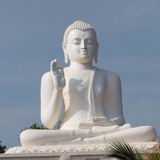
The Desire for Awakening
While you’ll eventually need to abandon your sense of “I” as you approach the final stages of the path, you won’t arrive there unless you first put that “I” to good use.
By Thanissaro Bhikkhu
Part 2 of 3
This is why the Buddha noted that one of the secrets to his awakening was “discontent with skillful qualities” (AN 2:5). As he described his quest for awakening, when he followed a path of practice and found that it didn’t lead all the way to the deathless, he abandoned it “in search of what is skillful” (MN 36). He kept trying to raise the level of his skill until it yielded the results he wanted. Only when he reached the deathless was he content.
He illustrated this principle with an analogy: If a person has need of the heartwood of a tree, he shouldn’t content himself with the leaves and twigs, the bark, or the sapwood. He has to keep searching until he finds the heartwood that will serve his purposes (MN 29).
So the desire for the deathless is not the problem. The problem is in wanting to attain the deathless simply through wishing it to be so. This is why the Buddha taught that the duty with regard to suffering is not to abandon the desire for the deathless but to comprehend it. When you comprehend the problem, you’ll comprehend the solution, and you can focus your desires there.
When you comprehend the problem, you’ll comprehend the solution, and you can focus your desires there.
The Buddha makes this point in more abstract terms in an interesting variant on dependent co-arising, his list of the causes that lead to suffering and stress. Most versions of the list end with suffering, but one version takes suffering as the jumping-off point for a series of factors beginning with conviction: When you comprehend the suffering of not getting what you want and can actually pinpoint the problem, that’s your motivation for placing conviction in the Buddha’s path and desiring to follow it. When you do, you give rise to joy, to the rapture, pleasure, and calm of concentration, and to the discernment that inspires dispassion, leading to total release (SN 12:23). When you focus your desires on following the right path of action, you’ll get what you want.
Ven. Ananda used an analogy to illustrate the role of desire on the path and in attaining the goal.
Once, when he was staying in a park, a brahman came and asked him what the goal of his practice was. Ananda replied that the goal was to abandon desire.
The brahman then asked whether there was a path of practice leading to the abandoning of desire, and Ananda replied that there was. He then described the path in terms of a teaching called the four bases of power: mental power endowed with concentration based on one of four things—desire, persistence, intent, and analysis—along with the fabrications of exertion, or right effort.
The brahman then replied that the path would have to be an endless path, because there’s no way you could abandon desire by means of desire.
Ananda responded with his analogy: Before the brahman came to the park, didn’t he have a desire to come? Didn’t he make an effort to act on that desire? And when he arrived, wasn’t that desire, along with the effort, allayed?
The brahman admitted that that was the case.
In the same way, Ananda continued, when a person has attained total awakening, whatever desire he or she had for awakening, whatever effort he or she made for awakening, is allayed (SN 51:15).
What he implies here is that you need desire to get on the path and stick with it to the end. And as he also implies, it’s not the case that, in the higher stages of the path, you attain the goal by abandoning the desire to get there. You abandon the desire because you’ve arrived.
Now, the path and the goal are two different things. The goal is unfabricated, which means that it doesn’t depend on any conditions. It’s not something you do. The path, though, is fabricated. It doesn’t cause the unfabricated, but the act of following the path can take you there.
While you’ll eventually need to abandon your sense of “I” as you approach the final stages of the path, you won’t arrive there unless you first put that “I” to good use.
By Thanissaro Bhikkhu
Part 2 of 3
This is why the Buddha noted that one of the secrets to his awakening was “discontent with skillful qualities” (AN 2:5). As he described his quest for awakening, when he followed a path of practice and found that it didn’t lead all the way to the deathless, he abandoned it “in search of what is skillful” (MN 36). He kept trying to raise the level of his skill until it yielded the results he wanted. Only when he reached the deathless was he content.
He illustrated this principle with an analogy: If a person has need of the heartwood of a tree, he shouldn’t content himself with the leaves and twigs, the bark, or the sapwood. He has to keep searching until he finds the heartwood that will serve his purposes (MN 29).
So the desire for the deathless is not the problem. The problem is in wanting to attain the deathless simply through wishing it to be so. This is why the Buddha taught that the duty with regard to suffering is not to abandon the desire for the deathless but to comprehend it. When you comprehend the problem, you’ll comprehend the solution, and you can focus your desires there.
When you comprehend the problem, you’ll comprehend the solution, and you can focus your desires there.
The Buddha makes this point in more abstract terms in an interesting variant on dependent co-arising, his list of the causes that lead to suffering and stress. Most versions of the list end with suffering, but one version takes suffering as the jumping-off point for a series of factors beginning with conviction: When you comprehend the suffering of not getting what you want and can actually pinpoint the problem, that’s your motivation for placing conviction in the Buddha’s path and desiring to follow it. When you do, you give rise to joy, to the rapture, pleasure, and calm of concentration, and to the discernment that inspires dispassion, leading to total release (SN 12:23). When you focus your desires on following the right path of action, you’ll get what you want.
Ven. Ananda used an analogy to illustrate the role of desire on the path and in attaining the goal.
Once, when he was staying in a park, a brahman came and asked him what the goal of his practice was. Ananda replied that the goal was to abandon desire.
The brahman then asked whether there was a path of practice leading to the abandoning of desire, and Ananda replied that there was. He then described the path in terms of a teaching called the four bases of power: mental power endowed with concentration based on one of four things—desire, persistence, intent, and analysis—along with the fabrications of exertion, or right effort.
The brahman then replied that the path would have to be an endless path, because there’s no way you could abandon desire by means of desire.
Ananda responded with his analogy: Before the brahman came to the park, didn’t he have a desire to come? Didn’t he make an effort to act on that desire? And when he arrived, wasn’t that desire, along with the effort, allayed?
The brahman admitted that that was the case.
In the same way, Ananda continued, when a person has attained total awakening, whatever desire he or she had for awakening, whatever effort he or she made for awakening, is allayed (SN 51:15).
What he implies here is that you need desire to get on the path and stick with it to the end. And as he also implies, it’s not the case that, in the higher stages of the path, you attain the goal by abandoning the desire to get there. You abandon the desire because you’ve arrived.
Now, the path and the goal are two different things. The goal is unfabricated, which means that it doesn’t depend on any conditions. It’s not something you do. The path, though, is fabricated. It doesn’t cause the unfabricated, but the act of following the path can take you there.
Telegram
Dhammapada - Buddha Dharma Teachings
Daily teachings of the Dhammapada, beloved and favorite teachings of the Buddha
❤1💯1
And it is a path of doing. The important thing is that you do it right. You can’t clone awakening by abandoning all efforts in imitation of what you’ve read about the goal. We can illustrate this point with another of the Buddha’s analogies. Suppose you want milk from a cow. If you try to get it by twisting the cow’s horn, you won’t get any milk no matter how much you want it. But if you pull the udder, you’ll get the milk (MN 126).
It’s not the case that, in the higher stages of the path, you attain the goal by abandoning the desire to get there. You abandon the desire because you’ve arrived.
All too many people try getting milk by twisting the horn, and then, when they don’t get any, they stop twisting the horn. They notice that not twisting the horn is more peaceful than twisting it, so they decide that peace is to be found, not by doing anything to the cow but by embracing your innate cow awareness. They even suggest that that’s what the Buddha meant by “milk.”
Now, cow awareness may bring you peace and relief after years of twisting the horn, but it still leaves you thirsty because it’s no way to get any milk. It would be a shame to content yourself with being thirsty, because the milk is still potentially available. What you have to realize is that you originally took the wrong approach, and that you’ll have to make the effort to find the right approach. Even though the act of pulling the udder is very different from the act of drinking milk, and it’s not as peaceful as simply being aware of the cow, still, when you pull the udder, you’ll get the milk. You can end your thirst. That’s why it’s the right approach.
===
Part 1 of 3:
https://news.1rj.ru/str/wordsofbuddha/3499
Part 2 of 3:
https://news.1rj.ru/str/dhammapadas/2455
Part 3 of 3:
https://news.1rj.ru/str/lorddivinebuddha/2877
===
Dhammapada, beloved and favorite teachings of the Buddha channel:
https://news.1rj.ru/str/dhammapadas
===
It’s not the case that, in the higher stages of the path, you attain the goal by abandoning the desire to get there. You abandon the desire because you’ve arrived.
All too many people try getting milk by twisting the horn, and then, when they don’t get any, they stop twisting the horn. They notice that not twisting the horn is more peaceful than twisting it, so they decide that peace is to be found, not by doing anything to the cow but by embracing your innate cow awareness. They even suggest that that’s what the Buddha meant by “milk.”
Now, cow awareness may bring you peace and relief after years of twisting the horn, but it still leaves you thirsty because it’s no way to get any milk. It would be a shame to content yourself with being thirsty, because the milk is still potentially available. What you have to realize is that you originally took the wrong approach, and that you’ll have to make the effort to find the right approach. Even though the act of pulling the udder is very different from the act of drinking milk, and it’s not as peaceful as simply being aware of the cow, still, when you pull the udder, you’ll get the milk. You can end your thirst. That’s why it’s the right approach.
===
Part 1 of 3:
https://news.1rj.ru/str/wordsofbuddha/3499
Part 2 of 3:
https://news.1rj.ru/str/dhammapadas/2455
Part 3 of 3:
https://news.1rj.ru/str/lorddivinebuddha/2877
===
Dhammapada, beloved and favorite teachings of the Buddha channel:
https://news.1rj.ru/str/dhammapadas
===
Telegram
Words of the Buddha
The Desire for Awakening
While you’ll eventually need to abandon your sense of “I” as you approach the final stages of the path, you won’t arrive there unless you first put that “I” to good use.
By Thanissaro Bhikkhu
Part 1 of 3
Adapted from a talk given…
While you’ll eventually need to abandon your sense of “I” as you approach the final stages of the path, you won’t arrive there unless you first put that “I” to good use.
By Thanissaro Bhikkhu
Part 1 of 3
Adapted from a talk given…
👏1🙏1
Dhammapada Verse 408
Pilindavacchatthera Vatthu
Akakksam vinnapanim
giram sacca' mudiraye
yaya nahhisaje kanci
tamaham brumi brahmanam.
Verse 408: Him I call a brahmana, who speaks gentle, instructive and true words, and who does not offend anyone by speech.
The Story of Thera Pilindavaccha
While residing at the Veluvana monastery, the Buddha uttered Verse (408) of this book, with reference to Thera Vaccha, who was also known as Thera Pilindavaccha, due to his offensive ways.
Thera Pilindavaceha had a very offensive way of addressing people: he would often say, "Come here, you wretch", or "Go there, you wretch" and such other things. Other bhikkhus reported about him to the Buddha. The Buddha sent for him, and spoke to him on the matter. Then, on reflection the Buddha found that for the past five hundred existences, the thera had been born only in the families of the brahmins, who regarded themselves as being superior to other people. So the Buddha said to the bhikkhus, "Bhikkhus! Thera Vaccha addresses others as 'wretch' only by force of habit acquired in the course of his five hundred existences as a brahmin, and not out of malice. He has no intention of hurting others, for an arahat does not harm others."
Then the Buddha spoke in verse as follows:
Verse 408: Him I call a brahmana, who speaks gentle, instructive and true words, and who does not offend anyone by speech.
===
Vajrayana Tantrayana Buddhism channel:
https://news.1rj.ru/str/tantrayanabuddhism
Tibetan Buddhism - Vajrayana, Tantrayana and esoteric Buddhism channel:
https://news.1rj.ru/str/tibetanbuddha
===
Pilindavacchatthera Vatthu
Akakksam vinnapanim
giram sacca' mudiraye
yaya nahhisaje kanci
tamaham brumi brahmanam.
Verse 408: Him I call a brahmana, who speaks gentle, instructive and true words, and who does not offend anyone by speech.
The Story of Thera Pilindavaccha
While residing at the Veluvana monastery, the Buddha uttered Verse (408) of this book, with reference to Thera Vaccha, who was also known as Thera Pilindavaccha, due to his offensive ways.
Thera Pilindavaceha had a very offensive way of addressing people: he would often say, "Come here, you wretch", or "Go there, you wretch" and such other things. Other bhikkhus reported about him to the Buddha. The Buddha sent for him, and spoke to him on the matter. Then, on reflection the Buddha found that for the past five hundred existences, the thera had been born only in the families of the brahmins, who regarded themselves as being superior to other people. So the Buddha said to the bhikkhus, "Bhikkhus! Thera Vaccha addresses others as 'wretch' only by force of habit acquired in the course of his five hundred existences as a brahmin, and not out of malice. He has no intention of hurting others, for an arahat does not harm others."
Then the Buddha spoke in verse as follows:
Verse 408: Him I call a brahmana, who speaks gentle, instructive and true words, and who does not offend anyone by speech.
===
Vajrayana Tantrayana Buddhism channel:
https://news.1rj.ru/str/tantrayanabuddhism
Tibetan Buddhism - Vajrayana, Tantrayana and esoteric Buddhism channel:
https://news.1rj.ru/str/tibetanbuddha
===
Telegram
Vajrayana Tantrayana Buddhism
Buddha teachings from the Vajrayana, esoteric, secret or Tantrayana vehicle
❤1👍1👏1
Forwarded from Buddha
The Desire for Awakening
While you’ll eventually need to abandon your sense of “I” as you approach the final stages of the path, you won’t arrive there unless you first put that “I” to good use.
By Thanissaro Bhikkhu
Part 3 of 3
As the Buddha says in that sutta, the right approach to awakening is the noble eightfold path. And as he states in a famous verse from the Dhammapada, it’s up to you to follow the path.
Just this
is the path
—there is no other—
to purify vision.
Follow it,
and that will be Mara’s
bewilderment.…
It’s for you to strive
ardently.
Tathagatas simply
point out the way.
Those who practice,
absorbed in jhana:
From Mara’s bonds
they’ll be freed. – Dhp 274, 276
Here, the Buddha’s not simply taking poetic license in saying that it’s for you to strive. Again and again, throughout the canon, when he describes how you should talk to yourself as you take on different aspects of the path, he advises you to use your sense of “I” to emphasize the fact that you’re making the choice to practice properly, and you’re going to have to accept responsibility for carrying through with that choice. Even though you’ll eventually need to abandon the sense of “I am” as you approach the final stages of the path—just as you’ll have to abandon desire and striving—you won’t arrive at those final stages unless you first put that “I am” to good use all along the way. Only then, when the time comes, can you abandon it in a way that’s healthy and effective.
The Buddha himself, when describing his quest for awakening, said again and again, in effect, that “I did this”:
“Quite secluded from sensuality, secluded from unskillful qualities, I entered & remained in the first jhana… With the abandoning of pleasure & pain … I entered & remained in the fourth jhana… When the mind was thus concentrated … I directed it to the knowledge of the ending of the mental effluents.” – MN 36
A prime example of how he taught the skillful use of “I” to others is found in his instructions to his son, Rahula, when Rahula was still a young boy. The Buddha tells him to reflect on his actions before doing them, while doing them, and after they’re done, to make sure that he doesn’t intend any harm and that his actions actually succeed in avoiding harm. In each case, the reflection involves taking responsibility for his actions: “This action I want to do…” “This action I am doing…” “This action I have done…” Only when Rahula takes responsibility for his actions in this way can he purify them. This, the Buddha says, is how all those in the past, present, and future who purify their actions have acted, are acting, and will act.
And this skillful use of “I” applies not only to the beginning levels of the practice but also to more advanced stages. Here, for instance, is how the Buddha recommends making mindfulness the governing principle with regard to developing discernment and releasing the mind:
“And how is mindfulness the governing principle?… The mindfulness that ‘I will scrutinize with discernment any dhamma that is not yet scrutinized, or I will protect with discernment any dhamma that has been scrutinized’ is well established right within. The mindfulness that ‘I will touch through release any dhamma that is not yet touched, or I will protect with discernment any dhamma that has been touched’ is well established right within.
“This is how mindfulness is the governing principle.” – AN 4:245
This is how he recommended that Ananda aim at attaining the highest form of emptiness:
“Therefore, Ananda, you should train yourselves: ‘We will enter & remain in the emptiness that is pure, superior, & unsurpassed.’ ” – MN 121
While you’ll eventually need to abandon your sense of “I” as you approach the final stages of the path, you won’t arrive there unless you first put that “I” to good use.
By Thanissaro Bhikkhu
Part 3 of 3
As the Buddha says in that sutta, the right approach to awakening is the noble eightfold path. And as he states in a famous verse from the Dhammapada, it’s up to you to follow the path.
Just this
is the path
—there is no other—
to purify vision.
Follow it,
and that will be Mara’s
bewilderment.…
It’s for you to strive
ardently.
Tathagatas simply
point out the way.
Those who practice,
absorbed in jhana:
From Mara’s bonds
they’ll be freed. – Dhp 274, 276
Here, the Buddha’s not simply taking poetic license in saying that it’s for you to strive. Again and again, throughout the canon, when he describes how you should talk to yourself as you take on different aspects of the path, he advises you to use your sense of “I” to emphasize the fact that you’re making the choice to practice properly, and you’re going to have to accept responsibility for carrying through with that choice. Even though you’ll eventually need to abandon the sense of “I am” as you approach the final stages of the path—just as you’ll have to abandon desire and striving—you won’t arrive at those final stages unless you first put that “I am” to good use all along the way. Only then, when the time comes, can you abandon it in a way that’s healthy and effective.
The Buddha himself, when describing his quest for awakening, said again and again, in effect, that “I did this”:
“Quite secluded from sensuality, secluded from unskillful qualities, I entered & remained in the first jhana… With the abandoning of pleasure & pain … I entered & remained in the fourth jhana… When the mind was thus concentrated … I directed it to the knowledge of the ending of the mental effluents.” – MN 36
A prime example of how he taught the skillful use of “I” to others is found in his instructions to his son, Rahula, when Rahula was still a young boy. The Buddha tells him to reflect on his actions before doing them, while doing them, and after they’re done, to make sure that he doesn’t intend any harm and that his actions actually succeed in avoiding harm. In each case, the reflection involves taking responsibility for his actions: “This action I want to do…” “This action I am doing…” “This action I have done…” Only when Rahula takes responsibility for his actions in this way can he purify them. This, the Buddha says, is how all those in the past, present, and future who purify their actions have acted, are acting, and will act.
And this skillful use of “I” applies not only to the beginning levels of the practice but also to more advanced stages. Here, for instance, is how the Buddha recommends making mindfulness the governing principle with regard to developing discernment and releasing the mind:
“And how is mindfulness the governing principle?… The mindfulness that ‘I will scrutinize with discernment any dhamma that is not yet scrutinized, or I will protect with discernment any dhamma that has been scrutinized’ is well established right within. The mindfulness that ‘I will touch through release any dhamma that is not yet touched, or I will protect with discernment any dhamma that has been touched’ is well established right within.
“This is how mindfulness is the governing principle.” – AN 4:245
This is how he recommended that Ananda aim at attaining the highest form of emptiness:
“Therefore, Ananda, you should train yourselves: ‘We will enter & remain in the emptiness that is pure, superior, & unsurpassed.’ ” – MN 121
Telegram
Buddha
Buddha dharma teachings from the suttas and commentaries
❤1👏1
Forwarded from Buddha
I, I, we: These terms have their skillful uses. They remind you that you have to take responsibility for the path. No one else and nothing else can do it for you. If you try to throw away all notions of desire, striving, and your role in doing the path, the path won’t get done. Only when it’s done can you safely put these notions aside.
You may have heard of the simile of the raft: To get to the farther shore, you use twigs, branches, and vines you find on this shore to put together a raft. This stands for the fact that the raft has to be made of things—like desire and your sense of “I”—found in the unawakened mind. And you have to put them together skillfully. You can’t just dump them in the river and hope that they’ll carry you across.
Once you’ve made the raft, then, holding on to it and making an effort with your hands and feet, you swim over to the other shore. At that point, you can put the raft down and go on your way. But you don’t put it down until it’s done its job, and you do put it down with a sense of appreciation:
“How useful this raft has been to me! For it was in dependence on this raft that, making an effort with my hands & feet, I have crossed over to safety on the further shore.” – MN 22
In the same way, you don’t put aside your desire for awakening or your sense of yourself as responsible for the path until the path has done its job. And when you put them down skillfully, you’ll do it with an appreciative sense of the good they have done.
===
Thanissaro Bhikkhu is an American Theravada Buddhist monk trained in the Thai Forest Tradition. He currently serves as abbot of the Metta Forest Monastery in San Diego County, California and is a frequent contributor to Tricycle. His latest book is Good Heart, Good Mind: The Practice of the Ten Perfections. Thanissaro Bhikkhu’s talks, writings, and translations are all freely available at his website:
www.dhammatalks.org
===
Part 1 of 3:
https://news.1rj.ru/str/wordsofbuddha/3499
Part 2 of 3:
https://news.1rj.ru/str/dhammapadas/2455
Part 3 of 3:
https://news.1rj.ru/str/lorddivinebuddha/2877
===
Buddha dharma teachings channel:
https://news.1rj.ru/str/lorddivinebuddha
===
You may have heard of the simile of the raft: To get to the farther shore, you use twigs, branches, and vines you find on this shore to put together a raft. This stands for the fact that the raft has to be made of things—like desire and your sense of “I”—found in the unawakened mind. And you have to put them together skillfully. You can’t just dump them in the river and hope that they’ll carry you across.
Once you’ve made the raft, then, holding on to it and making an effort with your hands and feet, you swim over to the other shore. At that point, you can put the raft down and go on your way. But you don’t put it down until it’s done its job, and you do put it down with a sense of appreciation:
“How useful this raft has been to me! For it was in dependence on this raft that, making an effort with my hands & feet, I have crossed over to safety on the further shore.” – MN 22
In the same way, you don’t put aside your desire for awakening or your sense of yourself as responsible for the path until the path has done its job. And when you put them down skillfully, you’ll do it with an appreciative sense of the good they have done.
===
Thanissaro Bhikkhu is an American Theravada Buddhist monk trained in the Thai Forest Tradition. He currently serves as abbot of the Metta Forest Monastery in San Diego County, California and is a frequent contributor to Tricycle. His latest book is Good Heart, Good Mind: The Practice of the Ten Perfections. Thanissaro Bhikkhu’s talks, writings, and translations are all freely available at his website:
www.dhammatalks.org
===
Part 1 of 3:
https://news.1rj.ru/str/wordsofbuddha/3499
Part 2 of 3:
https://news.1rj.ru/str/dhammapadas/2455
Part 3 of 3:
https://news.1rj.ru/str/lorddivinebuddha/2877
===
Buddha dharma teachings channel:
https://news.1rj.ru/str/lorddivinebuddha
===
Telegram
Words of the Buddha
The Desire for Awakening
While you’ll eventually need to abandon your sense of “I” as you approach the final stages of the path, you won’t arrive there unless you first put that “I” to good use.
By Thanissaro Bhikkhu
Part 1 of 3
Adapted from a talk given…
While you’ll eventually need to abandon your sense of “I” as you approach the final stages of the path, you won’t arrive there unless you first put that “I” to good use.
By Thanissaro Bhikkhu
Part 1 of 3
Adapted from a talk given…
👍1😍1
Free Buddha Dharma ebook
Good Kamma! Bad Kamma! What Exactly Is Kamma?
By Bhante Shravasti Dhammika
Free download available:
https://budblooms.org/good-kamma-bad-kamma-what-exactly-is-kamma/
===
Good Kamma! Bad Kamma! What Exactly Is Kamma?
By Bhante Shravasti Dhammika
Free download available:
https://budblooms.org/good-kamma-bad-kamma-what-exactly-is-kamma/
===
👍1🥰1🙏1
Free Buddha Dharma ebook
Good Kamma! Bad Kamma! What Exactly Is Kamma?
By Bhante Shravasti Dhammika
Today, the information in most books on kamma and rebirth by Buddhist writers are actually an amalgam of ideas the Buddha taught together with ones that developed sometimes centuries after his passing. And it is all presented as if it were the words and ideas of the Buddha himself. This would be equivalent to quoting Aquinas or Kierkegaard and attributing it to Jesus. Often, what is presented as the Buddha’s teaching of kamma and rebirth is actually the ideas from the Milindapañha written perhaps 400 or 500 years after the Buddha, of Buddhaghosa who lived some 900 after him, or Anuruddha, the author of the Abhidhammatthasaṅgaha, who lived about 1400 years after him. This is not to say that these later ideas are necessarily wrong. Some of them help to clarify things the Buddha said or take them to their logical conclusions. But they are all the product of scholarly speculation and hypothesizing, while what the Buddha taught was the outcome of his awakening experience. Thus this book will look at kamma and rebirth based on how these doctrines are presented in the Pāḷi Tipiṭaka, the oldest and most authentic record we have of the Buddha’s teaching.
Free download available:
https://budblooms.org/good-kamma-bad-kamma-what-exactly-is-kamma/
===
Good Kamma! Bad Kamma! What Exactly Is Kamma?
By Bhante Shravasti Dhammika
Today, the information in most books on kamma and rebirth by Buddhist writers are actually an amalgam of ideas the Buddha taught together with ones that developed sometimes centuries after his passing. And it is all presented as if it were the words and ideas of the Buddha himself. This would be equivalent to quoting Aquinas or Kierkegaard and attributing it to Jesus. Often, what is presented as the Buddha’s teaching of kamma and rebirth is actually the ideas from the Milindapañha written perhaps 400 or 500 years after the Buddha, of Buddhaghosa who lived some 900 after him, or Anuruddha, the author of the Abhidhammatthasaṅgaha, who lived about 1400 years after him. This is not to say that these later ideas are necessarily wrong. Some of them help to clarify things the Buddha said or take them to their logical conclusions. But they are all the product of scholarly speculation and hypothesizing, while what the Buddha taught was the outcome of his awakening experience. Thus this book will look at kamma and rebirth based on how these doctrines are presented in the Pāḷi Tipiṭaka, the oldest and most authentic record we have of the Buddha’s teaching.
Free download available:
https://budblooms.org/good-kamma-bad-kamma-what-exactly-is-kamma/
===
👍1🙏1💯1
Dhammapada Verse 409
Annataratthera Vatthu
Yo'dha digham va rassam va
anum thulam subhasubham
Joke adinnam nadiyati
tamaham brumi brahmanam.
Verse 409: Him I call a Brahmana, who, in this world takes nothing that is not given him, be it long or short, big or small, good or bad.
The Story of a Certain Thera
While residing at the Jetavana monastery, the Buddha uttered Verse (409) of this book, with reference to a certain thera.
One day, a brahmin from Savatthi put his upper garment outside his house to air it. A thera found that garment as he was going back to the monastery. Thinking that it was a piece of cloth thrown away by someone and therefore ownerless, the thera picked it up. The brahmin looking out of his window saw the thera picking up the piece of clothing and came after the thera, abusing and accusing him. "You shaven head! You are stealing my clothing", he said; the thera promptly returned the piece of clothing to the brahmin.
Back at the monastery, the thera related the above Incident to other bhikkhus, and they made fun of him and jokingly asked him whether the cloth was long or short, coarse or fine. To this question the thera answered, "Whether the clothing is long or short, coarse or fine matters not to me; I am not at all attached to it." Other bhikkhus then reported to the Buddha that the thera was falsely claiming himself to be an arahat. To them the Buddha replied, "Bhikkhus! The thera speaks the truth; an arahat does not take anything that is not given him."
Then the Buddha spoke in verse as follows:
Verse 409: Him I call a Brahmana, who, in this world takes nothing that is not given him, be it long or short, big or small, good or bad.
===
Words of the Buddha channel:
https://news.1rj.ru/str/wordsofbuddha
===
Annataratthera Vatthu
Yo'dha digham va rassam va
anum thulam subhasubham
Joke adinnam nadiyati
tamaham brumi brahmanam.
Verse 409: Him I call a Brahmana, who, in this world takes nothing that is not given him, be it long or short, big or small, good or bad.
The Story of a Certain Thera
While residing at the Jetavana monastery, the Buddha uttered Verse (409) of this book, with reference to a certain thera.
One day, a brahmin from Savatthi put his upper garment outside his house to air it. A thera found that garment as he was going back to the monastery. Thinking that it was a piece of cloth thrown away by someone and therefore ownerless, the thera picked it up. The brahmin looking out of his window saw the thera picking up the piece of clothing and came after the thera, abusing and accusing him. "You shaven head! You are stealing my clothing", he said; the thera promptly returned the piece of clothing to the brahmin.
Back at the monastery, the thera related the above Incident to other bhikkhus, and they made fun of him and jokingly asked him whether the cloth was long or short, coarse or fine. To this question the thera answered, "Whether the clothing is long or short, coarse or fine matters not to me; I am not at all attached to it." Other bhikkhus then reported to the Buddha that the thera was falsely claiming himself to be an arahat. To them the Buddha replied, "Bhikkhus! The thera speaks the truth; an arahat does not take anything that is not given him."
Then the Buddha spoke in verse as follows:
Verse 409: Him I call a Brahmana, who, in this world takes nothing that is not given him, be it long or short, big or small, good or bad.
===
Words of the Buddha channel:
https://news.1rj.ru/str/wordsofbuddha
===
Telegram
Words of the Buddha
Daily teachings of Buddha Dharma
❤1👏1
Dhammapada Verse 410
Sariputtatthera Vatthu
Asa yassa na vijjanti
asmim loke paramhi ca
nirasasam visamyuttam
tamaham brumi brahmanam.
Verse 410: Him I call a brahmana, who has no desire either for this world or for the next, who is free from craving and from moral defilements.
The Story of Thera Sariputta
While residing at the Jetavana monastery, the Buddha uttered Verse (410) of this book, with reference to Thera Sariputta.
On one occasion, Thera Sariputta accompanied by five hundred bhikkhus went to a monastery near a small village to spend the vassa. At the end of the vassa, Thera Sariputta wanted robes for young bhikkhus and samaneras. So he said to the bhikkhus, "If people come to offer robes, send them to me or inform me"; and then he left for the Jetavana monastery to pay homage to the Buddha. Other bhikkhus misunderstood Thera Sariputta's instructions, and said to the Buddha, "Venerable Sir! Thera Sariputta is still attached to material things like robes and other requisites of a bhikkhu." To them the Buddha replied, "Bhikkhus! My son Sariputta has no more craving in him. He told you to bring the robes to him, so that the chances to perform meritorious deeds may not decrease for lay-disciples, and the chances to accept whatever they may properly receive may not be reduced for young bhikkhus and samaneras."
Then the Buddha spoke in verse as follows:
Verse 410: Him I call a brahmana, who has no desire either for this world or for the next, who is free from craving and from moral defilements.
===
Dhammapada, beloved and favorite teachings of the Buddha channel:
https://news.1rj.ru/str/dhammapadas
===
Sariputtatthera Vatthu
Asa yassa na vijjanti
asmim loke paramhi ca
nirasasam visamyuttam
tamaham brumi brahmanam.
Verse 410: Him I call a brahmana, who has no desire either for this world or for the next, who is free from craving and from moral defilements.
The Story of Thera Sariputta
While residing at the Jetavana monastery, the Buddha uttered Verse (410) of this book, with reference to Thera Sariputta.
On one occasion, Thera Sariputta accompanied by five hundred bhikkhus went to a monastery near a small village to spend the vassa. At the end of the vassa, Thera Sariputta wanted robes for young bhikkhus and samaneras. So he said to the bhikkhus, "If people come to offer robes, send them to me or inform me"; and then he left for the Jetavana monastery to pay homage to the Buddha. Other bhikkhus misunderstood Thera Sariputta's instructions, and said to the Buddha, "Venerable Sir! Thera Sariputta is still attached to material things like robes and other requisites of a bhikkhu." To them the Buddha replied, "Bhikkhus! My son Sariputta has no more craving in him. He told you to bring the robes to him, so that the chances to perform meritorious deeds may not decrease for lay-disciples, and the chances to accept whatever they may properly receive may not be reduced for young bhikkhus and samaneras."
Then the Buddha spoke in verse as follows:
Verse 410: Him I call a brahmana, who has no desire either for this world or for the next, who is free from craving and from moral defilements.
===
Dhammapada, beloved and favorite teachings of the Buddha channel:
https://news.1rj.ru/str/dhammapadas
===
Telegram
Dhammapada - Buddha Dharma Teachings
Daily teachings of the Dhammapada, beloved and favorite teachings of the Buddha
❤1👍1🙏1
Forwarded from Buddha
Free Buddha Dharma ebook
The Truth Taught by All the Buddhas
By Bhikkhu Revata
Free download available:
https://static.sariputta.com/pdf/tipitaka/1239/the-truth-taught-by-all-the-buddhas.pdf
===
The Truth Taught by All the Buddhas
By Bhikkhu Revata
Free download available:
https://static.sariputta.com/pdf/tipitaka/1239/the-truth-taught-by-all-the-buddhas.pdf
===
🥰1💯1
Forwarded from Buddha
Free Buddha Dharma ebook
The Truth Taught by All the Buddhas
By Bhikkhu Revata
After attaining Full Enlightenment, the Buddha spent the rest of His life – forty-five years – going about teaching others the truth He had realised for Himself.
The truth the Buddha realised and taught is still available to us today. It is profound and far reaching. It consists of conventional truth and ultimate truth. There is no truth in the entire world that is not contained in these two truths.
Outside of the conventional truth and ultimate truth taught by the Buddha, there is no truth whatsoever. What the Buddha taught explains everything completely.
Having access to both the conventional truth and the ultimate truth taught by the Buddha is an extremely precious opportunity. It is very beneficial to learn and study the Dhamma, but the profound nature of the Buddha’s teaching becomes startlingly clear when it is practised. These two truths can liberate us from all suffering.
Hearing or reading the two truths taught by the Buddha is not enough for liberation. Knowledge is beneficial and necessary, but seeing for oneself is the only way to attain freedom from suffering.
The defilements that afflict our minds and cause us suffering are rooted in ignorance. Chief among the defilements is craving, the cause of suffering. One cannot simply stop craving by an act of will. One needs to know and see the truth of things as they really are, yathābhūta-ñāṇa-dassana, which essentially means knowing and seeing ultimate truth. Even though all of the Buddhas wanted to emphasise ultimate truth and would have preferred to teach only that, they never left conventional truth behind when expounding the profound Dhamma to the world in order to help us understand ultimate truth. What conventional and ultimate truth are is elucidated in this book. When one truly knows and sees ultimate truth, ignorance is eliminated, and one becomes truly wise. When one attains knowledge and vision of the way things are, craving ceases. Suffering ceases. One realises the truth that the Buddha Himself realised. One attains Nibbāna
Free download available:
https://static.sariputta.com/pdf/tipitaka/1239/the-truth-taught-by-all-the-buddhas.pdf
===
The Truth Taught by All the Buddhas
By Bhikkhu Revata
After attaining Full Enlightenment, the Buddha spent the rest of His life – forty-five years – going about teaching others the truth He had realised for Himself.
The truth the Buddha realised and taught is still available to us today. It is profound and far reaching. It consists of conventional truth and ultimate truth. There is no truth in the entire world that is not contained in these two truths.
Outside of the conventional truth and ultimate truth taught by the Buddha, there is no truth whatsoever. What the Buddha taught explains everything completely.
Having access to both the conventional truth and the ultimate truth taught by the Buddha is an extremely precious opportunity. It is very beneficial to learn and study the Dhamma, but the profound nature of the Buddha’s teaching becomes startlingly clear when it is practised. These two truths can liberate us from all suffering.
Hearing or reading the two truths taught by the Buddha is not enough for liberation. Knowledge is beneficial and necessary, but seeing for oneself is the only way to attain freedom from suffering.
The defilements that afflict our minds and cause us suffering are rooted in ignorance. Chief among the defilements is craving, the cause of suffering. One cannot simply stop craving by an act of will. One needs to know and see the truth of things as they really are, yathābhūta-ñāṇa-dassana, which essentially means knowing and seeing ultimate truth. Even though all of the Buddhas wanted to emphasise ultimate truth and would have preferred to teach only that, they never left conventional truth behind when expounding the profound Dhamma to the world in order to help us understand ultimate truth. What conventional and ultimate truth are is elucidated in this book. When one truly knows and sees ultimate truth, ignorance is eliminated, and one becomes truly wise. When one attains knowledge and vision of the way things are, craving ceases. Suffering ceases. One realises the truth that the Buddha Himself realised. One attains Nibbāna
Free download available:
https://static.sariputta.com/pdf/tipitaka/1239/the-truth-taught-by-all-the-buddhas.pdf
===
❤1👏1🏆1
Mendicants, before my awakening—when I was still unawakened but intent on awakening—I too, being liable to be reborn, sought what is also liable to be reborn. Myself liable to grow old, fall sick, die, sorrow, and become corrupted, I sought what is also liable to these things. Then it occurred to me: ‘Why do I, being liable to be reborn, grow old, fall sick, sorrow, die, and become corrupted, seek things that have the same nature? Why don’t I seek that which is free of rebirth, old age, sickness, death, sorrow, and corruption, the supreme sanctuary from the yoke, extinguishment?’
Some time later, while still with pristine black hair, blessed with youth, in the prime of life—though my mother and father wished otherwise, weeping with tearful faces—I shaved off my hair and beard, dressed in ocher robes, and went forth from the lay life to homelessness.
Partial excerpts from MN 26 : Pāsarāsisutta
Some time later, while still with pristine black hair, blessed with youth, in the prime of life—though my mother and father wished otherwise, weeping with tearful faces—I shaved off my hair and beard, dressed in ocher robes, and went forth from the lay life to homelessness.
Partial excerpts from MN 26 : Pāsarāsisutta
🙏1😇1🤗1