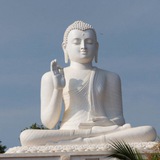
Forwarded from Buddha
As a skillful means for helping our understanding “become ever greater and more excellent,” it seems to be a useful technique. I think we need to rely upon the guidance of experienced meditation teachers, however, to help us discern when it is appropriate to apply this strategy. The mind is so capricious: it may turn to a more pleasurable object of awareness just to escape the growing pains of evolving insight; or it may mislead itself into thinking it is practicing undirected meditation when it is actually just spacing out.
===
Buddha dharma teachings channel:
https://news.1rj.ru/str/lorddivinebuddha
===
===
Buddha dharma teachings channel:
https://news.1rj.ru/str/lorddivinebuddha
===
Telegram
Buddha
Buddha dharma teachings from the suttas and commentaries
❤1👌1🏆1
Pabhassara citta
“Pabhassaram idaṁ, bhikkhave, cittaṁ. Tañca kho āgantukehi upakkilesehi upakkiliṭṭhaṁ.
Pabhassaram idaṁ, bhikkhave, cittaṁ. Tañca kho āgantukehi upakkilesehi vippamuttaṁ.”
“Bhikkhus, this mind is luminous, but it is defiled by incoming defilements.
Bhikkhus, this mind is luminous, and it is free from incoming defilements.”
Anguttara Nikaya 1.49–52
“Pabhassaram idaṁ, bhikkhave, cittaṁ. Tañca kho āgantukehi upakkilesehi upakkiliṭṭhaṁ.
Pabhassaram idaṁ, bhikkhave, cittaṁ. Tañca kho āgantukehi upakkilesehi vippamuttaṁ.”
“Bhikkhus, this mind is luminous, but it is defiled by incoming defilements.
Bhikkhus, this mind is luminous, and it is free from incoming defilements.”
Anguttara Nikaya 1.49–52
🙏2❤1🥰1😇1
Directed and Undirected Meditation
The Bhikkhunivasako Sutta explains how to incorporate different approaches to meditation into our practice.
Translation and commentary by Andrew Olendzki
Part 2 of 2
One important thing to notice about this passage is that the undirected meditation is occurring squarely within the context of the foundations of mindfulness [body, feeling, mind, and mental states]. This is not “object-less awareness” (which is not even possible in the early Buddhist models of mind), or the “awareness of awareness itself” that is mentioned in some traditions.
The meditator understands his awareness to be free and undirected, while contemplating body as body, feeling as feeling, mind as mind, and mental states as mental states. What distinguishes undirected meditation from directed meditation is simply the role of intention in the process.
Another interesting aspect of this sutta is that the framing story shows clearly that women were diligent and successful practitioners of insight meditation in the Buddha’s time, and that they were well-supported in this pursuit. Ananda, the Buddha’s cousin and lifelong assistant, was a great champion of the nuns’ cause and would often visit communities of nuns to encourage their dhamma practice. The Buddha seems to take the opportunity of Ananda’s report to expound on some of the details of mindfulness technique.
—Andrew Olendzki
Bhikkhunivasako Sutta – At the Nuns’ Residence
The venerable Ananda arose early one morning, and taking up his robe and bowl approached a certain settlement of nuns, where he sat down on a seat that had been prepared. A number of nuns approached the venerable Ananda, and after greeting him, sat down to one side. So seated, these nuns said this to the venerable Ananda: “There are here, Ananda sir, a number of nuns who abide with minds well established in the four foundations of mindfulness. Their understanding is becoming ever greater and more excellent.”
“So it is, Sisters, so it is!” replied Ananda. “Indeed for anybody, Sisters, whether monk or nun, who abides with a mind well established in the four foundations of mindfulness—it is to be expected that their understanding becomes ever greater and more excellent.”
[Ananda later relates this exchange to the Buddha, who approves of his response and then elaborates:]
Here, Ananda, a monk abides contemplating body as body—ardent, fully aware, mindful—leading away the unhappiness that comes from wanting the things of the world. And for one who is abiding contemplating body as body, a bodily object arises, or bodily distress, or mental sluggishness, that scatters his mind outward. [This passage is repeated for the other three foundations of mindfulness: feelings as feelings; mind as mind; mental states as mental states.] Then the monk should direct his mind to some satisfactory image. When the mind is directed to some satisfactory image, happiness is born. From this happiness, joy is then born. With a joyful mind, the body relaxes. A relaxed body feels content, and the mind of one content becomes concentrated. He then reflects: “The purpose for which I directed my my mind has been accomplished. So now I shall withdraw [directed attention from the image].” He withdraws, and no longer thinks upon or thinks about [the image]. He understands: “I am not thinking upon or thinking about [anything]. Inwardly mindful, I am content.” This is directed meditation.
And what is undirected meditation? Not directing his mind outward, a monk understands: “My mind is not directed outward.” He understands: “Not focused on before or after; free; undirected.” And he understands: “I abide observing body as body—ardent, fully aware, mindful—I am content.” This is undirected meditation.
And so, Ananda, I have taught directed meditation; and I have taught undirected meditation. Whatever is to be done by a teacher with compassion for the welfare of students, that has been done by me out of compassion for you. Here are the roots of trees. Here are empty places. Get down and meditate. Don’t be lazy.
The Bhikkhunivasako Sutta explains how to incorporate different approaches to meditation into our practice.
Translation and commentary by Andrew Olendzki
Part 2 of 2
One important thing to notice about this passage is that the undirected meditation is occurring squarely within the context of the foundations of mindfulness [body, feeling, mind, and mental states]. This is not “object-less awareness” (which is not even possible in the early Buddhist models of mind), or the “awareness of awareness itself” that is mentioned in some traditions.
The meditator understands his awareness to be free and undirected, while contemplating body as body, feeling as feeling, mind as mind, and mental states as mental states. What distinguishes undirected meditation from directed meditation is simply the role of intention in the process.
Another interesting aspect of this sutta is that the framing story shows clearly that women were diligent and successful practitioners of insight meditation in the Buddha’s time, and that they were well-supported in this pursuit. Ananda, the Buddha’s cousin and lifelong assistant, was a great champion of the nuns’ cause and would often visit communities of nuns to encourage their dhamma practice. The Buddha seems to take the opportunity of Ananda’s report to expound on some of the details of mindfulness technique.
—Andrew Olendzki
Bhikkhunivasako Sutta – At the Nuns’ Residence
The venerable Ananda arose early one morning, and taking up his robe and bowl approached a certain settlement of nuns, where he sat down on a seat that had been prepared. A number of nuns approached the venerable Ananda, and after greeting him, sat down to one side. So seated, these nuns said this to the venerable Ananda: “There are here, Ananda sir, a number of nuns who abide with minds well established in the four foundations of mindfulness. Their understanding is becoming ever greater and more excellent.”
“So it is, Sisters, so it is!” replied Ananda. “Indeed for anybody, Sisters, whether monk or nun, who abides with a mind well established in the four foundations of mindfulness—it is to be expected that their understanding becomes ever greater and more excellent.”
[Ananda later relates this exchange to the Buddha, who approves of his response and then elaborates:]
Here, Ananda, a monk abides contemplating body as body—ardent, fully aware, mindful—leading away the unhappiness that comes from wanting the things of the world. And for one who is abiding contemplating body as body, a bodily object arises, or bodily distress, or mental sluggishness, that scatters his mind outward. [This passage is repeated for the other three foundations of mindfulness: feelings as feelings; mind as mind; mental states as mental states.] Then the monk should direct his mind to some satisfactory image. When the mind is directed to some satisfactory image, happiness is born. From this happiness, joy is then born. With a joyful mind, the body relaxes. A relaxed body feels content, and the mind of one content becomes concentrated. He then reflects: “The purpose for which I directed my my mind has been accomplished. So now I shall withdraw [directed attention from the image].” He withdraws, and no longer thinks upon or thinks about [the image]. He understands: “I am not thinking upon or thinking about [anything]. Inwardly mindful, I am content.” This is directed meditation.
And what is undirected meditation? Not directing his mind outward, a monk understands: “My mind is not directed outward.” He understands: “Not focused on before or after; free; undirected.” And he understands: “I abide observing body as body—ardent, fully aware, mindful—I am content.” This is undirected meditation.
And so, Ananda, I have taught directed meditation; and I have taught undirected meditation. Whatever is to be done by a teacher with compassion for the welfare of students, that has been done by me out of compassion for you. Here are the roots of trees. Here are empty places. Get down and meditate. Don’t be lazy.
Telegram
Dhammapada - Buddha Dharma Teachings
Daily teachings of the Dhammapada, beloved and favorite teachings of the Buddha
🥰2❤1👍1
Don’t become one who is later remorseful. This is my instruction to you.
This translation available at www.dhammatalks.org
===
Part 1 of 2:
https://news.1rj.ru/str/lorddivinebuddha/2925
Part 2 of 2:
https://news.1rj.ru/str/dhammapadas/2508
===
Andrew Olendzki is a professor at Lesley University and the director of its graduate program in Mindfulness Studies. He teaches two Tricycle Online Courses: Going Forth and Living in Harmony, and he created the daily email course Dhamma Wheel.
===
Dhammapada, beloved and favorite teachings of the Buddha channel:
https://news.1rj.ru/str/dhammapadas
===
This translation available at www.dhammatalks.org
===
Part 1 of 2:
https://news.1rj.ru/str/lorddivinebuddha/2925
Part 2 of 2:
https://news.1rj.ru/str/dhammapadas/2508
===
Andrew Olendzki is a professor at Lesley University and the director of its graduate program in Mindfulness Studies. He teaches two Tricycle Online Courses: Going Forth and Living in Harmony, and he created the daily email course Dhamma Wheel.
===
Dhammapada, beloved and favorite teachings of the Buddha channel:
https://news.1rj.ru/str/dhammapadas
===
❤1🔥1💯1🤝1
Dhammapada Verse 415
Sundarasamuddatthera Vatthu
Yo'dha kime pahantvana
anagaro paribbaje
kamabhavaparikkhinam
tamaham brumi brahmanam.
Verse 415: Him I call a brahmana, who, in this world, has given up sensual pleasures, and leaving the home-life has become a bhikkhu; who has eradicated sensual desires and has come to the end of existence.
The Story of Thera Sundarasamudda
While residing at the Jetavana monastery, the Buddha uttered Verse (415) of this book, with reference to Thera Sundarasamudda.
Sundarasamudda was the son of a rich man from Savatthi. After he had entered the Order, he left for Rajagaha, which was forty-five yojanas away from Savatthi, to practise meditation. One day, while some festivities were going on in Savatthi, the parents of Sundarasamudda missed him very much; they also felt sorry for their son who was missing all the enjoyment and they wept. As they were weeping, a courtesan came to them and asked what the matter was. On hearing about their son, the courtesan said, "If I could make your son leave the Order and return to the life of a lay man how would you reward me?" The parents answered that they would make her rich. The courtesan then asked for a large sum of money and left for Rajagaha with a number of followers.
At Rajagaha, she rented a house with seven-tiered pinnacles on the route where Thera Sundarasamudda would come on his alms-round. She prepared good food and waited for him. On the first few days, she offered alms-food to the thera at the door of her house. Later, she invited him to come inside. Meanwhile, she paid money to some children to come and play just outside the house about the time the thera usually came on his alms-round. This gave her the excuse that it was very dusty and noisy on the ground floor; with this excuse she invited the thera to the top floor to have his alms-food. The thera consented and went up and as soon as he had entered the room, the courtesan closed the door. Then she started seducing the thera. She said to the thera, "Venerable Sir! Please be my youthful and energetic husband, and I will be your dearly beloved wife. After our long and happy wedded life we can both leave it to enter the Order and strive our very best to attain Nibbana." When he heard these words the thera suddenly realized his mistake and got alarmed. Then he said to himself, "Indeed, by being negligent and unmindful I have made a great mistake."
At that instant, the Buddha saw from his Perfumed Chamber what was happening to Thera Sundarasamudda at Rajagaha. He called the Venerable Ananda and said to him, "Ananda! On an upper storey of a pinnacled building in Rajagaha, there now goes on a struggle between Sundarasamudda and a courtesan; but in the end the thera will be the winner." After saying this to Ananda, the Buddha sent forth his radiance to the thera, made him feel his presence, and said, "My son! Be resolute and get rid of love of wealth and sensual pleasures."
Then the Buddha spoke in verse as follows:
Verse 415: Him I call a brahmana, who, in this world, has given up sensual pleasures, and leaving the home-life has become a bhikkhu; who has eradicated sensual desires and has come to the end of existence.
At the end of the discourse the thera attained arahatship, and by supernormal power passed through the roof into the sky and went to the Buddha.
===
Free Buddhism books, teachings, podcasts and videos from Theravada, Mahayana and Vajrayana traditions:
https://news.1rj.ru/str/buddha_ebooks
===
Sundarasamuddatthera Vatthu
Yo'dha kime pahantvana
anagaro paribbaje
kamabhavaparikkhinam
tamaham brumi brahmanam.
Verse 415: Him I call a brahmana, who, in this world, has given up sensual pleasures, and leaving the home-life has become a bhikkhu; who has eradicated sensual desires and has come to the end of existence.
The Story of Thera Sundarasamudda
While residing at the Jetavana monastery, the Buddha uttered Verse (415) of this book, with reference to Thera Sundarasamudda.
Sundarasamudda was the son of a rich man from Savatthi. After he had entered the Order, he left for Rajagaha, which was forty-five yojanas away from Savatthi, to practise meditation. One day, while some festivities were going on in Savatthi, the parents of Sundarasamudda missed him very much; they also felt sorry for their son who was missing all the enjoyment and they wept. As they were weeping, a courtesan came to them and asked what the matter was. On hearing about their son, the courtesan said, "If I could make your son leave the Order and return to the life of a lay man how would you reward me?" The parents answered that they would make her rich. The courtesan then asked for a large sum of money and left for Rajagaha with a number of followers.
At Rajagaha, she rented a house with seven-tiered pinnacles on the route where Thera Sundarasamudda would come on his alms-round. She prepared good food and waited for him. On the first few days, she offered alms-food to the thera at the door of her house. Later, she invited him to come inside. Meanwhile, she paid money to some children to come and play just outside the house about the time the thera usually came on his alms-round. This gave her the excuse that it was very dusty and noisy on the ground floor; with this excuse she invited the thera to the top floor to have his alms-food. The thera consented and went up and as soon as he had entered the room, the courtesan closed the door. Then she started seducing the thera. She said to the thera, "Venerable Sir! Please be my youthful and energetic husband, and I will be your dearly beloved wife. After our long and happy wedded life we can both leave it to enter the Order and strive our very best to attain Nibbana." When he heard these words the thera suddenly realized his mistake and got alarmed. Then he said to himself, "Indeed, by being negligent and unmindful I have made a great mistake."
At that instant, the Buddha saw from his Perfumed Chamber what was happening to Thera Sundarasamudda at Rajagaha. He called the Venerable Ananda and said to him, "Ananda! On an upper storey of a pinnacled building in Rajagaha, there now goes on a struggle between Sundarasamudda and a courtesan; but in the end the thera will be the winner." After saying this to Ananda, the Buddha sent forth his radiance to the thera, made him feel his presence, and said, "My son! Be resolute and get rid of love of wealth and sensual pleasures."
Then the Buddha spoke in verse as follows:
Verse 415: Him I call a brahmana, who, in this world, has given up sensual pleasures, and leaving the home-life has become a bhikkhu; who has eradicated sensual desires and has come to the end of existence.
At the end of the discourse the thera attained arahatship, and by supernormal power passed through the roof into the sky and went to the Buddha.
===
Free Buddhism books, teachings, podcasts and videos from Theravada, Mahayana and Vajrayana traditions:
https://news.1rj.ru/str/buddha_ebooks
===
Telegram
Buddha Dharma books
Free Buddhism books, teachings, podcasts and videos from Theravada, Mahayana and Vajrayana traditions
❤2👍2🥰1🙏1
Forwarded from Words of the Buddha
Buddham Saranam Gacchami
Dhammam Saranam Gacchami
Sangham Saranam Gacchami
I go to the Buddha for refuge.
I go to the Dhamma for refuge.
I go to the Sangha for refuge.
बुद्धं शरणं गच्छामि। धर्मं शरणं गच्छामि। संघं शरणं गच्छामि।
Dhammam Saranam Gacchami
Sangham Saranam Gacchami
I go to the Buddha for refuge.
I go to the Dhamma for refuge.
I go to the Sangha for refuge.
बुद्धं शरणं गच्छामि। धर्मं शरणं गच्छामि। संघं शरणं गच्छामि।
❤1🙏1👌1😇1
Forwarded from Buddha Dharma books
Free Buddha Dharma ebook
Awareness Itself
By Ajaan Fuang Jotiko
A collection of teachings spanning the whole range of practice by Ajaan Lee’s principal student and Ṭhānissaro Bhikkhu’s teacher.
Free download here:
https://www.dhammatalks.org/Archive/Writings/Ebooks/AwarenessItself_181215.pdf
===
Awareness Itself
By Ajaan Fuang Jotiko
A collection of teachings spanning the whole range of practice by Ajaan Lee’s principal student and Ṭhānissaro Bhikkhu’s teacher.
Free download here:
https://www.dhammatalks.org/Archive/Writings/Ebooks/AwarenessItself_181215.pdf
===
❤1👍1🕊1
Forwarded from Buddha Dharma books
Free Buddha Dharma ebook
Awareness Itself
By Ajaan Fuang Jotiko
A collection of teachings spanning the whole range of practice by Ajaan Lee’s principal student and Ṭhānissaro Bhikkhu’s teacher.
Free download here:
https://www.dhammatalks.org/Archive/Writings/Ebooks/AwarenessItself_181215.pdf
===
Awareness Itself
By Ajaan Fuang Jotiko
A collection of teachings spanning the whole range of practice by Ajaan Lee’s principal student and Ṭhānissaro Bhikkhu’s teacher.
Free download here:
https://www.dhammatalks.org/Archive/Writings/Ebooks/AwarenessItself_181215.pdf
===
❤1🥰1🤝1
Dhammapada Verse 416*
Jatilatthera Vatthu
Yo'dha tanham pahantvana
anagaro paribbaje
tanhabhavaparikkhinam
tamaham brumi brahmanam.
Verse 416: Him I call a brahmana, who, in this world, has given up craving, and leaving the home-life has become a bhikkhu; who has eradicated craving and has come to the end of existence.
The Story of Thera Jatila
While residing at the Veluvana monastery, the Buddha uttered Verse (416*) of this book, with reference to Thera Jatila.
Soon after the passing away (Parinibbana) of Kassapa Buddha, an arahat thera went round for donations to build a gold stupa where the relics of Kassapa Buddha were to be enshrined. The thera came to the house of a goldsmith while he and his wife were engaged in a heated quarrel. The goldsmith shouted at the thera and said, "You had better thrown your stupa into the water and go away." His wife then said to the goldsmith, "If you are angry with me you should abuse me only; you can even beat me if you like; but why do you have to abuse the Buddha and the thera? Surely, you have done a grievous wrong!" Hearing her words, the goldsmith realized the enormity of the wrong he had done and wanted to make atonement for it. So, he made some gold flowers, put them into three gold pots and offered them to be put into the relic chamber of the stupa of Kassapa Buddha.
In his present existence he was conceived in the womb of a rich man's daughter who had had an illicit love affair. When the child was born, she put it into a pot and floated it down the stream. A young woman who was bathing in the stream saw the child in the pot and took it with her. She adopted him and named him Jatila. Later, on the advice of a thera the woman sent Jatila to Taxila where he had his education. While at Taxila the thera arranged for him to stay at the house of a merchant who was a disciple of his. In due course, Jatila married the daughter of the merchant. Soon after the marriage, a large mound of gold appeared in the backyard of the house which was newly built for the couple. Three sons were born out of this marriage. After that, Jatila joined the Order and attained arahatship within a few days.
On one occasion, as the Buddha went on an alms-round with five hundred bhikkhus including Jatila, they came to the house of the sons of Jatila. His sons offered alms-food to the Buddha and his disciples for fifteen days. Some time afterwards, the bhikkhus asked Jatila whether he was still attached to his mound of gold and his sons, and he answered that he had no more attachment to them. The bhikkhus then said to the Buddha that Jatila was falsely claiming to have attained arahatship. To them the Buddha said, "Bhikkhus! Jatila has got rid of craving and pride; he has indeed attained arahatship."
Then the Buddha spoke in verse as follows:
Verse 416: Him I call a brahmana, who, in this world, has given up craving, and leaving the home-life has become a bhikkhu; who has eradicated craving and has come to the end of existence.
===
Buddha dharma teachings channel:
https://news.1rj.ru/str/lorddivinebuddha
===
Jatilatthera Vatthu
Yo'dha tanham pahantvana
anagaro paribbaje
tanhabhavaparikkhinam
tamaham brumi brahmanam.
Verse 416: Him I call a brahmana, who, in this world, has given up craving, and leaving the home-life has become a bhikkhu; who has eradicated craving and has come to the end of existence.
The Story of Thera Jatila
While residing at the Veluvana monastery, the Buddha uttered Verse (416*) of this book, with reference to Thera Jatila.
Soon after the passing away (Parinibbana) of Kassapa Buddha, an arahat thera went round for donations to build a gold stupa where the relics of Kassapa Buddha were to be enshrined. The thera came to the house of a goldsmith while he and his wife were engaged in a heated quarrel. The goldsmith shouted at the thera and said, "You had better thrown your stupa into the water and go away." His wife then said to the goldsmith, "If you are angry with me you should abuse me only; you can even beat me if you like; but why do you have to abuse the Buddha and the thera? Surely, you have done a grievous wrong!" Hearing her words, the goldsmith realized the enormity of the wrong he had done and wanted to make atonement for it. So, he made some gold flowers, put them into three gold pots and offered them to be put into the relic chamber of the stupa of Kassapa Buddha.
In his present existence he was conceived in the womb of a rich man's daughter who had had an illicit love affair. When the child was born, she put it into a pot and floated it down the stream. A young woman who was bathing in the stream saw the child in the pot and took it with her. She adopted him and named him Jatila. Later, on the advice of a thera the woman sent Jatila to Taxila where he had his education. While at Taxila the thera arranged for him to stay at the house of a merchant who was a disciple of his. In due course, Jatila married the daughter of the merchant. Soon after the marriage, a large mound of gold appeared in the backyard of the house which was newly built for the couple. Three sons were born out of this marriage. After that, Jatila joined the Order and attained arahatship within a few days.
On one occasion, as the Buddha went on an alms-round with five hundred bhikkhus including Jatila, they came to the house of the sons of Jatila. His sons offered alms-food to the Buddha and his disciples for fifteen days. Some time afterwards, the bhikkhus asked Jatila whether he was still attached to his mound of gold and his sons, and he answered that he had no more attachment to them. The bhikkhus then said to the Buddha that Jatila was falsely claiming to have attained arahatship. To them the Buddha said, "Bhikkhus! Jatila has got rid of craving and pride; he has indeed attained arahatship."
Then the Buddha spoke in verse as follows:
Verse 416: Him I call a brahmana, who, in this world, has given up craving, and leaving the home-life has become a bhikkhu; who has eradicated craving and has come to the end of existence.
===
Buddha dharma teachings channel:
https://news.1rj.ru/str/lorddivinebuddha
===
Telegram
Buddha
Buddha dharma teachings from the suttas and commentaries
👍2🙏2❤1👏1
Forwarded from Words of the Buddha
Free Buddha Dharma ebook
Footprints in the Dust: The Life of the Buddha from the Most Ancient Sources
By Bhante Shravasti Dhammika
Free download available:
https://budblooms.org/download/footprints-in-the-dust-the-life-of-the-buddha-from-the-most-ancient-sources/
===
Footprints in the Dust: The Life of the Buddha from the Most Ancient Sources
By Bhante Shravasti Dhammika
Free download available:
https://budblooms.org/download/footprints-in-the-dust-the-life-of-the-buddha-from-the-most-ancient-sources/
===
❤1👍1😍1🤗1
Forwarded from Words of the Buddha
Free Buddha Dharma ebook
Footprints in the Dust: The Life of the Buddha from the Most Ancient Sources
By Bhante Shravasti Dhammika
What was the Buddha like as a human being? How did he relate to others? With great care and an eye for detail, Venerable Dhammika pieces together the life events we can ‘read’ from very early texts. The result is a truly authoritative biography. It shows that as a man, as well as a teacher, the historical Buddha was remarkable indeed. The chapter headings are refreshingly original: a day in the life of, his humour, his debating style, his background. I really enjoyed thinking about Gotama Buddha simply as a person—and clearly an extraordinary one, as Ven Dhammika shows us. I recommend this book to anyone who would like a down- to-earth, accurate and readable appraisal of the founder of this great world religion, seen through modern eyes.
Free download available:
https://budblooms.org/download/footprints-in-the-dust-the-life-of-the-buddha-from-the-most-ancient-sources/
===
Footprints in the Dust: The Life of the Buddha from the Most Ancient Sources
By Bhante Shravasti Dhammika
What was the Buddha like as a human being? How did he relate to others? With great care and an eye for detail, Venerable Dhammika pieces together the life events we can ‘read’ from very early texts. The result is a truly authoritative biography. It shows that as a man, as well as a teacher, the historical Buddha was remarkable indeed. The chapter headings are refreshingly original: a day in the life of, his humour, his debating style, his background. I really enjoyed thinking about Gotama Buddha simply as a person—and clearly an extraordinary one, as Ven Dhammika shows us. I recommend this book to anyone who would like a down- to-earth, accurate and readable appraisal of the founder of this great world religion, seen through modern eyes.
Free download available:
https://budblooms.org/download/footprints-in-the-dust-the-life-of-the-buddha-from-the-most-ancient-sources/
===
❤1🥰1👏1💯1
Dhammapada Verse 416*
Jotikatthera Vatthu
Yo'dha tanham pahantvana
anagaro paribbaje
tanhabhavaparikkhinam
tamaham brumi brahmanam.
Verse 416: Him I call a brahmana, who, in this world, has given up craving, and leaving the home-life has become a bhikkhu; who has eradicated craving and has come to the end of existence.
The Story of Thera Jotika
While residing at the Veluvana monastery, the Buddha uttered Verse (416*) of this book, with reference to Thera Jotika.
Jotika was a famous rich man from Rajagaha. He lived in a stately mansion with seven tiered pinnacles. There were seven walls around his mansion, each of which had an entrance guarded by celestial demons. The fame of his wealth spread far and wide, and many people came to see his mansion. On one occasion, King Bimbisara came to visit Jotika; he also brought his son Ajatasattu with him. Ajatasattu seeing the grandeur of Jotika's mansion vowed that he would not allow Jotika to live in such a magnificent mansion when he became king. On the king's departure from his house Jotika presented the king with a large priceless ruby. It was the custom of Jotika to give presents to all visitors who came to see him.
When Ajatasattu ascended the throne, after killing his father, he came with his soldiers to take the mansion of Jotika by force. But as all the gates were well guarded by celestial demons, Ajatasattu and his soldiers had to retreat. Ajatasattu fled to the Veluvana monastery and he found Jotika listening to a discourse given by the Buddha. Seeing Jotika at the feet of the Buddha, Ajatasattu exclaimed, "After making your guards fight me, you are now pretending to be listening to a discourse!" Jotika realized that the king had gone to take his place by force and that he had been compelled to retreat.
In a past existence, Jotika had made a solemn wish that his property might not be taken away from him against his wish, and this wish had been fulfilled. So Jotika said to King Ajatasattu, "O king! My property cannot be taken away against my wish." Saying this, he stretched out his ten fingers and asked the king to take off the twenty rings he was wearing on his fingers. The king tried hard to take them off but did not succeed. Jotika then asked the king to spread out a piece of cloth and as Jotika put his fingers on to the cloth, all his rings easily slipped off. After he had given all his rings to King Ajatasattu, Jotika asked the Buddha that he might be permitted into the Order. Soon after entering the Order, Jotika attained arahatship.
One day, when other bhikkhus asked him whether he had any more craving left in him for his mansion his wealth and his wife, he answered that he did not have any more craving for them. The bhikkhus then went to the Buddha and said, "Venerable Sir! Thera Jotika claims to have attained arahatship; he is telling lies." To them the Buddha said, "Bhikkhus! Jotika speaks the truth; he does not have any more craving in him. He is now an arahat."
Then the Buddha spoke in verse as follows:
Verse 416: Him I call a brahmana, who, in this world, has given up craving, and leaving the home-life has become a bhikkhu; who has eradicated craving and has come to the end of existence.
===
Vajrayana Tantrayana Buddhism channel:
https://news.1rj.ru/str/tantrayanabuddhism
Tibetan Buddhism - Vajrayana, Tantrayana and esoteric Buddhism channel:
https://news.1rj.ru/str/tibetanbuddha
===
Jotikatthera Vatthu
Yo'dha tanham pahantvana
anagaro paribbaje
tanhabhavaparikkhinam
tamaham brumi brahmanam.
Verse 416: Him I call a brahmana, who, in this world, has given up craving, and leaving the home-life has become a bhikkhu; who has eradicated craving and has come to the end of existence.
The Story of Thera Jotika
While residing at the Veluvana monastery, the Buddha uttered Verse (416*) of this book, with reference to Thera Jotika.
Jotika was a famous rich man from Rajagaha. He lived in a stately mansion with seven tiered pinnacles. There were seven walls around his mansion, each of which had an entrance guarded by celestial demons. The fame of his wealth spread far and wide, and many people came to see his mansion. On one occasion, King Bimbisara came to visit Jotika; he also brought his son Ajatasattu with him. Ajatasattu seeing the grandeur of Jotika's mansion vowed that he would not allow Jotika to live in such a magnificent mansion when he became king. On the king's departure from his house Jotika presented the king with a large priceless ruby. It was the custom of Jotika to give presents to all visitors who came to see him.
When Ajatasattu ascended the throne, after killing his father, he came with his soldiers to take the mansion of Jotika by force. But as all the gates were well guarded by celestial demons, Ajatasattu and his soldiers had to retreat. Ajatasattu fled to the Veluvana monastery and he found Jotika listening to a discourse given by the Buddha. Seeing Jotika at the feet of the Buddha, Ajatasattu exclaimed, "After making your guards fight me, you are now pretending to be listening to a discourse!" Jotika realized that the king had gone to take his place by force and that he had been compelled to retreat.
In a past existence, Jotika had made a solemn wish that his property might not be taken away from him against his wish, and this wish had been fulfilled. So Jotika said to King Ajatasattu, "O king! My property cannot be taken away against my wish." Saying this, he stretched out his ten fingers and asked the king to take off the twenty rings he was wearing on his fingers. The king tried hard to take them off but did not succeed. Jotika then asked the king to spread out a piece of cloth and as Jotika put his fingers on to the cloth, all his rings easily slipped off. After he had given all his rings to King Ajatasattu, Jotika asked the Buddha that he might be permitted into the Order. Soon after entering the Order, Jotika attained arahatship.
One day, when other bhikkhus asked him whether he had any more craving left in him for his mansion his wealth and his wife, he answered that he did not have any more craving for them. The bhikkhus then went to the Buddha and said, "Venerable Sir! Thera Jotika claims to have attained arahatship; he is telling lies." To them the Buddha said, "Bhikkhus! Jotika speaks the truth; he does not have any more craving in him. He is now an arahat."
Then the Buddha spoke in verse as follows:
Verse 416: Him I call a brahmana, who, in this world, has given up craving, and leaving the home-life has become a bhikkhu; who has eradicated craving and has come to the end of existence.
===
Vajrayana Tantrayana Buddhism channel:
https://news.1rj.ru/str/tantrayanabuddhism
Tibetan Buddhism - Vajrayana, Tantrayana and esoteric Buddhism channel:
https://news.1rj.ru/str/tibetanbuddha
===
Telegram
Vajrayana Tantrayana Buddhism
Buddha teachings from the Vajrayana, esoteric, secret or Tantrayana vehicle
❤1👍1🙏1💯1