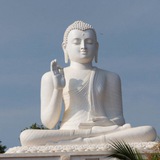
Forwarded from Words of the Buddha
While letting go can be extremely beneficial, the practice can be even more significant when we also learn to let go into something valuable. From this side, letting go is more about what is gained than what is lost. When we let go of fear, it may also be possible to let go into a sense of safety or a sense of relaxation. Forsaking the need to be right or to have one’s opinions justified can allow a person to settle into a feeling of peace. Letting go of thoughts might allow us to open to a calmer mind. By letting go into something beneficial, it can be easier to let go of something harmful. At times, people don’t want to let go because they don’t see the alternative as better than what they are holding on to. When something is clearly gained by letting go, it can be easier to do so.
A wonderful result of letting go is to experience each moment as being enough, just as it is.
We can see the Buddhist emphasis on what is gained through letting go by how the tradition understands renunciation. While the English word implies giving something up, the Buddhist analogy for renunciation is to go out from a place that is confined and dusty into a wide-open, clear space. It is as if you have been in a one-room cabin with your relatives, snowed in for an entire winter. While you may love your relatives, what is gained when you open the door and get out into the spring probably feels exquisite.
One of the nice things about letting go into something is that it has less to do with willing something or creating something than it does with allowing or relaxing. Once we know how to swim, it can be relaxing to float by allowing the water to hold us up. Once we know how to have compassion, there may be times when we not only let go of ill-will but also let go into a sense of empathy. Letting go of fear, may then also be resting back into a sense of calm.
A wonderful result of letting go is to experience each moment as being enough, just as it is. It allows us to be present for our experience here and now with such clarity and freedom that this very moment stands out as something profound and significant. We can let go of the headlong rush into the future, as well as the various, imaginative ways we think, “I’m not enough” or “this moment is not good enough,” so we can discover a well-being and peace not dependent on what we want or believe.
A fruit of Buddhist practice is to have available a greater range of wholesome, beautiful, and meaningful inner states to let go into. In particular, one can come to know a pervasive peace, accessible through both letting go and letting go into. The full maturity of this peace is when we let go of our self as the person experiencing the peace. With no self, there is just peace.
===
Gil Fronsdal teaches at the Insight Meditation Center and at Spirit Rock Meditation Center. He has practiced extensively in the Soto Zen and Theravada Buddhist traditions. He is the author of The Issue at Hand: Essays on Buddhist Mindfulness Practice and the translator of The Dhammapada: A New Translation of the Buddhist Classic.
===
Words of the Buddha channel:
https://news.1rj.ru/str/wordsofbuddha
===
A wonderful result of letting go is to experience each moment as being enough, just as it is.
We can see the Buddhist emphasis on what is gained through letting go by how the tradition understands renunciation. While the English word implies giving something up, the Buddhist analogy for renunciation is to go out from a place that is confined and dusty into a wide-open, clear space. It is as if you have been in a one-room cabin with your relatives, snowed in for an entire winter. While you may love your relatives, what is gained when you open the door and get out into the spring probably feels exquisite.
One of the nice things about letting go into something is that it has less to do with willing something or creating something than it does with allowing or relaxing. Once we know how to swim, it can be relaxing to float by allowing the water to hold us up. Once we know how to have compassion, there may be times when we not only let go of ill-will but also let go into a sense of empathy. Letting go of fear, may then also be resting back into a sense of calm.
A wonderful result of letting go is to experience each moment as being enough, just as it is. It allows us to be present for our experience here and now with such clarity and freedom that this very moment stands out as something profound and significant. We can let go of the headlong rush into the future, as well as the various, imaginative ways we think, “I’m not enough” or “this moment is not good enough,” so we can discover a well-being and peace not dependent on what we want or believe.
A fruit of Buddhist practice is to have available a greater range of wholesome, beautiful, and meaningful inner states to let go into. In particular, one can come to know a pervasive peace, accessible through both letting go and letting go into. The full maturity of this peace is when we let go of our self as the person experiencing the peace. With no self, there is just peace.
===
Gil Fronsdal teaches at the Insight Meditation Center and at Spirit Rock Meditation Center. He has practiced extensively in the Soto Zen and Theravada Buddhist traditions. He is the author of The Issue at Hand: Essays on Buddhist Mindfulness Practice and the translator of The Dhammapada: A New Translation of the Buddhist Classic.
===
Words of the Buddha channel:
https://news.1rj.ru/str/wordsofbuddha
===
Telegram
Words of the Buddha
Daily teachings of Buddha Dharma
❤2👍1
Dhammapada Verse 417
Nataputtakatthera Vatthu
Hitva manusakam yogam
dibbam yogam upaccaga
sabbayogavisamyuttam
tamaham brumi brahmanam.
Verse 417: Him I call a brahmana, who has given up attachment to (sensual pleasures of) human life, has transcended attachment to (sensual pleasures of) deva life and is completely free from all attachment.
The Story of Thera Nataputtaka
While residing at the Jetavana monastery, the Buddha uttered Verse (417) of this book, with reference to Thera Nataputtaka, who was the son of a dancer.
Once, the son of a dancer was going round the streets singing and dancing when he had a chance to listen to a discourse given by the Buddha. After listening to the discourse, he entered the Order and attained arahatship soon afterwards. One day, while the Buddha and the bhikkhus including Nataputtaka were going on an alms-round, they came across the son of another dancer dancing in the street. Seeing the young man dancing, the other bhikkhus asked Nataputtaka whether he still liked dancing. And Nataputtaka answered, "No, I do not." The bhikkhus then went to the Buddha and told him that Thera Nataputtaka was falsely claiming to have attained arahatship. Thereby, the Buddha said, "Bhikkhus! Nataputtaka has gone beyond all bonds of attachment; he has become an arahat."
Then the Buddha spoke in verse as follows:
Verse 417: Him I call a brahmana, who has given up attachment to (sensual pleasures of) human life, has transcended attachment to (sensual pleasures of) deva life and is completely free from all attachment.
===
Words of the Buddha channel:
https://news.1rj.ru/str/wordsofbuddha
===
Nataputtakatthera Vatthu
Hitva manusakam yogam
dibbam yogam upaccaga
sabbayogavisamyuttam
tamaham brumi brahmanam.
Verse 417: Him I call a brahmana, who has given up attachment to (sensual pleasures of) human life, has transcended attachment to (sensual pleasures of) deva life and is completely free from all attachment.
The Story of Thera Nataputtaka
While residing at the Jetavana monastery, the Buddha uttered Verse (417) of this book, with reference to Thera Nataputtaka, who was the son of a dancer.
Once, the son of a dancer was going round the streets singing and dancing when he had a chance to listen to a discourse given by the Buddha. After listening to the discourse, he entered the Order and attained arahatship soon afterwards. One day, while the Buddha and the bhikkhus including Nataputtaka were going on an alms-round, they came across the son of another dancer dancing in the street. Seeing the young man dancing, the other bhikkhus asked Nataputtaka whether he still liked dancing. And Nataputtaka answered, "No, I do not." The bhikkhus then went to the Buddha and told him that Thera Nataputtaka was falsely claiming to have attained arahatship. Thereby, the Buddha said, "Bhikkhus! Nataputtaka has gone beyond all bonds of attachment; he has become an arahat."
Then the Buddha spoke in verse as follows:
Verse 417: Him I call a brahmana, who has given up attachment to (sensual pleasures of) human life, has transcended attachment to (sensual pleasures of) deva life and is completely free from all attachment.
===
Words of the Buddha channel:
https://news.1rj.ru/str/wordsofbuddha
===
Telegram
Words of the Buddha
Daily teachings of Buddha Dharma
❤1👍1🤗1
Free Buddha Dharma ebook
Snow in the Summer
By Sayadaw U Jotika
Free download here:
https://static.sariputta.com/pdf/tipitaka/232/jotleeds_pdf.pdf
===
Snow in the Summer
By Sayadaw U Jotika
Free download here:
https://static.sariputta.com/pdf/tipitaka/232/jotleeds_pdf.pdf
===
🥰1🕊1
Forwarded from Words of the Buddha
Free Buddha Dharma ebook
Snow in the Summer
By Sayadaw U Jotika
This book is a compilation of extracts from letters written by Sayadaw U Jotika, a Burmese Buddhist monk, to his Western students many years ago. These letters have been collated under the topics as indicated.
Free download here:
https://static.sariputta.com/pdf/tipitaka/232/jotleeds_pdf.pdf
===
Snow in the Summer
By Sayadaw U Jotika
This book is a compilation of extracts from letters written by Sayadaw U Jotika, a Burmese Buddhist monk, to his Western students many years ago. These letters have been collated under the topics as indicated.
Free download here:
https://static.sariputta.com/pdf/tipitaka/232/jotleeds_pdf.pdf
===
❤1👍1👏1🤩1
Dhammapada Verse 418
Nataputtakatthera Vatthu
Hitva ratim ca aratim ca
sitabultam nirupadhim1
sabbalokabhihhum2 viram
tamaham brumi brahmanam.
Verse 418: Him I call a brahmana, who has given up taking delight (in sensual pleasures) and not taking delight (in solitude); who has attained perfect peace and is free from moral defilements; who has overcome all the five khandhas (lit., the world) and is diligent.
1. nirupadhim: according to the Commentary, "nirupadhim ti nirupakkilesam", i.e., free from substratum or free from moral defilements (kilesa).
2. sabbalokabhihhum: lit., one who has conquered all the world, i.e., one who has put an end to rebirths, or the arising of the khandhas.
The Story of Thera Nataputtaka
While residing at the Veluvana monastery, the Buddha uttered Verse (418) of this book, with reference to another Thera Nataputtaka, son of another dancer.
As in the previous story, the son of a dancer had entered the Order and had attained arahatship. Other bhikkhus went to the Buddha and told him about Thera Nataputtaka claiming to have attained arahatship. To them the Buddha said, "Bhikkhus! Nataputtaka has given up taking delight in all things."
Then the Buddha spoke in verse as follows:
Verse 418: Him I call a brahmana, who has given up taking delight (in sensual pleasures) and not taking delight (in solitude); who has attained perfect peace and is free from moral defilements; who has overcome all the five khandhas (lit., the world) and is diligent.
===
Dhammapada, beloved and favorite teachings of the Buddha channel:
https://news.1rj.ru/str/dhammapadas
===
Nataputtakatthera Vatthu
Hitva ratim ca aratim ca
sitabultam nirupadhim1
sabbalokabhihhum2 viram
tamaham brumi brahmanam.
Verse 418: Him I call a brahmana, who has given up taking delight (in sensual pleasures) and not taking delight (in solitude); who has attained perfect peace and is free from moral defilements; who has overcome all the five khandhas (lit., the world) and is diligent.
1. nirupadhim: according to the Commentary, "nirupadhim ti nirupakkilesam", i.e., free from substratum or free from moral defilements (kilesa).
2. sabbalokabhihhum: lit., one who has conquered all the world, i.e., one who has put an end to rebirths, or the arising of the khandhas.
The Story of Thera Nataputtaka
While residing at the Veluvana monastery, the Buddha uttered Verse (418) of this book, with reference to another Thera Nataputtaka, son of another dancer.
As in the previous story, the son of a dancer had entered the Order and had attained arahatship. Other bhikkhus went to the Buddha and told him about Thera Nataputtaka claiming to have attained arahatship. To them the Buddha said, "Bhikkhus! Nataputtaka has given up taking delight in all things."
Then the Buddha spoke in verse as follows:
Verse 418: Him I call a brahmana, who has given up taking delight (in sensual pleasures) and not taking delight (in solitude); who has attained perfect peace and is free from moral defilements; who has overcome all the five khandhas (lit., the world) and is diligent.
===
Dhammapada, beloved and favorite teachings of the Buddha channel:
https://news.1rj.ru/str/dhammapadas
===
Telegram
Dhammapada - Buddha Dharma Teachings
Daily teachings of the Dhammapada, beloved and favorite teachings of the Buddha
👏1🆒1
Dhammapada Verses 277, 278 and 279
Aniccalakkhana Vatthu
Dukkhalakkhana Vatthu
Anattalakkhana Vatthu
"Sabbe sankhara anicca" ti
yada pannaya1 passati
atha nibbindati dukkhe
esa maggo visuddhiya.
"Sabbe sankhara dukkha" ti
yada pannaya passati
atha nibbindati dukkhe
esa maggo visuddhiya.
"Sabbe sankhara anatta" ti
yada pannaya passati
atha nibbindati dukkhe
esa maggo visuddhiya.
Verse 277: "All conditioned phenomena are impermanent"; when one sees this with Insight-wisdom, one becomes weary of dukkha (i.e., the khandhas). This is the Path to Purity.
Verse 278: "All conditioned phenomena are dukkha"; when one sees this with Insight-wisdom, one becomes weary of dukkha (i.e., the khandhas). This is the Path to Purity.
Verse 279: "All phenomena (dhammas) are without Self"; when one sees this with Insight-wisdom, one becomes weary of dukkha (i.e., the khandhas). This is the Path to Purity.
https://news.1rj.ru/str/dhammapadas/1828
Aniccalakkhana Vatthu
Dukkhalakkhana Vatthu
Anattalakkhana Vatthu
"Sabbe sankhara anicca" ti
yada pannaya1 passati
atha nibbindati dukkhe
esa maggo visuddhiya.
"Sabbe sankhara dukkha" ti
yada pannaya passati
atha nibbindati dukkhe
esa maggo visuddhiya.
"Sabbe sankhara anatta" ti
yada pannaya passati
atha nibbindati dukkhe
esa maggo visuddhiya.
Verse 277: "All conditioned phenomena are impermanent"; when one sees this with Insight-wisdom, one becomes weary of dukkha (i.e., the khandhas). This is the Path to Purity.
Verse 278: "All conditioned phenomena are dukkha"; when one sees this with Insight-wisdom, one becomes weary of dukkha (i.e., the khandhas). This is the Path to Purity.
Verse 279: "All phenomena (dhammas) are without Self"; when one sees this with Insight-wisdom, one becomes weary of dukkha (i.e., the khandhas). This is the Path to Purity.
https://news.1rj.ru/str/dhammapadas/1828
🙏2👏1
Forwarded from Buddha Dharma books
Free Buddhism Dharma ebook
Colour illustrated Life Story of Angulimala
By G.K. Ananda Kumarasiri
Free download available:
https://ftp.budaedu.org/ebooks/pdf/EN341.pdf
===
Colour illustrated Life Story of Angulimala
By G.K. Ananda Kumarasiri
Free download available:
https://ftp.budaedu.org/ebooks/pdf/EN341.pdf
===
😍1😘1
Forwarded from Buddha Dharma books
Free Buddhism Dharma ebook
Colour illustrated Life Story of Angulimala
By G.K. Ananda Kumarasiri
Angulimala is known as a ruthless brigand who completely transforms after a conversion to Buddhism, he is seen as the example par excellence of the redemptive power of the Buddha's teaching and the Buddha's skill as a teacher. Angulimala is seen by Buddhists as the "patron saint" of childbirth and is associated with fertility in South and Southeast Asia.
Free download available:
https://ftp.budaedu.org/ebooks/pdf/EN341.pdf
===
Colour illustrated Life Story of Angulimala
By G.K. Ananda Kumarasiri
Angulimala is known as a ruthless brigand who completely transforms after a conversion to Buddhism, he is seen as the example par excellence of the redemptive power of the Buddha's teaching and the Buddha's skill as a teacher. Angulimala is seen by Buddhists as the "patron saint" of childbirth and is associated with fertility in South and Southeast Asia.
Free download available:
https://ftp.budaedu.org/ebooks/pdf/EN341.pdf
===
💯1🦄1
Forwarded from Buddha
“Ānanda, there are these 8 causes for a great earthquake.
This great earth is grounded on water, the water is grounded on air, and the air stands in space. At a time when a great wind blows, it stirs the water, and the water stirs the earth. This is the first cause..
..there is an brahmin or a powerful god that developed a limited perception of earth and a limitless perception of water. They make the earth shake and rock and tremble. This is the 2nd..
..when the being intent on awakening passes away from the host of joyful gods, he’s conceived in his mother’s belly, mindful and aware.. The 3rd .. [..when comes out of his mother’s belly mindful and aware..The 4th ..]
..when the Realized One realizes the supreme perfect awakening.. The 5th .. [..when rolls forth the supreme Wheel of Dhamma..The 6th..] [..when mindful and aware, surrenders the life force..The 7th ..] [..when becomes fully extinguished in the element of extinguishment with no residue..The 8th..]
Partial excerpts from AN 8.70: Bhūmicālasutta
This great earth is grounded on water, the water is grounded on air, and the air stands in space. At a time when a great wind blows, it stirs the water, and the water stirs the earth. This is the first cause..
..there is an brahmin or a powerful god that developed a limited perception of earth and a limitless perception of water. They make the earth shake and rock and tremble. This is the 2nd..
..when the being intent on awakening passes away from the host of joyful gods, he’s conceived in his mother’s belly, mindful and aware.. The 3rd .. [..when comes out of his mother’s belly mindful and aware..The 4th ..]
..when the Realized One realizes the supreme perfect awakening.. The 5th .. [..when rolls forth the supreme Wheel of Dhamma..The 6th..] [..when mindful and aware, surrenders the life force..The 7th ..] [..when becomes fully extinguished in the element of extinguishment with no residue..The 8th..]
Partial excerpts from AN 8.70: Bhūmicālasutta
😢1🙏1👌1🕊1
Dhammapada Verses 419 and 420
Vangisatthera Vatthu
Cutim yo vedi sattanam
upapattinca sabbaso
asattam sugatam buddham
tamaham brumi brahmanam.
Yassa gatim na jananti
deva gandhabbamanusa
khinasavam arahantam
tamaham brumi brahmanam.
Verse 419: Him I call a brahmana, who knows the death and rebirth of beings in every detail, who is detached, who follows the good practice and knows the Four Noble Truths.
Verse 420: Him I call a brahmana, whose destination the devas or gandhabbas or men do not know who has eradicated moral intoxicants and is an arahat.
The Story of Thera Vangisa
While residing at the Jetavana monastery, the Buddha uttered Verses (419) and (420) of this book, with reference to Thera Vangisa.
Once, in Rajagaha, there was a brahmin by the name of Vangisa who by simply tapping on the skull of a dead person could tell whether that person was reborn in the world of the devas, or of the human beings, or in one of the four lower worlds (apayas). The brahmins took Vangisa to many villages and people flocked to him and paid him ten, twenty or a hundred to find out from him where their various dead relatives were reborn.
On one occasion, Vangisa and his party came to a place not far from the Jetavana monastery. Seeing those people who were going to the Buddha, the brahmins invited them to come to Vangisa who could tell where their relatives had been reborn. But the Buddha's disciples said to them, "Our teacher is one without a rival, he only is the Enlightened One." The brahmins took that statement as a challenge and took Vangisa along with them to the Jetavana monastery to compete with the Buddha. The Buddha, knowing their intention, instructed the bhikkhus to bring the skulls of a person reborn in niraya, of a person reborn in the animal world, of a person reborn in the human world, of a person reborn in the deva world and also of an arahat. The five were then placed in a row. When Vangisa was shown those skulls he could tell where the owners of the first four skulls were reborn but when he came to the skull of the arahat he was at a loss. Then the Buddha said, "Vangisa, don't you know? I do know where the owner of that skull is." Vangisa then asked the Buddha to let him have the magical incantation (mantra) by which he could thus know; but the Buddha told him that the mantra could be given only to a bhikkhu. Vangisa then told the brahmins to wait outside the monastery while he was being taught the mantra. Thus, Vangisa became a bhikkhu and as a bhikkhu, he was instructed by the Buddha to contemplate the thirty-two constituents of the body. Vangisa diligently practised meditation as instructed by the Buddha and attained arahatship within a short time.
When the brahmins who were waiting outside the monastery came to ask Vangisa whether he had acquired the mantra, Vangisa said, "You all had better go now; as for me, I should no longer go along with you." Other bhikkhus hearing him thought he was telling lies, so they went to the Buddha and said, "Venerable Sir! Vangisa is falsely claiming to have attained arahatship." To them the Buddha said, "Bhikkhus! Vangisa really knows the death and rebirth of beings."
Then the Buddha spoke in verse as follows:
Verse 419: Him I call a brahmana, who knows the death and rebirth of beings in every detail, who is detached, who follows the good practice and knows the Four Noble Truths.
Verse 420: Him I call a brahmana, whose destination the devas or gandhabbas or men do not know who has eradicated moral intoxicants and is an arahat.
===
Buddha dharma teachings channel:
https://invite.viber.com/?g2=AQAKw1y3rv%2F6sk61PI2W4izuIiaEZj8YZujhY1tSzL%2B07s7rFnVFDAd0bAYFaMLw
===
Vangisatthera Vatthu
Cutim yo vedi sattanam
upapattinca sabbaso
asattam sugatam buddham
tamaham brumi brahmanam.
Yassa gatim na jananti
deva gandhabbamanusa
khinasavam arahantam
tamaham brumi brahmanam.
Verse 419: Him I call a brahmana, who knows the death and rebirth of beings in every detail, who is detached, who follows the good practice and knows the Four Noble Truths.
Verse 420: Him I call a brahmana, whose destination the devas or gandhabbas or men do not know who has eradicated moral intoxicants and is an arahat.
The Story of Thera Vangisa
While residing at the Jetavana monastery, the Buddha uttered Verses (419) and (420) of this book, with reference to Thera Vangisa.
Once, in Rajagaha, there was a brahmin by the name of Vangisa who by simply tapping on the skull of a dead person could tell whether that person was reborn in the world of the devas, or of the human beings, or in one of the four lower worlds (apayas). The brahmins took Vangisa to many villages and people flocked to him and paid him ten, twenty or a hundred to find out from him where their various dead relatives were reborn.
On one occasion, Vangisa and his party came to a place not far from the Jetavana monastery. Seeing those people who were going to the Buddha, the brahmins invited them to come to Vangisa who could tell where their relatives had been reborn. But the Buddha's disciples said to them, "Our teacher is one without a rival, he only is the Enlightened One." The brahmins took that statement as a challenge and took Vangisa along with them to the Jetavana monastery to compete with the Buddha. The Buddha, knowing their intention, instructed the bhikkhus to bring the skulls of a person reborn in niraya, of a person reborn in the animal world, of a person reborn in the human world, of a person reborn in the deva world and also of an arahat. The five were then placed in a row. When Vangisa was shown those skulls he could tell where the owners of the first four skulls were reborn but when he came to the skull of the arahat he was at a loss. Then the Buddha said, "Vangisa, don't you know? I do know where the owner of that skull is." Vangisa then asked the Buddha to let him have the magical incantation (mantra) by which he could thus know; but the Buddha told him that the mantra could be given only to a bhikkhu. Vangisa then told the brahmins to wait outside the monastery while he was being taught the mantra. Thus, Vangisa became a bhikkhu and as a bhikkhu, he was instructed by the Buddha to contemplate the thirty-two constituents of the body. Vangisa diligently practised meditation as instructed by the Buddha and attained arahatship within a short time.
When the brahmins who were waiting outside the monastery came to ask Vangisa whether he had acquired the mantra, Vangisa said, "You all had better go now; as for me, I should no longer go along with you." Other bhikkhus hearing him thought he was telling lies, so they went to the Buddha and said, "Venerable Sir! Vangisa is falsely claiming to have attained arahatship." To them the Buddha said, "Bhikkhus! Vangisa really knows the death and rebirth of beings."
Then the Buddha spoke in verse as follows:
Verse 419: Him I call a brahmana, who knows the death and rebirth of beings in every detail, who is detached, who follows the good practice and knows the Four Noble Truths.
Verse 420: Him I call a brahmana, whose destination the devas or gandhabbas or men do not know who has eradicated moral intoxicants and is an arahat.
===
Buddha dharma teachings channel:
https://invite.viber.com/?g2=AQAKw1y3rv%2F6sk61PI2W4izuIiaEZj8YZujhY1tSzL%2B07s7rFnVFDAd0bAYFaMLw
===
Viber
Buddha
Buddha dharma teachings from the suttas and commentaries from Theravada tradition
👍1🥰1